

Executive Overview
In an era defined by rapid coastal development, escalating real estate values, and the relentless march of short-term rentals, South Carolina’s barrier islands are rapidly losing their raw, untamed identity. Folly Beach—affectionately known as the "Edge of America"—is no exception. Today, its bustling streets are packed with surf shops, vacationers, and a neat grid of modern beach houses. Yet, tucked away on the island’s western flank lies an extraordinary anomaly: an 18-acre pocket of dense, swampy maritime forest that looks and feels as though time stopped a century ago.
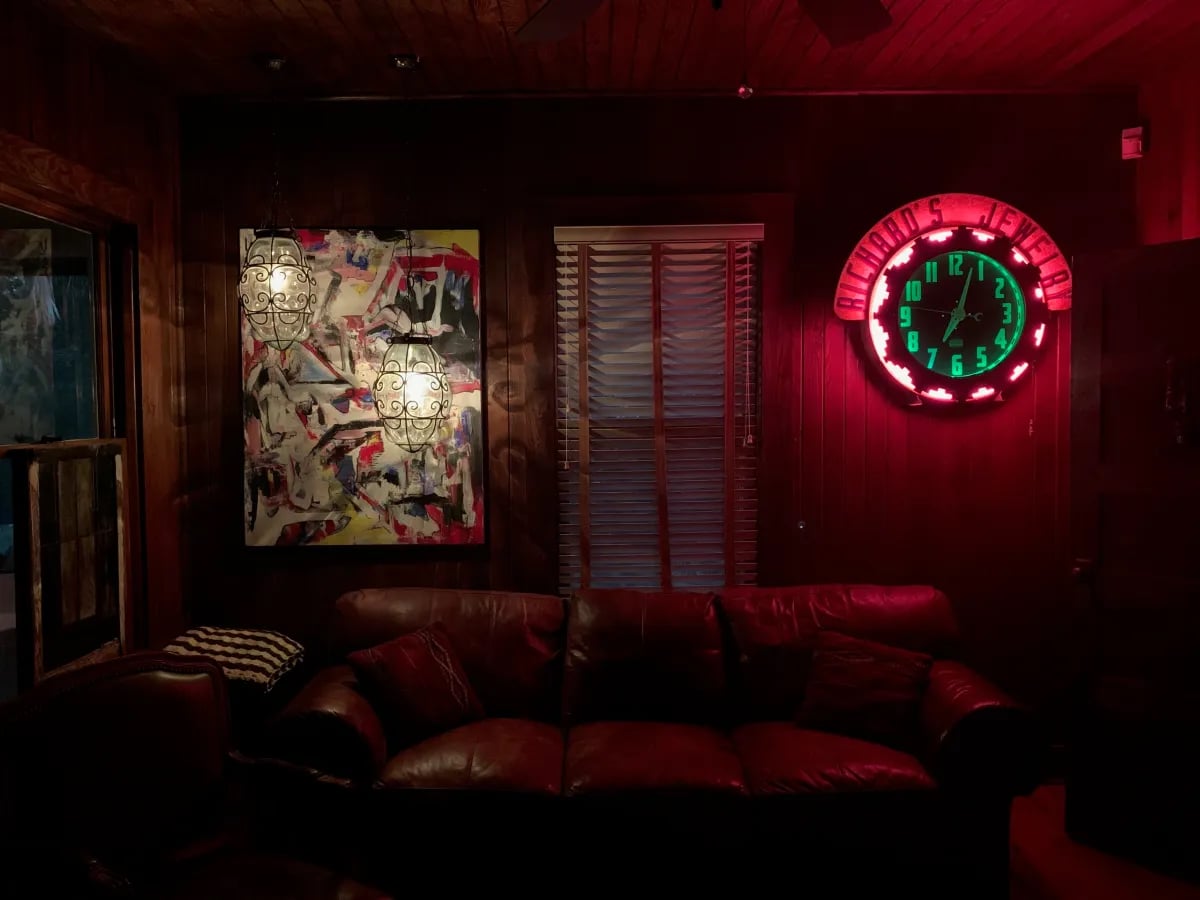
Owned by retired e-commerce executive, artist, and self-described land steward Jim Rocco, the Folly River House property is a living time capsule. What began in 1999 as an overgrown, trash-strewn urban dumping ground and squatter’s haven has been painstakingly transformed over more than two decades into a de facto wildlife refuge and an eclectic artist’s retreat. Complete with miles of hiking trails, a private dock, a rustic early-20th-century home, and towering outdoor art installations, Rocco’s property represents a rare triumph of conservation and creative stewardship in the lowcountry.
This deep dive explores the evolution of the Folly River House, examining its historical roots, its vital role as a sanctuary for native South Carolina wildlife, its intersection with local craftsmanship, and its future as an intergenerational legacy.
Detailed Chronology: From Dumping Ground to Ecological Haven
To understand the magnitude of what Jim Rocco has achieved on Folly Beach, one must first look at the state of the land when he acquired it at the turn of the millennium.
1999: The Acquisition and Initial State
When Rocco purchased the 18-acre tract and its dilapidated, early-1900s cottage in 1999, the property was locally written off as an "obvious teardown." Decades of neglect had turned the acreage into an impenetrable wilderness.
"The African Queen movie with Humphrey Bogart? Nothing on us," Rocco recalls of the property’s initial state. "You couldn’t go ten feet. You couldn’t see the river. Everything was overgrown for years. It was just left here."
The land served as a makeshift city dumping ground and a haven for squatters. Thick briars, fallen timber, and dense swamp choked the forest floor, masking the property’s connection to the Folly River. Yet, looking past the thicket, Rocco saw potential rooted in family lore. Growing up, he frequently heard stories from his father and grandfather—immigrants from Naples, Italy—about missed real estate opportunities.
"There were stories from either my father or my grandfather, saying, ‘Hey, Jimmy, you see that property over there? I could have bought that for $10.’ Every time they told me this story, I put $1 in a jar," Rocco recounts with a laugh. When the Folly Beach parcel came onto his radar, that metaphorical jar helped fund a leap of faith.
The Decades of Restoration (2000–2020s)
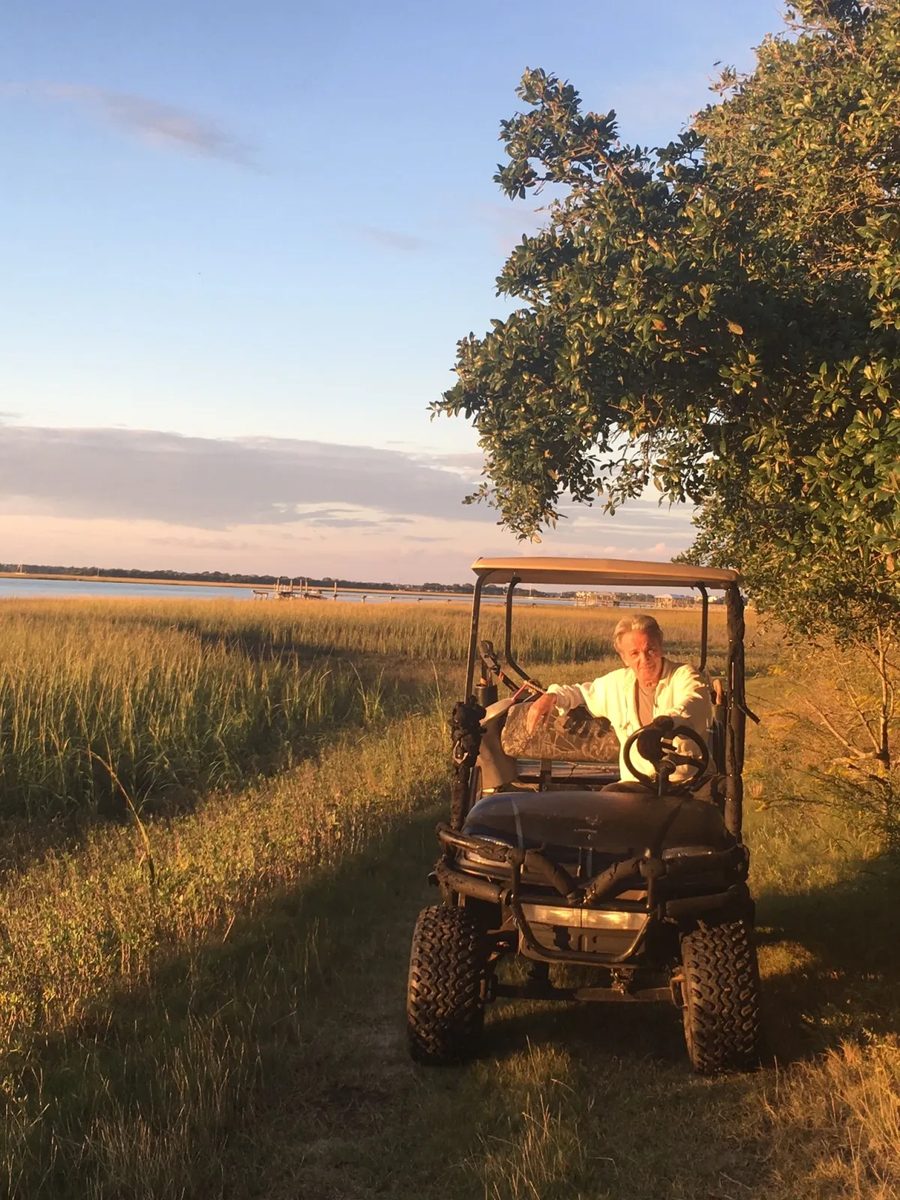
With the vital intuition and support of his late wife, Shann, Rocco made a conscious decision not to clear-cut or develop the land into modern subdivisions. Instead, they chose a path of preservation. Over the next twenty-plus years, Rocco carved out miles of winding trails by hand, cleared the banks to reveal the river views, and restored the decaying century-old farmhouse.
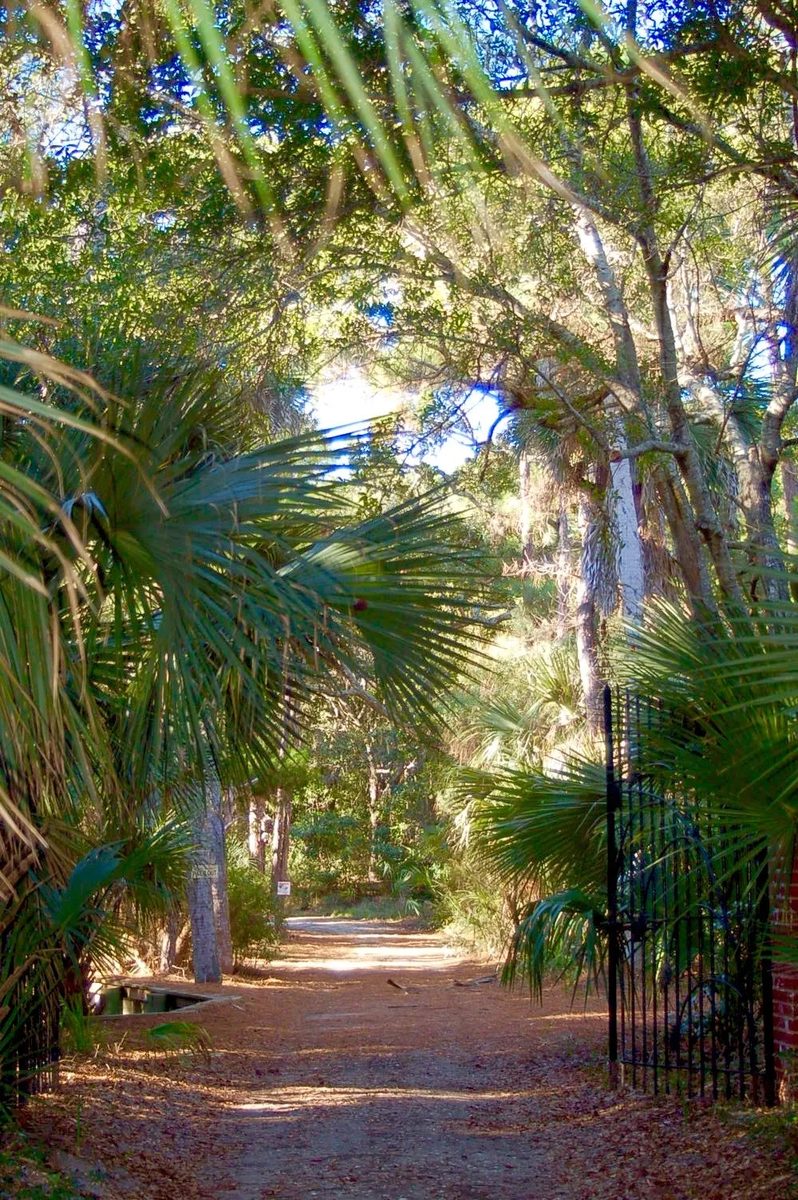
Rather than importing exotic landscaping, they allowed the indigenous flora to reclaim the terrain. Today, a long, winding gravel driveway cuts through the thick swampy forest—a stark contrast to the buzzing beach town just beyond the tree line. A satellite view of Folly Island lays bare this unique contrast: a meticulous grid of residential streets, vast expanses of riverside marsh, and one distinct, dense cluster of green on the western edge—Rocco’s sanctuary.
Supporting Context & Metrics: History and Habitat
The significance of the Folly River House extends far beyond its current use as an artist’s retreat. The land is deeply woven into the socio-political and environmental history of the South Carolina coast.
Historical Footprint
According to archival records preserved by previous owners, the 18-acre parcel has served multiple distinct purposes across different eras of American history:
- Civil War Era: Historical markers and prior assessments suggest the high ground of the property likely functioned as a strategic staging area and supply depot for Union forces during their campaigns around Charleston.
- Mid-20th Century: During the 1930s, the land was utilized as a boys’ summer camp, giving local youths a rustic taste of lowcountry wilderness.
- Modern Conservation: Since 1999, the property has transitioned into a private ecological holding that shields a vital watershed from commercial overdevelopment.
Ecological Sanctuary
While much of Folly Beach has succumbed to high-density real estate pressures—igniting ongoing civic debates over the proliferation of short-term rentals—Rocco’s land remains an untouched oasis for local fauna. The property’s varied topography, which transitions from high maritime forest down to tidal marsh and river dock, supports a robust population of native wildlife:
- Avian Life: Bald eagles frequently soar above the canopy, alongside great blue herons and egrets stalking the shoreline.
- Mammals: White-tailed deer roam the interior trails, while secretive predators like bobcats utilize the unbroken forest corridors for foraging and shelter.
Official Statements & Artistic Vision
Jim Rocco views his relationship with the acreage less through the lens of traditional property ownership and more through the sacred responsibility of stewardship.
The Philosophy of "Making Magic"
Now retired from the e-commerce sector, Rocco splits his time between maintaining the grounds, creating landmark sculptures, and mentoring the next generation of artisans. He maintains a close relationship with the American College of Building Arts in nearby Charleston, frequently offering students their very first professional commissions.
Recent student-collaborative works commissioned by Rocco include:
- A massive, intricately carved Poseidon throne.
- A striking sculptural head of Medusa.
- A towering, seven-foot-tall statue of South Carolina’s legendary cryptid, the "Lizard Man."
"Make magic. Be inspired. Get back to nature. For me, it’s that simple," Rocco notes.
Landmark Sculptures and Local Icons
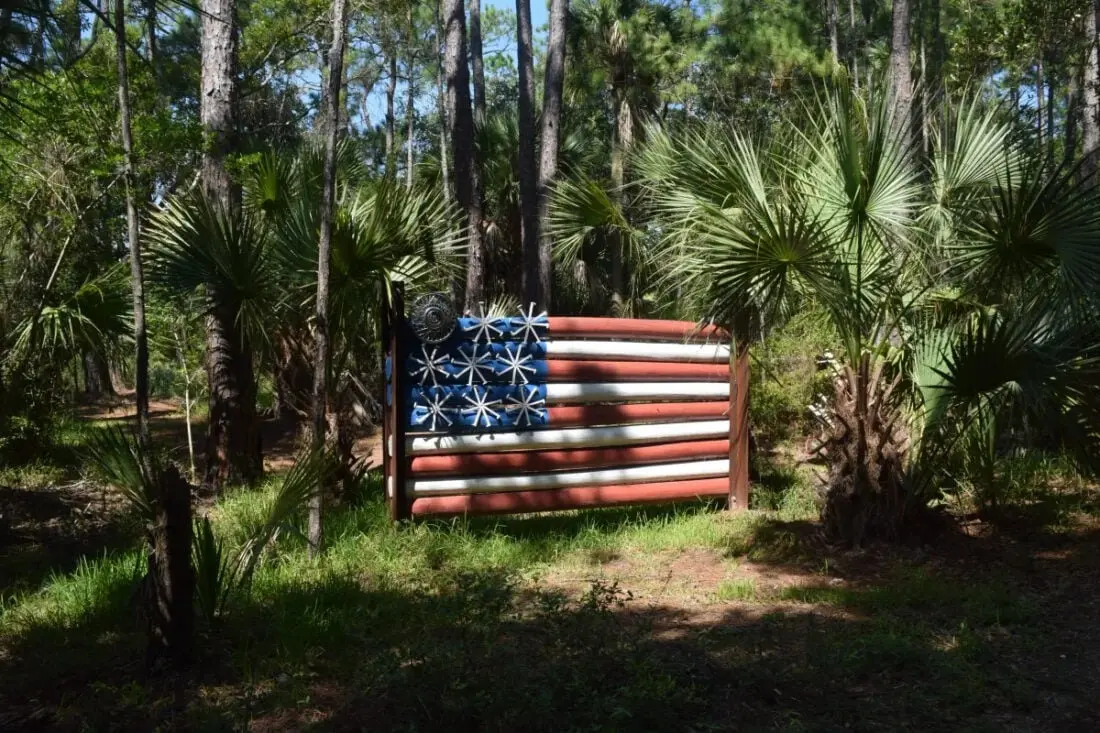
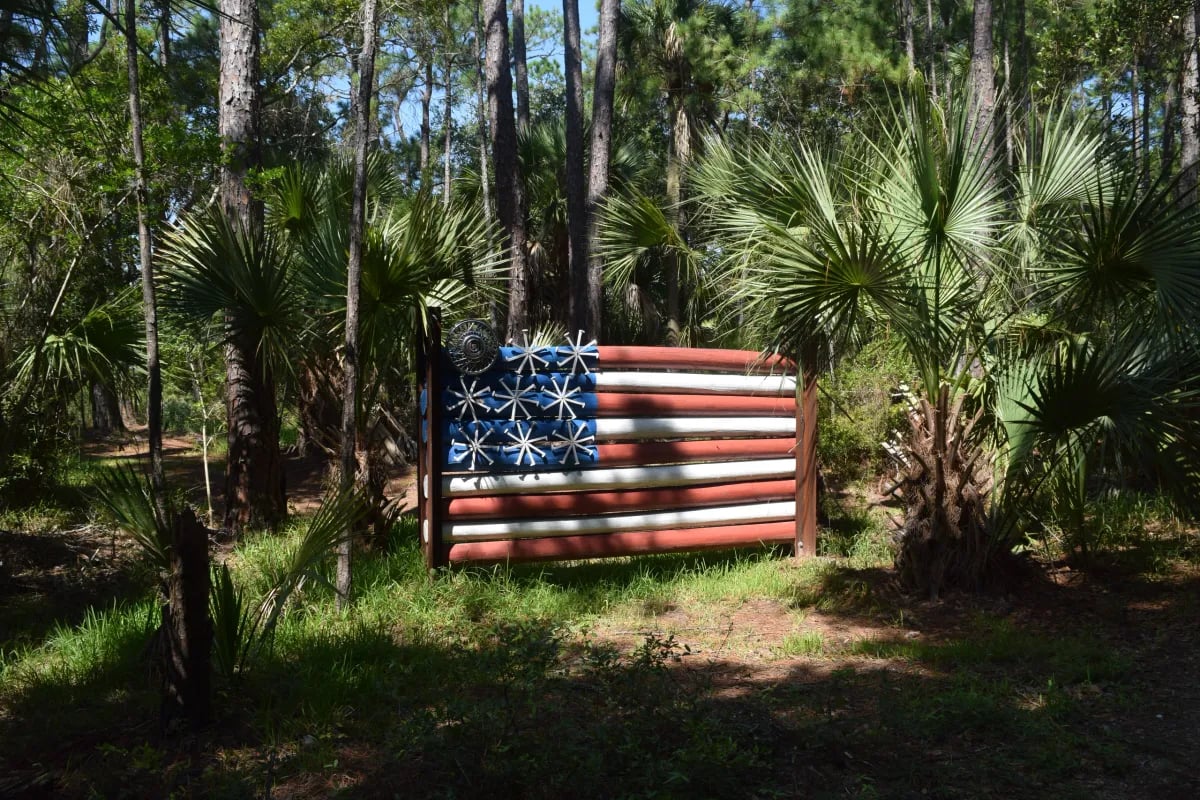
Rocco’s artistic footprint is not confined to the boundaries of his 18-acre estate; it extends into the public sphere of Folly Beach. He is locally renowned for constructing unique American flag sculptures built from stacked logs. Rather than traditional white stars, these flags feature deeply personal and culturally significant artifacts: Civil War bullets, an old trombone, and his grandfather’s vintage pickax head.
His masterwork sits on Folly’s Huron Avenue. Constructed using reclaimed timbers from the former Folly Beach Pier, the large-scale flag sculpture honors the construction workers who built the new pier "on time and ahead of schedule, with no complaints." Flanked by a public seating area and a prominent sign bearing the town’s legendary moniker—The Edge of America—the installation bridges Folly’s industrial past with its artistic present.
Future Outlook
As the pressure to commercialize coastal South Carolina mounts year over year, the long-term viability of small, privately held conservation pockets faces significant headwinds. However, Rocco has established a clear succession plan to protect the Folly River House in perpetuity.
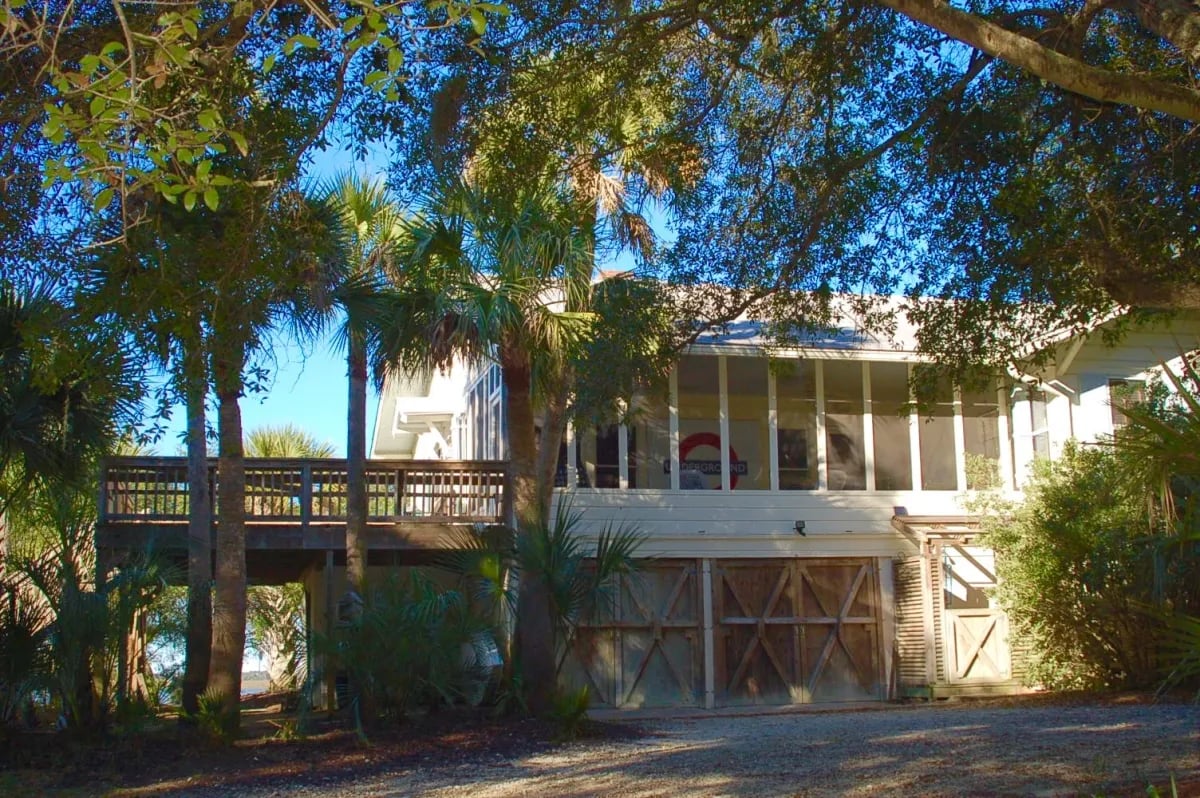
While the property is occasionally listed on platforms like Airbnb for travelers seeking an immersive lowcountry experience, its primary functions remain deeply personal. It serves as a private gathering place for family, a creative haven for Rocco, and a living laboratory for young craftsmen.
Looking forward, Rocco is formalizing an intimate events business tailored specifically to the site’s unique aesthetic. Crucially, he plans to leave the entire operation in the capable hands of his daughter, ensuring that the next generation will maintain the ecological and artistic integrity of the land.
"In the end we made the decision together. Keep it as is. Keep it special," Rocco reflects on the gamble he and his late wife took over two decades ago. "And now it’s just a little gem. You come here and your world stops here."
In a world driven by perpetual acceleration, Jim Rocco’s wild sanctuary on Folly Beach stands as a monument to patience, preservation, and the enduring power of nature.

0 Comments