

Executive Overview
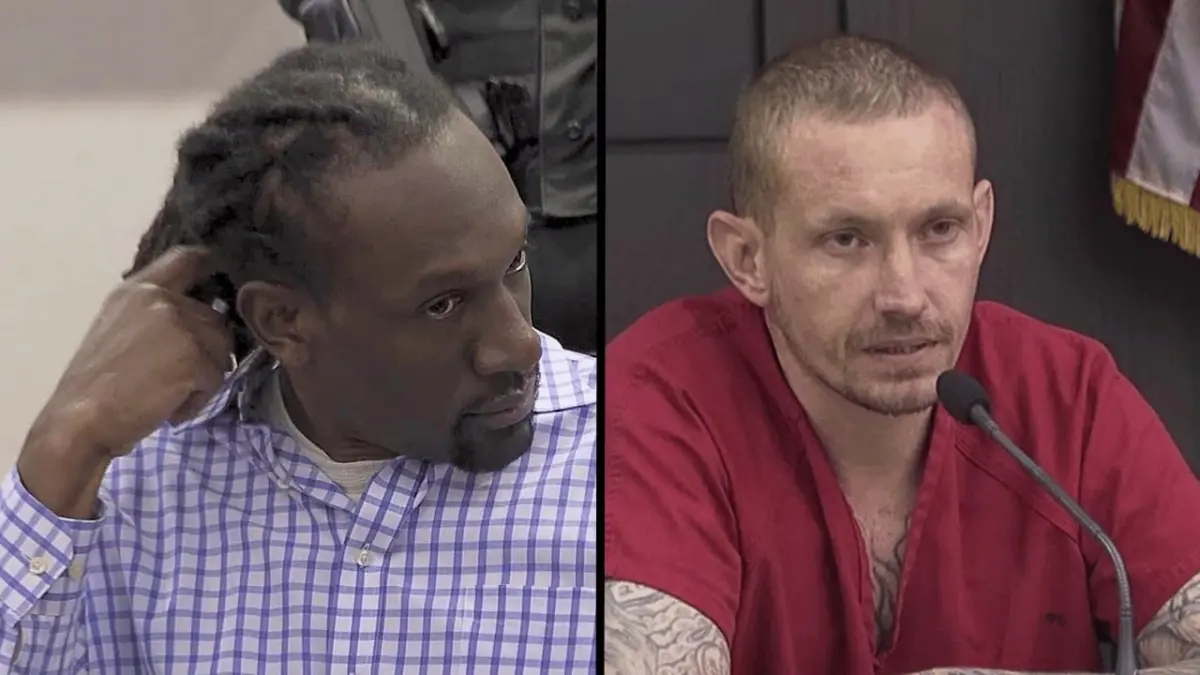
GAINESVILLE, Fla. — Nearly a decade after a brutal home invasion cut short the life of 23-year-old Christin Cassels in Hawthorne, Florida, the pursuit of accountability has reached a critical juncture in the Eighth Judicial Circuit Court. Defendants Kenneth Altidor, Blake Jackson, and Nikenson Perin are standing trial together in a high-profile joint proceeding that has gripped Alachua County. The case, which went cold for years before a digital-age breakthrough breathed new life into the investigation, centers on the tragic events of 2017, when Cassels was found murdered in a garage just five days shy of her 24th birthday.
As the trial enters its pivotal final phases, courtroom drama has reached a fever pitch. Prosecutors have introduced a cache of previously unheard jailhouse phone calls, translated from Haitian Creole, in which the suspects attempt to navigate the fallout of their arrests. Meanwhile, the state’s case was dramatically bolstered by the testimony of a seasoned jailhouse informant, who detailed a chilling confession allegedly made by Perin behind bars.
Simultaneously, the defense has faced steep judicial setbacks. An attempt by Perin’s defense team to introduce a last-minute expert witness to challenge cutting-edge geofencing evidence was soundly rejected by the bench following a rigorous Richardson hearing. Furthermore, the presiding judge swiftly denied defense motions for judgments of acquittal, ensuring that the charges—ranging from murder to burglary—will ultimately be decided by a jury. With all three defendants declining to take the stand in their own defense, the stage is set for a dramatic conclusion. Closing arguments are slated to begin Monday morning, bringing the community one step closer to closure in a case defined by patience, digital forensics, and a relentless pursuit of the truth.
Detailed Chronology of the Trial Proceedings
The fourth day of the trial in Gainesville was characterized by intense legal maneuvering, evidentiary battles, and explosive testimony that pushed the proceedings past standard courtroom hours and guaranteed a continuation into the following week.
Morning Delays and the Introduction of Jailhouse Recordings
The courtroom proceedings on Thursday morning experienced a prolonged delay of approximately two hours before the jury was permitted to enter. This hiatus was consumed by fierce legal arguments as defense attorneys lobbied objections against the state’s intent to play a series of recorded jailhouse phone calls. The defense argued against the admissibility and prejudicial nature of the audio, but the prosecution successfully defended their inclusion as vital probative evidence.
Once the jury took their seats, the court-appointed its first witness of the day: a certified Haitian Creole interpreter. The interpreter was tasked with authenticating and presenting transcripts of phone calls intercepted by investigators. According to state prosecutors, Kenneth Altidor had initiated contact with Nikenson Perin shortly after Altidor was initially taken into custody for questioning. The state submitted a total of 10 recorded conversations, complete with side-by-side Haitian Creole-to-English translations.
To protect the integrity of the judicial process and prevent unfair bias, jurors were explicitly instructed that while Perin’s voice was on the recordings, they were not to factor in that he was already incarcerated at the time the calls were made. The translated excerpts revealed cryptic and defensive dialogue. In one notable recorded exchange read aloud to the courtroom, a speaker stated:
"I told him, I don’t know nothing about nothing from the real translations. They mentioned the guy, all the guys they mentioned the guy sorry I don’t know. I’m so, I’m not going to let anyone do anything under my name."
Jurors listened intently to multiple other phone conversations initiated by Perin from custody, parsing the subtext for admissions of guilt or coordination among the co-defendants.
The Informant’s Testimony: A Cellmate’s Damning Account
Following the audio recordings, the prosecution called Lance Martin to the stand—a witness whose testimony provided one of the trial’s most compelling narratives. Martin, currently serving a 20-year prison sentence and carrying a record of 11 felony convictions, testified that he had spent time sharing a cell with Nikenson Perin at the Alachua County Jail.
According to Martin, Perin openly discussed the circumstances of his incarceration, explicitly stating that he was being held for the murder of Christin Cassels. Martin walked the jury through the narrative that Perin allegedly shared regarding the fateful night.
Perin reportedly told his cellmate that a group of men had targeted Cassels’ home with the specific intent of executing a robbery, hunting for approximately $30,000 in cash believed to be on the premises. In a shocking detail, Martin testified that Perin admitted his intended target was actually Bob Munnerlyn, Cassels’ boyfriend. According to the account, Perin attempted to shoot Munnerlyn but missed, fatally striking Cassels instead.
When cross-examined by the defense regarding his motivations for coming forward, Martin’s response underscored personal connections over institutional incentives.
"Why then are you testifying?" an attorney pressed.
"Because a friend of mine, Dana, she had asked me to find out what happened to her cousin, and she’s like family to me, and Christin didn’t deserve what happened," Martin replied.
Visibly aware of the risks associated with prisonhouse testimony, Martin openly acknowledged to the jury that his decision to cooperate with authorities had placed him in personal danger.
Supporting Context & Metrics: The Science of Digital Forensics
The modern prosecution of a 2017 cold case relies heavily on the marriage of traditional investigative police work and advanced digital forensics. The breakthrough that ultimately led to the arrests of Altidor, Jackson, and Perin in 2024—seven years after Cassels was discovered lifeless in a Hawthorne garage—was anchored by comprehensive cell phone data analysis.
Unlocking the Past Through Geofencing and Call Detail Records
Earlier in the trial, Detective Christopher Weitzel of the Alachua County Sheriff’s Office took the stand to demystify the complex digital footprint left behind by the suspects. Detective Weitzel explained the methodology behind constructing link charts and parsing digital location telemetry.
"If you place a call, it’ll develop a link chart, so when we have a number for the individuals involved in a case, we can develop link charts with where they might be calling each other or mapping out their cell phone data and then same as with the Google records when we start getting location data it’ll map that for us as well," Weitzel testified.
This digital dossier forms the bedrock of the state’s case, allowing prosecutors to place the defendants within proximity of the crime scene and establish communication channels among them before, during, and after the homicide. Conversely, the defense teams have made challenging the integrity, accuracy, and interpretation of this geofencing data a cornerstone of their strategy.
The Richardson Hearing and the Exclusion of the Defense Expert
The friction between digital evidence and trial protocol reached a boiling point on Thursday when Perin’s defense attorney made a last-minute motion to introduce an expert witness. The defense sought to bring in a specialist to challenge the state’s geofencing data and cellular mapping analysis.
Because this request materialized abruptly on the fourth day of trial, the presiding judge halted proceedings to conduct a formal Richardson hearing. This specialized legal inquiry evaluates whether the defense violated discovery rules by withholding witness disclosures until the trial was already underway.
Following the hearing, the judge ruled against the defense, issuing an exclusion order for the expert witness. The court reasoned that the defense had failed to provide sufficient information to adequately establish the witness’s formal expertise, compounded by the fatal timing of the request, which arrived far too late in the proceedings to avoid prejudicing the orderly administration of justice.
Official Statements and Judicial Rulings
As the evidentiary phase of the trial wound down on Thursday afternoon, the legal battle shifted to the survival of the charges themselves. All three defense attorneys—representing Altidor, Jackson, and Perin—formally moved for judgments of acquittal, demanding that the presiding judge dismiss the charges against their clients prior to jury deliberations.
The Legal Debate Over the $30,000 Target
The primary thrust of the defense’s acquittal argument centered on the alleged motive and the fruits of the crime. Defense counsel contended that the prosecution had failed to establish material proof that $30,000 was ever actually stolen from Christin Cassels’ home during the invasion, undermining the foundational premise of the robbery narrative.
The state countered vigorously, pointing out the nuances of Florida criminal law. Prosecutors argued that a conviction for burglary does not legally require the successful extraction of stolen goods; rather, the state need only prove beyond a reasonable doubt that the defendants unlawfully entered or remained on the property with the intent to commit an offense therein—in this case, theft.
After weighing the arguments, the judge denied all three defense motions for judgments of acquittal. The charges remain intact, and the matter is officially headed to the jury.
Constitutional Rights and Final Decisions
With the prosecution resting its case and the defense’s motions denied, each of the three defendants was formally advised of their constitutional right to testify in their own defense. Following consultations with their respective counsel, Kenneth Altidor, Blake Jackson, and Nikenson Perin all exercised their right to remain silent, choosing not to take the witness stand.
The remainder of Thursday afternoon and early evening was dedicated to collaborative discussions between the bench and counsel regarding jury instructions, outlining the precise legal parameters and lesser-included offenses the panel will be permitted to weigh.
Future Outlook: The Road to a Verdict
With the evidentiary arguments concluded, the trial is poised for its dramatic final chapter. The courtroom will reconvene on Monday morning at 8:15 a.m. to finalize administrative details before closing arguments commence.
The timeline moving forward is tightly managed:
- 8:15 AM (Monday): Court resumes for final pre-argument conferences.
- Morning Session (Monday): Prosecution and defense deliver their closing arguments, synthesizing seven years of investigative work and four days of intense trial testimony.
- 11:00 AM (Estimated): The judge aims to hand the case over to the jury, allowing them to begin their formal deliberations.
For the family and loved ones of Christin Cassels—who was robbed of her future just days before turning 24—Monday marks the beginning of the end of a harrowing seven-year wait for accountability. As the jurors prepare to shoulder the immense responsibility of weighing the cell phone data, jailhouse audio, and informant testimony, Alachua County watches closely, awaiting a verdict that will echo through the community for years to come.

0 Comments