

Executive Overview
The tragic death of 22-year-old Asia Bennett has ignited a fierce public debate concerning use-of-force policies, the handling of mental health crises, and the response protocols of law enforcement officers arriving at domestic violence scenes. Bennett, a 110-pound woman described by her family as deeply gentle and vulnerable, was shot and killed by Jacksonville Sheriff’s Office (JSO) Officer Erin Gaitten outside a residence in the Arlington neighborhood of Jacksonville, Florida.
The incident, which began late at night as a routine domestic dispute call, rapidly escalated into a fatal confrontation after Bennett emerged from a home armed with a large butcher-style kitchen knife. Body camera footage—subsequently released by the JSO following intense public and familial pressure—captures the distressing final minutes of Bennett’s life, laying bare a harrowing sequence of verbal exchanges, escalating tensions, and subsequent gunfire.
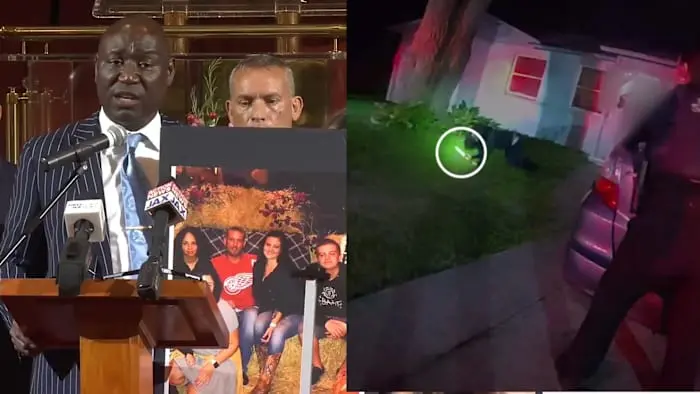
Renowned civil rights attorney Ben Crump, retained by Bennett’s grieving family, has forcefully condemned the officer’s actions, labeling the shooting as "horrific and unjustified." Crump and legal advocates argue that the responding officers possessed ample distance, time, and tactical alternatives to de-escalate the situation without resorting to lethal force against a distressed, self-identified victim of domestic abuse.
As the Jacksonville Sheriff’s Office faces mounting scrutiny and anticipates impending litigation, this case brings to the forefront critical questions regarding how law enforcement agencies across the United States assess threats, manage vulnerable individuals in crisis, and deploy non-lethal intervention strategies during high-stress encounters.
Detailed Chronology of Events
The Initial Call and Dispatch
The sequence of events that culminated in Asia Bennett’s death began at approximately 10:45 p.m. on a Tuesday evening. JSO deputies and officers were dispatched to a residential property located on Westdale Drive, near the intersection of Pine Bluff Drive, following a 911 call reporting a battery with injuries.
The emergency call was placed by a man who identified himself as Bennett’s romantic partner and boyfriend. According to initial police reports, the caller alleged that Bennett had physically battered him inside the residence. Upon arrival, responding officers made contact with the male caller outside the home. JSO officials later noted that the man exhibited "minor physical injuries" consistent with a domestic altercation.
During the initial debriefing between the male caller and Officer Erin Gaitten, the situation shifted dynamically. The caller informed the officer that Bennett was still inside the dwelling and was armed with a knife. As Officer Gaitten engaged with the reporting party, the front door of the home opened, and Bennett emerged into the yard.
The Confrontation and Escalation
Upon seeing Bennett exit the residence, Officer Gaitten observed that she was carrying multiple items, most notably a large butcher-style kitchen knife. Acting swiftly, Gaitten drew her service weapon, aimed it directly at Bennett, and issued loud, repeated verbal commands instructing her to drop all items in her hands.
Instead of complying immediately, an emotionally distraught Bennett confronted the officer, shouting allegations against her partner:
"He beat the s*** out of me!"
Officer Gaitten maintained her firearm training posture, continuing to demand that Bennett drop the knife and phone she was holding. Bennett, visibly agitated and overwhelmed, refused immediate compliance. Her emotional state was raw and desperate; she shouted profanities and expressed profound despair, explicitly challenging the officer:
"Alright, I don’t give a f***. Let’s do it. Go ahead, kill me! He just f***** did all of this s***. He beat the s*** out of me!"
According to JSO’s internal accounting and the body camera footage, Officer Gaitten maintained a spatial buffer of approximately 10 feet from Bennett. Despite Bennett reiterating pleas for her own death ("Kill me, go ahead"), Gaitten discharged her service weapon once, striking Bennett in the upper body and causing her to collapse onto the ground.
The Secondary Engagement
Following the initial gunshot, Bennett fell to the pavement, writhing in pain and continuing to voice her suicidal ideation, repeatedly stating, "I want to die."
As Officer Gaitten was joined by a second responding officer, identified as Officer Starling, both law enforcement personnel maintained their tactical positions. Bennett, severely injured and crawling on the ground, attempted to reposition herself. Moving from her stomach to her knees and elbows, she struggled against physical shock.
In the harrowing moments following the first shot, Bennett momentarily dropped the knife, pointed toward her male partner, and cried out, "He hit me!" However, she subsequently picked the knife back up while still on the ground, ignoring ongoing commands from the officers to relinquish the weapon so that emergency medical personnel could safely render aid.
As Bennett attempted to push herself up while still clutching the knife, Officer Gaitten fired a second time. The fatal round struck Bennett, ending her movement. Emergency medical protocols were subsequently initiated, and Bennett was transported rapidly to a nearby medical facility, where she was pronounced dead.
Supporting Context & Metrics
The Human Toll and Background
Asia Bennett’s death has devastated her family and friends, who paint a starkly different portrait of the 22-year-old than that of a volatile suspect. Standing roughly five feet tall and weighing approximately 110 pounds, Bennett was characterized by her mother, Crissy Duncan, as exceptionally gentle, soft-spoken, and inherently non-violent.
In interviews following the tragedy, Duncan expressed profound outrage, emphasizing that her daughter was actively suffering as a victim of domestic violence at the time authorities were called. Rather than receiving supportive intervention or protective custody from law enforcement, Duncan argues, her daughter was met with lethal force.
The Landscape of Domestic Violence Calls
The incident underscores the extreme volatility and inherent dangers associated with domestic disturbance calls for law enforcement officers nationwide. According to data compiled by organizations such as the National Law Enforcement Officers Memorial Fund (NLEOMF) and the Bureau of Justice Statistics (BJS), domestic violence calls consistently rank among the most perilous assignments for patrol officers, frequently involving volatile emotional states, unpredictable environments, and firearms or edged weapons.
Concurrently, criminal justice watchdogs and mental health advocates emphasize the statistical vulnerability of individuals experiencing acute psychological crises or trauma responses when interacting with armed police. Critics argue that traditional tactical responses—which prioritize immediate compliance and weapon retention—frequently exacerbate escalation when deployed against trauma victims, domestic abuse survivors, or individuals experiencing mental health emergencies.
Official Statements and Legal Perspectives
Ben Crump and the Legal Team’s Response
The legal representation for the Bennett family, spearheaded by nationally prominent civil rights attorney Ben Crump, has mounted a rigorous challenge against the official narrative put forth by the Jacksonville Sheriff’s Office. Following the public release of the body camera footage, Crump issued a searing critique of Officer Gaitten’s tactical decisions.
"She was 22 years old, 110 pounds, a domestic violence victim standing outside her home, and there was no reason to shoot her," Crump stated publicly. "Not once, and certainly not twice. That officer had distance. She had time. She had every option a trained law enforcement officer is supposed to reach for before the gun, and she reached for the gun anyway. Asia should be alive today, and her family deserves justice for losing her too soon."
Crump’s legal strategy centers on the concepts of proportionality and tactical patience. The legal team contends that because Bennett was maintaining distance and was not actively lunging or charging at the officer during the moments preceding the first shot, lethal force was entirely avoidable. Furthermore, the defense of the second shot—fired while Bennett was incapacitated, crawling on the ground, and severely wounded—remains a central point of contention in prospective civil litigation.
The Jacksonville Sheriff’s Office Position
The Jacksonville Sheriff’s Office has maintained that its personnel acted within the framework of departmental policy given the immediate, lethal threat posed by an armed individual refusing lawful commands. JSO officials emphasized that officers are trained to protect themselves and the public from edged weapons, which tactical manuals designate as lethal threats within close quarters.
In an official statement addressing the public release of the body camera footage, the agency noted:
"The Jacksonville Sheriff’s Office has shared as much information as possible given the ongoing investigation. Given anticipated litigation, the agency will provide no further comment."
The internal administrative review, alongside a parallel investigation conducted by state prosecutors, aims to determine whether Officer Gaitten’s actions adhered strictly to Florida statutes governing justifiable use of deadly force by law enforcement officers.
Future Outlook
As the dust settles on the initial public disclosures, the case involving Asia Bennett’s death is poised to enter a protracted and contentious legal phase. Several key developments will shape the trajectory of the narrative in the coming months:
- Independent Investigations and Prosecutorial Review: The State Attorney’s Office is tasked with reviewing all evidentiary materials, including comprehensive forensic reports, ballistic analyses, and the complete body camera footage, to determine if criminal charges are warranted against Officer Gaitten.
- Civil Litigation: Ben Crump and the Bennett family are widely expected to file a wrongful death lawsuit against the Jacksonville Sheriff’s Office and the City of Jacksonville, challenging institutional training standards regarding domestic violence response and the handling of individuals experiencing mental distress.
- Policy and Community Dialogue: The tragedy has re-energized local activism in Jacksonville regarding police accountability, transparency in the release of critical incident footage, and the potential integration of specialized crisis intervention teams (CIT) into routine domestic violence dispatches.
For the family and loved ones of Asia Bennett, the pursuit of accountability remains paramount. As community leaders demand systemic reforms to prevent future tragedies, the legacy of a 22-year-old domestic abuse victim serves as a solemn reminder of the delicate balance between officer safety, crisis de-escalation, and the preservation of human life.

0 Comments