

Executive Overview
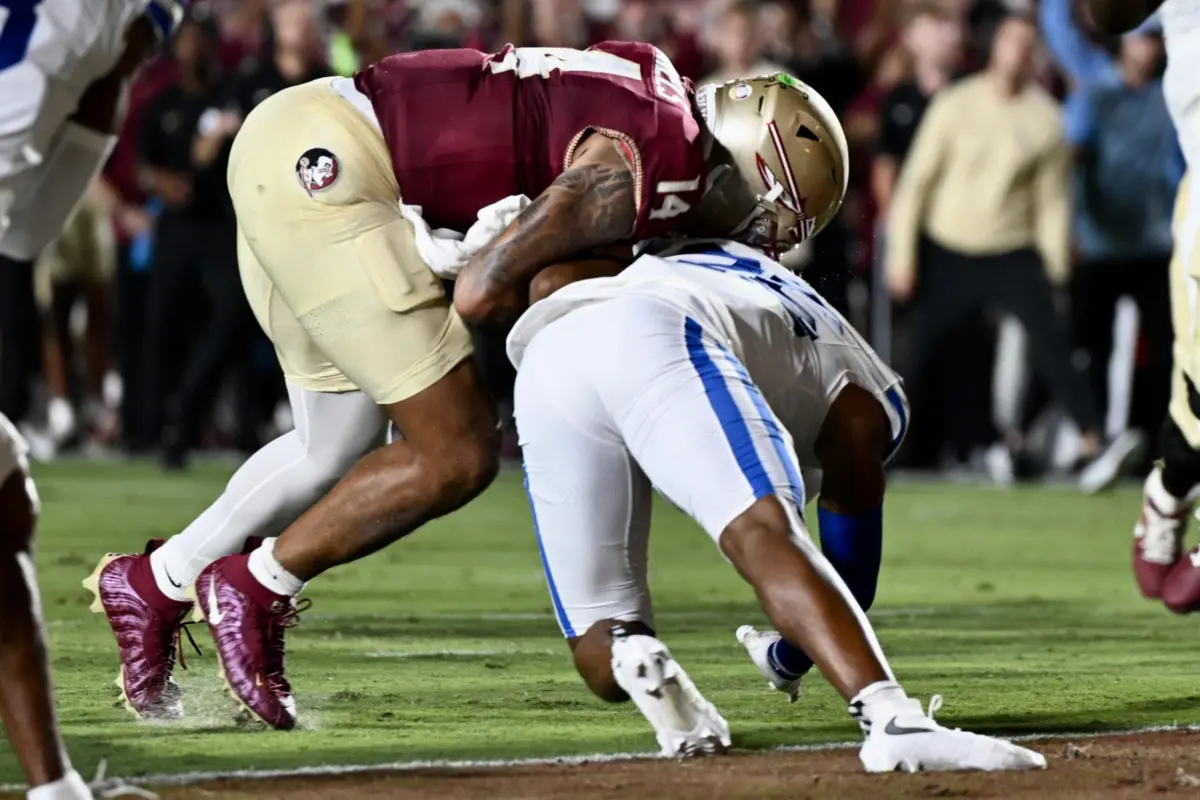
TALLAHASSEE, Fla. — The Florida State Seminoles entered Monday night’s conference matchup desperately searching for an identity, a spark, and, above all else, a desperately needed victory to salvage the trajectory of their season. Instead, what unfolded under the primetime lights was a familiar, haunting narrative of defensive vulnerability, offensive stagnation, and missed opportunities. Despite capitalizing on four crucial turnovers orchestrated by a gritty, opportunistic defense, the Seminoles ultimately fell short in a 27-24 defeat against the No. 19-ranked SMU Mustangs.
The loss deals a severe blow to a program already navigating turbulent waters. With this setback, Florida State drops its third consecutive Atlantic Coast Conference (ACC) opener—a stunning statistical indictment for a program accustomed to conference dominance. Furthermore, head coach Mike Norvell saw his overall tenure record in Tallahassee slip to 39-35, while his conference mark fell deeper into sub-par territory at 22-27.
While the final three-point margin suggests a nail-biting, down-to-the-wire struggle that could have swung either way, the underlying metrics paint a vastly different, more alarming picture. The Seminoles were thoroughly outgained, surrendering a staggering 585 yards of total offense while mustering a meager 324 yards of their own. Florida State’s secondary proved utterly incapable of containing the explosive SMU aerial assault, led by Mustangs quarterback Kevin Jennings, who put on a clinic with 430 yards and two touchdowns through the air.
As the dust settles on another deflating evening at Doak Campbell Stadium, the immediate questions surrounding Florida State football are existential. How does a team that forces four turnovers still manage to lose by a possession? Why does the offensive scheme continually bog down against high-caliber competition? And, most importantly, where does Norvell’s squad go from here during a much-needed bye week? This comprehensive breakdown explores the anatomy of the collapse, the statistical realities, the coaching implications, and the road ahead for a proud program desperately searching for answers.
Detailed Chronology: How the Game Was Won and Lost
First Half: A Defensive Front Buying Time
The contest kicked off with palpable tension, both teams understanding the high stakes attached to early-season conference positioning. Florida State’s defense, heavily scrutinized in recent weeks, made an immediate statement of intent. On SMU’s opening possession, the Seminoles’ front seven applied ferocious pressure, forcing a hurried throw that resulted in an interception deep in FSU territory. It was the first of several early gifts that the defense would hand the offense on a silver platter.
However, the recurring offensive woes of the Seminoles manifested immediately. Unable to establish a rhythm on the ground or protect the quarterback, FSU’s offense stalled, forcing a quick punt and failing to capitalize on the early turnover. This dynamic would define the opening two quarters: a Florida State defense bending, breaking, and occasionally making miraculous plays, only for the offense to give the ball right back or settle for low-yield drives.
SMU, adapting quickly to the early adversity, leaned heavily on the right arm of Kevin Jennings. The Mustangs quarterback began picking apart the FSU secondary with surgical precision, finding soft spots in zone coverage and exploiting man-to-man matchups. Despite throwing an interception and coughing up a fumble, Jennings remained unfazed. His ability to extend plays outside the pocket began to wear down an FSU defense that was forced to spend entirely too much time on the field.
The turning point of the first half arrived midway through the second quarter. Clinging to a narrow lead, SMU faced a third-and-long deep in its own territory. Instead of playing conservatively, the Mustangs dialed up a deep shot. Jennings uncorked a beautiful, spiral-bound missile that traveled nearly 50 yards in the air, connecting with his receiver for a 72-yard catch-and-run touchdown that stunned the home crowd and completely shifted the momentum of the game.
By halftime, SMU had accumulated a mountain of yardage, yet Florida State remained within striking distance solely due to three first-half turnovers forced by the defense. The scoreboard read 17-10 in favor of the visitors, but the statistical chasm between the two squads was already cavernous.
Second Half: The Dam Breaks
Trailing by a touchdown, Florida State needed an explosive start to the third quarter. Instead, the offense went three-and-out, telegraphing plays and failing to establish any semblance of an interior run game. The offensive line, porous all evening, allowed consistent pressure, rendering deep routes impossible to develop.
SMU capitalized immediately. Receiving the punt, the Mustangs orchestrated a methodical, soul-crushing drive that ate up nearly seven minutes of game clock. Jennings sliced through the FSU linebackers with quick slants and check-downs before capping the drive with a touchdown pass that extended the lead to two scores.
Yet, true to the chaotic nature of the evening, Florida State refused to quietly fade into the night. Trailing by 14 in the fourth quarter, the Seminoles’ defense forced their fourth turnover of the game—a red-zone fumble recovery that electrified the stadium. Galvanized by the defensive stop, the FSU offense finally strung together its most cohesive drive of the evening. Utilizing a blend of tempo and quick-hitting perimeter passes, the Seminoles punched the ball into the end zone, narrowing the deficit to 24-17.
The ensuing minutes featured a desperate, high-stakes chess match. SMU added a crucial field goal to push the lead to two possessions, 27-17, leaving FSU with precious little time on the clock. Florida State mounted a spirited, late-game touchdown drive to pull within three points at 27-24 with under two minutes remaining. However, needing a miracle on an onside kick, the Seminoles failed to secure the recovery, allowing SMU to run out the remaining clock and seal a hard-fought, richly deserved victory.
Supporting Context & Metrics: By the Numbers
To truly understand the depths of Florida State’s defeat, one must look beyond the final three-point margin and examine the underlying box score. The metrics tell the story of a team thoroughly dominated in every statistical phase outside of turnover generation.
+---------------------------+-------------------+-------------------+
| Metric                    | Florida State     | SMU Mustangs      |
+---------------------------+-------------------+-------------------+
| Total Offense             | 324 yards         | 585 yards         |
| Passing Yards             | 210 yards         | 430 yards         |
| Rushing Yards             | 114 yards         | 155 yards         |
| Turnovers Lost            | 1                 | 4                 |
| Time of Possession        | 25:12             | 34:48             |
| Third-Down Conversions    | 4 of 13 (30%)     | 9 of 16 (56%)     |
+---------------------------+-------------------+-------------------+
The 585-Yard Imbalance
Surrendering 585 yards of total offense is an alarming data point for any defensive coordinator, let alone one operating under the high-pressure expectations of a Power Four program. SMU’s offense operated with clinical efficiency, running 78 total plays compared to FSU’s 54. This massive disparity in play volume underscored a glaring issue: the Seminoles’ defense could not get off the field on third down. SMU converted 9 of their 16 third-down attempts (56%), repeatedly moving the chains through a combination of Jennings’ precise passing and balanced play-calling.
The Kevin Jennings Show
Quarterback Kevin Jennings put up video-game numbers against the FSU secondary, finishing the night with 430 passing yards and two touchdowns. His 72-yard touchdown pass stands as one of the most glaring defensive breakdowns of the ACC season thus far. FSU’s defensive backfield struggled immensely with communication, repeatedly leaving SMU receivers unaccounted for in space and failing to tackle effectively in the open field.
Offensive Anemia
While the defense surrendered nearly 600 yards, the FSU offense did its counterpart zero favors. Generating only 324 total yards, the unit looked disjointed, predictable, and devoid of explosive playmakers. The inability to establish a consistent rushing attack (averaging a modest yards-per-carry metric) forced the offense into predictable passing situations, where the offensive line promptly surrendered pressure. Converting just 4 of 13 third-down tries rendered sustained drives nearly impossible, keeping an already overworked defense chained to the field.
Official Statements & Staff Insights
Following the conclusion of the game, the Tomahawk Nation editorial and coaching staff convened to dissect the wreckage of the loss. The post-game autopsy revealed deep-seated concerns regarding team chemistry, scheme execution, and the immediate future of the program.
When assessing the turning point of the game, analysts overwhelmingly pointed to the explosive 72-yard touchdown pass in the second quarter. Up to that juncture, FSU’s defense had held firm against early pressure and forced timely turnovers. That single play, however, punctured the psychological armor of the team, allowing SMU to seize absolute control of the tempo and momentum.
Regarding whether a close three-point loss altered opinions on the team’s ceiling, the consensus was clear: No, the closeness of the score was largely illusory. While the final margin suggests a competitive battle, the statistical gulf between the two squads proved that FSU is fundamentally a tier below elite conference competition at this stage of the season. The four turnovers forced by the defense masked what was otherwise a systematic blowout in terms of yardage and time of possession.
When asked to identify standout performers, praise was sparse and heavily qualified. Defensively, a handful of front-seven players deserve credit for relentless effort, combining to force four crucial turnovers that kept FSU within arm’s reach. Offensively, individual execution was largely eclipsed by collective systemic failure, though a few wide receivers made commendable plays in garbage time to keep the scoreboard respectable.
The most concerning statistic of the night was universally cited as the 585 yards allowed to the SMU offense. In modern college football, surrendering that volume of yardage—particularly through the air—indicates profound structural flaws in coverage schemes, pass rush containment, and defensive backfield discipline.
Future Outlook: The Road Ahead During the Bye Week
As the final whistle blew in Tallahassee, the immediate reality for Florida State is stark. Sitting at an uncharacteristic crossroad, the program must utilize its upcoming bye week not merely as a period of physical recovery, but as an existential reckoning.
1. Rebuilding Offensive Identity
Mike Norvell and his offensive coaching staff face a monumental challenge during the bye week. The offensive line must be fundamentally reevaluated, blocking schemes adjusted to account for recurring pass-protection breakdowns, and play-calling streamlined to accentuate the natural strengths of the roster rather than forcing square pegs into round holes. Without a dependable rushing attack and an efficient passing game, the Seminoles will struggle immensely against the remainder of their conference schedule.
2. Patching the Secondary
Defensively, coordinator adjustments are urgently required. While forcing four turnovers is an encouraging metric of defensive resilience, giving up 430 passing yards to a single quarterback is utterly unsustainable. The secondary must return to fundamental tackling drills, zone-coverage communication, and disciplined eye-work. Opposing offensive coordinators have identified FSU’s defensive backfield as a primary vulnerability; until that unit proves it can lock down opposing wideouts, opponents will continue to air it out at will.
3. Psychological Recovery and Leadership
Perhaps the most critical task during the bye week is psychological. Losing three consecutive ACC openers is unprecedented territory for recent FSU history, and the burden of expectation weighs heavily on a locker room searching for confidence. Head coach Mike Norvell, now holding a 39-35 overall record in Tallahassee, must rally his leadership council, quiet the external noise, and foster an internal culture of accountability and resilience.
The margin for error has evaporated entirely. As Florida State steps away from the gridiron to lick its wounds during the bye week, the fanbase and administration alike will be watching closely to see what adjustments materialize when the Seminoles return to action. One thing is certain: the path back to ACC prominence is steeper and more arduous than anyone in Tallahassee anticipated when the season kicked off.

0 Comments