

Executive Overview
For generations, the Southern sporting tradition has been anchored to the land. From the pine-scented quail plantations of South Georgia to the storied duck-hunting timber holes of Arkansas, the architecture of the hunt has traditionally been rooted in deep topsoil, built of heavy timber and brick to withstand the elements while offering rustic luxury to weary sportsmen.
Enter Fowl Play.
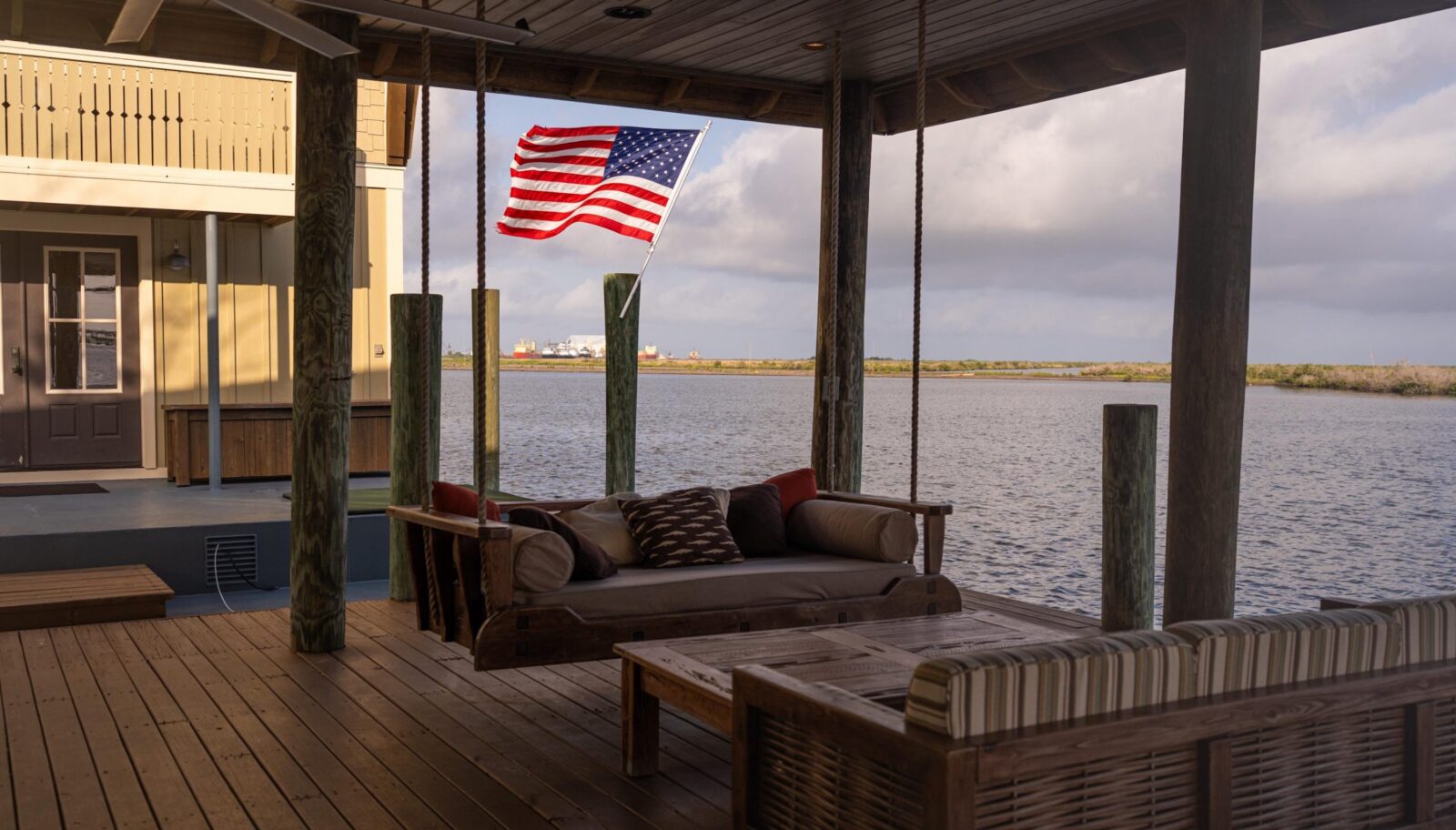
Moored at the intersection of architectural innovation and high-end outdoor recreation, this waterbound marvel challenges everything the market thought it knew about sporting real estate. Measuring an impressive 155 feet in length and offering 4,600 square feet of meticulously crafted living space, Fowl Play is not merely a camp—it is a self-contained, floating luxury estate designed to chase fish and fowl across the dynamic waterways of southern Louisiana.
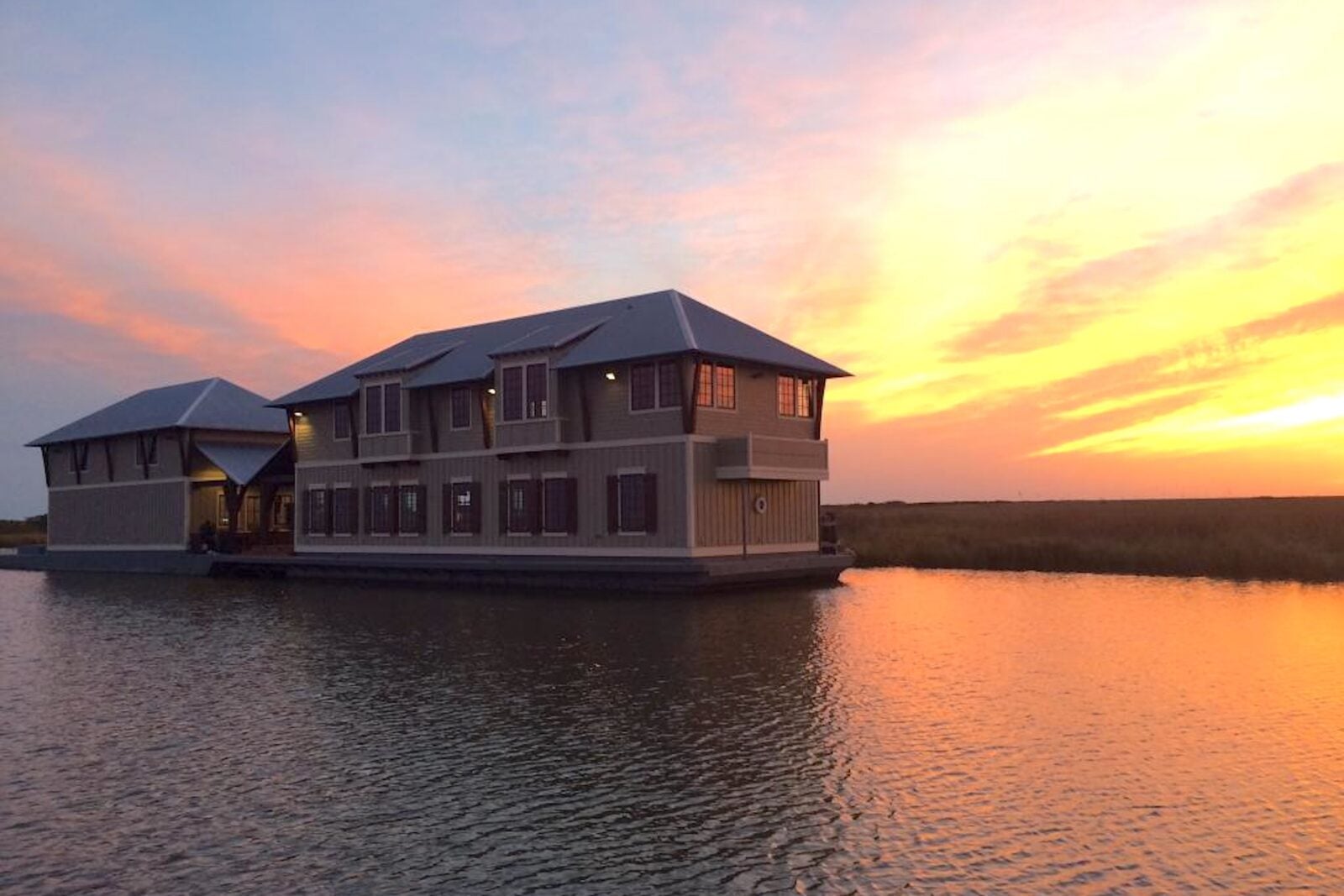
Constructed over a decade ago by Birmingham, Alabama-based architect Tom Adams and partner Adam Gerndt for owner Tony Nelson, the compound sits atop two independent spud barges. It is capable of sleeping a staggering 22 people across its dual-structure layout. Now, this engineering and design tour de force has been listed for sale at $5.5 million through Jon Kohler & Associates, complete with an exclusive 6,000-acre hunting lease and a permanent, gated home base in Port Fourchon.
For the high-net-worth sportsman who refuses to choose between world-class deep-sea fishing and prime marsh waterfowl hunting, Fowl Play represents the ultimate turnkey acquisition: a floating mothership that shifts with the seasons, marrying the rugged demands of the Louisiana delta with the refined comforts of a five-star boutique hotel.
Detailed Chronology: From Concept to Coastal Icon
The genesis of Fowl Play reads less like a traditional residential construction project and more like the commissioning of a luxury mega-yacht. More than a decade ago, owner Tony Nelson envisioned a sporting retreat that could bypass the rigid limitations of coastal real estate. Traditional hunting camps in the fragile marshlands of southern Louisiana are perpetually vulnerable to shifting coastlines, encroaching tides, and the relentless battering of tropical weather systems. Nelson’s solution was radical: build a camp that could simply move out of harm’s way, or better yet, follow the migration patterns of the wildlife itself.
Nelson enlisted the architectural firm of Tom Adams and Adam Gerndt in Birmingham, Alabama, tasking them with translating high-end residential design onto a marine-engineered platform. The structural realities were immense. The design team had to balance human comfort—vaulted ceilings, expansive open-plan kitchens, and private staterooms—with the heavy-duty demands of a commercial-grade watercraft.
The resulting design placed the compound atop two independent spud barges, providing exceptional stability even in rough coastal waters. The layout was divided into two distinct floating entities: a main camp dedicated to sleeping, dining, and leisure, and a crew camp engineered for logistics, featuring a heavy-duty mud room, tackle rooms, game-prep spaces, and vital utility management.
Over the ensuing years, Fowl Play evolved from an ambitious architectural blueprint into a legendary fixture of the Mississippi Flyway. It established a seamless seasonal rhythm. During the scorching spring and summer months, the lodge docks at its permanent, deeded home base in Port Fourchon, Louisiana. Sheltered by grand live oak trees and equipped with a private saltwater pool, the property serves as a luxurious launchpad for inshore speckled trout and redfish excursions, as well as rapid access to world-class blue-water fishing in the Gulf of Mexico for yellowfin tuna and marlin.
As autumn cools the air and the first cold fronts sweep down the continent, the rhythm shifts. A contracted tugboat hooks up to the compound, towing the massive structure deep into the labyrinthine marshes of southern Louisiana. There, it anchors in the heart of a 6,000-acre exclusive hunting lease, transforming overnight into a floating basecamp for pursuing mallards, pintails, wigeon, and black ducks.
Supporting Context & Metrics: Engineering, Amenities, and Operations
To truly understand the value proposition of Fowl Play’s $5.5 million price tag, one must look beneath the rustic heart pine flooring and examine the staggering logistics required to maintain a floating palace in the middle of a Louisiana marsh.
Scale and Specifications
- Total Length: 155 feet
- Living Space: 4,600 square feet
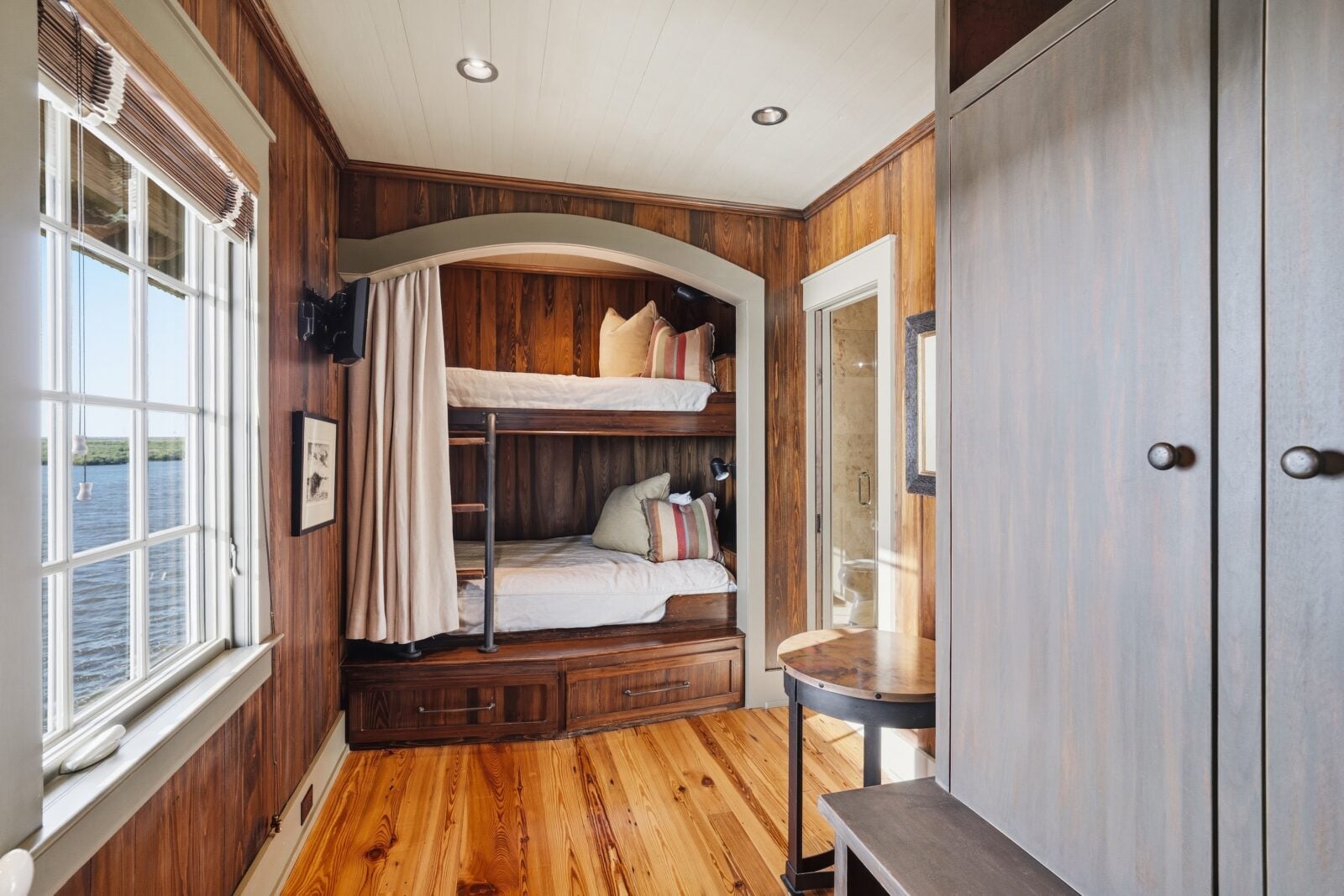
- Sleeping Capacity: 22 guests total (featuring two private indoor staterooms and an expansive eight-bed bunk room in the main camp).
- Foundation: Two independent commercial-grade spud barges.
- Home Base: Port Fourchon, Louisiana (deeded, gated waterfront lot featuring a saltwater pool and mature live oaks).
- Hunting Lease: 6,000 acres of exclusive marshland in the heart of the Mississippi Flyway (conveying with the property purchase).
Self-Sustaining Infrastructure
Operating far off the electrical grid requires industrial-grade redundancy. Fowl Play is engineered to be entirely self-sustaining for extended periods without shore power or municipal services:
- Power Generation: Dual on-board commercial generators provide uninterrupted electricity for climate control, refrigeration, and lighting.
- Freshwater Storage: An internal tank capacity holding 30,000 gallons of fresh water ensures that guests enjoy endless hot showers and fully operational culinary facilities deep in the backcountry.
- Storage Systems: Extensive cold and dry storage facilities allow the lodge to provision for weeks at a time, minimizing the need for supply runs during peak hunting and fishing windows.
Interior Design and Craftsmanship
While its engineering is marine-grade, the interior aesthetic is undeniably Southern vernacular at its most refined:
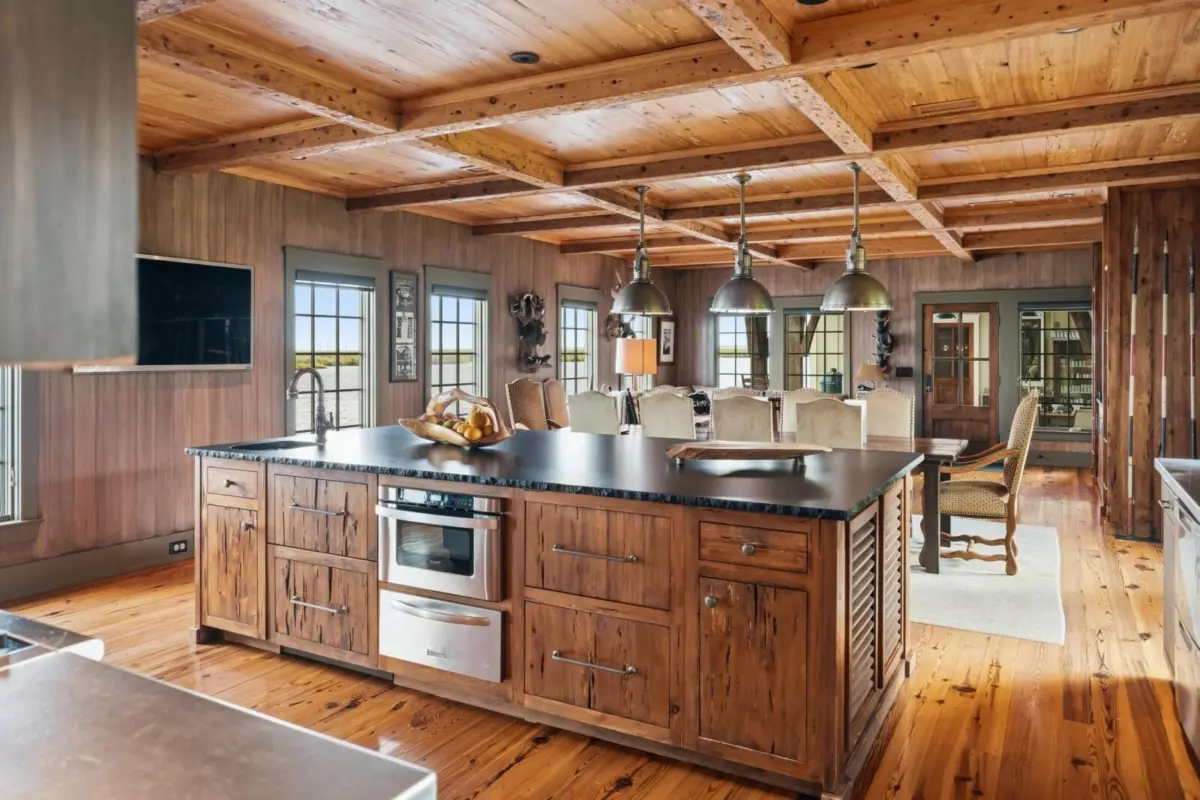
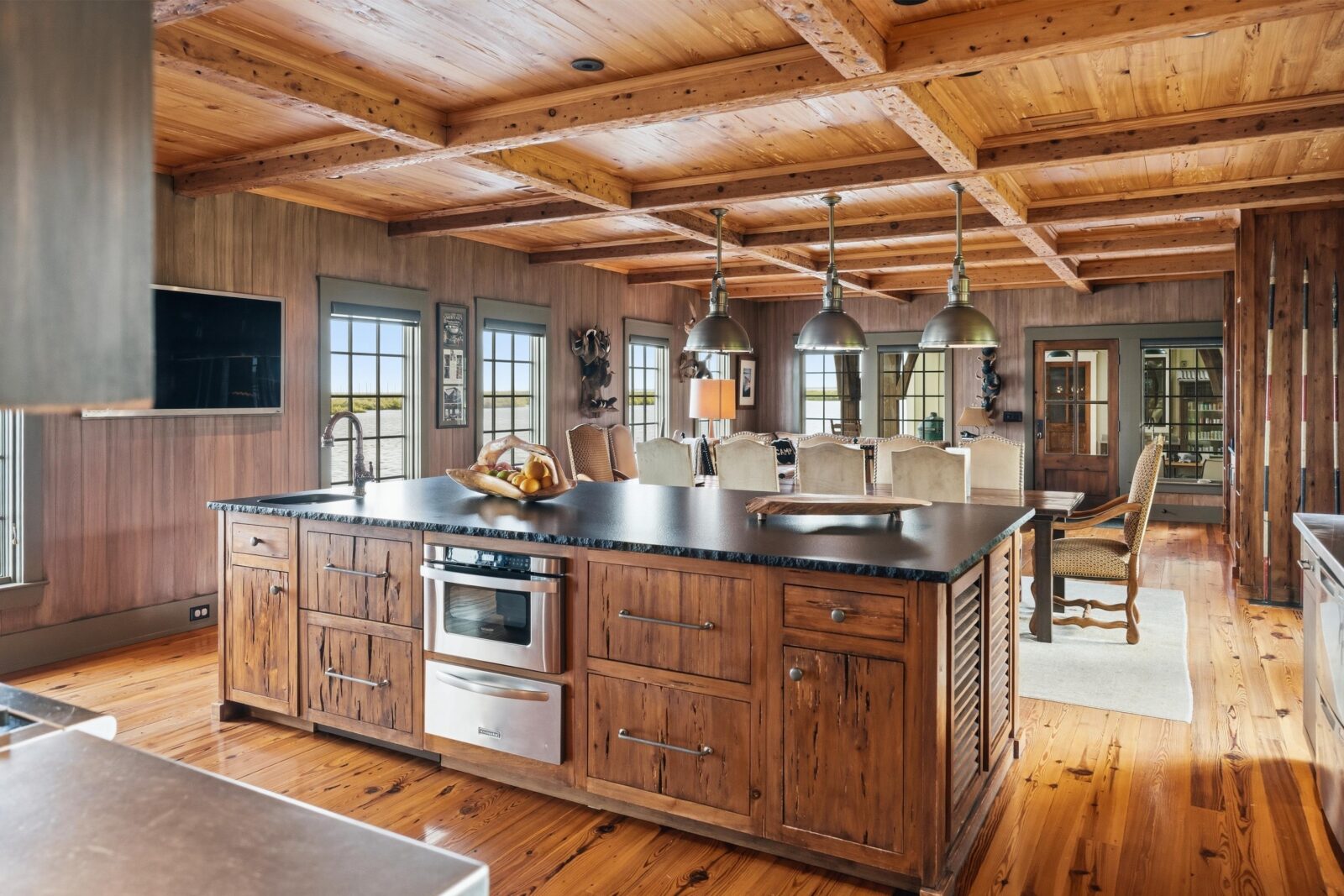
- The Kitchen: The open-plan culinary space features rich heart pine floors, striking pecky cypress ceilings, and top-tier professional Wolf appliances capable of preparing multi-course game dinners for a full house.
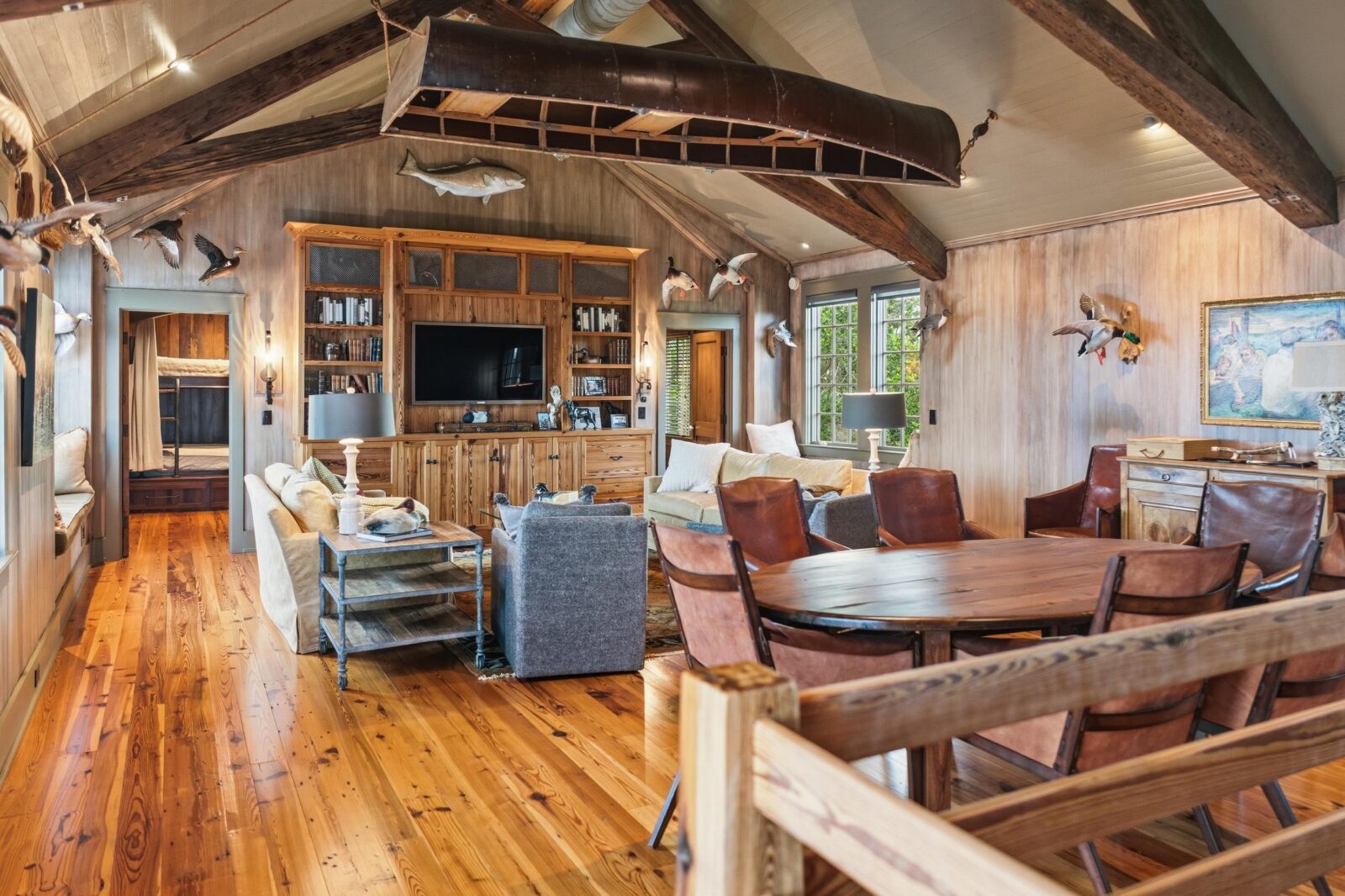
- The Accommodations: Vaulted ceilings and integrated entertainment systems elevate the two primary indoor staterooms, while the custom bunk room offers private, cozy nooks complete with individual reading lights and storage.
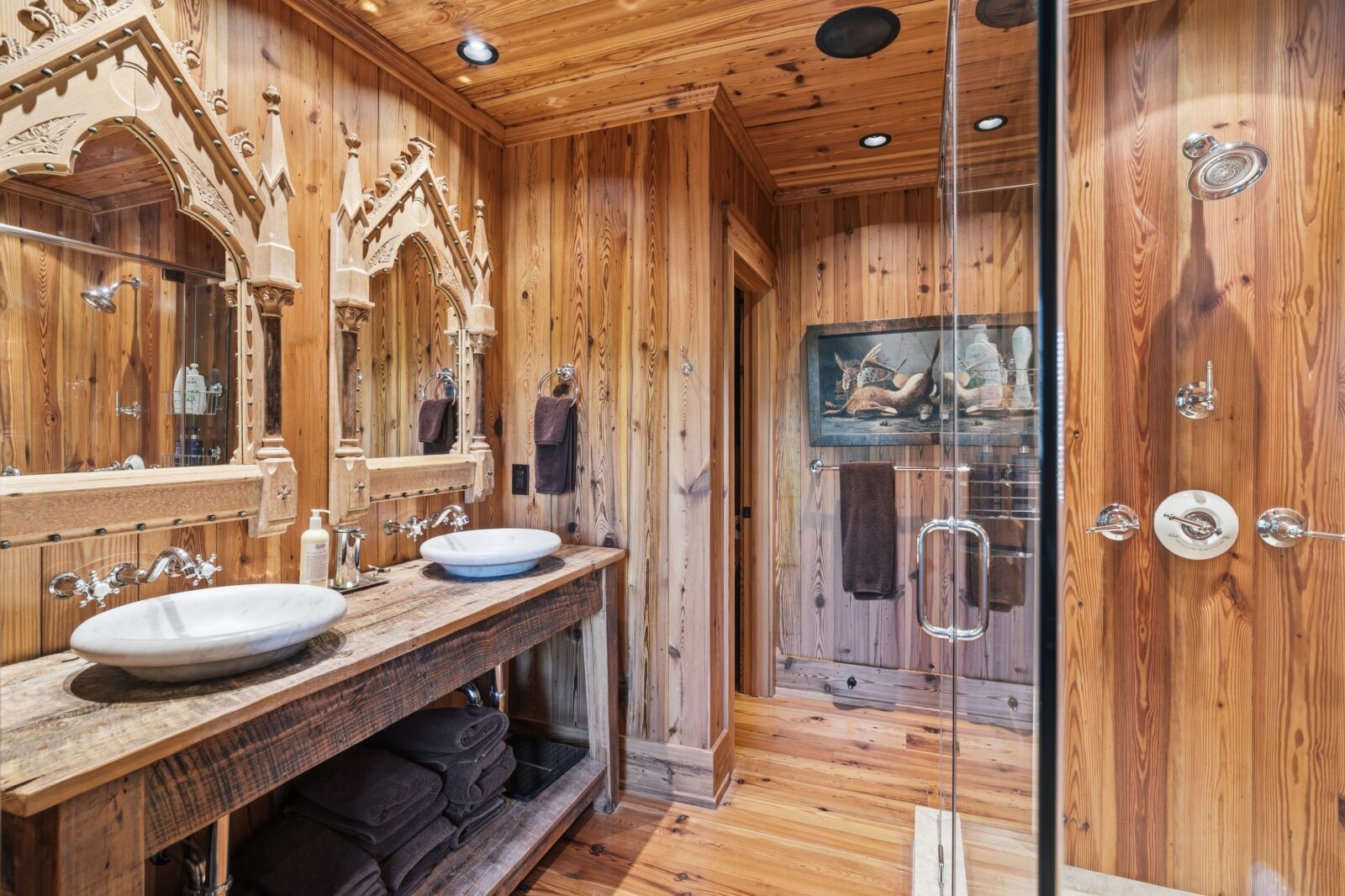
- The Bathrooms: Hand-carved double vanities paired with high-end marble sinks bring urban luxury to the delta.
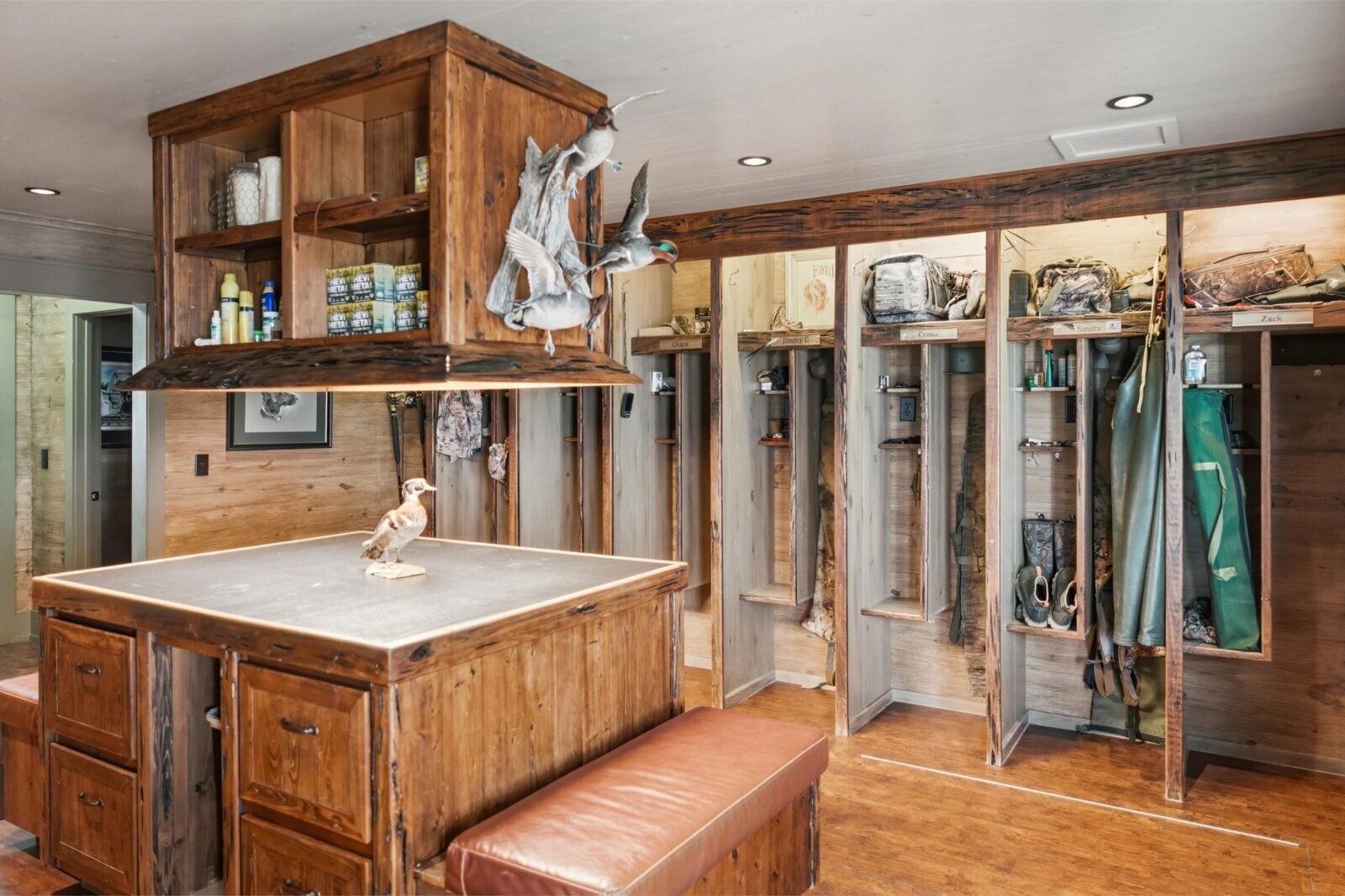
- The Mud Room: Tailored specifically for the sporting lifestyle, the transition space features personalized lockers for every guest, ensuring that muddy waders, wet camo, and high-end shotgun cases have an organized home before stepping into the living areas.
Official Statements & Industry Perspective
In the hyper-exclusive realm of high-end sporting real estate, brokers frequently encounter exceptional properties, but few possess the novelty and operational sophistication of Fowl Play.
Tim James, Jr., a broker with real estate firm Jon Kohler & Associates, has spent his career handling premier recreational tracts across the American South. Yet, even by his elevated standards, this listing stands apart.
"I’m used to seeing the best of the best when it comes to recreation," James remarks. "Most places have great hunting or great fishing, but this has both. It’s one of the coolest deals I’ve ever seen."
The appeal, according to James, lies not just in the hardware, but in the software—specifically, the turnkey nature of the offering. High-net-worth buyers increasingly seek assets that offer immediate enjoyment without the administrative friction of staffing, maintenance, and logistical planning.
"When someone comes to buy this, there’s truly nothing they need to do," James explains, emphasizing that the purchase includes an established operational framework. "There’s a full-time manager already in place who cares for the boat, plus chefs, hunting guides, helpers. Everything is lined up."
This seamless transition of staff is a critical selling point. Managing a 155-foot waterbound compound in dynamic coastal environments requires specialized maritime knowledge, local ecological expertise, and culinary polish. By keeping the existing crew intact, the incoming owner steps into a functioning, frictionless hospitality ecosystem from day one.
Future Outlook: The Evolution of Mobile Sporting Real Estate
As the market for luxury recreational real estate continues to evolve, properties like Fowl Play offer a fascinating glimpse into the future of high-end leisure. Traditional fixed-location hunting camps are increasingly susceptible to changing environmental regulations, shifting land ownership patterns, and the unpredictable impacts of climate change on coastal wetlands.
By decoupling luxury accommodation from the mainland, Fowl Play introduces a paradigm of ecological adaptability. If environmental conditions shift, or if a sportsman desires a change of scenery within the vast delta waterways, the camp can simply untie its lines and relocate. This mobility represents the ultimate luxury in modern conservation and recreation: freedom without compromise.
Furthermore, the inclusion of the 6,000-acre exclusive hunting lease anchors the property’s long-term utility. In regions where prime marshland access is tightly guarded and rarely changes hands, acquiring a turnkey floating lodge coupled with a generational hunting lease is an exceedingly rare market event.
For a buyer seeking anonymity, unparalleled access to both the elite duck hunting of the Mississippi Flyway and the world-class pelagic fisheries of the Gulf of Mexico, Fowl Play is positioned in a league of its own. As the listing gains traction among elite collectors of sporting properties, it remains to be seen who will next take the helm of this remarkable floating estate—and where they will choose to drop anchor when the autumn migration begins.

0 Comments