
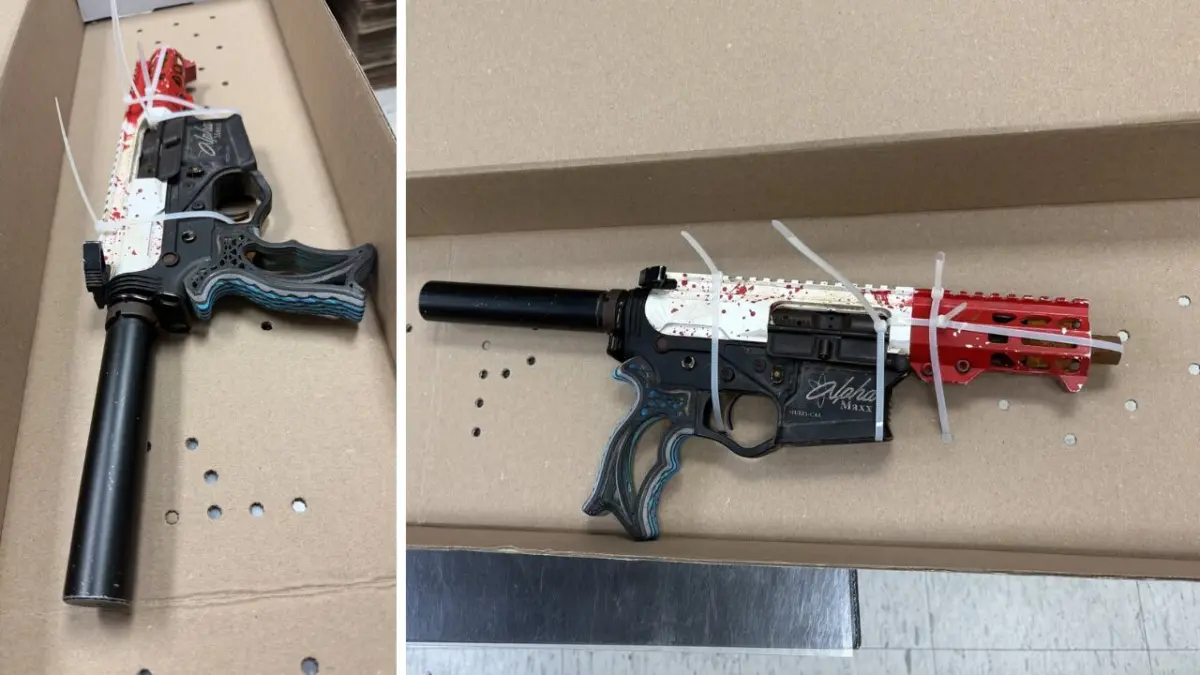

COLUMBIA, S.C. — A routine Tuesday morning school bus route in Richland County turned into a critical security incident when officials discovered a six-year-old student in possession of a loaded, high-powered firearm. The discovery, made by a school resource officer before classes officially began, has ignited urgent discussions surrounding child safety, municipal firearm storage laws, and the persistent vulnerabilities inherent in student transportation networks.
Authorities with the Richland County Sheriff’s Department (RCSD) swiftly intervened, securing the weapon and arresting the child’s mother. The incident has since drawn widespread condemnation from local officials and advocacy groups alike, highlighting the catastrophic risks posed by unsecured firearms within residential settings accessible to young children.
Executive Overview
The unfolding of events on Tuesday, August 18, 2026, began shortly after dawn in the capital region of South Carolina. According to investigators, a six-year-old child attending JP Thomas Elementary School managed to acquire a loaded AR-style pistol from their home, transport it onto a crowded school bus, and bring it onto school grounds.
The crisis was averted due to the vigilance of school safety personnel. A school resource officer (SRO) assigned to JP Thomas Elementary was summoned at approximately 7:30 a.m. following urgent reports that a young student was carrying a deadly weapon. The SRO successfully confiscated the firearm without incident, ensuring that no students or staff were physically harmed.
Following the immediate containment of the threat, law enforcement turned their attention to the origin of the weapon. Investigators determined that the firearm had been kept in a manner that allowed unhindered access by a minor. The child’s mother, identified as 35-year-old Destar Hall, was subsequently called to the school, where she was taken into custody by sheriff’s deputies.
Hall has been formally charged with unlawful conduct toward a child—a serious criminal offense under South Carolina law designed to penalize parents or guardians whose gross negligence places minors in mortal danger. She was subsequently transported to the Alvin S. Glenn Detention Center, where she remains held pending a formal bond hearing.
Subsequent forensic disclosures by the Richland County Sheriff’s Department escalated public alarm: the weapon was not a standard handgun, but rather an AR-style pistol chambered for .556 rounds—a military-derived platform capable of inflicting catastrophic damage. The revelation that such a lethal weapon was easily accessible to a child barely old enough to enter the first grade has triggered intense scrutiny regarding household firearm security protocols across the state.
Detailed Chronology of Events
7:00 A.M. – 7:15 A.M.: The Morning Commute
The sequence of events commenced during the typical morning pickup window for Richland County school buses. Families across Columbia were sending their children off to school, a routine process replicated across thousands of neighborhoods nationwide.
According to preliminary investigative findings, the six-year-old student at JP Thomas Elementary School boarded the designated school bus carrying a concealed or semi-concealed item that would soon prove to be a loaded firearm. While the exact details of how the child transported the weapon past family members or neighbors remain part of the ongoing police inquiry, the child successfully boarded the vehicle alongside peers who were entirely unaware of the lethal hazard traveling alongside them.
School buses represent a uniquely vulnerable environment for security breaches. Unlike traditional school buildings equipped with stationary metal detectors, secure entry points, and roving security personnel, school buses are confined mobile spaces operated typically by a single driver whose primary focus must remain on navigating traffic safely. The presence of a loaded firearm in such an unsupervised, cramped environment presented an extreme, unmitigated hazard to every minor on board.
7:30 A.M.: Intervention at JP Thomas Elementary School
The situation shifted from a latent hazard to an active crisis upon the bus’s arrival at JP Thomas Elementary School. Swift reporting by watchful observers—whether a bus driver, an observant classmate, or school staff awaiting the drop-off—alerted campus administration to the presence of the weapon.
At approximately 7:30 a.m., the school resource officer (SRO) assigned to the campus was immediately dispatched to intervene. Operating under standardized active-threat protocols, the SRO intercepted the student and secured the weapon. Investigators confirmed that the firearm was loaded at the time of seizure, meaning a single accidental trigger pull by a curious six-year-old could have resulted in fatal consequences inside the bus or school courtyard.
The SRO’s rapid response neutralized the immediate physical danger, transitioning the incident from an active emergency response to a criminal and child-welfare investigation.
Morning Hours: Investigation and Maternal Arrest
With the firearm secured, school administrators and deputies launched a dual investigation to determine how the six-year-old obtained the weapon and to identify the responsible adult.
Richland County Sheriff’s Department detectives quickly traced the ownership and storage history of the firearm. Forensic examination of the weapon revealed it to be an AR pistol loaded with .556-caliber ammunition. Investigators visited the primary residence associated with the child and concluded that the firearm had been left unsecured, allowing the minor unmonitored access.
Prompted by law enforcement, Destar Hall was summoned to JP Thomas Elementary School under the pretense of addressing a school-related matter involving her child. Upon her arrival, she was confronted by sheriff’s deputies, placed under arrest, and read her rights.
Processing and Detention
Following her arrest at the school, Hall was transported to the Richland County Sheriff’s Department processing facility for booking. She was formally charged with one count of unlawful conduct toward a child, a statutory violation reflecting severe parental negligence.
By Tuesday afternoon, Hall was transferred to the Alvin S. Glenn Detention Center in Columbia, S.C. As of press time, she is being held at the facility while awaiting her initial appearance before a magistrate judge for a formal bond hearing.
Supporting Context & Metrics: The Crisis of Unsecured Firearms
The harrowing incident at JP Thomas Elementary School is far from an isolated occurrence; rather, it represents a troubling statistical trend unfolding across American classrooms and neighborhoods. Public health researchers, criminologists, and child advocacy organizations track the intersection of unsecured firearms and minors with mounting alarm.
The Prevalence of Unsecured Firearms in American Homes
According to data compiled by organizations such as the Giffords Law Center to Prevent Gun Violence and the Harvard Injury Control Research Center, millions of American children live in homes with unlocked, loaded firearms.
- National Estimates: Research indicates that approximately 4.6 million children in the United States live in homes with at least one loaded, unlocked firearm.
- Accessibility: Studies consistently show that a significant percentage of children under the age of ten know where their parents store firearms, and many handle them when adults are absent, often within minutes of discovering them.
- The AR-Platform Danger: The weapon recovered in the Richland County incident—an AR-style pistol—represents a distinct legal and tactical category. Combining the modularity and high-velocity ammunition (.556 NATO) of a rifle with the compact framing of a handgun, AR pistols have surged in popularity among civilian gun owners. However, their light trigger pulls and lack of traditional shoulder stocks can make them particularly hazardous when handled by individuals lacking the physical strength and cognitive maturity required for safe operation, let alone a six-year-old child.
Child Access Prevention (CAP) Laws in South Carolina
The legal framework governing how adults store firearms around minors varies dramatically from state to state. South Carolina law addresses child endangerment primarily through statutes penalizing reckless conduct rather than mandating strict, universal safe-storage requirements.
Under South Carolina criminal code, charges such as unlawful conduct toward a child (the charge levied against Destar Hall) are typically applied when a caregiver’s intentional act or gross negligence places a child at unreasonable risk of physical harm or death.
Legal scholars note that while prosecutors frequently utilize general child endangerment statutes in cases involving unsecured weapons, the absence of stringent, proactive safe-storage legislation—often referred to as Child Access Prevention (CAP) laws—limits the state’s ability to deter negligent storage proactively before a tragedy or near-miss occurs.
- CAP Law Impact: States with robust CAP laws—which hold gun owners criminally liable if a minor gains access to an unsecured firearm—report lower rates of accidental shootings and unauthorized school-weapon recoveries.
- Community Toll: Law enforcement agencies across South Carolina have repeatedly issued public service announcements urging gun owners to utilize biometric safes, trigger locks, and dedicated lockboxes, emphasizing that the burden of responsible ownership extends far beyond personal defense.
Official Statements and Institutional Response
The discovery of a loaded military-style weapon on a primary school bus prompted swift public statements from educational leaders, law enforcement officials, and child advocacy groups.
Richland County Sheriff’s Department
The Richland County Sheriff’s Department spearheaded both the tactical response and the subsequent criminal investigation. In official briefings released to regional media outlets, department spokespersons emphasized the gravity of the hazard averted by the school resource officer.
"The potential for tragedy in this scenario cannot be overstated," a representative for the RCSD stated during a media briefing. "A six-year-old child lacks the cognitive development, emotional maturity, and physical capability to safely handle any firearm, let alone a high-powered AR pistol loaded with live rounds. This incident serves as a stark, sobering reminder to every gun owner in our community: securing your firearms is not merely a suggestion; it is a legal and moral obligation that saves lives."
Sheriff’s investigators reiterated that the department will continue to pursue criminal charges against adults who fail to store their weapons securely, signaling a zero-tolerance policy toward negligence that exposes minors to lethal hazards.
Richland School District One / JP Thomas Elementary School
Administrators at JP Thomas Elementary School, operating under Richland School District One, moved quickly to communicate with parents and reassure the broader school community following the Tuesday morning disruption.
In an urgent notification sent to families of enrolled students, school principal and district administrators detailed the timeline of the intervention while maintaining student privacy rights. The communication praised the prompt actions of the campus school resource officer and reinforced the district’s strict zero-tolerance policies regarding weapons on school property and district transportation.
- Enhanced Vigilance: District officials announced that transportation staff would receive additional briefings regarding safety protocols and observation techniques during morning boarding procedures.
- Counseling Services: Recognizing the potential psychological impact on young students who may have witnessed or heard about the weapon on the bus, district counselors were made available on-site at JP Thomas Elementary to provide support services to students and staff.
"The safety and security of our students remains our absolute highest priority," district administrators noted in a joint statement. "We commend our staff and our law enforcement partners at the Richland County Sheriff’s Department for their swift, decisive action in resolving this matter before anyone could be harmed. We urge all families to partner with us in reinforcing safety at home."
Future Outlook: Legal Proceedings and Community Impact
As the investigation transitions from immediate emergency response to judicial processing, several critical milestones remain on the horizon for the legal case, the family, and the broader Richland County community.
Upcoming Legal Proceedings for Destar Hall
Destar Hall remains detained at the Alvin S. Glenn Detention Center in Columbia, awaiting her formal bond hearing.
- The Magistrate’s Decision: During the upcoming bond hearing, a magistrate judge will evaluate the severity of the charge—unlawful conduct toward a child—alongside Hall’s criminal history, ties to the community, and flight risk to determine whether she will be released pretrial, and under what conditions.
- Potential Penalties: Under South Carolina penal statutes, a conviction for unlawful conduct toward a child can carry substantial prison time, particularly if the court finds that the negligence resulted in an extreme, life-threatening hazard. Legal analysts suggest that the prosecution will likely emphasize the lethality of the recovered AR pistol to underscore the gravity of the defendant’s alleged failure in supervision and storage.
- Child Protective Services Involvement: Beyond the criminal proceedings, state child welfare agencies are expected to conduct a comprehensive dependency and safety evaluation regarding the welfare of the minor child and any other dependents residing in the household.
Broader Implications for School Safety and Gun Storage Advocacy
The incident at JP Thomas Elementary School is expected to reverberate far beyond the courtroom, serving as a focal point in ongoing debates concerning local school security budgets and statewide firearm legislation.
- Transportation Security Debates: The breach has reignited discussions among school board members regarding whether technological enhancements—such as expanded security screenings or enhanced surveillance systems—should be integrated into district transportation fleets, though financial and logistical hurdles remain significant.
- Public Awareness Campaigns: Local advocacy groups and law enforcement agencies are ramping up educational outreach focused on responsible gun ownership. Campaigns emphasizing the utilization of gun locks, biometric vaults, and ammunition separation are slated to expand across Richland County in the coming academic term.
Ultimately, the Tuesday morning incident at JP Thomas Elementary stands as a cautionary narrative regarding the intersection of domestic firearm storage and child safety. While disaster was averted through the vigilance of a single school resource officer, the event underscores the profound responsibility incumbent upon gun owners to ensure that lethal weapons remain strictly out of the reach of children.

0 Comments