

Executive Overview
COLUMBIA, S.C. — In a deeply troubling incident that has reignited urgent conversations surrounding child safety and firearm storage laws, a South Carolina mother was arrested and booked into custody after her six-year-old child brought a loaded, high-powered firearm onto a public school bus. The alarming discovery, made on a Tuesday morning, prompted an immediate emergency response from school district personnel and local law enforcement, preventing what could have easily culminated in an irreversible tragedy.
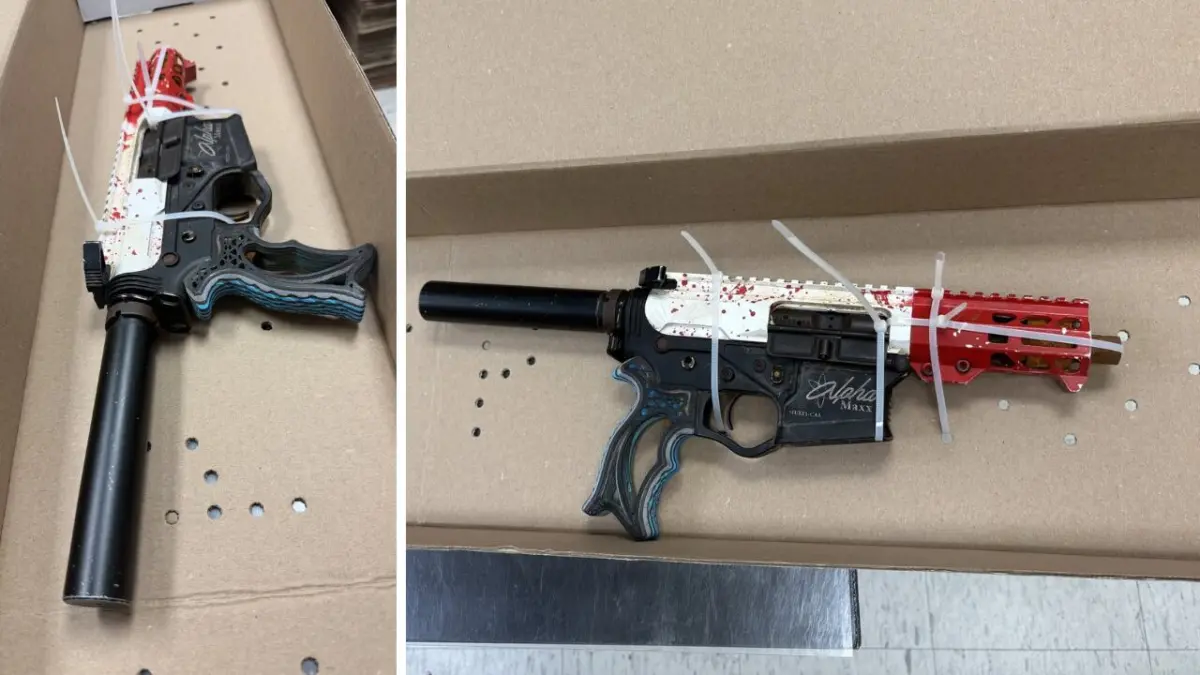
According to the Richland County Sheriff’s Department, the young student—enrolled at JP Thomas Elementary School in Columbia—was found to be in possession of a fully loaded AR-style pistol complete with live .556-caliber rounds. School resource officers and bus monitors intervened swiftly upon learning of the weapon, securing the firearm before any physical harm could come to the child or their peers. The incident has since sent shockwaves through the local community, amplifying long-standing anxieties regarding how easily accessible lethal weapons remain within residential settings where young children reside.
Following a brief preliminary investigation, deputies detained the child’s mother, identified as 35-year-old Destar Hall. Authorities concluded that the firearm had been kept unsecured within the family home, enabling the first-grader to easily access, retrieve, and transport a weapon capable of mass devastation into a communal, public environment. Hall was subsequently charged with unlawful conduct toward a child and transported to the Alvin S. Glenn Detention Center, where she awaits a formal bond hearing.
This comprehensive report examines the detailed chronology of the morning’s harrowing events, analyzes the broader public safety crisis surrounding unsecured firearms in households with minors, outlines the specific legal ramifications under South Carolina law, and explores the preventive community measures being evaluated in the wake of this near-miss disaster.
Detailed Chronology of Events
The sequence of events unfolded rapidly during the early morning hours, disrupting what should have been a routine transit for elementary school students across Richland County.
The Morning Commute and Discovery
At approximately 7:30 a.m., as the morning bus route for JP Thomas Elementary School was underway, a red flag was raised regarding the contents of a young student’s belongings. While details regarding how the weapon was initially spotted remain protected due to the age of the minor involved, prompt observations by individuals on the bus alerted school administration to an immediate, high-level threat.
Rather than waiting until the bus arrived at the campus gates—or allowing the child to disembark into the general student population—immediate protocols were enacted. Upon arrival at JP Thomas Elementary School, a designated school resource officer (SRO) was immediately notified and dispatched to intercept the vehicle.
SRO Intervention and Weapon Securing
The SRO intercepted the student and safely confiscated the weapon without incident. Law enforcement officials later confirmed that the firearm was not a standard handgun, but rather an AR-style pistol chambered for .556 rounds—a military-grade platform possessing high muzzle velocity and significant destructive capability. More critically, the weapon was fully loaded, meaning a simple fumble, dropped bag, or curious touch by a six-year-old could have triggered a catastrophic discharge inside a confined space filled with children.
Investigation and Mother’s Arrest
With the immediate physical threat neutralized and the weapon secured in police custody, detectives shifted their focus toward how a first-grader managed to acquire such a device. Investigators quickly established contact with the child’s guardian, summoning Destar Hall to the school campus.
Upon interviewing Hall and assessing the living conditions from which the child departed, Richland County Sheriff’s Department investigators determined that the firearm had been left entirely unsecured inside the family’s residence. The lack of a trigger lock, lockbox, or safe allowed a six-year-old child to easily locate and pack the weapon alongside standard school supplies.
At the conclusion of the preliminary on-scene investigation, deputies placed Hall under arrest. She was transported away from the school grounds and booked into the Alvin S. Glenn Detention Center, where she faces state charges relating to child endangerment and criminal negligence.
Supporting Context & Metrics: The Crisis of Unsecured Firearms and Child Safety
The alarming incident at JP Thomas Elementary School is far from an isolated occurrence; rather, it is part of a persistent, nationwide public health and safety epidemic involving unsecured firearms and minors.
The Scope of Unsecured Firearms in American Homes
Public health researchers and law enforcement data consistently demonstrate that millions of American children live in households where firearms are stored improperly. According to data compiled by organizations such as the Giffords Law Center to Prevent Gun Violence and the Everytown for Gun Safety Support Fund, an estimated 4.6 million children in the United States live in homes with at least one loaded, unlocked firearm.
When weapons are left within reach of children, the consequences are frequently devastating. Unintentional shootings by children—often referred to in public safety studies as "family fire"—account for hundreds of injuries and deaths annually. While many of these incidents occur inside the home, cases involving children bringing firearms onto school grounds, into classrooms, or onto public transportation networks represent a uniquely terrifying subset of the crisis, turning ordinary community spaces into potential zones of mass trauma.
The Nature of the Weapon: AR-Style Pistols in Civilian Hands
The specific weapon recovered from the six-year-old—an AR-style pistol loaded with .556 ammunition—warrants distinct analytical attention. AR-style platforms are civilian adaptations of military weapon systems. When configured as pistols (possessing stabilizing braces or shortened barrels rather than traditional shoulder stocks), they retain the lethal mechanics, high-velocity rounds, and rapid-firing potential of rifles while offering increased maneuverability.
Law enforcement experts note that the weight, recoil characteristics, and operational mechanics of an AR-style pistol make them exceptionally dangerous when handled by untrained individuals, let alone a six-year-old child whose cognitive development, fine motor skills, and understanding of consequence are in their absolute infancy. The presence of such a weapon on a school bus highlights a profound breakdown in responsible gun ownership practices.
Legal Landscapes and Child Endangerment
South Carolina, like many states, maintains strict parameters regarding the welfare of minors, though debates persist regarding the specificity of mandatory safe-storage statutes. Under South Carolina law, prosecutors have increasingly utilized charges such as unlawful conduct toward a child when parents or guardians display a reckless disregard for a minor’s safety by leaving lethal instrumentalities accessible.
Legal analysts point out that while the Second Amendment protects the right of law-abiding citizens to keep and bear arms for self-defense, that right carries an inherent, non-negotiable duty of care. When a firearm is left unattended and accessible to a child, the legal threshold for criminal negligence is frequently met, exposing the responsible adult to felony prosecution regardless of whether a discharge or injury ultimately occurred.
Official Statements and Institutional Response
In the wake of the arrest, local authorities, school district administrators, and child advocacy groups released statements addressing the gravity of the incident and outlining the path forward.
Richland County Sheriff’s Department
The Richland County Sheriff’s Department emphasized the averted tragedy while delivering a stern warning to gun owners regarding responsible storage. In official briefings, department representatives underscored that law enforcement will pursue accountability whenever negligence places children in mortal danger.
Sheriff’s officials reiterated that gun owners bear the ultimate responsibility for ensuring that firearms are rendered inaccessible to minors through the use of dedicated gun safes, lockboxes, and trigger locks. They praised the swift, professional actions of the school resource officer and bus transportation staff, noting that proactive intervention prevented a catastrophic outcome.
Richland County School District Officials
Administrators representing the local school district issued communications to parents and guardians within the JP Thomas Elementary community. The district stressed that student safety remains an absolute, non-negotiable priority, outlining the multi-layered security measures—including bus monitoring, vigilant staff training, and the strategic deployment of school resource officers—that enabled the rapid detection of the weapon.
Furthermore, district officials announced plans to partner with local law enforcement and community organizations to host educational workshops focusing on safe gun storage, aiming to bridge the gap between community gun ownership and child safety awareness.
Future Outlook: Prevention, Policy, and Community Action
As the legal proceedings against Destar Hall advance through the Richland County judicial system, community stakeholders are turning their focus toward long-term prevention strategies to ensure a similar incident is never repeated.
The Push for Enhanced Safe Storage Education
Public safety advocates argue that punitive measures alone—while legally necessary—are insufficient to solve the root problem of child firearm access. A comprehensive future outlook requires robust, community-wide public awareness campaigns that normalize safe storage practices. Initiatives such as the national "Be SMART" framework, which encourages adults to secure all guns in homes and vehicles, model responsible behavior, and talk about the risks of unsecured firearms, are gaining traction across South Carolina school districts.
Local police departments and community groups are increasingly distributing free cable locks and promoting safe storage programs, aiming to remove financial or logistical barriers that might otherwise prevent gun owners from properly securing their firearms.
Legal and Legislative Horizons
At the legislative level, lawmakers in South Carolina continue to face mounting pressure from advocacy groups to enact explicit, statewide safe-storage mandates (often referred to as "Carly’s Law" or similar child-access prevention statutes). Proponents argue that clear statutory requirements holding adults criminally liable for leaving accessible firearms where minors can obtain them provide prosecutors with sharper legal tools and send an unambiguous message regarding community standards of safety.
Critics of such mandates, however, often raise concerns regarding enforcement mechanisms and the protection of constitutional rights, ensuring that legislative debates over gun storage will remain contentious in the state capital.
Conclusion
The recovery of a loaded AR-style pistol from a six-year-old child on a Columbia school bus serves as a chilling wake-up call for communities nationwide. It exposes the devastating intersection of parental negligence and the proliferation of high-powered weaponry within residential spaces. While the immediate crisis was averted through the vigilance of school personnel and law enforcement, the incident leaves an indelible mark on the community—serving as a stark, urgent reminder that the true cost of unsecured firearms is measured in the lives of our most vulnerable children. As legal proceedings unfold for Destar Hall, the broader society must grapple with the collective responsibility required to safeguard the spaces where children learn, grow, and travel.

0 Comments