

Executive Overview
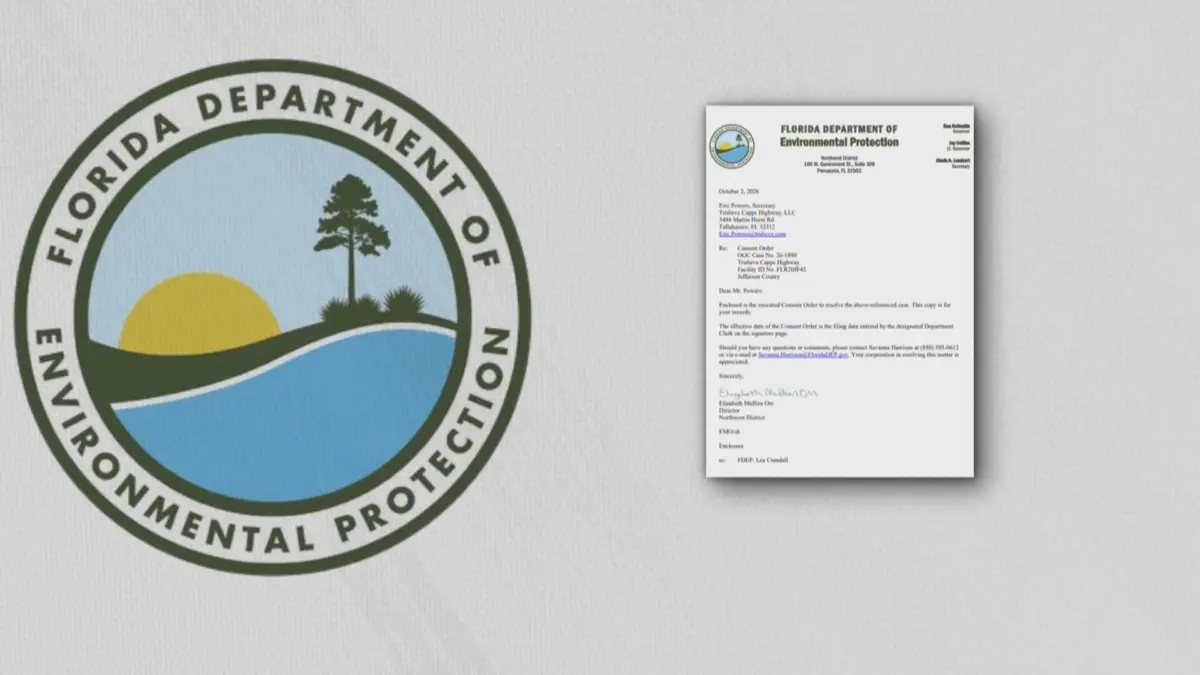
MONTICELLO, Fla. — Months of mounting pressure from local residents, grassroots environmental advocates, and concerned community stakeholders in Jefferson County have culminated in a decisive regulatory enforcement action. The Florida Department of Environmental Protection (FDEP) has officially entered into a formal consent order with major cannabis operator Trulieve, directly targeting unauthorized wastewater management practices and agricultural runoff at the company’s cultivation and processing facility near Monticello.
The agreement, obtained by local media outlets on Monday, marks a significant turning point in an ongoing saga that has strained relations between the rural community and one of the state’s largest medical marijuana providers. Local frustrations first boiled over in early spring, when residents living near the facility began noticing troubling water discoloration, unusual odors, and potential environmental degradation infiltrating their surrounding properties. These grievances transformed into an organized, vocal local movement that leveraged public demonstrations, formal petitions, direct appeals to state leadership, and shareholder engagement to demand strict governmental oversight.
Under the newly minted consent order, Trulieve faces a financial and operational reckoning. The company is required to pay an $80,000 regulatory settlement or, alternatively, invest $120,000 into a pre-approved, state-monitored environmental enhancement project. Beyond financial penalties, the legally binding document imposes strict operational deadlines: Trulieve must submit a comprehensive irrigation and containment plan within 30 days to permanently halt unauthorized runoff onto neighboring lands, followed by a full environmental permit application within 120 days to overhaul its overall wastewater management infrastructure.
While state regulators and corporate representatives have framed the agreement as a collaborative path forward emphasizing site improvements and regulatory compliance, local residents are celebrating the development as a major grassroots triumph. For the citizens of Jefferson County, the consent order validates months of relentless advocacy and highlights the vital role community watchdog groups play in holding corporate agricultural operations accountable for environmental stewardship.
Detailed Chronology of the Jefferson County Water Dispute
The journey toward accountability in Jefferson County was neither swift nor straightforward. It required a sustained, multi-month campaign driven by residents determined to protect their rural ecosystem, property values, and personal quality of life from the impacts of industrial-scale agricultural runoff.
April 2026: The Initial Outcry
The conflict crystallized in early April 2026, when residents living in proximity to the Trulieve cannabis cultivation facility began voicing alarm over deteriorating water conditions and persistent, unusual odors emanating from the property. Homeowners reported unsettling changes in nearby drainage areas and expressed deep concerns regarding the potential contamination of local water tables. At the time, residents highlighted a glaring lack of transparency regarding how the industrial facility managed the vast quantities of water required for large-scale cannabis cultivation. What began as informal neighborhood discussions quickly transformed into organized community meetings, where citizens gathered to document environmental anomalies, share photographic evidence of pooling water, and strategize on how to bring their concerns to local and state authorities.
June 2026: Escalation and Grassroots Mobilization
As weeks passed without a visible response from regulatory agencies, the grassroots resistance intensified its tactics. In June, a dedicated coalition of Jefferson County residents and concerned Trulieve shareholders took the fight directly to the state’s highest offices. The group dispatched a formal, urgent letter to the Governor of Florida, demanding immediate state intervention to investigate water quality degradation and odor pollution tied to the facility.
Simultaneously, the coalition filed formal Public Records Requests with the FDEP, demanding a complete historical record of all regulatory proceedings, inspections, permits, and communications associated with the Monticello site. This strategic move ensured that state regulators knew the community was actively monitoring their oversight and would not accept bureaucratic inaction or silence. The pressure placed on corporate leadership during public shareholder forums further elevated the dispute, transforming a localized rural grievance into a headline-making corporate governance issue.
August 2026: The FDEP Steps In and Enforcement Down
The relentless pressure campaign bore fruit when state environmental investigators substantiated residents’ claims. According to the administrative documents reviewed by reporters, FDEP inspectors confirmed that the Trulieve facility had been actively spraying industrial wastewater onto its outdoor lawns and open grounds. More critically, the investigation revealed that a portion of this untreated or partially treated wastewater had migrated beyond the legal boundary perimeter of the facility. Because Trulieve lacked the specific, active permits required by the state to discharge or redirect wastewater outside its designated operational footprint, these off-site movements constituted a clear violation of Florida environmental statutes.
The culmination of these findings resulted in the formal consent order finalized and released on Monday, bringing a temporary sense of relief and vindication to the community that had sounded the alarm months prior.
Supporting Context & Metrics: Unpacking the Consent Order
The consent order agreed upon by the FDEP and Trulieve contains specific legal, financial, and logistical requirements designed to rectify past regulatory failures and prevent future off-site contamination.
Financial and Project Options
At the center of the enforcement action is a structured compliance penalty designed to incentivize environmental remediation over simple fine payments:
- The Baseline Fine: Trulieve is assessed an $80,000 civil penalty for operating without the necessary permits and allowing wastewater to migrate beyond its property lines.
- The Environmental Alternative: In lieu of paying the direct cash fine to the state, the consent order grants Trulieve the option to fully fund and execute a $120,000 environmental enhancement project. This project must receive prior written approval from the FDEP to ensure it provides tangible ecological benefits to the affected local ecosystem.
Operational Mandates and Deadlines
Financial penalties, while significant, are secondary to the operational reforms mandated by the state. The consent order establishes a strict timeline for corrective actions:
- 30-Day Irrigation Plan: Within one month of the order’s execution, Trulieve must draft and submit a detailed, engineered irrigation plan for FDEP approval. This plan must incorporate advanced containment and distribution controls to guarantee that no wastewater spills, pools, or drifts onto adjacent private properties or public rights-of-way.
- 120-Day Permitting Application: Within four months, the company is legally required to submit a comprehensive permit application addressing all facility wastewater discharges. This forces Trulieve to bring its infrastructure into full compliance with state environmental protection standards, replacing ad-hoc water management practices with a thoroughly vetted, legally authorized system.
The Broader Environmental Stakes in the Big Bend
The region known as Florida’s "Big Bend"—where the Florida panhandle curves into the peninsula—is characterized by its rich ecological diversity, extensive agricultural heritage, and delicate hydrological features, including the Floridan Aquifer. Because the soil and geological formations in this part of the state are uniquely porous, industrial and agricultural practices carry inherent risks for subterranean water resources. For Jefferson County residents, safeguarding local water tables is not merely a matter of aesthetic comfort or odor control; it is a vital necessity for protecting drinking water supplies, local agriculture, livestock health, and the pristine natural beauty that defines the region.
Official Statements and Community Reactions
Reactions to the release of the consent order reflect a stark contrast between corporate crisis management narratives and the profound relief felt by local grassroots advocates.
The Community Perspective: A Hard-Fought Victory
On social media platforms, community message boards, and neighborhood networks across Jefferson County, Monday’s news was met with an outpouring of validation and celebration. Residents who had spent the spring and summer documenting runoff, trading notes on water odors, and drafting letters to state officials took to digital town squares to declare the consent order a major "victory for the community."
Many residents emphasized that without the collective mobilization of ordinary citizens—refusing to be intimidated by corporate legal teams or ignored by distant bureaucrats—the environmental violations likely would have continued unchecked. For the people of Monticello, the enforcement action stands as proof that persistent civic engagement can effectively check corporate overreach and compel government agencies to enforce environmental laws.
Trulieve’s Official Corporate Response
In an official statement provided to regional media, corporate representatives for Trulieve sought to emphasize their commitment to environmental compliance and ongoing cooperation with state regulators:
"Trulieve worked together with the Florida Department of Environmental Protection to reach this agreement that allows environmental site improvements in lieu of a fine. We look forward to working with the department through the permitting and approval process. Trulieve takes compliance very seriously and remains committed to operating responsibly."
While the statement highlights the collaborative nature of the final agreement and frames the investment as a proactive choice toward site improvement, it also underscores the company’s desire to move past the public relations fallout generated by the spring and summer protests. By opting for the $120,000 environmental project over the straightforward $80,000 fine, Trulieve aims to project corporate responsibility while addressing the physical infrastructure flaws identified by state inspectors.
Future Outlook: Accountability and Long-Term Vigilance
As the ink dries on the FDEP consent order, the residents of Jefferson County are turning their attention from reactive protesting to proactive, long-term monitoring. While the agreement provides a clear roadmap for remediation, local advocates stress that true success will depend entirely on rigorous enforcement and transparent execution over the coming months.
Monitoring the 30-Day and 120-Day Benchmarks
All eyes will be on the FDEP and Trulieve as the first major deadline approaches. Within 30 days, the company’s newly proposed irrigation and containment plan must be submitted for public and regulatory scrutiny. Neighbors living near the facility intend to keep a close watch on outdoor operations to verify whether wastewater spraying ceases immediately and whether construction or modification work begins in accordance with state guidelines.
Furthermore, the 120-day window for the formal wastewater permit application will serve as a critical test of Trulieve’s long-term operational viability at the Monticello site. Environmental groups have indicated they plan to request public review of the permit application once filed, ensuring that community voices remain part of the evaluation process rather than being sidelined by closed-door administrative approvals.
A Blueprint for Rural-Corporate Relations
The Jefferson County controversy serves as a cautionary tale—and a potential blueprint—for other rural communities across Florida and the broader United States experiencing the rapid industrialization of agricultural sectors, including the burgeoning legal cannabis market. As agricultural operations scale up to meet commercial demands, rural infrastructure is frequently tested or overwhelmed.
The successful mobilization of Jefferson County residents demonstrates that while corporations possess immense legal and financial resources, well-organized grassroots coalitions armed with public records laws, persistent media outreach, and direct political pressure can successfully demand environmental justice. For Monticello, the road to total ecological restoration is just beginning, but Monday’s consent order ensures that the path forward will be paved with legal accountability, mandatory oversight, and an empowered community refusing to look the other way.

0 Comments