

Executive Overview
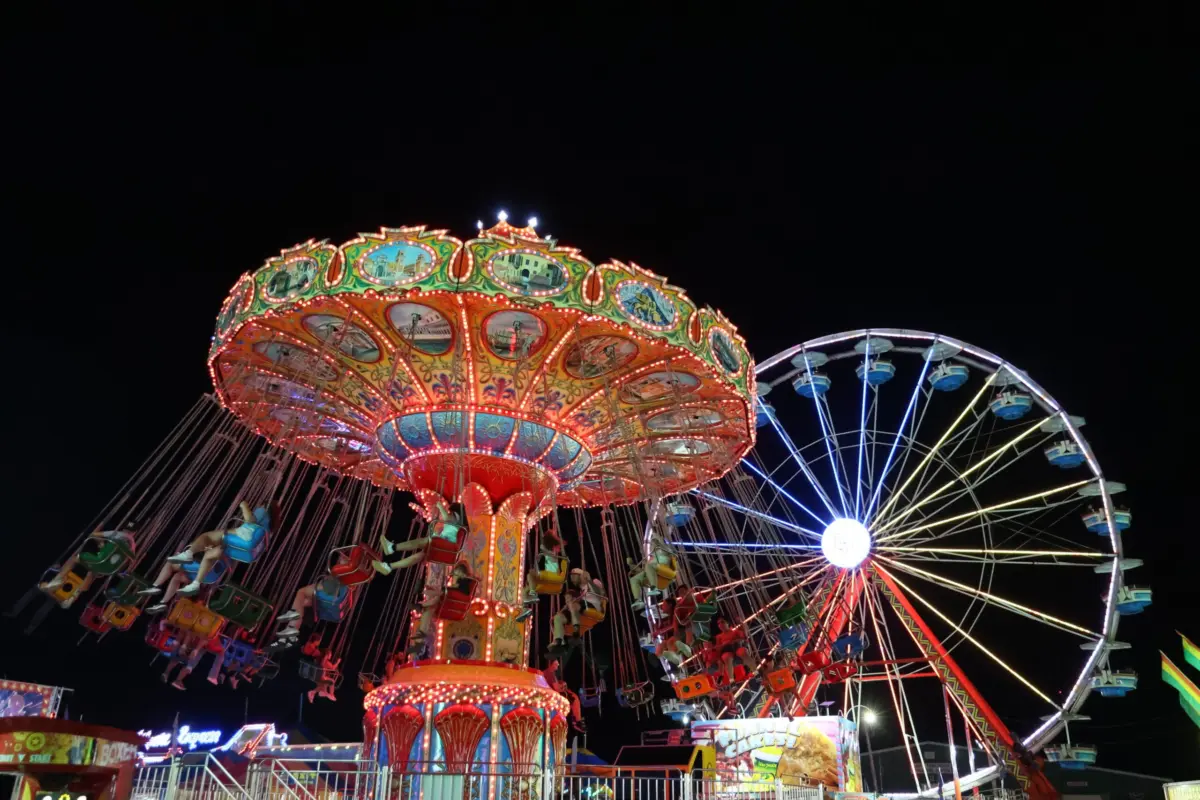
LEBANON, Tenn. — A festive summer evening at the Wilson County–Tennessee State Fair abruptly turned into a scene of concern on Wednesday night when a popular amusement ride suffered a sudden mechanical malfunction. The incident, which unfolded at the state’s largest agricultural and entertainment exposition, involved the "Wave Swinger"—a traditional, high-flying swing ride operated by carnival vendor Reithoffer Shows.
According to emergency response officials, the ride experienced an unexpected disruption in its operational cycle, causing it to stop abruptly while airborne. As the rotating swings descended during the halt, a number of riders collided with the safety fence surrounding the perimeter of the attraction. The mishap resulted in immediate chaos on the midway, prompting a swift, coordinated response from on-site emergency medical personnel, local first responders, and state regulators.
In the wake of the incident, nine individuals were evaluated for injuries on the fairgrounds. Four of the injured patrons required transport to a local medical facility for further evaluation and treatment. Fortunately, local emergency management officials confirmed that none of the sustained injuries were life-threatening.
The Tennessee Department of Labor and Workforce Development (TDLWD) acted swiftly, issuing an immediate cease-and-desist order to halt the operation of the Wave Swinger indefinitely. The ride will remain closed while regulatory bodies, third-party safety inspectors, and the equipment manufacturer investigate the root cause of the malfunction. This incident has once again cast a spotlight on amusement park safety, the rigorous protocols required for traveling carnival equipment, and the multi-layered oversight designed to protect fairgoers across the United States.
Detailed Chronology of the Incident
The sequence of events on Wednesday night highlights both the unpredictability of mechanical ride failures and the preparedness of the emergency infrastructure established at major public gatherings.
The Malfunction Unfolds
The incident occurred during peak evening hours at the Wilson County–Tennessee State Fairgrounds in Lebanon, Tennessee. The Wave Swinger—a classic fairground attraction featuring suspended seats that lift and rotate outward at high speeds—was carrying a full load of passengers.
Witnesses and official statements indicate that the ride was in motion when it experienced a sudden loss of normal operating rhythm. According to Reithoffer Shows, the ride’s mechanism experienced an unexpected stop. As the rotating structure began its descent to ground level, the dynamic swing of the suspended chairs caused several riders to drift outward and collide with the metal security fence perimeter enclosing the attraction.
Immediate On-Site Response
Because of the large crowds attending the state’s premier fair, multi-agency emergency personnel were already strategically positioned throughout the grounds. The Wilson County Emergency Management Agency (EMA), alongside medical professionals from Ascension Saint Thomas, responded to the midway within minutes of the distress call.
Rather than waiting for municipal ambulances to navigate crowded fair traffic, responders utilized the fair’s newly established on-site medical facility, situated directly adjacent to the amusement ride sector.
"Response was immediate and all guests were provided professional medical attention," a fair spokesperson noted in an official statement. "They were taken to our new on-site medical facility adjacent to the amusement rides and received care immediately from staff by Wilson County Emergency Management Agency and Ascension Saint Thomas professionals."
Of the nine individuals who were evaluated by medical personnel on site, four presented with injuries necessitating transport to an off-site hospital for comprehensive diagnostics and care. Emergency management officials later confirmed that all four hospitalized patients suffered non-life-threatening injuries, and several were discharged later that evening following observation.
Supporting Context & Metrics: Safety, Regulation, and Equipment History
The incident at the Wilson County–Tennessee State Fair has drawn intense scrutiny toward the regulatory framework governing traveling carnivals, the maintenance history of the ride in question, and the unique challenges of overseeing temporary amusement attractions.
Regulatory Oversight at Tennessee’s Largest Fair
The Tennessee Department of Labor and Workforce Development maintains an active oversight presence at the Wilson County–Tennessee State Fair due to its status as the largest event of its kind in the state. The TDLWD’s Amusement Device Unit deploys inspectors to remain on-site throughout the duration of the fair, ensuring continuous compliance with state amusement safety mandates.
State officials emphasized that this permanent on-site presence was instrumental in minimizing response times. While state regulators do not perform hands-on accident investigations or routine mechanical maintenance checks themselves, their inspectors are empowered to enforce immediate operational shutdowns when safety protocols are compromised or unexpected incidents occur.
Inspection History and Recent Upgrades
According to data released by the TDLWD, Reithoffer Shows holds an active annual operating permit that covers a total of 57 individual amusement devices deployed across its circuit.
Crucially, records show that the Wave Swinger involved in the incident had undergone a third-party safety inspection just one day prior to the fair’s official opening, on August 12. However, state officials revealed a critical detail regarding recent modifications to the ride: prior to that August 12 assessment, the Wave Swinger had a brand-new computer system and a newly installed motor device fitted onto the machinery.
Following Wednesday night’s malfunction, the third-party inspector who cleared the ride advised the state that the equipment manufacturer must formally review whether these newly integrated computer and motor components negatively affected the device’s operational functionality and safety margins.
The Inspection vs. Regulatory Divide
A point of clarification emerged in the hours following the incident regarding the division of labor in amusement ride safety. Reithoffer Shows released a statement on Thursday morning asserting that "a state inspector is now examining the amusement attraction and, at this time, has found no abnormality with the ride."
However, the TDLWD quickly clarified its operational scope to correct any public misunderstandings about how ride assessments are conducted in Tennessee:
"The Amusement Device Unit does not conduct accident investigations. Inspections and assessments are performed by qualified third-party inspectors. The state’s role is to oversee the process, review the required documentation, and determine whether a device meets the operational requirements."
This distinction underscores the reliance of state governments on certified private inspectors and equipment manufacturers to diagnose complex mechanical and software failures on traveling carnival rides.
Official Statements and Stakeholder Reactions
As news of the incident spread across local and regional media outlets, key stakeholders—including the fair administration, the ride operator, and state agencies—released official communications detailing their roles, responses, and commitments to public safety.
The Wilson County–Tennessee State Fair Administration
Fair organizers moved quickly to reassure the public that patron safety remains their highest priority. In an email statement to local media, a fair spokesperson emphasized the effectiveness of the emergency infrastructure implemented for the 2026 event.
"The safety and well-being of our fairgoers is always our top priority," the spokesperson said. "The swift and coordinated response by the Wilson County Emergency Management Agency, Ascension Saint Thomas medical professionals, and our on-site staff ensured that everyone involved received immediate, high-quality care. We are grateful for their professionalism and are fully cooperating with state authorities and Reithoffer Shows as they investigate the cause of this incident."
Reithoffer Shows
As the owner and operator of the Wave Swinger, Reithoffer Shows issued clarifying remarks regarding the physical mechanics of the accident. The company confirmed that the ride’s primary issue stemmed from an abrupt, unplanned stop mid-cycle.
"The ride stopped, and as it was coming down, a few guests came into contact with the surrounding fence," the company stated. Reithoffer representatives noted that they are working closely with third-party technical experts, manufacturer representatives, and state compliance officers to determine why the ride halted unexpectedly and why the deceleration trajectory brought the swings into proximity with the perimeter barrier.
Tennessee Department of Labor and Workforce Development
The TDLWD reiterated its commitment to rigorous oversight, explaining that the cease-and-desist order will remain firmly in place until all safety prerequisites are fully satisfied.
"Because this is Tennessee’s largest fair, the Amusement Device Unit has maintained an on-site presence throughout the event to oversee compliance with the state’s amusement device requirements," the agency noted. "Because of this on-site presence, the state was able to respond quickly when this incident occurred, issue the necessary cease-and-desist order, and begin overseeing the regulatory review process."
Future Outlook: Path to Reopening and Industry Implications
The temporary closure of the Wave Swinger leaves lingering questions about the path forward for both the specific ride and the broader conversation surrounding traveling amusement safety in Tennessee.
What Must Happen for the Ride to Resume Operation?
Under Tennessee state guidelines and the mandates issued by the TDLWD, the Wave Swinger cannot—and will not—reopen to the public until a stringent clearance process is completed. This multi-step protocol includes:
- Manufacturer Consultation: Because new computer systems and motor devices were recently installed, engineers from the ride’s original manufacturing company must conduct a forensic review of the hardware and software. They must formally certify whether these technological upgrades played a role in the sudden stop or the subsequent trajectory of the swings.
- Comprehensive Third-Party Inspection: A certified, independent amusement ride inspector must perform a rigorous mechanical and electrical examination of the entire ride structure, paying special attention to the braking systems, hydraulic or mechanical descent controls, and clearance zones.
- Documentation Review: The TDLWD Amusement Device Unit must review all diagnostic reports, maintenance logs, manufacturer findings, and third-party inspection certifications to ensure total compliance with state safety codes.
- Lifting of the Cease-and-Desist Order: Only after the state thoroughly evaluates all documentation and confirms that the ride meets every operational requirement will the stop order be officially rescinded.
Broader Implications for Fairgoers and the Industry
Incidents involving amusement ride malfunctions inevitably trigger public anxiety, particularly at large-scale regional events that draw hundreds of thousands of visitors. However, industry safety advocates often point out that regulatory frameworks—such as Tennessee’s active on-site inspection protocols—demonstrate that safety systems are functioning as intended when unexpected mechanical failures occur.
For the remainder of the Wilson County–Tennessee State Fair, visitors will continue to enjoy the vast majority of the midway attractions, though the empty footprint of the gated-off Wave Swinger will serve as a stark reminder of Wednesday night’s ordeal. As the investigation presses forward, the findings from the equipment manufacturer and third-party inspectors will likely be closely watched not only by Tennessee regulators but by carnival operators across the nation seeking to prevent similar malfunctions in the future.

0 Comments