

Executive Overview
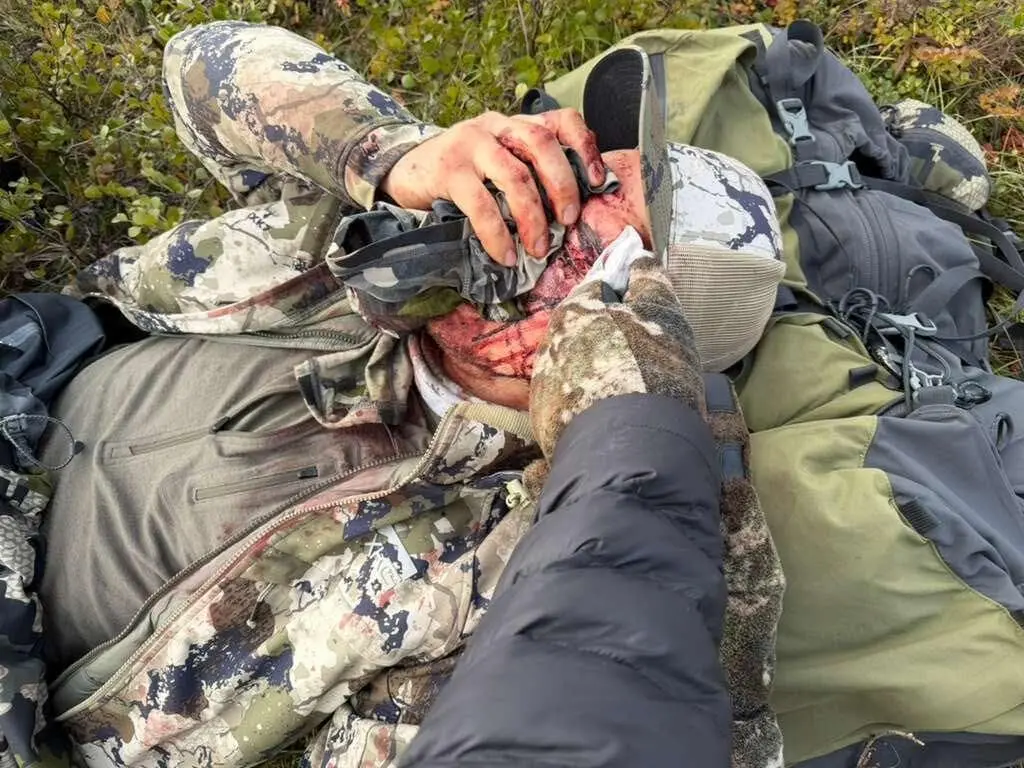
In the remote, unforgiving expanse approximately 100 miles outside Deadhorse, Alaska, a routine caribou hunting expedition transformed into a life-or-death struggle against apex wilderness predators. Jadon Nicoara, a 27-year-old father of two young children, now recuperates at home after surviving a ferocious brown bear attack that left him with severe lacerations, multiple fractures, and an enduring testament to human resilience.
Four days into what was supposed to be a standard backcountry hunt, Nicoara and his cousin found themselves suddenly ambushed by an aggressive brown bear while navigating a steep canyon ridge. What followed was a harrowing sequence of events characterized by sudden violence, defensive gunfire, and a desperate race against time for emergency medical evacuation.
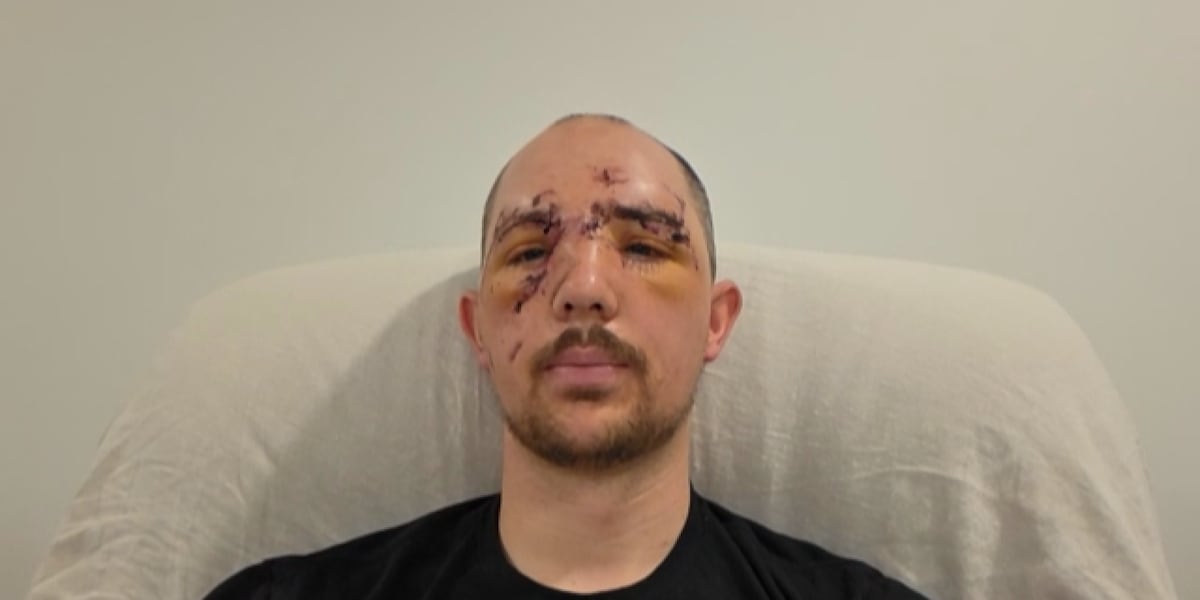
Nicoara’s survival is viewed by medical professionals and family members alike as an extraordinary miracle. Despite sustaining severe trauma—including facial bites that crushed the bones in his nose and deep lacerations across his limbs—Nicoara retained his eyesight and the full use of his limbs. As he prepares for complex facial reconstructive surgery, his story serves as both a visceral reminder of the inherent dangers of the Alaskan wilderness and a profound narrative of survival driven by faith, family, and split-second tactical defense.
Detailed Chronology of the Attack
The Approach: Day Four of the Expedition
The incident occurred on a Thursday, marking the fourth day of Nicoara and his cousin’s backcountry hunting trip in the vast wilderness north of the Arctic Circle. The pair had set out to track a herd of caribou spotted earlier through binoculars in the distance. Seeking a strategic vantage point, the hunters began scaling the steep, rugged edge of a local canyon, navigating dense brush and uneven terrain.
As they ascended, Nicoara noticed unexpected movement in the thick bushes just above them along the ridge.
"I don’t know if I said it or thought it, but I was like, ‘Caribou,’" Nicoara recalled. "I turned around to my right, and there was a bear just running, at probably 15 to 20 feet, straight toward me. It was growling, its mouth was open and it was just running full speed."
The Ambush and Mauling
With virtually no time to deploy defensive measures, the charging brown bear collided with Nicoara, throwing him violently backward. He tumbled down the steep slope of the hill as the bear pressed its advantage, initiating a frenzied attack characterized by powerful bites and deep scratching.
"I just felt it bite my arm, and it was very surreal because everything happens so fast," Nicoara said. "Then, it finally ended up on top of me, and it was biting my face. It was just biting again and again, and I could hear all the bones crunching in my nose. I saw stars, and I was like, ‘OK, this is kind of where it ends.’ I thought I was going to be dead."
The bear methodically shifted its focus down Nicoara’s body, clamping onto his hands and subsequently his foot in a sustained predatory sequence.
The Counter-Attack and Escape
Realizing his cousin’s life was in imminent danger, Nicoara’s companion drew his handgun and began firing rapidly in the direction of the animal. However, the close-quarters grapple presented a severe risk of friendly fire.
"I was screaming at him not to hit me because I was all tangled up with the bear, and I didn’t want more damage," Nicoara explained. "He emptied his whole magazine, and then, the bear turned and went to him."
The diversion proved critical. Capitalizing on the bear’s momentary shift in attention toward his cousin, Nicoara managed to draw his own revolver. Firing at close range, he struck the animal, causing the wounded bear to break off the attack and flee into the surrounding brush.
The Race for Evacuation
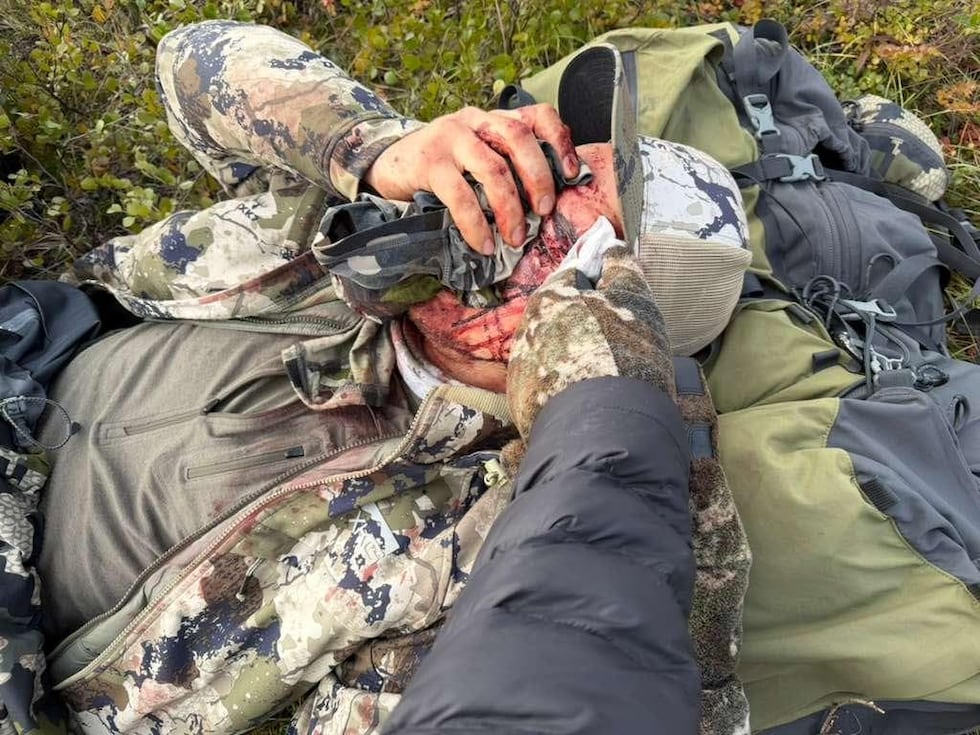
With the immediate threat neutralized, the primary objective shifted instantly to survival and medical triage. Both men, though battered and bleeding, understood that remaining stationary in the remote Alaskan backcountry was not an option. They began a grueling trek to a designated extraction coordinate where a rescue helicopter could safely land.
Upon making contact with emergency services, the hunters were informed that it would take approximately two hours for the rescue aircraft to reach their location.
"I was like, ‘Oh my goodness, I don’t know if I’m going to make it because I’m bleeding pretty good,’" Nicoara said. "We were praying, and I was thinking about my girls. I was like, ‘I need to make it home.’ I just remember at one point looking around, and it was a gorgeous day. I’m like, ‘How did this even happen? It’s so surreal.’"
Ultimately, emergency air support arrived, stabilizing Nicoara and transporting him out of the wilderness to receive urgent medical care.
Supporting Context & Metrics: Wilderness Safety in Alaska
The Reality of Alaskan Brown Bear Encounters
Alaska is home to an estimated 30,000 brown bears (Ursus arctos), representing the vast majority of the United States population. While encounters between humans and bears are relatively uncommon given the massive expanse of public lands, the convergence of hunters, hikers, and wildlife during peak autumn activity periods frequently elevates risk levels.
- Habitat Dynamics: The North Slope and Brooks Range regions near Deadhorse are characterized by stark tundra, steep river canyons, and limited cover. This terrain can occasionally result in surprise encounters, as natural folds in the landscape and thick riparian brush can obscure visibility until parties are within close proximity.
- Defensive Firearms and Deterrents: Wildlife management agencies across Alaska strongly emphasize the carrying of EPA-approved bear spray as a first line of defense, supplemented by large-caliber firearms (such as .44 Magnum revolvers or 12-gauge shotguns loaded with slugs) for extreme scenarios. Nicoara and his cousin’s possession of accessible sidearms played a pivotal role in halting the mauling, though experts note that close-quarters engagement during an active struggle carries immense tactical risk.
Medical Impact and Trauma Statistics
Maulings by brown bears frequently result in catastrophic soft-tissue damage, bone fractures, and severe blood loss. According to emergency medical studies tracking wildlife attacks in northern latitudes:
- Facial and Cranial Trauma: Due to the height and posture of charging bears, attacks often target the upper extremities and the head/face region. Reconstructive surgery is frequently required to repair complex fractures of the nasal bones, jaw, and orbital sockets.
- Evacuation Timelines: The remote nature of Northern Alaska means that "golden hour" trauma protocols are frequently stretched. Survival in these instances relies heavily on immediate self-aid, buddy-aid (tourniquets and pressure dressings), and reliable satellite or radio communication to coordinate rapid medevac responses.
Official Statements and Personal Reflections
Now safely returned to his wife and two young daughters—ages 3 years and 7 months, respectively—Nicoara has reflected deeply on the psychological and spiritual dimensions of his survival.
"I’m very thankful to be alive," Nicoara stated shortly after returning home. "Glad to have my eyesight and the use of all my limbs. God is very good."
Rather than dwelling on the trauma of the physical assault, Nicoara has drawn immense solace from his faith throughout his recuperation period.
"I’ve been listening to some of the Psalms in the Bible, and Psalm 23:4 stuck out to me," he shared. "It says, ‘Even though I walk through the valley of the shadow of death, I will fear no evil for you are with me.’"
While local wildlife and public safety authorities routinely monitor regional bear populations, no formal punitive measures or public safety closures were immediately mandated following the self-defense shooting, which fell under legal provisions for the protection of human life in the wilderness.
Future Outlook & Recovery Roadmap
Medical Prognosis
The physical road ahead for Jadon Nicoara remains complex and demanding. While he has avoided permanent neurological damage, loss of sight, or limb amputation, his immediate medical schedule involves intensive follow-up care:
- Surgical Interventions: Nicoara is currently scheduled for extensive facial reconstruction surgery to repair the extensive structural damage sustained to his nose and facial tissues.
- Wound Management: Medical teams continue to monitor severe lacerations across his arms and legs for potential infection, utilizing prophylactic antibiotics and specialized wound-care protocols.
- Physical and Occupational Therapy: Rehabilitation will focus on restoring full dexterity and strength to his hands, which sustained bites and claw trauma during the scuffle.
Psychological Healing
Beyond physical rehabilitation, experts note that survivors of violent wildlife encounters frequently navigate post-traumatic stress. For a young father of two, the mental adjustment from the edge of the grave back to everyday domestic life requires patience, community support, and time.
Nicoara’s harrowing ordeal stands as a powerful testament to the unpredictability of nature, the unwavering bond of family, and the profound fortune required to walk away from the valley of the shadow of death.

0 Comments