

Executive Overview
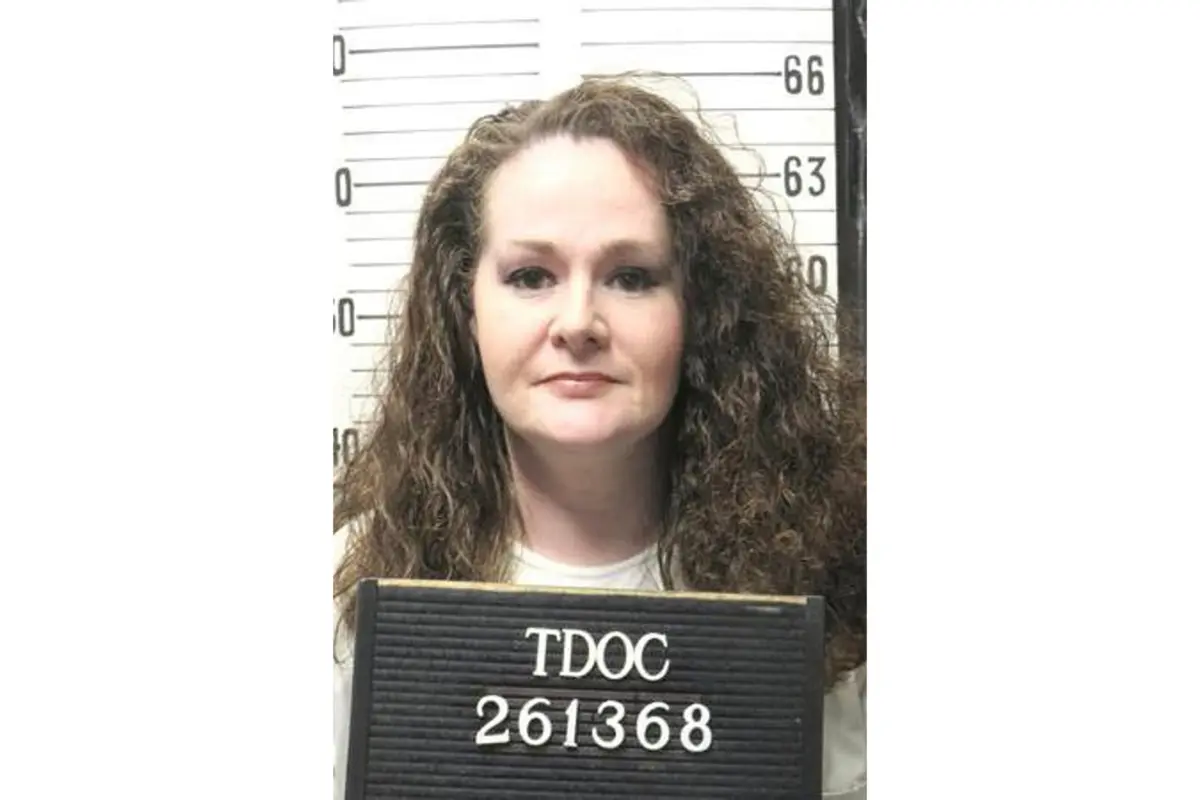
NASHVILLE, Tenn. — In what death penalty experts are calling a singular and unprecedented failure in modern American penology, Tennessee state officials were unable to put Christa Gail Pike to death Wednesday night, despite administering two full doses of the lethal drug pentobarbital. Pike, 50, remained alive—breathing and audibly snoring—following the botched execution protocol at the Riverbend Maximum Security Institution in Nashville. She was subsequently removed from the prison by ambulance and rushed to an undisclosed hospital for medical evaluation and treatment.
The catastrophic mechanical and procedural breakdown prompted Tennessee Governor Bill Lee to take swift, decisive action late Wednesday evening. Lee ordered an immediate, comprehensive, and independent third-party review to determine precisely how the state’s execution protocol failed so publicly. Furthermore, the governor announced that all remaining scheduled executions in Tennessee would be halted for the remainder of the calendar year.
"Carrying out a lawfully imposed sentence is among the State’s most serious responsibilities, and the people of Tennessee expect it to be done in a manner that is not only legal and constitutional, but is effective," Gov. Lee said in a strongly worded official statement.
Pike had been scheduled to die for the 1995 murder of 19-year-old Colleen Slemmer, a crime she committed when she was just 18 years old. Had the lethal injection succeeded, Pike would have become the first woman executed in Tennessee in more than two centuries. Instead, her botched execution has reignited a fierce, nationwide debate regarding the constitutionality, reliability, and humaneness of capital punishment—particularly the state’s heavy reliance on single-drug pentobarbital protocols and the execution of individuals convicted for crimes committed in their youth.
Detailed Chronology: A Day of Legal Drama and Procedural Collapse
The events of Wednesday unfolded as a harrowing, roller-coaster sequence of emergency legal maneuvers, last-minute judicial interventions, and unprecedented execution-chamber complications.
Morning Stays and Supreme Court Interventions
Pike’s execution was originally slated for 10:00 a.m. local time on Wednesday. As media witnesses, state officials, and the victim’s family gathered at the Riverbend Maximum Security Institution, a dramatic legal lifeline emerged. Just one hour before the lethal injection was set to commence, the 6th U.S. Circuit Court of Appeals voted 2-1 to issue an emergency stay of execution. The appellate court ruled that a delay was necessary to properly evaluate whether Pike’s claims of severe childhood sexual abuse and mental illness had been adequately considered during her original 1996 sentencing phase.
The ruling sent shockwaves through the proceedings. However, the Tennessee Attorney General’s office immediately filed an emergency appeal to the U.S. Supreme Court. State prosecutors argued that halting the execution at the eleventh hour caused severe psychological trauma to the victim’s family and rewarded what they characterized as "abusive delay tactics" by Pike’s defense attorneys.
Hours later, the conservative majority of the U.S. Supreme Court vacated the stay, clearing the way for the execution to proceed later that evening. The majority offered no written explanation for their order, while the court’s three liberal justices signed a dissenting opinion arguing that Pike’s claims deserved a much closer judicial look.
Inside the Death Chamber
With the legal hurdles cleared, prison officials rescheduled the execution window for the evening. At 7:27 p.m., media witnesses observing from a secure, separate viewing room watched as guards raised the curtains to the execution chamber, revealing Pike strapped securely to a gurney.
When given the opportunity to deliver her final words, Pike expressed a sense of peace. "I’m going to leave this world the way I spent most of my life and that is in love," she told the room, describing herself as tranquil.
However, the execution soon deviated sharply from standard procedure. Witnesses reported that Pike remained fully awake and conscious well into the process. At one point, she raised her head, looking toward executioners and asking prison officials if her arm was "supposed to feel that way"—a chilling query that left observers uncertain what physical sensation she was referencing.
Despite these visible signs of consciousness, execution logs indicate that the first dose of pentobarbital was administered. When that failed to induce death, executioners proceeded to administer a second dose of the lethal drug by 8:26 p.m.
Rather than succumbing to the chemicals, Pike remained alive behind the closed curtains. Witnesses in the media room reported hearing her loudly snoring. The auditory feed continued until 8:53 p.m., at which point prison staff abruptly cut off the room’s microphone and ordered media witnesses to be escorted out of the facility.
Emergency Legal Filings and Hospitalization
Realizing that the execution had gone catastrophically awry, Pike’s defense team filed emergency motions late Wednesday night with the Tennessee Supreme Court, the 6th Circuit, and a federal district court. The filings argued that Pike was enduring "unnecessary agony" and that the botched procedure constituted a direct violation of her constitutional protection against cruel and unusual punishment under the Eighth Amendment.
By late evening, Pike’s attorneys confirmed that their client was transported out of the prison via ambulance to an off-site hospital. As of early Thursday morning, defense counsel stated that prison and state officials had refused to provide any detailed updates regarding Pike’s medical status or current condition.
Supporting Context & Metrics: A Historic Outlier
The failure of Tennessee’s execution protocol stands as a watershed moment in the modern history of capital punishment in the United States.
The Rarity of Female Executions
Capital punishment in the U.S. is overwhelmingly applied to men. According to data compiled by the Death Penalty Information Center (DPIC), only 18 women have been put to death since the U.S. Supreme Court reinstated the death penalty in 1976. This figure accounts for roughly 1% of all executions nationwide over the past five decades. Had Pike been executed, she would have represented the 30th person put to death in the United States this year, following an execution carried out in Florida on Tuesday.
An "Unparalleled" Failure
Robin M. Maher, executive director of the Death Penalty Information Center, classified what occurred in Nashville as "singular and unparalleled."
While historical records document at least seven other instances where executions were botched or halted due to medical teams failing to establish a viable intravenous (IV) line to administer lethal drugs, Maher noted that no inmate in modern American history has successfully survived after actually receiving the lethal chemical doses designated for execution.
This incident marks the second time in 2026 alone that Tennessee has failed to carry out a scheduled lethal injection. In May, state officials were forced to call off the execution of Tony Carruthers—who was convicted of kidnapping and murdering three people in 1994—after executioners tried and failed for over an hour to establish a working IV line for pentobarbital administration.
The Evolution of Tennessee’s Protocol
Tennessee’s execution methodologies have faced intense scrutiny and administrative turbulence in recent years. In 2024, the state officially transitioned away from its traditional three-drug lethal injection cocktail, adopting a single-drug protocol utilizing pentobarbital.
This pivot came in the wake of a major scandal in 2022, when Governor Bill Lee abruptly halted the execution of Oscar Smith at the very last minute after discovering that the state had failed to properly test its lethal injection drugs for potency and bacterial contamination in compliance with state protocols.
Official Statements and Institutional Responses
The fallout from Wednesday’s failed execution has triggered immediate finger-pointing, internal reviews, and sharp policy questions from across the political and legal spectrum.
The Tennessee Department of Correction
In an official statement released late Wednesday, the Tennessee Department of Correction (TDOC) defended the actions of its execution team, maintaining adherence to established state guidelines.
"The Department of Correction followed every step of the State’s lawful, established execution protocol approved by the Attorney General’s Office," the agency stated.
Legal analysts immediately pointed out a glaring deficiency in the state’s written guidelines. Tennessee’s execution protocol explicitly dictates that a secondary set of drug syringes must be administered "if the inmate is not deceased" following the initial set. However, the protocol notably contains no provisions, contingencies, or instructions detailing what executioners should do if the inmate remains alive and conscious after the second set of drugs has been fully administered.
Governor Bill Lee’s Directive
Faced with mounting pressure from civil rights organizations, legal scholars, and the general public, Governor Lee announced the third-party independent review.
"Carrying out a lawfully imposed sentence is among the State’s most serious responsibilities, and the people of Tennessee expect it to be done in a manner that is not only legal and constitutional, but is effective," Lee emphasized. By halting all remaining executions for the remainder of the year, the governor effectively paused the state’s entire capital punishment docket while investigators attempt to untangle the mechanical, chemical, or human errors that led to Wednesday’s debacle.
Background of the Crime and the "Satanic Panic" Era
The case of Christa Gail Pike dates back to January 12, 1995, a period when American pop culture and law enforcement agencies were deeply gripped by fears of occult activity, widely referred to as the "satanic panic" of the 1980s and 1990s.
The Knoxville Killing
At the time of the murder, Pike was an 18-year-old student at a Knoxville Job Corps training facility. Prosecutors established that Pike grew intensely jealous, falsely believing that 19-year-old fellow student Colleen Slemmer was attempting to flirt with or steal her boyfriend, Tadaryl Shipp.
Pike, Shipp, and a third acquaintance, Charlton Massey, lured Slemmer under false pretenses to an isolated, wooded area on the University of Tennessee agricultural campus. Once there, the group subjected Slemmer to a prolonged, brutal assault. Pike slashed Slemmer with a box cutter and beat her repeatedly with a large chunk of asphalt.
The crime gained national notoriety because Shipp subsequently used a box cutter to carve a pentagram—a star-shaped symbol associated with Satanism—into Slemmer’s chest. Evidence of occult interest introduced at trial played heavily into the media narrative surrounding the murder.
While Massey received a lesser sentence for his cooperative role, Shipp (who was 17 at the time of the crime) was convicted and sentenced to life in prison with the possibility of parole. Pike, having turned 18 shortly before the murder, was the only participant sentenced to death.
The Victim’s Family Speaks Out
For decades, Colleen Slemmer’s mother, May Martinez, has fought relentlessly for closure and the execution of her daughter’s killer. Speaking to The Associated Press just days before the scheduled execution, Martinez described the enduring trauma of the loss.
"Every time I think about it, I think about Colleen feeling that pain and trying to get up and run," Martinez said in a telephone interview, noting that she had traveled to Nashville specifically to witness justice carried out. Martinez could not be immediately reached for comment following the chaotic events of Wednesday night.
Future Outlook: Legal and Moral Aftermath
The botched execution of Christa Gail Pike has fundamentally altered the landscape of capital punishment in Tennessee and injected fresh momentum into the national anti-death penalty movement.
Legal Challenges Ahead
Pike’s defense attorneys are expected to leverage Wednesday’s failure to file aggressive new federal lawsuits. They will argue that subjecting an inmate to a botched lethal injection—complete with consciousness, visible confusion, and the administration of multiple uncoordinated drug doses—constitutes cruel and unusual punishment, rendering any future attempts to execute her unconstitutional under the Eighth Amendment.
Furthermore, the incident has permanently fractured public confidence in the state’s ability to execute inmates safely and humanely. Legal experts suggest that the independent third-party review ordered by Governor Lee will face immense scrutiny. Investigators will need to answer critical questions: Did the pentobarbital supply suffer from chemical degradation? Were the dosages miscalculated? Or did execution personnel commit procedural errors during administration?
The Debate Over Juvenile Offenders and Mental Illness
Beyond the immediate mechanical failure, Pike’s case has permanently revitalized the ethical debate surrounding the execution of individuals who committed capital crimes as teenagers.
In her post-conviction appeals and clemency petitions, Pike’s supporters highlighted severe mental health diagnoses accumulated during her decades on death row, including bipolar disorder and complex post-traumatic stress disorder stemming from severe childhood trauma and abuse.
"I was a mentally ill 18-year-old kid. It took me numerous years to even realize the gravity of what I’d done," Pike expressed in a recent statement.
Assistant Federal Defender Stephen Ferrell noted that Pike’s death sentence has long been an anomaly in Tennessee jurisprudence, pointing out that virtually all other individuals who were sentenced to death for crimes committed as 18-year-olds in the state have subsequently had their sentences vacated or commuted.
As Christa Gail Pike recovers under police guard in an undisclosed hospital room, the state of Tennessee finds itself at an unprecedented crossroads. With its execution protocol deeply compromised, its governor’s moratorium in place, and a storm of legal battles looming on the horizon, the future of the death penalty in the Volunteer State remains shrouded in profound uncertainty.

0 Comments