

Executive Overview
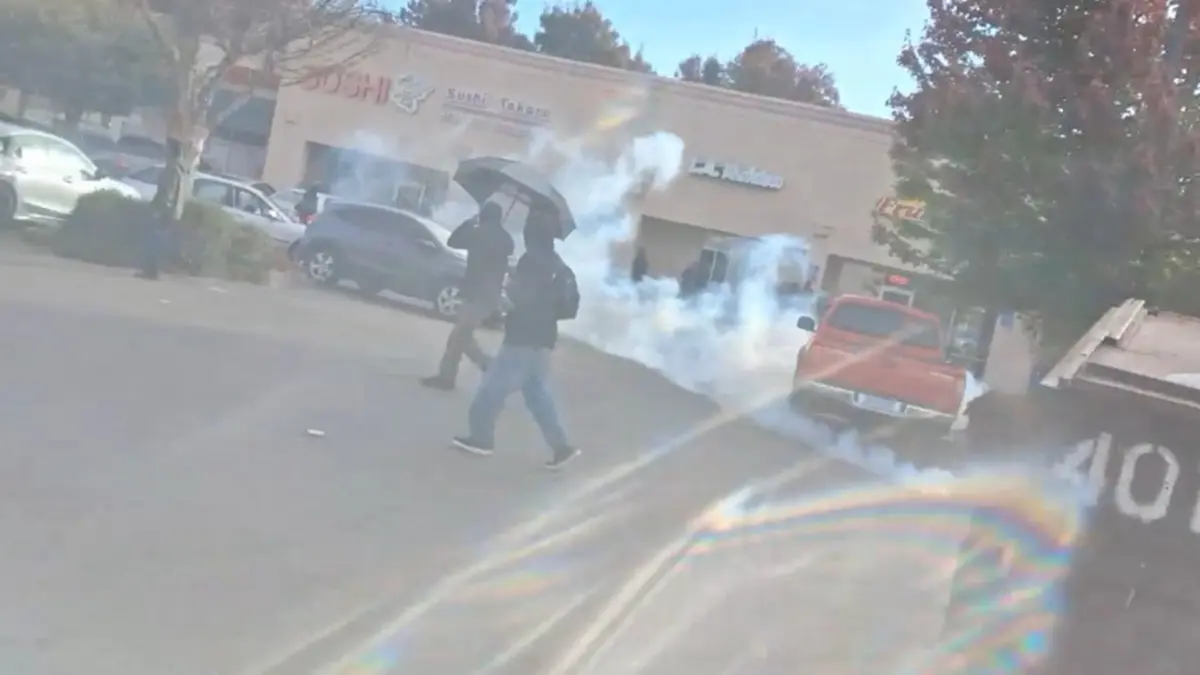
SALEM, Ore. — Tensions surrounding federal immigration enforcement reached a boiling point on Saturday morning, October 10, 2026, when a confrontation between U.S. Immigration and Customs Enforcement (ICE) agents and a group of local demonstrators culminated in the deployment of tear gas, pepper spray, and chemical projectiles in a busy northeast Salem neighborhood.
According to local law enforcement, emergency services, and eyewitness accounts, the incident began at approximately 9:30 a.m. near the intersection of Lancaster Drive Northeast and Sunnyview Road Northeast. Roughly 30 protesters and community members had surrounded a convoy of unmarked federal vehicles, physically blocking their exit routes with their own automobiles. Faced with the impromptu blockade, federal agents opted to break the line by deploying chemical irritants before fleeing the scene.
The aftermath of the deployment triggered a massive local emergency response. Salem 911 dispatchers were inundated with calls from bystanders, protesters, and local residents suffering from acute tear gas-related symptoms, including respiratory distress, severe skin and eye irritation, and panic. Salem Police Department officers and Salem Fire Department medical crews rushed to the scene to render first aid.
The confrontation has exposed a deep rift between federal immigration operations and local municipal authorities. Salem police officials were quick to distance themselves from the federal action, emphasizing that they had no prior knowledge of the ICE operation and played no role in its coordination. Meanwhile, the incident has drawn sharp, immediate condemnation from federal lawmakers representing Oregon, who accused the agency of reckless endangerment. The clash also punctuates a broader, weeks-long escalation in immigration enforcement activities across the Pacific Northwest, leaving local immigrant advocacy groups, municipal leaders, and federal authorities locked in a high-stakes standoff over community safety, jurisdictional boundaries, and the tactical methods employed by federal agents on domestic soil.
Detailed Chronology of Events
9:00 AM – 9:30 AM: The Buildup and Blockade
The morning’s events unfolded rapidly along Lancaster Drive Northeast and Sunnyview Road Northeast, a bustling commercial and residential artery in northeast Salem. According to investigative reports and police logs, federal agents operating under the umbrella of ICE were conducting an unannounced field operation in the area.
As word of the operation spread among local activist networks and neighborhood residents through digital messaging channels, a crowd of approximately 30 individuals quickly assembled. Driven by concerns over aggressive enforcement tactics and recent upticks in community detentions, the group moved to intercept the federal vehicles. Utilizing their own cars as physical barriers, the protesters successfully boxed in the ICE convoy, halting its movement and demanding accountability from the agents inside.
9:30 AM: The Federal Report and Chemical Deployment
At precisely 9:30 a.m., while the blockade was actively holding the convoy in place, federal agents contacted the Salem Police Department dispatch center. They reported that they were surrounded, trapped by civilian vehicles, and unable to proceed.
However, before local patrol units could arrive to assess and manage the growing disturbance, the situation escalated violently. Rather than waiting for municipal police to de-escalate the standoff, federal agents took matters into their own hands. Utilizing tear gas canisters, pepper spray, and pepper-ball projectiles, the agents cleared the human and vehicular blockade. Witnesses and local officials later confirmed that smoke canisters were also discharged, blanketing the intersection in chemical agents and dense smoke. Once a path was forced, the ICE vehicles accelerated away from the scene, leaving behind a chaotic, smoke-filled intersection.
9:30 AM – 10:15 AM: Emergency Medical Response and Triage
As the federal convoy vanished, the human cost of the chemical deployment became immediately apparent. The intersection of Lancaster Drive and Sunnyview Road—frequented by Saturday morning shoppers, families, and local motorists—was saturated with airborne irritants.
Salem 911 emergency dispatchers received a surge of frantic calls reporting acute medical distress. Numerous individuals, including bystanders who had no direct involvement in the protest, began experiencing severe respiratory failure, violent coughing fits, and burning sensations in their eyes and airways.
Salem Police officers, who had been dispatched moments earlier in response to the initial federal call, arrived to find a chaotic scene rather than a blockade. Recognizing the immediate medical crisis, police officers and emergency medical technicians (EMTs) from the Salem Fire Department immediately transitioned into triage mode. First responders established a treatment zone, administering flushing eyewashes, oxygen, and on-site medical evaluations to those suffering from chemical exposure.
Post-Incident Investigation and Evidence Gathering
With the immediate medical crisis stabilized, Salem police secured the area to collect physical evidence, interview witnesses, and compile comprehensive incident reports. In a formal operational briefing later that afternoon, department leadership clarified that the gathered intelligence, video footage, and witness statements would not be retained for local criminal prosecution of the protesters. Instead, the entire investigative file is being forwarded to external oversight bodies, specifically the Oregon Department of Justice (DOJ) and the U.S. Department of Homeland Security’s Office of Inspector General (DHS-OIG), to determine whether federal agents violated agency protocols or used excessive force.
Supporting Context, Metrics, and Escalating Tensions
The dramatic clash in Salem does not exist in a vacuum; it is the volatile culmination of weeks of mounting anxiety and escalating friction between federal immigration authorities and Oregon communities.
A Surge in Oregon Detentions
Over the preceding weeks, immigration rights groups, legal aid organizations, and community advocates across Oregon reported a measurable and alarming surge in ICE detentions and enforcement operations. According to data compiled by local advocacy networks, federal agents have ramped up targeted enforcement sweeps in both metropolitan hubs—such as Portland and Salem—and smaller agricultural communities throughout the Willamette Valley.
This ramp-up has instilled widespread fear within immigrant communities, many of which reside in cities that pride themselves on inclusivity and local policy frameworks designed to limit municipal entanglement with federal immigration enforcement. The sudden visibility of aggressive enforcement tactics has transformed neighborhoods into flashpoints, prompting everyday citizens and activist organizations to mobilize rapid-response networks designed to monitor, document, and peacefully obstruct ICE operations.
The Geography of the Clash
The choice of location for Saturday’s confrontation—northeast Salem—highlights the complex demographic landscape of Oregon’s capital city. Lancaster Drive is one of the most culturally diverse and economically dynamic corridors in Marion County, home to high concentrations of immigrant families, working-class residents, and thriving small businesses. For residents in this corridor, the sudden presence of unmarked federal enforcement vehicles carrying out high-stress operations is viewed not merely as a routine law enforcement action, but as a direct threat to the stability and safety of their neighborhoods.
The Mechanics of Oversight
The involvement of the Oregon Department of Justice alongside federal oversight bodies underscores the legal gray areas and jurisdictional friction that frequently plague local-federal interactions during high-tension civil disturbances. While federal agents possess broad legal authority to conduct immigration enforcement under federal statute, the deployment of crowd-control munitions within municipal boundaries—particularly when affecting uninvolved bystanders, children, and elderly residents—raises critical questions regarding proportionality, public safety, and inter-agency communication.
Official Statements and Political Reactions
The fallout from the Saturday morning incident quickly transcended local police blotters, triggering sharp rebukes from high-ranking elected officials and prompting stark institutional clarifications from local law enforcement agencies.
Salem Police Department Sets Boundaries
In an official statement released Saturday afternoon, the Salem Police Department moved decisively to separate its institutional identity and operational objectives from those of the federal agency:
"Salem Police Officers had no prior knowledge of the activity in this incident and did not coordinate in any way with Immigration and Customs Enforcement," the department stated. "Our officers respond to disturbances such as this solely to de-escalate, provide medical aid when necessary, and collect evidence so that the appropriate oversight agencies can conduct their review."
The statement underscores a growing trend among local law enforcement agencies in progressive jurisdictions, which are increasingly eager to reassure their constituents that local police resources are not being quietly funneled into federal immigration sweeps.
Congressional Condemnation: Representative Andrea Salinas Speaks Out
The political shockwaves hit Washington, D.C., and the Oregon state legislature rapidly, culminating in a fierce, uncompromising statement from U.S. Representative Andrea Salinas (D-Ore.), who represents the district encompassing Salem. Salinas did not mince words, condemning the tactical choices made by federal agents and alleging systemic recklessness during the morning operation.
"ICE’s actions today were reckless and needlessly endangered innocent people," Salinas stated on Saturday afternoon. "As part of today’s operations, ICE deployed pepper spray, pepper balls, and smoke canisters against the elderly and children. They followed and harassed U.S. citizens, and they drove recklessly with a blatant disregard for the safety of other drivers. At one point, they shut down Route 99E and nearly caused several accidents."
Salinas’s condemnation highlights the political vulnerability of federal enforcement tactics in communities that reject aggressive or militarized approaches to immigration policy. Her public stance amplified calls from constituents and civil rights groups for a thorough, transparent congressional inquiry into the rules of engagement governing ICE field operations in civilian zones.
Future Outlook and Ongoing Investigations
As the dust settles on the intersection of Lancaster Drive and Sunnyview Road, the ramifications of Saturday’s clash will likely be felt for months to come. The incident has cast a harsh spotlight on the operational methods of federal immigration agents operating within municipal boundaries and has galvanized local resistance networks.
Key Questions Moving Forward
- Oversight and Accountability: Will the investigations launched by the Oregon Department of Justice and the U.S. Department of Homeland Security result in disciplinary actions, policy revisions, or legal scrutiny for the agents involved in deploying tear gas in a crowded residential area?
- Inter-Agency Protocols: Will municipal police departments and county sheriffs in Oregon establish formal protocols requiring federal immigration agencies to provide advanced notification before launching field operations within city limits, minimizing the risk of uncoordinated tactical responses?
- Community Mobilization: How will local immigrant advocacy networks and community defense groups respond to the reported surge in detentions? Observers predict an intensification of rapid-response monitoring, potentially setting the stage for future standoffs.
For the residents of Salem, Saturday’s events serve as a stark, chemical-laced reminder of the fierce national debate playing out on local streets. As legal experts, politicians, and civil rights advocates parse the video footage and emergency logs, the fundamental questions of community safety, civil liberties, and federal authority remain unresolved—leaving Oregon’s capital on high alert.

0 Comments