

Executive Overview
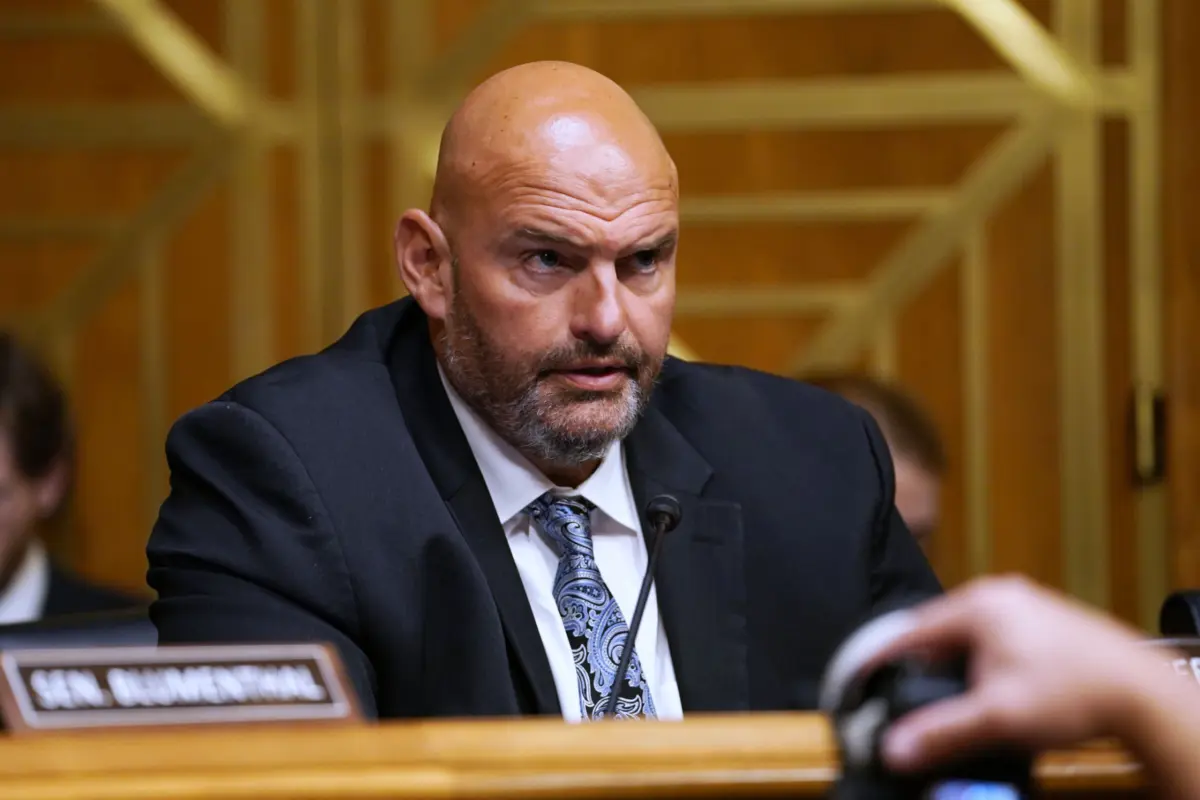
In the fast-moving theater of modern American politics, few figures have experienced a political trajectory as jarring and asymmetric as Senator John Fetterman of Pennsylvania. Just two years ago, Fetterman stood as a heavyweight on the Democratic campaign trail—a towering, hoodie-wearing populist whose cross-county crusade galvanized progressives and moderates alike, driving electoral momentum for candidates up and down the ballot. Today, that political capital has largely evaporated within his own party. Fetterman finds himself politically isolated, absent from local campaign circuits, and persona non grata among the very grassroots organizers who helped propel him to Capitol Hill.
The fissure between Fetterman and the Pennsylvania Democratic Party is not merely a matter of routine legislative disagreement; it is a profound ideological and cultural divorce. By breaking ranks with his caucus to support key priorities of President Donald Trump, vocally defending Israel’s military campaigns in Gaza, attacking the progressive wing of his party, and frequently aligning with conservative media outlets, Fetterman has alienated his foundational base. Polling data underscores this tectonic shift: once enjoying overwhelming approval ratings among registered Democrats, Fetterman now commands stronger favorability among state Republicans than among his fellow party members.
As a shadow primary for his Senate seat takes shape ahead of the 2028 election cycle, and with whispers of a potential party switch circulating through Washington corridors, Fetterman’s tenure serves as a fascinating case study in political realignment. This in-depth report examines the chronological erosion of his relationships, the statistical reality of his polling collapse, the operational challenges tied to his attendance and legislative record, and the high-stakes political calculus facing Pennsylvania Democrats as they navigate crucial upcoming midterms.
Detailed Chronology: The Anatomy of a Political Divorce
The Zenith of 2024 and Early Signs of Friction
Following a harrowing campaign trail defined by a stroke in 2022 and subsequent treatment for clinical depression during his initial months in office, Fetterman initially projected the image of a pugnacious, blue-collar fighter determined to deliver for Pennsylvania. However, tensions began to simmer quietly in late 2023. As the Israel-Hamas war escalated, Fetterman emerged as one of Capitol Hill’s most unshakeable defenders of the Israeli military strategy, sharply rebuking progressives and left-wing members of the Democratic Socialists of America (DSA).
While foreign policy disagreements initially caused friction, the rift widened into a chasm following the inauguration of President Donald Trump. Rather than adopting a posture of total obstruction, Fetterman frequently broke with his party to vote in favor of Trump-backed cabinet and judicial nominations, supported Republican-led efforts to resolve fiscal shutdowns, and openly mocked progressive strategies to counter the White House.
The Melting of Grassroots Support
By 2025 and into 2026, the alienation transformed into outright hostility from local party leadership. Officials across Pennsylvania’s critical swing counties reported a total cessation of communication with the senator’s office.
Lori McFarland, the Democratic Party chair in pivotal Lehigh County—a crucial battleground housing tightly contested congressional and state legislative seats—did not mince words regarding the senator’s standing among local organizers.
"I absolutely think that Fetterman would bring us more harm than good," McFarland stated. "Nobody’s asked to see him, nobody’s requested his presence, and people, quite honestly, they’re mad at him and they don’t want anything to do with him. The local feel here is they feel betrayed by him."
This sentiment has been echoed by state representatives and municipal leaders throughout the commonwealth. State Rep. Peter Schweyer of Allentown noted a total evaporation of the senator’s physical presence in local communities, remarking that constituents who expected a vocal champion instead felt abandoned by a figure who had seemingly vanished from the local political ecosystem.
Supporting Context & Metrics: The Polling Reversal
Statistical data vividly illustrates the unprecedented collapse of Fetterman’s popularity among his base and his paradoxical surge among political opponents.
- The Democratic Reversal: According to a comprehensive New York Times poll conducted in August, only roughly 20% (2 in 10) of registered Democrats in Pennsylvania held a favorable view of Fetterman. This represents a staggering freefall from 2024, when his intra-party favorability stood at an impressive 74%.
- The Republican Embrace: Conversely, Fetterman’s approval ratings among registered Republicans have inverted entirely. A Quinnipiac University poll revealed that approximately 73% of Republican voters in the state now view Fetterman favorably—a dramatic leap from the 25% approval he garnered from the GOP early in his term.
- The Legislative Absence: Beyond policy disagreements, Fetterman’s physical and operational dedication to his senatorial responsibilities has drawn intense scrutiny. Reports from outlets like The Philadelphia Inquirer and The Wall Street Journal highlighted a sharp increase in missed votes, chronic absenteeism from critical committee hearings, and erratic behavior in closed-door meetings. Notably, a briefing with representatives from a major teachers union dissolved in chaos after the senator reportedly began shouting, repeating phrases, and slamming his hands on furniture.
These operational struggles, coupled with skipped public appearances—such as the memorial service for three Pennsylvania police officers killed in the line of duty—have fueled perceptions that the senator is increasingly detached from the day-to-day duties of his office.
Official Statements and Caucus Dynamics
Despite the intense hostility from his party’s grassroots, Fetterman has repeatedly rejected the notion of formally crossing the aisle, framing his political identity around traditional labor unions, LGBTQ+ rights, and working-class advocacy.
Appearing on conservative media programs, Fetterman defended his independent streak to host Sean Hannity:
"I’m not going to be a Republican, but I’m going to be a Democrat that’s going to have a conversation with whoever is playing it straight."
Nevertheless, the senator has drawn a definitive "red line" for his continued affiliation with the Democratic Party. He has explicitly stated that should the national Democratic platform permanently adopt an explicitly anti-Israel posture, it would trigger an immediate and irrevocable departure from the caucus.
This ambiguity has not been lost on Senate Republican leadership. Senate Majority Leader John Thune (R-S.D.) acknowledged in July that GOP leadership had engaged in direct dialogues with Fetterman regarding his mounting frustrations within the Democratic caucus. Thune remarked pointedly, "If he ever comes to the conclusion that he’s ready to move, we’d certainly welcome him."
Such a defection would carry monumental national consequences. With the Senate currently operating under a narrow Democratic advantage of 47 seats, a party switch by Fetterman—combined with potential electoral shifts—could instantly reset the chamber to a 50-50 deadlock, empowering Vice President JD Vance to wield the ultimate tie-breaking vote and handing outright control of the upper chamber to the Republicans.
Future Outlook: The 2028 Horizon and Midterm Stakes
As Pennsylvania Democrats pour their energy into high-stakes midterm elections—rallied by popular Governor Josh Shapiro, who is defending his seat and spearheading efforts to expand the state House majority and flip targeted U.S. House seats—Fetterman is entirely absent from the strategic calculus. Candidates such as Democrat Bob Harvie, locked in a fierce battle to unseat Republican Rep. Brian Fitzpatrick, have explicitly confirmed they have not sought—nor would they welcome—Fetterman’s endorsement or campaign presence.
Looking further ahead to the 2028 election cycle, a crowded and aggressive shadow primary is already forming around Fetterman’s Senate seat. Ambitious Democrats, including U.S. Representatives Chris Deluzio and Brendan Boyle, alongside former U.S. Rep. Conor Lamb, are frequently mentioned as prospective challengers.
Rep. Deluzio captured the prevailing sentiment among the state’s congressional delegation when speaking to the Associated Press:
"I don’t think that Democrats want John Fetterman campaigning for them, and I say that as a guy who’s campaigning with Democrats in the most competitive and toughest districts across Pennsylvania… Pennsylvanians elected John Fetterman as a Democrat to the United States Senate. They expect him to be a Democrat in these two years he has left in this term."
Whether Fetterman intends to seek a second term in 2028, or whether he will complete his current mandate as an increasingly isolated independent voice within a hostile caucus, remains one of the most compelling subplots in American governance. What is certain, however, is that the political bridge between John Fetterman and the Pennsylvania Democratic establishment has been thoroughly burned, leaving the senator to navigate a lonely, uncharted path in the twilight of his first term.

0 Comments