
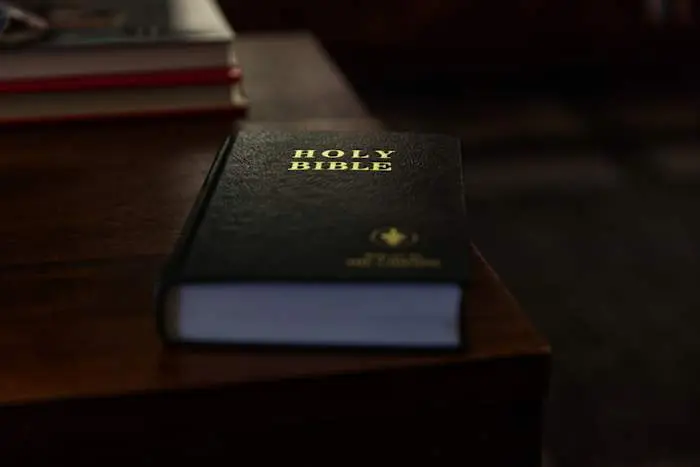

SALISBURY, Md. — "Rocky Raccoon checked into his room, only to find Gideon’s Bible."
When Paul McCartney penned those whimsical lines for The Beatles, he immortalized a detail of American hospitality that millions of travelers took for granted. Explaining the lyric years later, McCartney noted that these unassuming texts "were in every hotel in America"—a phenomenon he had never encountered in his native England.
For more than a century, turning back the nightstand drawer in an American hotel or motel has revealed a uniform, black- or blue-bound volume stamped with the golden emblem of Gideons International. More than just a religious artifact, the Gideon Bible has evolved into a profound symbol of the nation’s roadside culture, Protestant tradition, and the spirit of a transient populace. It occupies a unique space in the cultural consciousness, referenced endlessly across lyrics, films, and Broadway stages.
"The Gideon Bible is a peculiarly and amazingly American object," observes Lori Anne Ferrell, author of The Bible and the People.
As part of the ongoing "American Objects" series marking the upcoming 250th anniversary of the United States, an examination of this ubiquitous book reveals a sweeping history of evangelical ambition, infrastructural expansion, and the shifting tides of American secularism.
Executive Overview
The story of the Gideon Bible is inextricably linked to the democratization of travel and the rise of American roadside culture. Founded in 1899 by a small cadre of evangelical commercial travelers, Gideons International embarked on a mission that would quietly alter the physical and spiritual landscape of the United States. What began as an impromptu conversation in a Montana hotel transformed into a global distribution juggernaut, placing more than 2.5 billion Bibles into circulation across hotels, hospitals, prisons, and military bases.
Despite facing modern challenges—ranging from legal battles over school distributions to the broader secularization of the hospitality industry—the Gideon Bible endures. It remains a quiet fixture of comfort in the most transient of settings, bridging the gap between sacred tradition and secular American mobility. This deep dive explores the historical chronology of the Gideons, the cultural framework that made their mission possible, the metrics of their staggering reach, and the uncertain future of bedside religion in an increasingly digital world.
Detailed Chronology: From a Montana Train Stop to a Global Footprint
To understand how the Gideon Bible conquered the American nightstand, one must trace a timeline defined by grassroots organization, industrial transformation, and strategic institutional partnerships.
1899: The Genesis of an Association
The groundwork for Gideons International was laid in Janesville, Wisconsin, through the vision of three Christian businessmen: John H. Nicholson, Samuel E. Hill, and Will J. Knights. Traveling frequently for work, these men recognized the spiritual isolation of commercial travelers and resolved to band together for mutual support, Christian fellowship, and evangelism. They chose the name "Gideons," referencing the biblical judge who displayed unwavering obedience to God against overwhelming odds.
1908: The Spark in Superior, Montana
The defining operational pivot of the organization occurred nearly a decade after its founding. A Gideon member traveling for a railroad expansion project stepped off a train in the remote town of Superior, western Montana, and checked into a local hotel. Eager to share his faith, he approached the proprietor to ask if he could leave a Bible at the front desk.
The hotel owner responded with a much more ambitious proposition: Instead of a single book at the desk, why not place a Bible in every guest room of the hotel? Recognizing the profound potential of this idea, the Gideons formally adopted hotel Bible distribution as their primary mission at their annual convention later that year.
The Industrial Catalyst: The Model T and American Mobility
Significantly, 1908 was also the year Henry Ford rolled out the first Model T from the Piquette Avenue Plant in Detroit. The introduction of affordable automobiles catalyzed an explosion in American travel.
"All of a sudden, we have the road culture, the interstate culture, we have motels, and we have, for the first time, people leaving home," notes historian Lori Anne Ferrell. "There’s a story about America with the Gideon Bible that you can’t tell with any other Bible because it’s distributed everywhere, and it represents the movement of people across the country."
As the nation paved roads and highways zigzagged across state lines, the Gideons followed the travelers, stocking the nightstands of mom-and-pop motels, roadside inns, and eventually massive corporate hotel chains.
1971: Reaching the Highest Office
As the decades progressed, the organization expanded its distribution criteria beyond hotels, targeting institutional settings where individuals experienced vulnerability or transition—prisons, hospitals, and military installations.
The cultural and political weight of the organization was underscored in August 1971, during a high-profile White House ceremony. In front of national media, representatives of Gideons International presented their 100 millionth distributed Bible to President Richard Nixon, cementing the organization’s status as a staple of American civic and religious life.
Supporting Context & Metrics: The Scale of Distribution
The numbers associated with Gideons International are staggering, reflecting a well-oiled evangelical machine that operates across more than 200 countries and territories worldwide.
- 2.5 Billion and Counting: Since that fateful day in Superior, Montana, the organization has distributed more than 2.5 billion Bibles and New Testaments globally.
- Pace of Distribution: According to the group’s operational metrics, Gideons distribute more than two copies of the Scriptures every second.
- Targeted Institutions: While hotels and motels remain the most visible vector, millions of copies are funneled annually into schools (where legally permissible), colleges, hospitals, nursing homes, domestic military bases, and correctional facilities.
- Funding Model: Unlike many modern publishing houses, Gideon Bibles are funded entirely through voluntary financial contributions from members of evangelical churches, who purchase the books at cost for placement.
Timothy K. Beal, author of Roadside Religion: In Search of the Sacred, the Strange, and the Substance of Faith, points out that the Gideon Bible speaks directly to a foundational American ethos.
"It’s an expression of biblicism—the idea that the Bible is from God to you. And it’s all you need… and that biblicism is a deep element in American culture," Beal explains. This ruggedly individualistic approach to faith—unmediated by clergy, sitting quietly in a drawer waiting to be opened by a weary traveler—resonates deeply with the American psychological landscape.
Official Statements and Societal Perspectives
The ubiquity of the Gideon Bible has not come without friction or controversy. Over the decades, the intersection of private religious messaging and public space has generated intense legal and cultural debates.
Legal and Educational Pushback
While placing Bibles in private hotel rooms is an established business practice protected by property rights, attempts by Gideons to distribute materials in public schools have faced fierce opposition. Organizations such as the Freedom From Religion Foundation (FFRF) have successfully challenged school districts across the United States, arguing that distributing religious texts on public school grounds violates the Establishment Clause of the First Amendment, which prohibits the government from establishing or endorsing a religion.
The Hospitality Shift
In recent years, the internal landscape of the American hotel industry has also shifted. Driven by corporate consolidation, shifting consumer demographics, and an overarching drift toward secularism, a growing number of modern boutique hotels and minimalist chains have opted to omit religious materials from their nightstands entirely.
Speaking anonymously regarding modern interior design trends in the hospitality sector, one hotel developer noted: "Guests today are looking for clean, neutral, and highly personalized spaces. While traditional brands still maintain the nightstand drawer Bible out of loyalty to older demographics, newer lifestyle brands often prioritize Wi-Fi passwords and local art over traditional texts."
Despite these contractions, representatives for Gideons International maintain that the demand for their physical texts remains robust, sustained by a core demographic of traditional travelers and international visitors who view the bedside Bible as a comforting touchstone of American hospitality.
Future Outlook: The Bedside Testament in the Digital Age
As the United States approaches its semiquincentennial (America 250) in 2026, cultural historians are taking stock of the objects that have defined the nation’s identity. Alongside the Model T, the bluejeans, and the diner coffee mug, the Gideon Bible holds an unimpeachable place in the material culture of the American journey.
Yet, the future presents unprecedented challenges. The digitization of text has fundamentally altered how humans read and interact with literature. Travelers increasingly rely on smartphones and tablets for reading, working, and spiritual reflection, rendering physical books in hotel drawers susceptible to neglect. Furthermore, the rapid secularization of younger generations suggests that the cultural literacy surrounding biblical texts is on the decline.
Nevertheless, experts like Lori Anne Ferrell suggest that the physical endurance of the Gideon Bible may outlast its immediate utility.
"Even if it is rarely opened, the Bible in the drawer serves a psychological purpose," Ferrell notes. "It represents an acknowledgment of vulnerability. When people travel, they are away from home, away from their support systems, and sometimes facing personal crises. The book is a silent sentinel of comfort."
Whether viewed as a cherished relic of Protestant heritage, a fascinating footnote in roadside infrastructure, or a contentious intrusion of faith into the public square, the Gideon Bible remains an undisputed icon. As long as travelers check into rooms, turn down the sheets, and pull open the nightstand drawer, they will continue to encounter the black-bound volume—a quiet, enduring artifact of an older, more mobile America.

0 Comments