

Executive Overview
For decades, the standard of American landscaping has been defined by the immaculate, monocultural lawn: tightly manicured turfgrass stretching unbroken to the property line, flanked by sterile mulch beds and isolated shade trees. This aesthetic of aggressive tidiness, while long championed by homeowners associations and suburban aesthetic norms, has exacted a devastating toll on native ecosystems.
Now, a quiet horticultural revolution is taking root. Gardeners, conservationists, and environmental educators are embracing a radical concept known as “soft landings.”
Popularized by native plant advocates and wildlife conservationists, soft landings involve transforming the barren, chemically treated earth beneath large trees into rich, multi-tiered native plant sanctuaries. By leaving fallen leaves to decompose naturally and layering the understory with shrubs, perennials, and groundcovers, property owners are creating critical habitats for insects, amphibians, reptiles, and birds.
As urban sprawl and habitat fragmentation continue to threaten local wildlife populations, these residential "pied-à-terres" offer an indispensable lifeline. Far from being unkempt or neglected, these ecologically functional landscapes represent a sophisticated fusion of aesthetic design and environmental stewardship—proving that the most powerful conservation efforts often begin right outside our back doors.
Detailed Chronology: The Shift from Sterile Turf to Living Understories
To understand the rise of the soft-landings movement, one must examine how suburban landscaping evolved away from nature in the first place.
The Era of the Sterile Lawn (Mid-to-Late 20th Century)
For generations, the default suburban yard relied on imported turfgrass varieties that demanded heavy irrigation, synthetic fertilizers, and routine pesticide applications. Homeowners routinely raked, bagged, and hauled away autumn leaves and grass clippings—the very organic matter that forest floors rely on for nutrient cycling. Trees were treated as isolated decorative sculptures planted in seas of green plastic grass, completely severing the biological connections between canopy-dwelling wildlife and the soil below.
The Awakening of the Native Plant Movement (Early 2000s)
As entomologists and ecologists began publishing alarming data regarding global insect declines—often referred to as the "insect apocalypse"—attention turned to the suburban yard. Landmark research highlighted that insects, particularly moth and butterfly caterpillars, cannot feed on non-traditional landscape plants like turfgrass or exotic ornamentals. They require native host plants. However, conservationists soon realized that planting native trees was only half the battle; what happened to insects during their vulnerable life-cycle transitions remained a major bottleneck.
The Rise of "Soft Landings" in Contemporary Horticulture (2020s–Present)
Coined to describe the critical ecological space beneath keystone trees, the "soft landings" concept gained momentum through grassroots environmental organizations, botanical gardens, and community education centers.
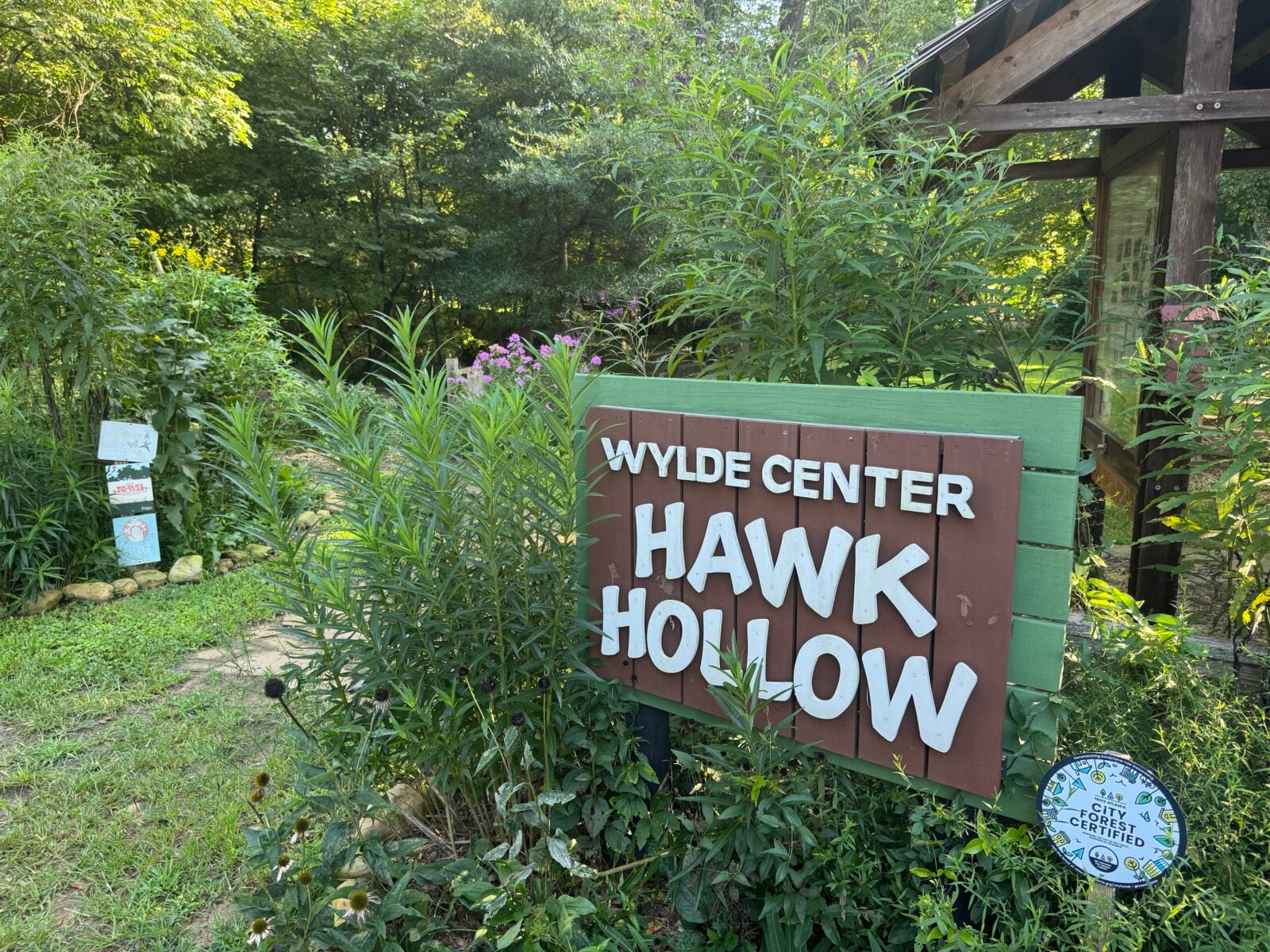
In Atlanta, Georgia, environmental advocates like Terry Moriarty and institutions like the Wylde Center have taken the message directly to the streets. Moriarty has made headlines—and changed neighborhood habits—by intercepting curbside paper leaf bags on trash day, redistributing the organic gold back beneath the canopy of local trees.
Simultaneously, specialized growers like Pandra Williams, founder and co-owner of Beech Hollow Farm in Georgia, began framing the understory not as wasted space, but as a vertical architectural puzzle. By translating ecological science into accessible metaphors—such as treating vertical yard space like the shelves and hanging rods of a well-organized closet—horticulturists have successfully translated a complex ecological strategy into practical, actionable steps for everyday gardeners.
Supporting Context & Metrics: The Science of the Sub-Canopy
To appreciate why soft landings are so ecologically potent, one must examine the complex life cycles of native fauna, particularly Lepidoptera (butterflies and moths).
The Caterpillar-to-Pupa Journey
Many insects spend their larval stages high in the branches of keystone trees like oaks, cherries, and maples. When caterpillars reach maturity, they do not remain in the canopy. Instead, they must descend to the ground to pupate—either burrowing into the soil, spinning cocoons in leaf litter, or attaching themselves to the base of plants.
In a traditional suburban yard featuring bare soil or tightly packed turfgrass treated with weed-killers and mowed weekly, this descent is a death sentence. The caterpillars have nowhere to hide from predators, no leaf litter to insulate them, and no permeable soil in which to burrow. Furthermore, pesticide-laden turf acts as a chemical barrier.
Keystone Trees and Their Understory Partners
Ecological data underscores the unmatched power of native trees. According to conservation research, native oak trees support over 500 species of caterpillars in North America alone, making them vital biological powerhouses. However, these caterpillars require a functional understory to complete their generational cycle.
When a property owner establishes a soft landing beneath an oak tree, they complete an unbroken ecological circuit. The tree feeds the larvae; the soft landing catches the falling caterpillars and provides sanctuary for pupation; and the resulting insect population provides essential protein for breeding songbirds and their nestlings in the spring.
Vertical Stratification: Mimicking Nature’s Architecture
Pandra Williams’s "closet" analogy highlights the importance of vertical space in garden design. A natural forest floor is never uniform. It features:
- The Organic Floor Layer: Fallen leaves, woody debris, and decomposing duff that retain moisture and feed soil microbes.
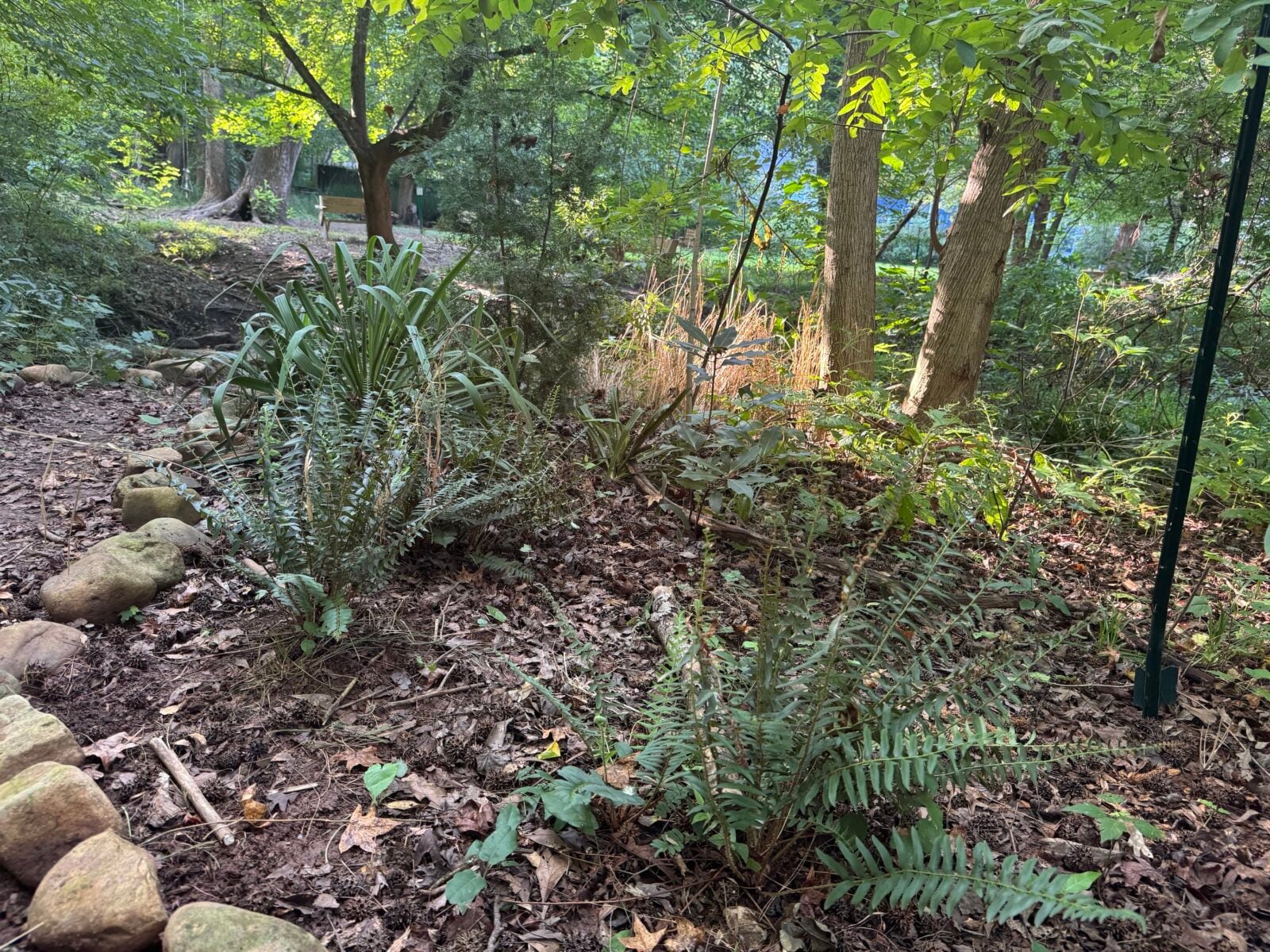
- The Groundcover Layer: Low-growing ferns, mosses, and creeping perennials that stabilize the soil and provide micro-habitats for amphibians like leopard frogs.
- The Sub-Canopy/Shrub Layer: Mid-level native shrubs that capture sunlight filtering through the canopy, offering nesting sites for birds and nectar sources for pollinators.
By layering these elements, gardeners maximize the biological carrying capacity of even a modest residential lot.
Official Statements and Expert Insights
The transition toward ecologically integrated landscaping is championed by frontline educators and growers who see the transformation happening in real-time.
On Changing Neighborhood Norms:
Terry Moriarty, an Atlanta resident and volunteer at the Wylde Center, emphasizes the power of community demonstration. Her grassroots approach to reclaiming discarded yard waste has sparked organic behavioral changes along her street:
"It’s a good way to teach people, because on my street when I did it and told them why, slowly they started saving their leaves," Moriarty notes.
Reflecting on the immediate biodiversity boom in her own yard, she adds:
"It’s a great ecosystem to support. I see leopard frogs in my yard. I see more birds, more snakes—little nice snakes."
On Spatial Design and Vertical Utilization:
Pandra Williams, founder and co-owner of Beech Hollow Farm, breaks down the horticultural philosophy behind the movement using everyday imagery:
"When you’ve got a closet and you put things on the rod and you put things on the floor, there’s all that empty space in between. It’s taking advantage of vertical space like shelves."
By viewing the understory as a tiered habitat rather than an empty gap to be filled with mulch or grass, gardeners can optimize both aesthetic appeal and ecological productivity.
Future Outlook: Implementing Soft Landings in Your Own Yard
As municipal sustainability initiatives grow and water conservation policies tighten, the future of landscaping points decisively away from high-maintenance turf and toward self-sustaining native plant communities. Creating a soft landing does not require a sprawling estate; it can be implemented around a single backyard maple or oak.
Practical Steps for Implementation
- Cease Bagging Leaves:
Instead of sending autumn leaves to the municipal landfill, rake or blow them out of turf areas and deposit them directly beneath the drip lines of your trees. This creates the foundational organic layer required by ground-dwelling insects and soil fungi. - Select Site-Appropriate Native Plants:
Success relies entirely on matching plants to local soil and lighting conditions.- Beneath Pine Trees: Acid-loving native plants such as wild azaleas and shade-tolerant native blueberry varieties (like shiny blueberry or pine-savanna blueberry) thrive in the acidic, needle-rich soil.
- Beneath Oak Trees: The oakleaf hydrangea is an ideal companion, flourishing in speckled shade while matching the woodland aesthetic.
- For Color and Foraging: Beautyberries offer a stunning pop of magenta fruit in partial shade while feeding autumn birds and caterpillars.
- For Groundcover: Native ferns—such as the Christmas fern or the widespread southern shield fern (ranging from South Carolina down to Florida and across to West Texas)—provide an evergreen, soft-textured base layer.
- Consult Local Experts:
Homeowners looking to begin their transition should avoid generic big-box nurseries and instead seek guidance from regional native plant societies, university extension offices, or specialized native plant markets like Beech Hollow and the Wylde Center.
A Greener Horizon
The "pied-à-terre of the yard" is more than a clever horticultural trend; it is a vital recalibration of humanity’s relationship with the domestic landscape. By abandoning the compulsion for sterile perfection and embracing the messy, beautiful complexity of multi-layered native ecosystems, property owners can turn their yards into resilient arks of biodiversity. In doing so, we ensure that our neighborhoods remain vibrant, living landscapes for generations to come.

0 Comments