

Executive Overview
NASHVILLE, Tenn. — The global entertainment landscape is in mourning following the passing of Dolly Parton, the undisputed queen of country music, legendary songwriter, astute businesswoman, and tireless philanthropist. Parton died peacefully on Tuesday in Nashville, Tennessee, at the age of 80, according to her publicist. Her death comes approximately a year and a half after the passing of her lifelong partner and husband of 58 years, Carl Dean, who died in March 2025 at the age of 82.
Parton’s departure marks the closure of one of the most remarkable chapters in American cultural history. Rising from extreme Appalachian poverty to achieve international superstardom, Parton transcended the confines of the country music genre to become a universally beloved pop-culture phenomenon. Known as much for her self-deprecating wit, towering wigs, and dazzling stage presence as for her crystalline soprano and peerless songwriting catalog—which includes timeless anthems such as "Jolene," "I Will Always Love Parton," and "9 to 5"—Parton defined a standard of authenticity and resilience.
Beyond her musical accomplishments, Parton built a sprawling commercial and philanthropic empire. From co-founding the Dollywood theme park nestled near her native Great Smoky Mountains to establishing the Imagination Library, a visionary literacy program that has mailed hundreds of millions of books to children worldwide, her impact extended far beyond the recording studio.
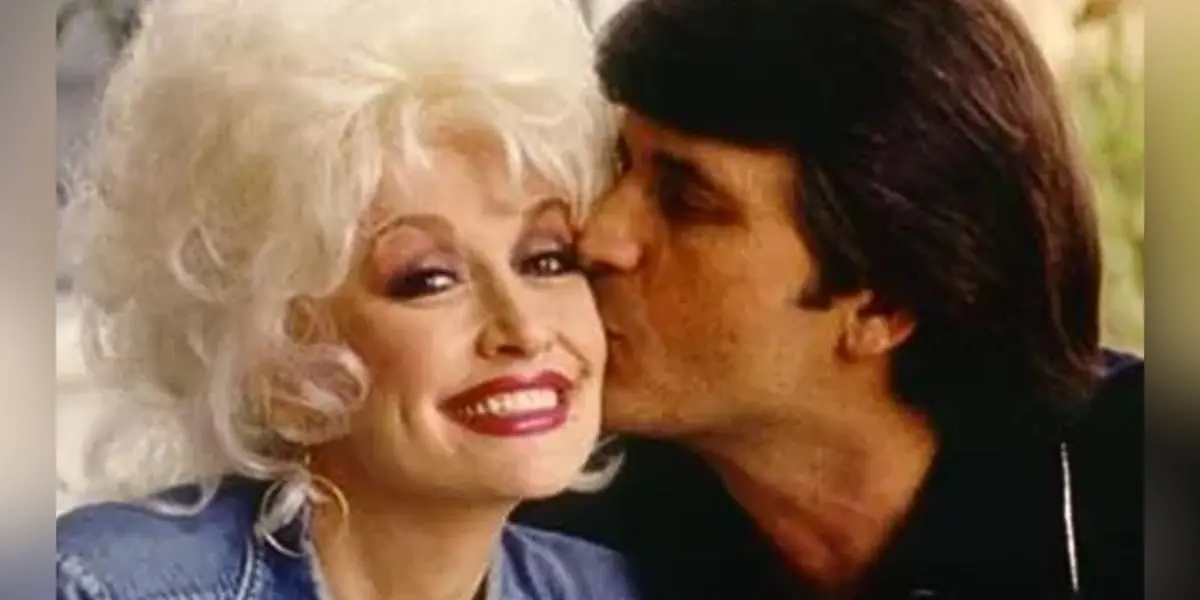
The juxtaposition of her passing so soon after that of Carl Dean has deeply touched fans worldwide. Their nearly six-decade romance—defined by Dean’s resolute avoidance of the spotlight and Parton’s fierce protection of their domestic privacy—served as a grounding anchor throughout her meteoric career. As tributes pour in from heads of state, musical contemporaries, and devoted fans across the globe, the world pauses to reflect on the monumental legacy of a woman who never forgot where she came from, even as she reached the pinnacle of global stardom.
Detailed Chronology: A Life in Full
From Sevierville to the Grand Ole Opry (1946–1966)
Born on January 19, 1946, in Locust Ridge, Tennessee, Dolly Rebecca Parton was the fourth of twelve children born to Robert Lee Parton and Avie Lee Owens. Growing up in a ramshackle cabin in the Great Smoky Mountains, Parton’s early life was defined by financial hardship but rich in musical tradition. Her mother’s family were deeply involved in local church singing, and Dolly picked up her first guitar—handmade by her uncle—as a young child.
By her early teens, Parton was performing on local radio and television stations in East Tennessee. The defining moment of her youth came the very day she graduated from high school in 1964. Packing her meager belongings, an 18-year-old Parton boarded a bus for Nashville, determined to conquer Music City.
Fate intervened almost immediately upon her arrival. While doing her laundry at the Wishy Washy Laundromat in Nashville, Parton caught the eye of a young businessman named Carl Dean. As Parton famously recounted in later interviews, Dean pulled up in his white Chevy pickup truck, took one look at the young, ambitious singer, and knew his life had changed forever.
"He said, ‘You’re going to marry me,’" Parton recalled. The courtship was swift and steadfast. Two years later, on Memorial Day—May 30, 1966—the couple married in a quiet, private ceremony in Ringgold, Georgia, accompanied only by Parton’s mother and the preacher’s wife. It was the beginning of an unconventional yet remarkably enduring partnership that would span nearly six decades.
The Rise of a Superstorm (1967–1980s)
Parton’s professional breakthrough arrived in 1967 when country music entertainer Porter Wagoner invited her to join his popular syndicated television program, The Porter Wagoner Show. Her soaring vocals and effervescent personality quickly made her a fan favorite. While her initial years were defined by successful duet recordings with Wagoner, Parton harbored fierce ambitions for a solo career.
In 1974, she made the difficult decision to part ways professionally with Wagoner—a split that inspired one of her most enduring masterpieces, "I Will Always Love You." Rather than burning bridges, Parton penned the song as a heartfelt farewell, performing it directly to Wagoner on television to signal her departure. The song rocketed to number one on the Billboard Hot Country Songs chart, a feat she would repeat with the track years later.
The mid-to-late 1970s saw Parton orchestrate a deliberate crossover campaign. Hits like "Jolene" (1973), "Sweet Summer Lovin’," and "Here You Come Again" (1977) bridged the gap between traditional country and mainstream pop music. Her striking image—characterized by high-glam fashion, towering blonde wigs, and heavy makeup—was entirely intentional. Parton frequently noted that her look was inspired by the town tramp of her youth, transforming an exaggerated caricature of femininity into an emblem of empowerment and self-expression.
Cinematic Success and Mogul Status (1980–2000s)
In 1980, Parton expanded her artistic repertoire into the cinematic realm, starring alongside Jane Fonda and Lily Tomlin in the workplace comedy blockbuster 9 to 5. Parton not only held her own on screen but also contributed the iconic theme song, earning an Academy Award nomination and two Grammy Awards. Her success continued with the 1982 film adaptation of The Best Little Whorehouse in Texas and 1989’s Steel Magnolias, cementing her status as a multi-hyphenate superstar.
Concurrently, Parton was laying the groundwork for a massive business empire. In 1986, she partnered with the Herschend family to open Dollywood in Pigeon Forge, Tennessee. The theme park revitalized the local economy of East Tennessee, providing thousands of jobs and drawing millions of tourists annually to the foothills of the Great Smoky Mountains.
Throughout the 1990s and 2000s, Parton demonstrated remarkable longevity. She launched her own independent record label, Blue Eye Records, returned to her acoustic roots with a critically acclaimed bluegrass trilogy (The Grass Is Blue, Little Sparrow, and Halos & Horns), and continually adapted to shifting music industry landscapes without ever compromising her artistic integrity.
The Twilight Years and Unwavering Partnership (2010–2026)
As she entered her seventies and eighties, Parton’s cultural footprint only expanded. She became a beloved fixture of internet culture, a champion of COVID-19 vaccine research (having donated $1 million to Vanderbilt University’s medical center), and a Rock and Roll Hall of Fame inductee—an honor she initially resisted before wholeheartedly embracing.
Through it all, her relationship with Carl Dean remained a steady, private constant. Dean, who owned an asphalt-paving business in the Nashville area, steadfastly avoided the public eye. Rumors and conspiracy theories regarding his existence occasionally circulated in tabloid media, but Parton continually defended his choice to remain anonymous, emphasizing that their contrasting lifestyles were the secret to their longevity.
The couple celebrated their 50th wedding anniversary in 2016 by renewing their vows at their Nashville home—an event that directly inspired Parton’s studio album Pure & Simple.
The harmony of their long life together was fractured in March 2025 with the passing of Carl Dean at the age of 82. In a poignant statement following his death, Parton wrote: "Carl and I spent many wonderful years together. Words can’t do justice to the love we shared for over 60 years. Thank you for your prayers and sympathy."
Just over a year later, Dolly Parton joined her beloved husband, passing away peacefully in Nashville at age 80. While the direct causes of death for both Parton and Dean were kept private by their family, the symmetry of their departures has brought a poignant sense of closure to one of modern history’s most devoted love stories.
Supporting Context & Metrics
To fully understand the magnitude of Dolly Parton’s impact, one must examine the staggering scale of her commercial, creative, and philanthropic achievements:
- Discography & Chart Dominance: Parton released dozens of studio albums over a career spanning seven decades. She amassed 25 number-one singles on the Billboard Hot Country Songs chart—a record for a female artist that stood for decades—and earned 11 Grammy Awards from 50 nominations.
- Songwriting Output: Parton wrote more than 3,000 songs during her lifetime. Among her most famous compositions, "I Will Always Love You" achieved historic global success not only through her own recordings but also via Whitney Houston’s iconic 1992 cover for The Bodyguard soundtrack, which spent 14 weeks at number one on the Billboard Hot 100.
- The Imagination Library: Founded in 1995 through the Dollywood Foundation, Parton’s literacy initiative began as a local effort in Sevier County, Tennessee, to inspire a love of reading among preschool children. By the time of her passing, the program had expanded internationally—operating across the United States, Canada, the United Kingdom, Australia, and Ireland—and mailed well over 200 million free books to children from birth until they enter school.
- Economic Impact of Dollywood: Located in Pigeon Forge, Tennessee, Dollywood and its surrounding properties (including water parks and resort hotels) became the largest ticketed tourist attraction in the state, employing thousands of local residents and driving billions of dollars into the regional Appalachian economy.
Official Statements and Global Tributes
The news of Dolly Parton’s passing triggered an immediate and overwhelming outpouring of grief, gratitude, and admiration from leaders, artists, and fans worldwide.
The White House released a statement commemorating Parton as "an American treasure whose music healed broken hearts and whose generosity uplifted entire communities."
Fellow artists took to social media and broadcast networks to share their personal grief. Country music star Carrie Underwood wrote: "There will never be another Dolly. She paved the way for every female artist in this industry, and she did it with grace, humor, and an unshakeable sense of who she was."
Miley Cyrus, Parton’s goddaughter and a fellow music superstar, shared a tearful tribute: "My fairy godmother, my mentor, my icon, my family. The world is vastly dimmer without your physical presence, but your light is woven into the very fabric of this universe. I will miss you every single day."
International figures, from British royalty to Hollywood icons, echoed these sentiments, highlighting Parton’s rare ability to bridge cultural divides through the universal language of music and kindness.
Future Outlook: Preserving an Unmatched Legacy
As Nashville and the global community absorb the reality of life without Dolly Parton, attention immediately turns to the preservation of her monumental legacy.
Administrators of her estate, alongside the Dollywood Foundation and the Country Music Hall of Fame and Museum, are expected to announce comprehensive archival projects, commemorative museum exhibits, and scholarship funds designed to ensure that future generations understand the breadth of her contributions.
The Imagination Library has issued a statement confirming that the program will continue uninterrupted, fully funded and operational, honoring Parton’s lifelong commitment to childhood literacy. Meanwhile, Dollywood remains a beacon of Appalachian culture and hospitality, operating as a living monument to its creator’s entrepreneurial vision and civic pride.
Dolly Parton leaves behind a world that is undeniably richer, kinder, and more melodious than the one she entered in the mountains of East Tennessee eighty years ago. Though she and Carl Dean have departed, the echoes of her voice and the enduring warmth of her spirit will resonate for generations to come.

0 Comments