


Executive Overview
In the heart of Nashville’s historic Sylvan Park neighborhood, a quiet culinary revolution is taking place behind the zinc-topped bar and within the stainless-steel prep stations of Miel, a beloved French-inspired, farm-to-table bistro. At the intersection of zero-waste philosophy and avant-garde cocktail engineering lies a drink that has captured the essence of peak summer growing season: the Blushing Mary—affectionately known among patrons and staff alike as the tomato vine martini.
Conceived through an ongoing, highly collaborative cross-pollination of ideas between Beverage Director and General Manager Evan Steen and Head Chef Jason Lalacona, this modern libation challenges the conventional boundaries between the kitchen and the bar. Far from a standard seasonal novelty, the tomato vine martini represents a masterclass in culinary resourcefulness. By dismantling the artificial barriers that traditionally separate savory cookery from mixology, Miel has transformed what would otherwise be garden waste—ripe Campari tomatoes, their sugary juices, and their profoundly aromatic, resinous vines—into a sophisticated, multi-sensory cocktail experience.
As consumers increasingly demand transparency, sustainability, and authentic hyper-local flavors from the hospitality industry, Miel’s approach offers a compelling blueprint for the future of sustainable dining. This comprehensive feature explores the genesis of the tomato vine martini, the intricate chemistry and closed-loop kitchen practices that make it possible, the sensory philosophy guiding its creation, and the broader implications of zero-waste mixology in contemporary American gastronomy.
Detailed Chronology: The Genesis of a Modern Classic
The Closed-Loop Ecosystem at Miel
To understand how a tomato vine found its way into a high-end cocktail glass, one must first examine the operational DNA of Miel. Established as a cornerstone of Nashville’s farm-to-table movement, the restaurant has long operated on the principle that sustainability is not merely a marketing buzzword, but an operational necessity.
Within this framework, the kitchen and the bar are not autonomous departments; they function as a single, symbiotic organism. The relationship between Evan Steen and Chef Jason Lalacona is built on a daily exchange of raw materials, culinary byproducts, and creative challenges.
"There is a constant two-lane highway of produce flowing between the bar and the kitchen," Steen explains, detailing the daily rhythms of prep service. This fluid dynamic manifests in routine operational handoffs:
- The Berry Exchange: When Steen macerates fresh berries for seasonal cocktails, the nutrient-dense, fruit-infused mash is routinely salvaged rather than discarded. Instead of hitting the compost bin, it is handed off to Lalacona, who transforms it into rich house-made jams, complex reductions, or vibrant gastriques for evening proteins.
- The Fruit Return: Conversely, Lalacona frequently passes surplus or over-ripe fruit from the culinary line back to the beverage program, where Steen and her team incorporate them into house-made shrubs, syrups, and infusions.
- The Trim Trade: Even rinds, citrus peels, herb stems, and vegetable trimmings are subject to this cross-departmental barter system. By treating every ingredient as a multi-stage resource, Miel significantly curbs food waste while amplifying depth of flavor across its entire menu.
The Birth of the "Blushing Mary"
It was within this collaborative crucible that the tomato vine martini was born. As the summer sun coaxes peak-season tomatoes from regional soil, the restaurant’s menu naturally pivots to highlight the undisputed star of the warm-weather garden.
While the official menu lists the drink as the Blushing Mary—a playful nod to its soft, rose-tinted hue and its distant cousin, the Bloody Mary—its DNA is fundamentally rooted in the structure of a classic dirty martini. Rather than relying on briny, high-sodium olive juice to lend salinity and savory depth, Steen sought a vegetal alternative that could honor the pure, unadulterated flavor of fresh-picked garden produce.
The breakthrough came from looking past the fruit itself and examining the plant structure. By incorporating a freshly clipped snippet of tomato vine into the mixing process, Steen unlocked an entirely new aromatic profile. The resulting cocktail bridges the gap between sweet and savory, offering a sophisticated, herbaceous take on a cocktail hour staple that speaks directly to the soul of Southern summer gardening.
Supporting Context & Metrics: The Science of the Vine and the Shrub
Botanical Chemistry: Why the Tomato Vine Captivates the Nose
To the uninitiated, adding a plant stem to an alcoholic beverage might sound unusual or even counterintuitive. However, horticulturists and sensory scientists understand that the green, leafy parts of the tomato plant—specifically the trichomes (tiny hair-like structures) covering the stems and leaves—contain concentrated volatile organic compounds.
When a tomato vine is freshly clipped and gently handled, these trichomes rupture, releasing a complex cocktail of aromatic compounds, including:
- Leaf Alcohols (Z-3-Hexen-1-ol): Responsible for that universally recognized, invigorating scent of freshly cut grass and bruised foliage.
- Terpenes and Sesquiterpenes: Hydrocarbon molecules that contribute deep, earthy, resinous, and subtly piney undertones.
- Pyrazines: Compounds that impart a distinct, herbaceous greenness that cuts through the rich, warming qualities of base spirits.
"My favorite part of the recipe is that snippet of tomato vine," Steen notes, emphasizing its sensory impact. "The oils infuse the cocktail with garden-fresh goodness. It’s earthy and herbaceous. It can be slightly bitter in a good way. It also plays on the nose, inspiring the feeling you get when you smell the garden after a good rain, or fresh-cut grass."
This olfactory trigger is no accident; it taps into human evolutionary psychology, evoking a deep-seated association with vitality, growth, and fertile earth.
Agricultural Selection: The Campari Advantage
Choosing the right tomato variety is critical to balancing the flavor profile of the drink. While any backyard gardener can adapt the recipe using whatever heirloom or hybrid variety is currently overrunning their vines, Steen specifically selected Campari tomatoes for Miel’s cocktail program.
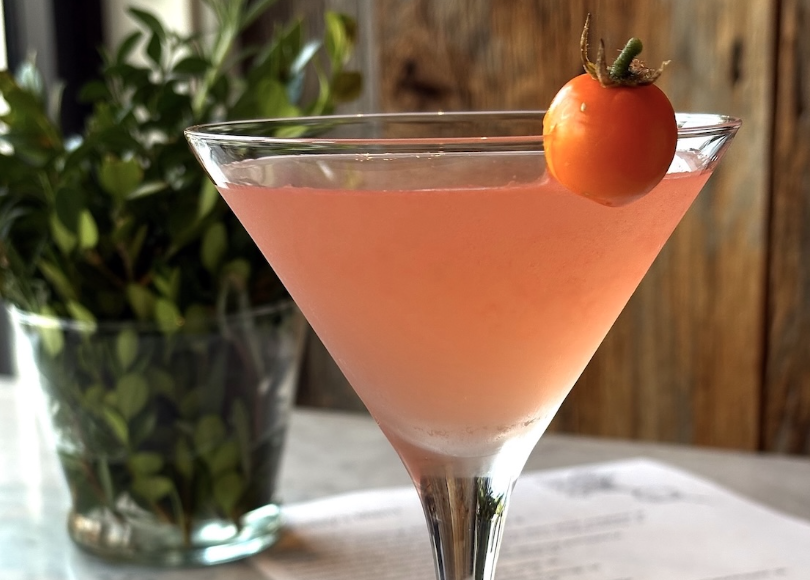
Campari tomatoes offer several distinct advantages for mixology:
- Sugar-to-Acidity Ratio: They naturally possess a relatively low acidity level paired with a significantly higher concentration of natural sugars compared to larger, more watery slicing tomatoes. This natural sweetness prevents the cocktail from becoming overly sharp or astringent.
- Textural Integrity: Their dense, meaty flesh and manageable seed cavities yield a cleaner, less pulpy extraction when transformed into a shrub or juice reduction.
- Consistent Year-Round Quality: While peak-season local tomatoes remain the gold standard, Campari varieties offer reliable flavor profiles that allow the bar program to maintain a degree of consistency as the seasons shift.
The Shrub Technique and Upcycling the Byproducts
At the core of the drink’s flavor profile is a house-made tomato shrub—a centuries-old method of preserving seasonal produce using vinegar, sugar, and time. By macerating the Campari tomatoes with sugar to draw out their juices, then balancing the mixture with a clean, high-grade vinegar, Steen creates a sweet-and-sour elixir that mimics the textural mouthfeel and saline kick of traditional olive brine while injecting bright, fruit-forward acidity.
True to Miel’s zero-waste ethos, the lifecycle of the tomato shrub does not end when the cocktail is garnished and served. Once a batch of shrub has been exhausted or residual tomato mash remains from prep, the kitchen steps back in to upcycle the material. Borrowing from Chef Lalacona’s playbook, leftover shrub and tomato remnants are routinely repurposed into:
- Vinaigrettes: Lending bright, acidic complexity and subtle umami to summer greens.
- Tomato Aiolis: Infusing house-made mayonnaise with concentrated, savory garden notes that elevate fish, poultry, and sandwich programs.
Official Statements and Culinary Philosophy
To fully appreciate the scope of Miel’s beverage philosophy, one must examine the intentionality behind their menu curation. The restaurant’s leadership views every cocktail not merely as a profit center or a vehicle for alcohol, but as an extension of their culinary values.
"At Miel, we refuse to let the kitchen and the bar operate in silos. When Evan creates a syrup, she thinks about what Jason needs for the evening service. When Jason processes produce, he considers how those trimmings can enhance the bar program. The tomato vine martini is the physical manifestation of that dialogue—it takes something as simple as a backyard garden and elevates it into high art through shared responsibility."
— Miel Management & Culinary Team
This philosophy challenges the traditional division of labor in hospitality venues, where bartenders and line cooks often speak entirely different professional languages. By fostering an environment where ideas and byproducts flow freely across the pass, Miel has cultivated a team of hospitality professionals who view sustainability not as a compliance checklist, but as an ongoing creative challenge.
Furthermore, the introduction of the tomato vine martini addresses a broader shift in consumer preferences. Today’s sophisticated diners—particularly within burgeoning culinary hubs like Nashville—are increasingly fatigued by overly sweet, heavily manufactured cocktail ingredients. They seek drinks that tell a story, connect them to the land, and offer complex, savory flavor profiles that pair harmoniously with fine food.
By swapping the heavy, oil-laden profile of a traditional olive-brined martini for the bright, vegetal crispness of a garden-fresh tomato shrub and vine infusion, Miel has successfully captured the palate of the modern epicurean.
Future Outlook: The Evolution of Closed-Loop Mixology
As the culinary landscape looks toward the remainder of the decade, the principles demonstrated by Miel’s tomato vine martini are poised to move from pioneering anomalies to industry-standard expectations. The convergence of rising supply chain costs, environmental consciousness, and a growing consumer appetite for hyper-local ingredients means that sustainability and creativity will remain inextricably linked.
The Replication of Zero-Waste Programs
Independent restaurants across the American South and beyond are increasingly adopting cross-departmental waste reduction strategies. Bar programs that once operated independently, ordering pre-packaged syrups and commercial mixers, are shifting toward in-house preservation techniques—fermentations, shrubs, cordials, and infusions—derived directly from kitchen trimmings.
This shift offers profound economic and culinary benefits:
- Cost Efficiency: Utilizing kitchen byproducts reduces overall food waste disposal costs while maximizing the yield on expensive seasonal produce.
- Brand Differentiation: In a crowded hospitality market, unique, hyper-contextual drinks like the tomato vine martini give establishments a distinct identity that cannot be replicated by chain restaurants relying on corporate beverage menus.
- Agricultural Literacy: Drinks that highlight specific plant parts—such as tomato vines, carrot tops, or beet greens—educate consumers about the agricultural lifecycle of their food, fostering a deeper appreciation for sustainable farming.
What’s Next for Miel?
As the summer season transitions into autumn, the collaborative spirit between Evan Steen and Chef Jason Lalacona shows no signs of slowing down. While the tomato vine martini will eventually yield its place on the seasonal menu to make room for fall crops—anticipating root vegetables, orchard apples, and warming spices—the foundational methodology established by the drink remains permanent.
Future iterations at Miel are expected to explore savory fall shrubs utilizing roasted root vegetables, herbaceous infusions incorporating cold-weather greens, and further integration of fermentation techniques to extend the shelf life of seasonal harvests.
For the home bartender inspired by Miel’s innovation, the takeaway is clear: the boundary between the kitchen and the bar is porous. Whether you are growing Campari tomatoes in a suburban backyard or sourcing them from a local Nashville farmers market, looking beyond the fruit to the vine, the stem, and the trimmings opens up an entirely new world of flavor. As Miel has proven, when you bring the garden into the glass with intention and creativity, sustainability never tasted so good.

0 Comments