

By Charlie Hastings
Published: October 7, 2026
Executive Overview
In an era defined by rapid coastal development and the relentless march of short-term vacation rentals, Folly Beach, South Carolina, has largely traded its rugged, bohemian charm for a grid of neat neighborhood streets and modern beach houses. Yet, tucked away on the island’s western flank lies a stark anomaly: eighteen acres of dense, swampy maritime forest, untouched by the modern commercial wave.
This is the Folly River House, a property owned since 1999 by retired e-commerce executive and artist Jim Rocco. What began as a local dumping ground, a haven for squatters, and what real estate speculators universally dismissed as an "obvious teardown" has evolved over more than two decades into a de facto wildlife refuge and an eclectic artist’s retreat.
Today, Rocco’s property stands as the last true vestige of old Folly Beach—a barrier island wilderness where bald eagles nest, bobcats roam, and art converges with conservation. Through a meticulous blend of land stewardship, community mentorship, and site-specific sculptural works, Rocco has preserved a vital piece of South Carolina history while crafting a sanctuary that feels entirely suspended in time.
Detailed Chronology: From Dumping Ground to Sanctuary
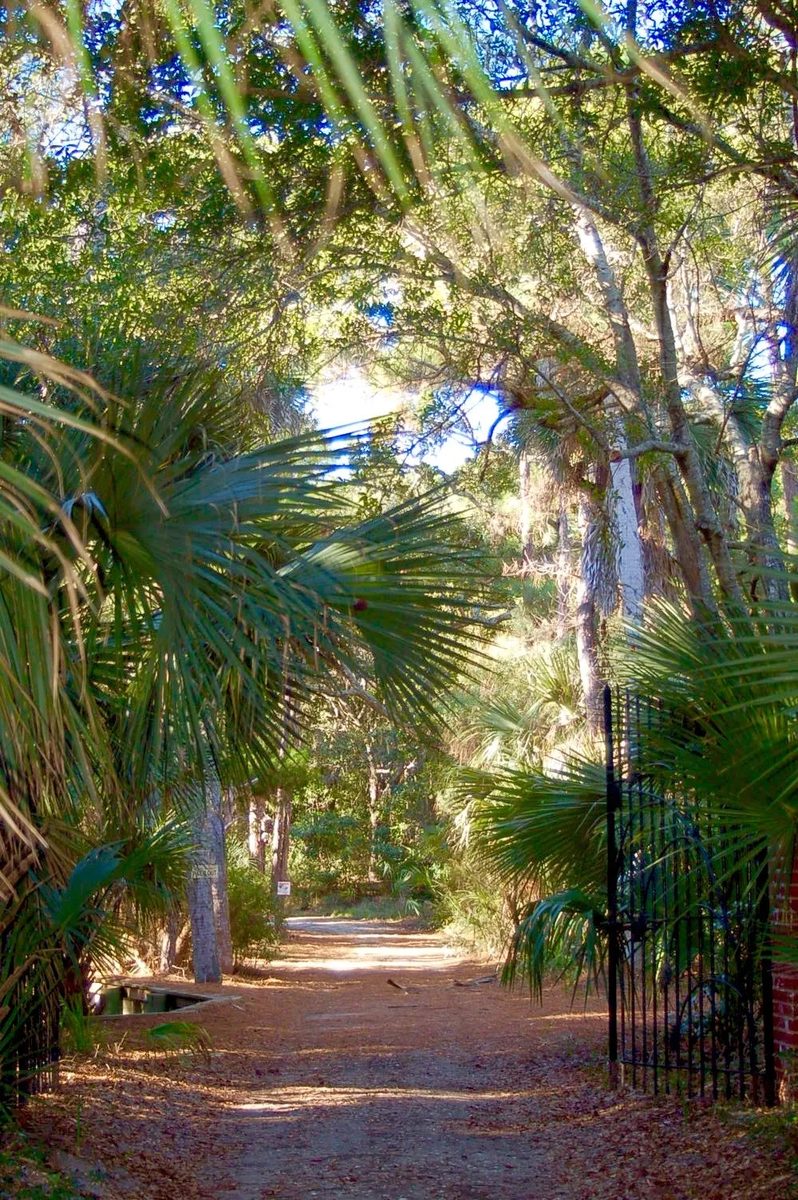
To understand the magnitude of the Folly River House today, one must look back at its harrowing origins at the turn of the millennium. When Rocco acquired the neglected eighteen-acre tract in 1999, the land was choked by decades of neglect, acting as an informal neighborhood landfill and an unregulated camping ground for transients.
"The African Queen movie with Humphrey Bogart? Nothing on us," Rocco recalls, reflecting on the initial, nearly impassable state of the terrain. "You couldn’t go ten feet. You couldn’t see the river. Everything was overgrown for years. It was just left here."
The purchase, however, was decades in the making, rooted in family folklore. Rocco’s grandfather, an immigrant from Naples, Italy, had often looked across various undeveloped South Carolina tracts with a mixture of longing and hindsight.
"There were stories from either my father or my grandfather, saying, ‘Hey, Jimmy, you see that property over there? I could have bought that for $10,’" Rocco says with a laugh. Echoing that familial regret, every time he heard the story growing up, Rocco dropped a dollar into a physical jar—a savings habit that quietly laid the financial and psychological groundwork for his eventual acquisition.
Upon purchasing the land, Rocco faced a crossroads familiar to coastal property owners: clear-cut the acreage to maximize its lucrative real estate potential, or invest blood, sweat, and tears into restoration. Guided by the intuition of his late wife, Shann, the couple made a fateful choice.
"In the end, we made the decision together. Keep it as is. Keep it special," Rocco recalls.
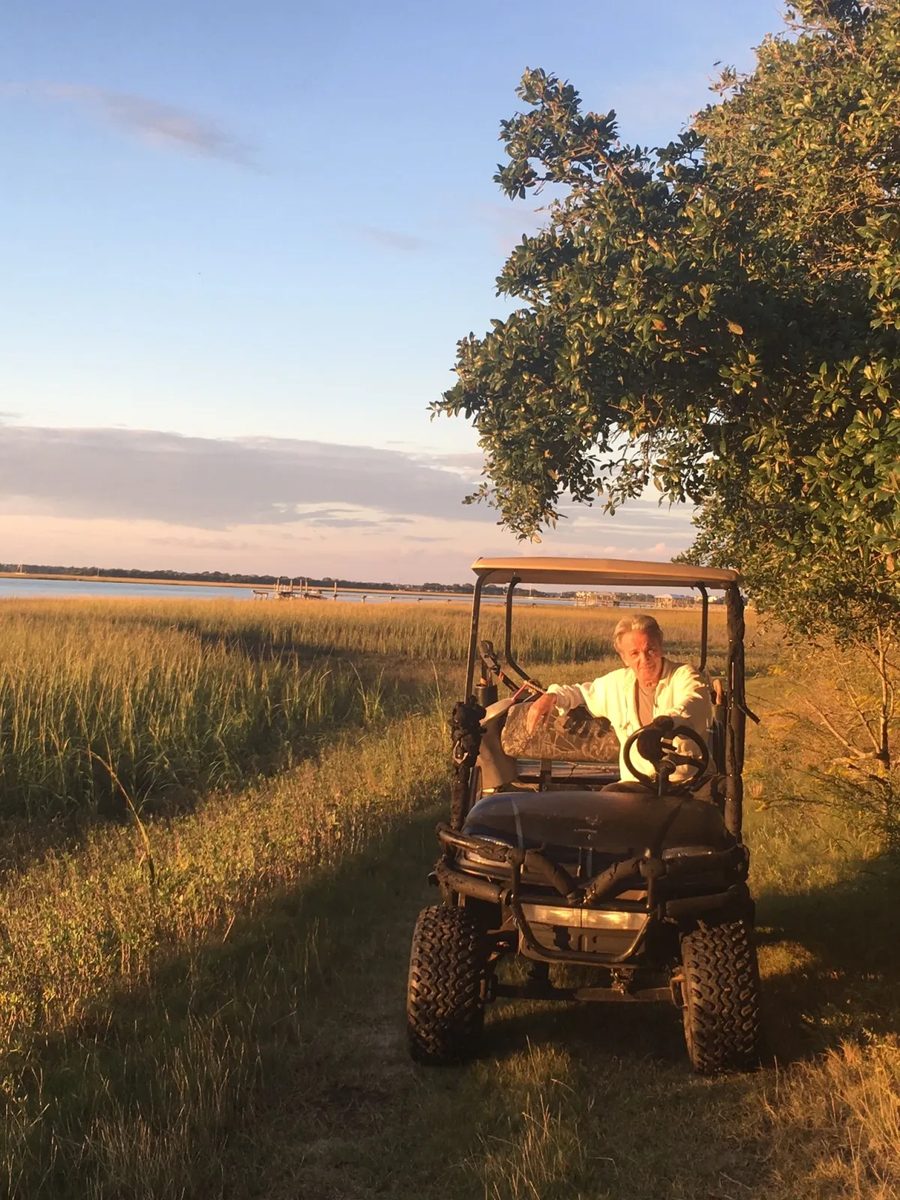
Over the next twenty-two years, Rocco embarked on an intensive rehabilitation project. He cleared invasive overgrowth by hand, mapped out miles of winding nature trails, repaired the crumbling early-1900s rustic cottage at the heart of the property, and built a dock stretching out toward the Folly River. Rather than imposing his will upon the landscape, Rocco viewed himself not as an owner, but as a reluctant custodian answering a call to preservation.
Supporting Context & Metrics: History, Ecology, and the Folly Beach Landscape
Historical Significance
The eighteen acres of the Folly River House are deeply embedded in the turbulent history of the South Carolina coast. According to historical records preserved by previous owners, the property served dual lives before Rocco’s tenure:
- The Civil War Era: Archaeological traces and historical documents indicate the marsh-adjacent land acted as a tactical staging area and supply depot for Union forces operating in the Lowcountry.
- The 1930s: Decades later, the property transitioned into a boys’ summer camp, bringing echoes of youth and laughter to a stretch of coastline that had otherwise weathered decades of military and maritime strife.
Ecological Footprint
A modern satellite view of Folly Island reveals a stark visual dichotomy. The landscape is dominated by a rigid, geometric grid of residential lots and tourist infrastructure. Yet, on the west side of the island, a dark, dense, irregular emerald canopy breaks the pattern: Rocco’s forest.
This preservation has yielded an unexpected ecological dividend. While surrounding habitats have faced mounting pressure from human encroachment, the Folly River House functions as a vital micro-ecosystem. The undisturbed maritime forest and adjacent wetlands now host a thriving biodiversity, regularly welcoming:
- Bald eagles soaring above the canopy.
- White-tailed deer navigating the interior thickets.
- Wading cranes patrolling the riverbanks.
- Bobcats utilizing the contiguous woodland corridors for hunting and shelter.
Cultural & Sculptural Additions
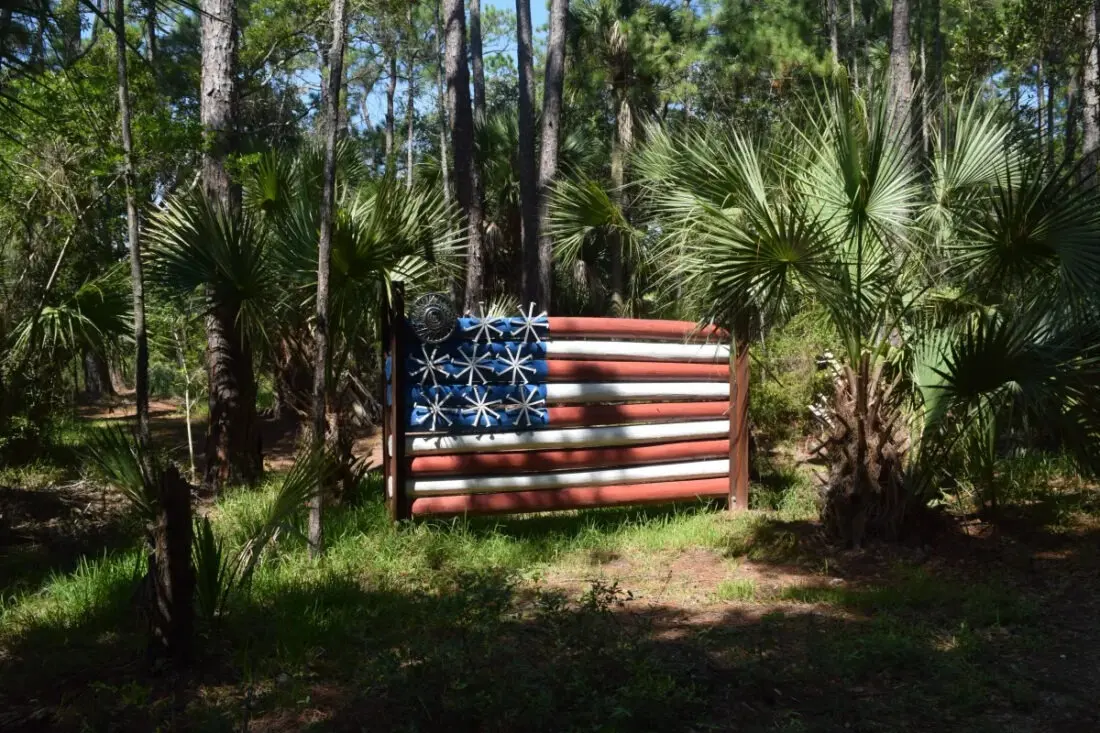
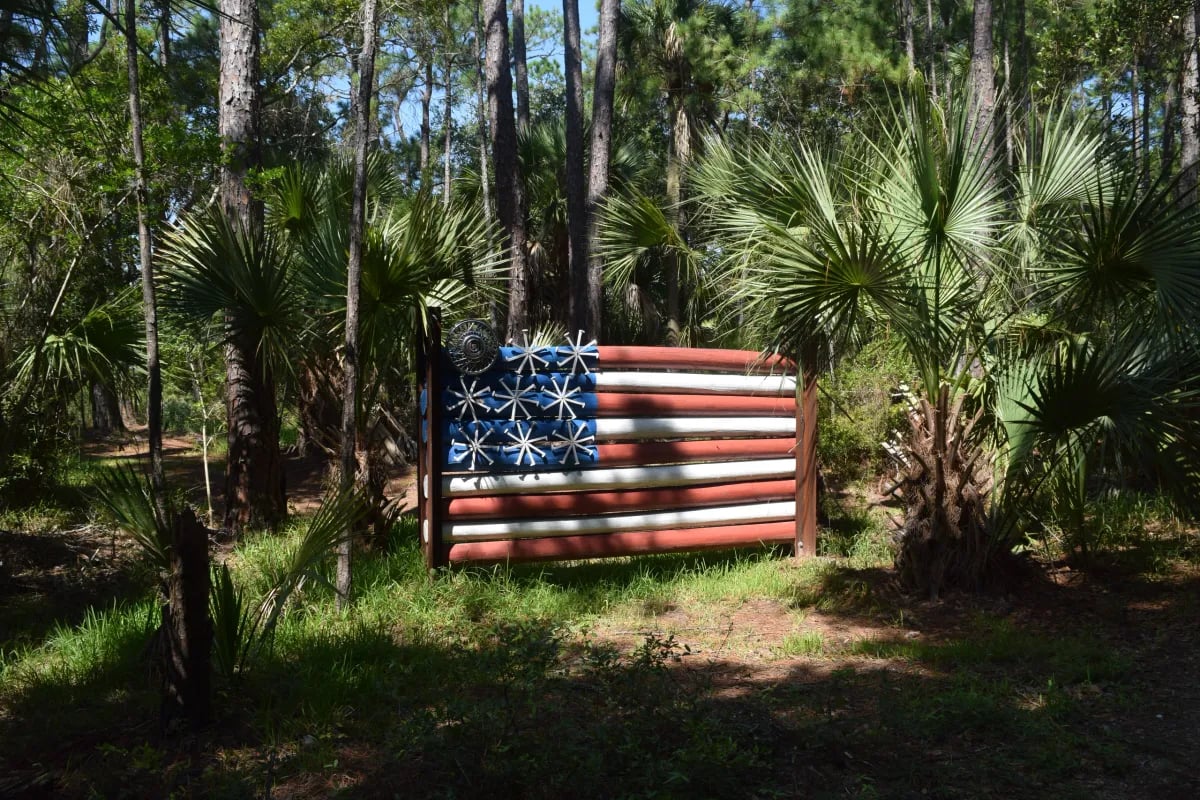
Rocco’s artistic vision extends far beyond interior decorating; it is woven directly into the topography of Folly Beach. Best known locally for his monumental American flag sculptures crafted from stacked logs, Rocco transforms historical debris into patriotic tributes.
Instead of traditional white stars, Rocco embeds objects laden with profound personal or regional resonance: Civil War bullets, an antique trombone, and the rusted head of his grandfather’s old pickax.
His most ambitious public installation stands on Huron Avenue. Utilizing weathered wooden beams salvaged from the demolition of the former Folly Beach Pier, Rocco constructed a massive flag sculpture dedicated to the construction crews who built the new pier "on time and ahead of schedule, with no complaints." Framed by a public sitting area and a sign bearing Folly Beach’s iconic moniker—the Edge of America—the sculpture serves as a physical bridge between the island’s industrial past and its modern identity.
Official Statements and Community Impact
While the Folly River House is occasionally listed on short-term rental platforms like Airbnb, Rocco maintains that commercial enterprise is secondary to preservation and connection. The property is frequently lent out as an unconditional sanctuary for family, close friends, and Rocco himself to escape the island’s bustling tourist core.
Beyond the boundaries of his private estate, Rocco has embedded himself deeply into the Lowcountry’s artistic community. He spends much of his time mentoring emerging artisans at the American College of Building Arts in nearby Charleston, frequently granting recent graduates their very first professional commissions.
Current student projects commissioned by Rocco for display on the River House grounds include:
- A towering, mythological Poseidon throne.
- A intricately carved Medusa head.
- A striking, seven-foot-tall statue of the legendary "Lizard Man" of South Carolina folklore.
"Make magic. Be inspired. Get back to nature. For me, it’s that simple," Rocco explains, summarizing a philosophy that stands in direct defiance of commercialism.
"You come here and your world stops here."
Future Outlook
As Folly Beach navigates ongoing municipal debates surrounding the proliferation of short-term rentals and the relentless saturation of coastal development, the long-term viability of green spaces hangs in the balance. Property values on the barrier island continue to skyrocket, making private conservation efforts increasingly rare and financially burdensome.
Rocco, however, has established a clear succession plan to protect his life’s work. He is currently formalizing an events business tailored specifically to the Folly River House grounds—one designed to generate sustainable revenue without compromising the integrity of the ecosystem. Upon stepping back entirely, Rocco plans to leave the stewardship of the eighteen-acre sanctuary entirely in the hands of his daughter.
By coupling intergenerational land management with active community engagement and public art preservation, the Folly River House is engineered to outlast the shifting trends of coastal real estate. In a changing South Carolina where every square foot of sand and swamp faces the constant pressure of concrete, Jim Rocco’s woodland refuge remains an enduring testament to the power of a single promise, a dollar jar, and a stubborn refusal to let the past be paved over.

0 Comments