

Executive Overview
PLYMOUTH, Mass. — The high-stakes legal proceedings surrounding Lindsay Clancy reached a critical juncture at Plymouth Superior Court, where jurors resumed deliberations to determine the legal culpability of a mother accused of ending the lives of her three young children in January 2023. The case, which has captivated and deeply polarized the nation, hinges on an agonizingly complex question: Was Lindsay Clancy a cold-blooded murderer driven by premeditated despair, or was she a victim of severe, medically unmanaged postpartum psychosis so absolute that it entirely obliterated her grasp on reality?
Clancy, 36, has pleaded not guilty by reason of lack of criminal responsibility. She does not dispute the physical acts; she admits to strangling her children—5-year-old Cora, 3-year-old Dawson, and 8-month-old Callan—inside their Duxbury, Massachusetts, home before attempting to take her own life by leaping from a second-story window. The fall left her permanently paralyzed from the waist down.
The trial, which featured dramatic closing arguments from defense attorney Kevin Reddington and Assistant District Attorney Jennifer Sprague, laid bare the catastrophic failure points within the modern mental healthcare infrastructure. It also forced a profound societal reckoning regarding how the American legal system handles profound psychiatric crises. As the jury weighs verdicts ranging from first-degree murder to manslaughter, or an acquittal by reason of insanity, the case stands as a harrowing monument to the devastating intersection of severe maternal mental illness, overmedication, and institutional shortcomings.
Detailed Chronology
The Descent: Autumn 2022 to January 2023
The tragedy that unfolded on January 24, 2023, was not an isolated snap, but the catastrophic culmination of a harrowing, months-long decline in Clancy’s mental health following the birth of her youngest child, Callan, in May 2022.
According to testimony presented during the trial, Clancy—a labor and delivery nurse by trade—began exhibiting signs of severe anxiety, obsessive thoughts, and debilitating depression in the fall of 2022. Friends, family, and medical records painted a picture of a devoted mother who recognized her own spiraling state and actively sought help, cycling through a dizzying array of psychiatric medications and therapeutic interventions.
Between October 2022 and January 2023, Clancy reportedly tried upwards of a dozen different psychiatric medications. Medical experts testified that this "medication merry-go-round," characterized by rapid changes in dosages and drug combinations, may have exacerbated rather than alleviated her underlying neurological distress.
By January 2023, Clancy’s condition had deteriorated to a point of acute crisis. She checked into McLean Hospital, a renowned psychiatric facility in Belmont, Massachusetts, for an inpatient stay. Her husband, Patrick Clancy, testified to the absolute terror and exhaustion that defined their lives during this period, noting that despite seeking professional intervention, they felt profoundly unequipped to manage the sheer velocity of Lindsay’s psychological disintegration.
Discharge and the Fatal Afternoon
Clancy was discharged from McLean Hospital in early January 2023—less than three weeks before the killings. While her discharge notes indicated stabilization, defense experts argued that she was discharged prematurely, still harboring homicidal and suicidal ideations born of severe postpartum psychosis.
On the afternoon of January 24, 2023, Patrick Clancy left the house briefly to pick up dinner and medication, leaving Lindsay alone with the three children. In the span of roughly an hour, a domestic sanctuary transformed into a crime scene.
According to investigative findings, Clancy used exercise bands to strangle Cora, Dawson, and Callan. Following the killings, she inflicted severe wounds upon herself and threw herself from a second-story window. When Patrick returned home, he discovered the horrifying tableau. The children were rushed to hospitals, where they were pronounced dead over the subsequent days. Lindsay survived the fall, though her injuries resulted in permanent paralysis.
The Trial Proceedings and Closing Arguments
The trial at Plymouth Superior Court featured weeks of emotionally searing testimony. Clancy did not take the stand in her own defense, but jurors heard extensive depositions and live testimony from psychiatrists, psychiatric nurses, family members, and friends.
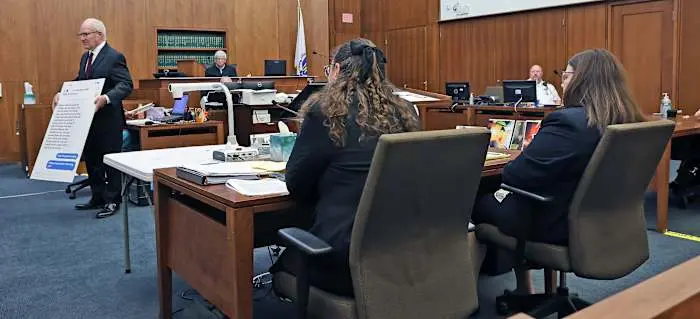
During closing arguments, defense attorney Kevin Reddington presented a tearful and impassioned plea to the jury. Holding up a framed photograph of the Clancy family taken before the tragedy, Reddington argued that Lindsay was entirely detached from reality, hijacked by a biological malfunction that rendered her incapable of knowing right from wrong. "She loved her children more than life itself," Reddington told the jury. "She was suffering from a disease that stole her mind, her soul, and her autonomy."
Conversely, Assistant District Attorney Jennifer Sprague argued for the prosecution that Clancy’s actions demonstrated calculated awareness. Sprague contended that Clancy was fully conscious of her acts, asserting that she killed the children out of profound depression and a desire to end her own suffering while taking her children with her. "She knew what she was doing, she planned it, and she carried it out," Sprague argued, pointing to text messages and communications prior to the incident that prosecutors framed as evidence of premeditation and a desire to escape her life circumstances.
Supporting Context & Metrics
Understanding Postpartum Psychosis
Postpartum psychosis is the most severe form of postpartum psychiatric illness, yet it remains widely misunderstood by the general public and notoriously difficult to litigate in criminal courts. Occurring in approximately 1 to 2 out of every 1,000 deliveries, it typically has a sudden onset within the first two weeks following childbirth, though symptoms can emerge months later.
Key clinical features include:
- Delusions and Hallucinations: Mothers often experience bizarre, persecutory, or grandiose beliefs, sometimes hearing voices commanding them to harm themselves or their infants.
- Extreme Agitation and Insomnia: Profound inability to sleep, erratic behavior, and rapid mood swings are hallmark indicators.
- Loss of Reality Testing: Unlike postpartum depression, where mothers generally retain an understanding of reality despite deep sadness, individuals experiencing psychosis lose their cognitive anchor, rendering them unable to distinguish between rational thought and delusional imperatives.
Medical literature emphasizes that postpartum psychosis is a psychiatric emergency carrying a high risk of suicide and infanticide if left untreated or improperly managed. Defense experts in the Clancy trial argued that her rapid cycling of medications, combined with inadequate outpatient follow-up, created a "perfect storm" that triggered a psychotic break.
Comparative Judicial Context
Cases involving mothers who kill their children while experiencing severe mental illness frequently challenge the foundational tenets of criminal law, which traditionally require mens rea (a guilty mind) for a conviction.
Legal precedent in cases involving postpartum psychosis reveals a spectrum of outcomes:
- Not Guilty by Reason of Insanity (NGRI): Juries have occasionally returned NGRI verdicts when clear evidence demonstrates that the defendant was experiencing active psychosis that prevented them from understanding the wrongfulness of their actions.
- Manslaughter Convictions: In some instances, juries compromise by convicting defendants of lesser charges such as manslaughter, acknowledging that mental impairment diminished their capacity for premeditation without entirely absolving them of responsibility.
- First-Degree Murder Convictions: Prosecutors frequently push for murder convictions by framing acts committed during psychiatric episodes as calculated, pointing to the methods used as evidence of rational planning.
The Clancy trial sits squarely at this contentious legal crossroads, testing a jury’s willingness to accept medical definitions of psychosis over prosecutorial arguments of rational agency.
Official Statements
The tragedy has generated profound commentary from legal experts, medical professionals, and victim advocates, highlighting the deep societal divisions regarding accountability and mental health.
"Lindsay Clancy loved her children more than anything in this world. She did not kill them because she was evil; she killed them because she was violently, unequivocally insane, the victim of a medical system that failed to protect her from her own brain."
— Kevin Reddington, Defense Attorney"The evidence demonstrates a deliberate, conscious series of choices. Mental illness does not strip an individual of basic human understanding of life and death. The children’s lives were abruptly and brutally ended, and justice requires accountability."
— Jennifer Sprague, Assistant District Attorney
Mental health advocates and medical associations have similarly weighed in, focusing not on the courtroom outcome, but on the systemic failures that preceded the tragedy. Representatives from maternal mental health coalitions have repeatedly emphasized that the case underscores an urgent need for universal postpartum psychiatric screenings, standardized treatment protocols for severe perinatal mood disorders, and destigmatization of maternal mental illness to ensure women feel safe seeking help before a crisis escalates.
Future Outlook
As the jury continues its deliberations at Plymouth Superior Court, the implications of the Lindsay Clancy trial extend far beyond the courtroom walls.
Immediate Legal Ramifications
Should the jury return a verdict of not guilty by reason of lack of criminal responsibility, Clancy will not walk free; under Massachusetts law, she will be remanded to a secure psychiatric facility for evaluation and treatment, where she would remain until medical professionals determine she no longer poses a danger to herself or others. Conversely, a guilty verdict on murder or manslaughter charges would result in a substantial prison sentence, presenting unique logistical and humanitarian challenges given her permanent paralysis.
Broader Societal and Medical Impacts
Regardless of the legal verdict, the trial has permanently altered the national conversation surrounding maternal mental health. Healthcare providers and policymakers are increasingly scrutinizing how postpartum psychiatric care is delivered, funded, and monitored.
Key areas targeted for reform include:
- Standardized Medication Management: Greater caution and oversight regarding rapid pharmaceutical interventions for severe postpartum psychiatric conditions.
- Inpatient Bed Availability: Addressing the severe shortage of specialized mother-baby psychiatric units in the United States, which often forces separation of mother and child during critical treatment phases or leads to premature discharges.
- Public Awareness: Educating families, obstetricians, and pediatricians to recognize the subtle, often terrifying escalation points of postpartum psychosis before tragedy strikes.
Ultimately, the Lindsay Clancy trial serves as a haunting reminder of the invisible battles fought within the human mind—and the catastrophic human cost when support systems fail to catch those falling into the abyss.

0 Comments