
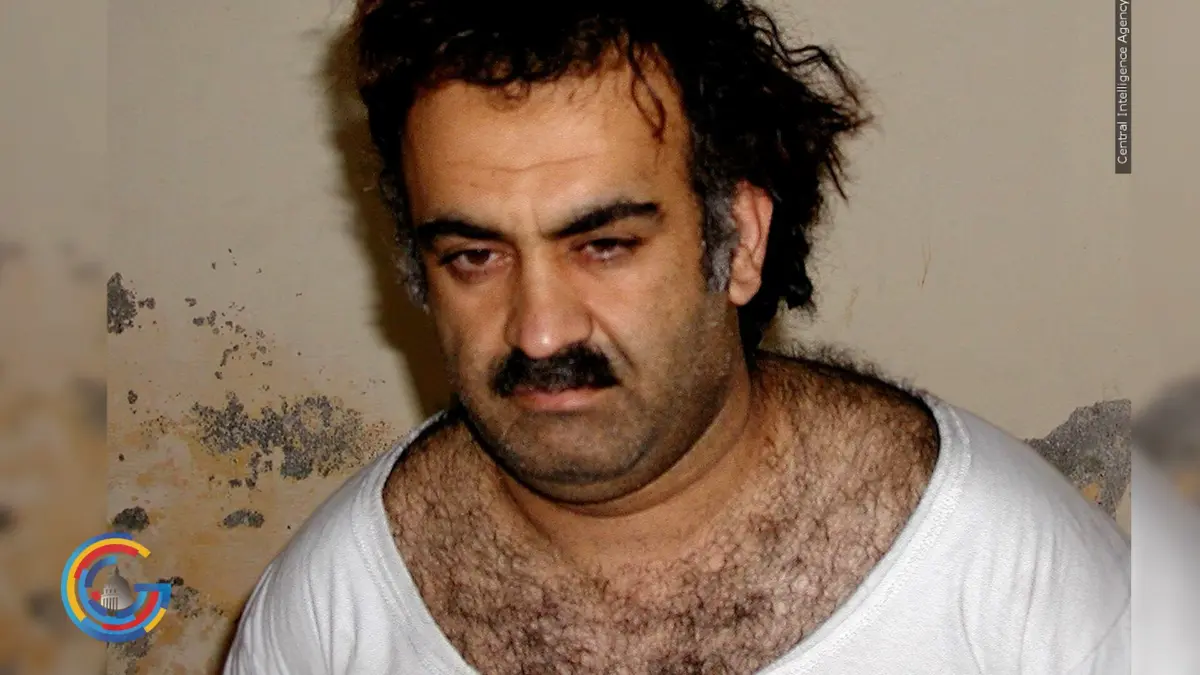

NEW YORK — More than two decades after the darkest day in modern American history, a U.S. military judge has formally scheduled the long-awaited trial for Khalid Sheikh Mohammed, the self-proclaimed mastermind of the September 11, 2001, terrorist attacks. According to a scheduling order issued by the military commission at Guantanamo Bay, proceedings are set to commence in June 2028—just weeks before the somber 25th anniversary of the attacks that reshaped global geopolitics, national security, and the American civil liberties landscape.
The setting of this trial date represents a watershed moment in what has justifiably been described as the most complex, protracted, and legally fraught prosecution in the history of American jurisprudence. Yet, even this milestone is laden with the familiar friction that has defined the case from its inception: the June 2028 start date arrives a full 18 months later than federal prosecutors had originally petitioned for, underscoring the relentless procedural quagmires that continue to plague the military commissions system.
As Mohammed and three of his alleged co-conspirators prepare to face justice inside the heavily fortified courtroom at Naval Station Guantanamo Bay, legal scholars, victims’ families, and human rights advocates alike are forced to confront an uncomfortable reality. The pursuit of accountability has spanned four presidential administrations, cost billions of dollars, and repeatedly collided with constitutional questions regarding torture, due process, and the viability of military tribunals for crimes of this magnitude.
Executive Overview
The announcement of a 2028 trial date brings a tentative, albeit distant, horizon to a legal odyssey that began with Mohammed’s capture in Rawalpindi, Pakistan, in March 2003. Transferred to the custody of the Central Intelligence Agency (CIA), Mohammed was subjected to the agency’s controversial "enhanced interrogation techniques"—including waterboarding 183 times—before being rendered to the detention facility at Guantanamo Bay, Cuba, in 2006.
Under the current scheduling framework, Mohammed will stand trial alongside three remaining defendants: Walid Muhammad Salih Mubarak Bin ‘Attash, Mustafa Ahmed Adam al-Hawsawi, and Ammar al-Baluchi. Originally, the prosecution’s charge sheet included five men. However, the legal landscape shifted dramatically when plea agreements previously negotiated between prosecutors and defense teams collapsed amid fierce political backlash and shifting interpretations of executive authority.
The core challenge facing the military commission remains the legal fallout from the CIA’s detention and interrogation program. Defense attorneys have aggressively argued—and legal experts widely acknowledge—that the brutal interrogation methods employed against Mohammed and his co-defendants have irreparably tainted the prosecution’s evidence. The central legal battleground continues to be whether statements made by the defendants, as well as evidence derived from those statements, are legally admissible under the U.S. Constitution and the Military Commissions Act.
Military Judge Colonel Matthew McCall adjusted the timeline from a previously floated 2027 start date to mid-2028 specifically to accommodate ongoing pretrial motions regarding evidence admissibility and constitutional protections. This delay highlights the fundamental tension at the heart of the Guantanamo Bay commissions: the desire to deliver definitive justice to the victims of 9/11 balanced against the rigid demands of a fair trial that withstands appellate scrutiny.
Detailed Chronology: A Two-Decade Legal Quagmire
To understand how a trial for the most infamous terrorist attack in history could take over a quarter-century to reach a courtroom, one must trace a serpentine path of shifting legal frameworks, executive branch overhauls, and unprecedented judicial hurdles.
2001–2003: The Attacks and the Hunt
- September 11, 2001: Al-Qaeda operatives hijack four commercial airplanes, crashing them into the World Trade Center towers, the Pentagon, and a field in Shanksville, Pennsylvania, killing 2,977 victims.
- March 2003: Khalid Sheikh Mohammed is captured in a joint raid by Pakistani intelligence and the CIA in Rawalpindi. He is immediately placed into the CIA’s covert "black site" detention network, where he undergoes rigorous interrogation for over three years.
2006–2009: Transfer to Guantanamo and Early Trials
- September 2006: President George W. Bush acknowledges the existence of the CIA secret prison network, announcing the transfer of 14 "high-value detainees," including Mohammed, to the military prison camp at Guantanamo Bay.
- November 2007: During a closed military tribunal hearing, Mohammed proudly claims responsibility for the 9/11 attacks, stating, "I was responsible for the 9/11 operation, from A to Z."
- 2008–2009: The administration of President Barack Obama takes office, pledging to close the Guantanamo Bay detention facility within a year. In pursuit of this goal, the Obama administration initially attempts to move the trials of 9/11 co-conspirators to federal civilian court in New York City, sparking intense bipartisan political opposition and legislative blockades.
2011–2021: The Military Commissions Act and Endless Pretrial Hearings
- April 2011: Facing insurmountable congressional resistance to civilian trials, Attorney General Eric Holder announces that Mohammed and his co-defendants will instead be tried by military commissions at Guantanamo Bay.
- May 2012: Arraignment proceedings formally begin for Mohammed and four co-defendants. However, the courtroom is immediately bogged down by audio feed disruptions, security classification disputes, and logistical nightmares.
- 2014: The Senate Select Committee on Intelligence releases its exhaustive Executive Summary of the CIA Torture Report, detailing the extreme physical and psychological abuse suffered by detainees, providing defense counsel with powerful ammunition to challenge the legitimacy of the government’s case.
- 2021: Hopes for a trial breakthrough emerge as defense teams and prosecutors explore pretrial agreements that would swap the death penalty for life imprisonment in exchange for guilty pleas. However, political fallout forces top defense department officials to revoke the agreements, throwing the litigation back into chaos.
2024–2028: The Road to the 25th Anniversary
- August 2024: Defense Secretary Lloyd Austin revokes the plea deals, asserting that decisions of such magnitude should rest with him, igniting fresh rounds of litigation over executive overreach and bad-faith bargaining.
- Late 2024–2025: Military Judge Col. Matthew McCall grapples with the fallout of the revoked plea deals, sorting through mountains of motions regarding evidence suppression, witness availability, and speedy trial rights.
- Early 2026: Judge McCall formally announces the June 2028 trial date, placing the commencement of proceedings a mere two weeks before the 25th anniversary of the 9/11 attacks.
Supporting Context & Metrics
The prosecution of Khalid Sheikh Mohammed is not merely a criminal trial; it is an administrative, financial, and logistical leviathan. Quantifying the scope of the case reveals the extraordinary resources expended over the past two decades.
- 2,977 Victims: The human cost of the September 11 attacks, representing citizens from dozens of nations whose families have endured a generation of legal delays while awaiting closure.
- 22 Years of Detention: The length of time Mohammed will have spent in U.S. custody by the time the gavel sounds in June 2028, with the vast majority of that time spent in indefinite military detention at Guantanamo Bay.
- Over $2 Billion: Estimated cumulative costs associated with operating the Guantanamo Bay detention camp, including the construction of the courtroom facility (known as Camp Justice), military personnel deployments, security operations, and defense and prosecution expenditures.
- 5 Original Defendants: The initial roster of men arraigned in 2012. This number was reduced following the legal separation and subsequent resolution of charges for defendant Ramzi bin al-Shibh, whose trial was severed due to mental competency evaluations.
- 183 Waterboardings: The documented number of times interrogators subjected Mohammed to simulated drowning while held in CIA custody between 2003 and 2006—a statistic that remains the central pillar of the defense’s argument against the admissibility of his confessions.
Official Statements and Legal Perspectives
The announcement of the 2028 trial date has elicited a polarized array of responses from legal analysts, human rights organizations, and advocates for the families of 9/11 victims. The core debate centers on whether the military commission system has proven itself capable of delivering justice or if it has devolved into a constitutional anomaly.
The Prosecution and Government Viewpoint
From the perspective of federal prosecutors and national security officials, holding a trial—regardless of the timeline—is an essential moral and legal imperative. Proponents argue that the military commissions provide a secure, adaptable framework designed specifically for the unique challenges of prosecuting alien unlawful enemy combatants caught outside traditional zones of conventional warfare.
"The objective has always been to ensure that those who engineered the mass murder of nearly 3,000 innocent people are held fully accountable in a court of law," said a former Justice Department official familiar with the early phases of the litigation. "While the procedural hurdles have been unprecedented, abandoning the military commissions would signal a failure of national resolve. The victims and their families deserve a transparent, definitive verdict."
The Defense and Civil Liberties Perspective
Conversely, defense attorneys and international human rights advocates maintain that the military commission system is fundamentally broken and incapable of providing a fair trial. They argue that the systemic use of torture during the CIA black site era has poisoned the well beyond remediation, transforming the proceedings into a "show trial" designed to obscure systemic governmental misconduct.
James Connell, lead defense counsel for Ammar al-Baluchi, has repeatedly emphasized that the reliance on evidence tainted by torture violates both domestic and international law.
"You cannot build a legitimate judicial process on a foundation of torture," legal observers and defense teams have consistently argued in court filings. "By choosing to utilize enhanced interrogation techniques, the government made a conscious decision that traded moral authority and constitutional integrity for short-term intelligence gains. The chickens have come home to roost in the form of endless delays."
Families of the Victims: A Fractured Consensus
For the community of 9/11 family members, the prolonged timeline is a source of profound anguish. While some organizations have expressed relief that a concrete date has finally been established, others feel disillusioned by decades of false starts, legal maneuvers, and broken promises from successive presidential administrations.
"Twenty-five years is an eternity," noted a representative of a 9/11 family advocacy group. "Children who lost parents on that day are now adults. Many elderly parents of victims have passed away without ever seeing a verdict. For our community, justice delayed has quite literally been justice denied."
Future Outlook: What Lies Ahead Between Now and June 2028?
As the legal world looks toward the summer of 2028, the road to the courtroom remains fraught with potential pitfalls that could disrupt the newly established schedule.
1. Pretrial Evidentiary Battles
Before a single witness is sworn in, Judge McCall must resolve a battery of complex motions concerning the "taint" of torture. Defense teams are expected to file sweeping motions to suppress any statements made by the defendants while in CIA custody, as well as any physical or documentary evidence derived from those interrogations. If the military judge excludes core elements of the prosecution’s case, the government’s trial strategy could face severe setbacks.
2. Witness Availability and Health
Given the advanced age and health complications of several participants—including aging military judges, defense attorneys, prosecutors, and the defendants themselves—logistical and medical contingencies will loom large over the proceedings. Furthermore, securing the testimony of former intelligence officials and high-ranking government figures from the Bush administration presents ongoing classification and subpoena challenges.
3. Political and Executive Transitions
With the trial scheduled to take place during a future presidential term, the shifting priorities of the executive branch could once again impact the proceedings. While the military commissions operate with a degree of judicial independence, the Department of Defense retains administrative authority over the funding, staffing, and operational parameters of the Guantanamo Bay commissions.
4. The Specter of Appellate Review
Even if the trial commences in June 2028 and reaches a verdict, legal scholars universally agree that any resulting convictions will immediately trigger decades of appellate litigation. The Court of Military Commission Review, the U.S. Court of Appeals for the District of Columbia Circuit, and potentially the Supreme Court of the United States will ultimately be tasked with deciding whether a trial conducted under these extraordinary circumstances satisfied the requirements of the U.S. Constitution.
As the 25th anniversary of September 11 approaches, the scheduled trial of Khalid Sheikh Mohammed stands as a monumental testament to the enduring scars left by that fateful day. It is a stark reminder that while nations can wage wars with swift and overwhelming force, the machinery of justice—when constrained by law, contaminated by the abuses of the past, and tested by relentless procedural combat—moves with agonizing, glacial slowness.

0 Comments