

Executive Overview
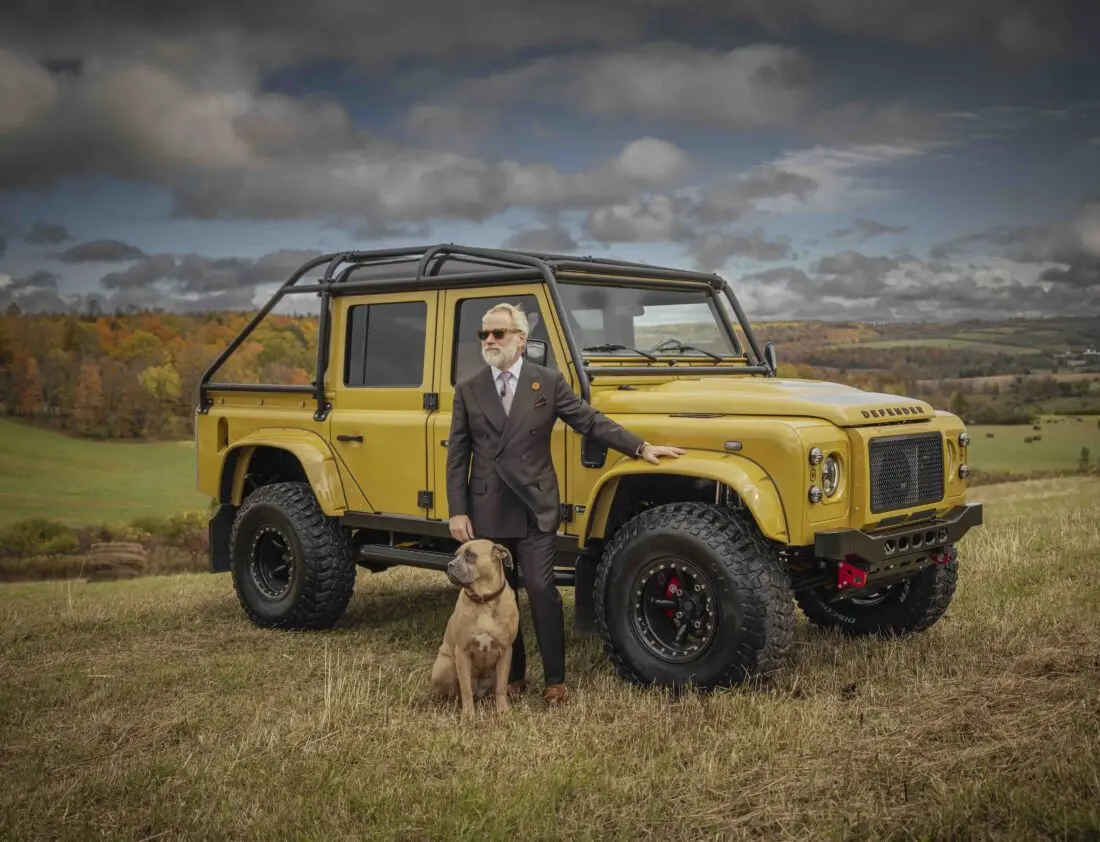
In the misty countryside of England and the rolling, densely wooded hills of the Arkansas Ozarks, a quiet automotive revolution is taking place. At the intersection of bespoke British heritage and modern American luxury engineering sits Helderburg, a boutique automotive venture founded by entrepreneur Paul Potratz. Helderburg does not merely restore classic Land Rover Defenders; it reimagines them.
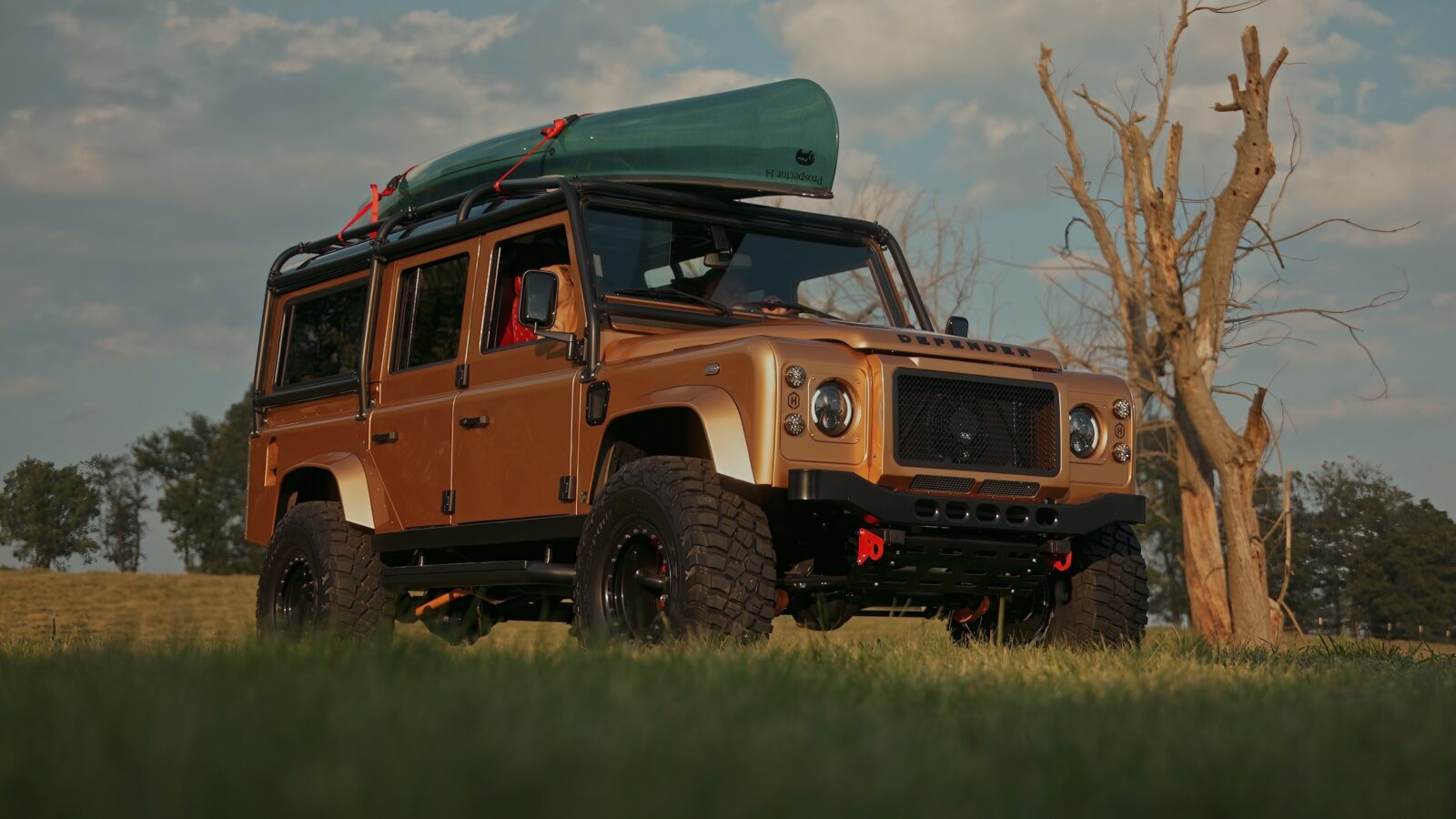
For commanding price tags ranging from $288,000 to $406,000, Helderburg takes decades-old British workhorses—salvaged from farms and vineyards across Europe—and subjects them to an exhaustive, multi-thousand-hour transformation. The end result is a vehicle that retains its authentic, rugged soul while boasting the performance, safety, and luxury of a modern high-end SUV.
As Potratz puts it: "If Land Rover’s original engineers were building a classic Defender now, I believe this is exactly what it would be."
This deep-dive investigative feature explores the origins of Helderburg, the meticulous mechanics behind its bespoke builds, and how a childhood spent in a Memphis repair shop blossomed into one of the most exclusive automotive restoration operations in the world.
Detailed Chronology: From Memphis Daydreams to the Ozark Estate
The Roots in Memphis
Paul Potratz’s fascination with automotive mechanics began long before he ever picked up a wrench professionally. Growing up in Memphis, Tennessee, he spent his formative years working inside his father’s independent car repair shop. While other mechanics focused solely on domestic vehicles or mainstream imports, Potratz’s father specialized in notoriously difficult, temperamental European machines: Peugeots, Alfa Romeos, and, most importantly, Land Rovers.
It was during these formative years that a local British expatriate routinely pulled up to the shop in a classic Land Rover Defender. The vehicle left an indelible mark on young Potratz.
"There was a British guy who pulled up in his Defender, and I was in love," Potratz recalls. "I still love them because they remind me of my dad, who died at a pretty young age. It’s the feeling more than anything else. I can go for a drive in a Defender and feel like I’m on an expedition."
Despite his early immersion in greasy garage floors and European automotive quirks, Potratz initially harbored dreams of entering the high-stakes world of fashion design. Ultimately, he pursued a corporate career, successfully building and selling three distinct companies. Yet, the youthful influences of his father’s garage and a deep-seated affection for British design never left him. When the time came for his next great endeavor, Potratz merged his business acumen with his lifelong obsession, giving birth to Helderburg.
Relocating to the Haldenmere Estate
Finding the right home for Helderburg required an exhaustive geographic search. Initially, Potratz operated out of the Catskills in New York, attempting to perform rigorous test-mile trials amid seven feet of annual snowfall.
However, everything changed when he participated in a vintage car rally through the Arkansas Ozarks. Captivated by the meandering roads, the natural beauty, and the warmth of the local community, Potratz and his wife seized an opportunity. Two years ago, after spotting a listing for the sprawling Haldenmere estate, they flew down and made an offer on the spot.
Today, the Arkansas property serves as the beating heart of Helderburg’s American operations. Though newly constructed, the estate boasts a distinctly European aesthetic—defined by heavy limestone and exceptional craftsmanship—that mirrors the vehicles built upon its grounds. The estate is more than just a home and a headquarters; it is an immersive client experience center. Complete with a private automotive test course, pristine trout fishing streams, and sporting clays facilities, the estate invites clients to fly in, inspect their bespoke builds, and partake in a lifestyle of unhurried luxury.
Supporting Context & Metrics: Anatomy of a Helderburg Build
To truly understand a Helderburg Defender, one must first understand what it is not. The automotive market is currently saturated with "resto-mods"—vehicles that often drop a mass-produced American V8 onto a cheap reproduction chassis fabricated overseas. Potratz dismisses these shortcuts outright, emphasizing that quality cannot be faked.
Sourcing and the British Connection
The journey of every Helderburg Defender begins overseas. Potratz scours European farms, estates, and wineries—predominantly in countries where vehicles were manufactured with left-hand drive already integrated, such as Italy, France, Germany, and Poland.
Once acquired, the donor vehicles are shipped to Helderburg’s staging facility in England, where a rotating inventory of 40 to 50 classic Defenders sits waiting in the hedgerows. When a client commissions a build, a forklift selects a donor vehicle, strips it down to its bare bones, and initiates the rigorous mechanical restoration on British soil.
The Numbers That Matter
- 3,000+ — The total number of man-hours invested into a single Helderburg Defender.
- 400 — The number of hours dedicated solely to the multi-stage custom paint job.
- $288,000 – $406,000 — The baseline financial investment required to commission a Helderburg build.
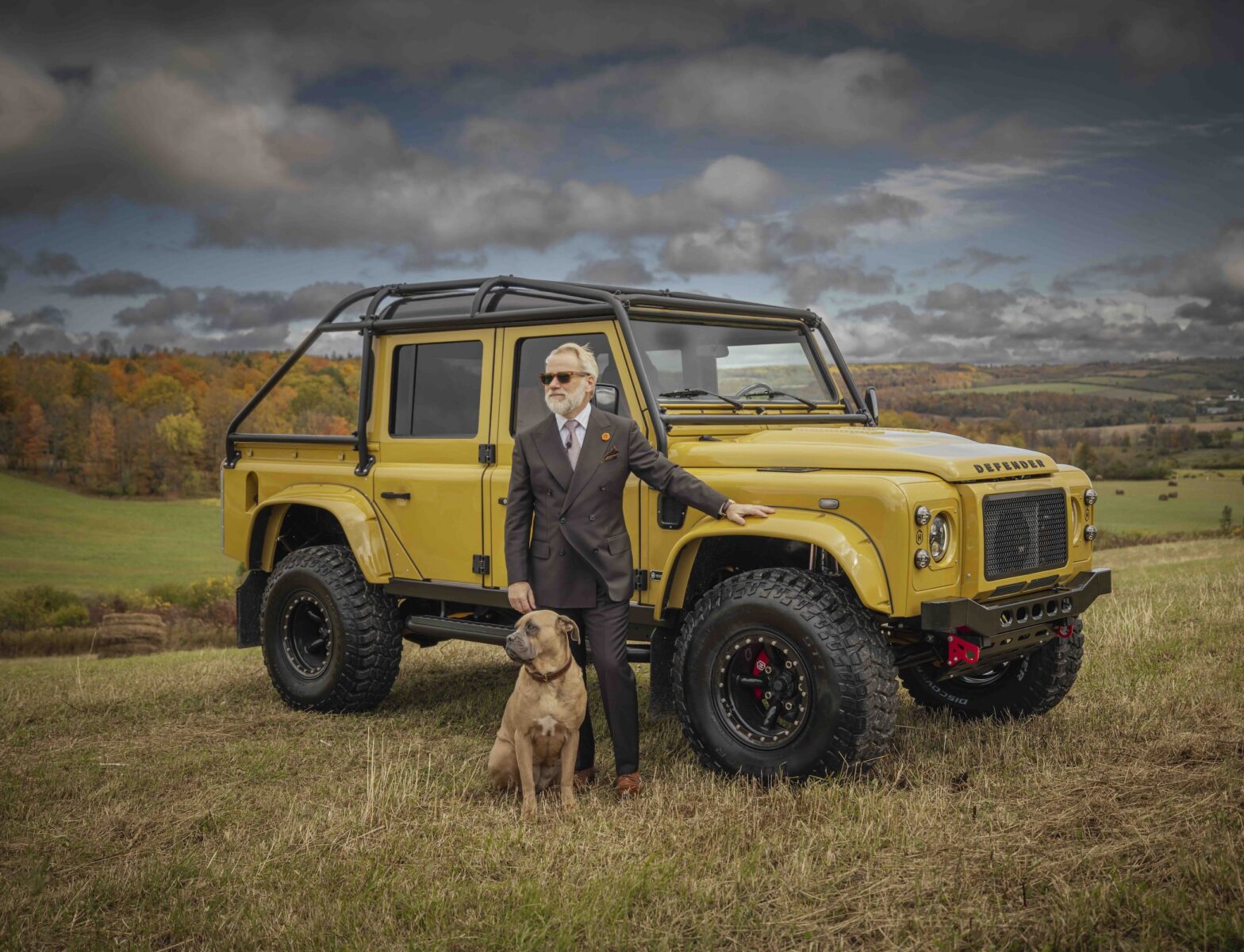
- 130 lbs — The weight of Lucy, Potratz’s Cane Corso, whose daily abuse served as the benchmark for testing the interior leather’s durability.
Interior Luxuries and Canine Resilience
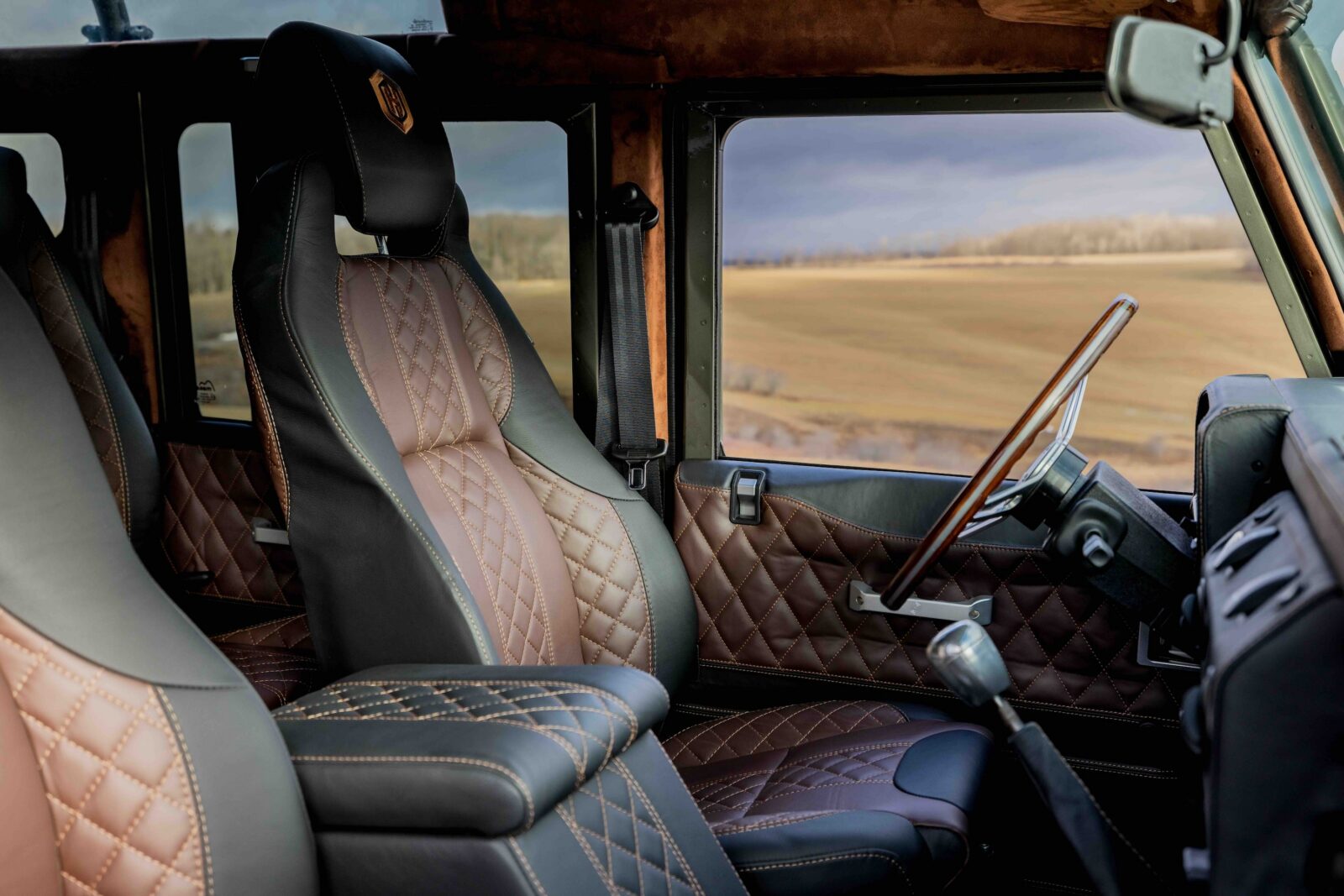
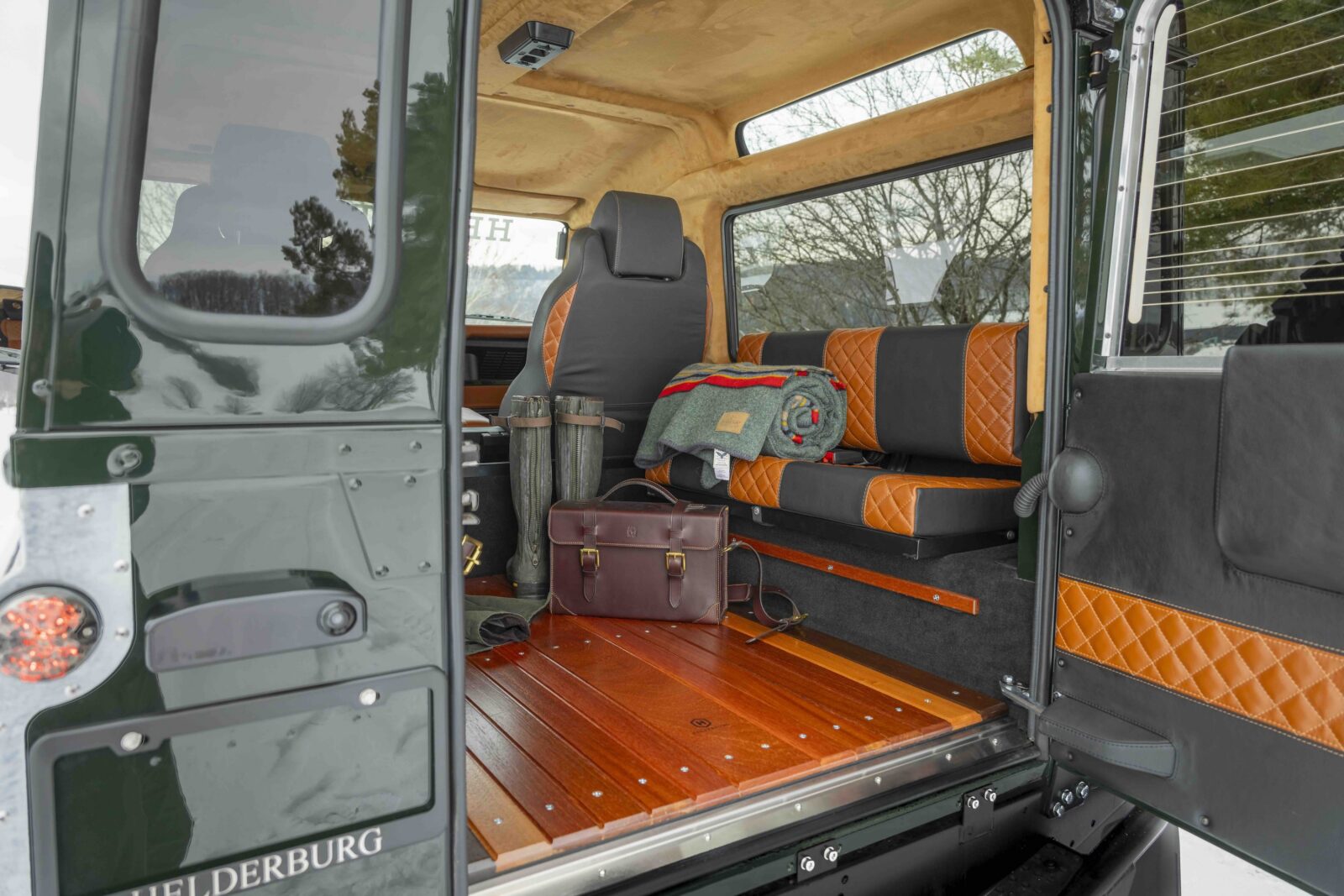
The cabins of Helderburg Defenders are meticulously appointed, blending old-world craftsmanship with modern utility. Flooring is crafted from exotic hardwoods like mahogany and teak, while the dashboards and seating feature the finest Scottish leathers, German wools, and bespoke analog gauges.
Yet, this luxury is engineered to be used, not merely admired. Potratz’s own daily companion—a six-year-old, 130-pound Cane Corso named Lucy—frequently rides shotgun, tracking mud and water into the cabin after swimming sessions. Developing a leather interior that could withstand such punishment required an exhaustive two-year search for the right tannery. The resulting leather features boot-thickness durability and a high-wax content, proving that absolute luxury can coexist with rugged, everyday utility.
Official Statements & Industry Distinction
The distinction between a standard restoration, a cheap resto-mod, and a Helderburg re-engineering lies in authenticity and relentless modernization.
+-------------------------------------------------------------------------+
       COMPARATIVE SPECTRUM OF LAND ROVER DEFENDER UPGRADES
+--------------------+---------------------------+------------------------+
| Restoration        | Resto-Mod                 | Helderburg             |
+--------------------+---------------------------+------------------------+
| Preserves original | Often uses cheap imported | Keeps original engine  |
| factory specs (can | reproduction chassis &    | blocks & British       |
| feel dated/slow).  | generic American V8s.     | provenance intact.     |
+--------------------+---------------------------+------------------------+
| Factory-grade      | Variable build quality;   | Over 3,000 hours of    |
| reliability.       | questionable structural   | bespoke engineering &  |
|                    | integrity.                | modern performance.    |
+--------------------+---------------------------+------------------------+
Preserving British Provenance
Unlike operations that swap out core components for generic modern alternatives, Helderburg respects the vehicle’s historical DNA. Every client receives an official Certificate of Registry from the British government, legally certifying that their vehicle is an authentic, classic Land Rover Defender originally built in Britain.
Potratz elaborates on the engineering philosophy:
"We use the original engine blocks and re-engineer the crankshafts, connecting rods, cylinder heads, radiators, braking systems, headlights, suspensions, analog gauges, and even the glass, utilizing upgraded components we manufacture ourselves. Defenders were originally built as farm trucks. We’re modernizing them so they have the performance and smooth suspensions to be driven in the United States, take long vacations, or drive up the side of a mountain like a brand-new Mercedes G-Wagon."
This commitment to proprietary upgrades ensures that the vehicles drive with modern civility without losing the mechanical character that enthusiasts revere.
Future Outlook: Daily Drivers and Family Heirlooms
As Helderburg continues to carve out its unique niche in the luxury automotive landscape, the market response has challenged traditional notions of vintage car ownership. Historically, high-end classic cars are treated as garage queens—fragile investments driven only on sunny weekends to car shows.
Helderburg vehicles, by contrast, are built to be driven every single day.
The client demographic reflects this philosophy of active utility. Potratz points to a surgeon in Memphis who uses his Helderburg Defender as a daily commuter vehicle to the hospital, as well as an older client in Vermont who has already integrated the vehicle into his estate succession plan, setting up a shared-use schedule for his two sons.
"It’s rare that a Helderburg gets resold outside the family," Potratz notes.
By bridging the gap between nostalgic British heritage and uncompromising modern execution, Helderburg has elevated the classic Land Rover Defender from a humble agrarian workhorse into an enduring, multi-generational family heirloom. For Paul Potratz, every completed build rolling out of the Arkansas Ozarks is not just a commercial delivery—it is a rolling tribute to a young boy in Memphis who fell in love with a stranger’s British truck outside his father’s garage.

0 Comments