

Executive Overview
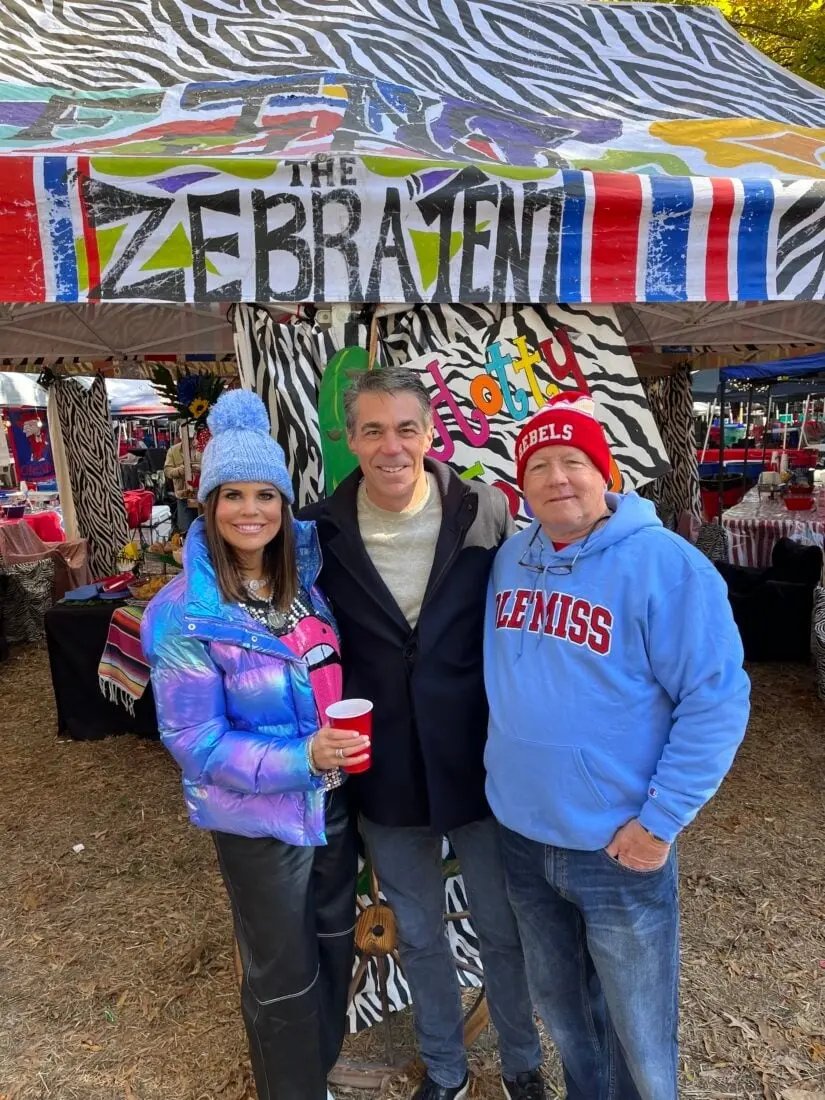
In the storied landscape of collegiate athletics, few traditions rival the pageantry, scale, and cultural significance of Southeastern Conference (SEC) tailgating. Among these weekend rituals, none achieved quite the mythic status of the Grove at the University of Mississippi. Spanning ten acres of historic, oak-shaded lawn in Oxford, Mississippi, the Grove transforms on autumn Saturdays into a metropolis of hospitality, high-end design, and collegiate devotion. For more than two decades, the uncontested sovereign of this domain was Jane Foster.
Operating under her iconic, maximalist zebra-striped marquee, Foster redefined what it meant to host on game day. Her setup—complete with cascading champagne fountains, chandeliers, meticulously curated themes, and spreads capable of feeding upwards of seven hundred guests—transcended standard pre-game routines. It became an institutional fixture, earning regular features on national broadcasts like ESPN’s College GameDay and SEC Network’s SEC Nation.
Though Foster officially retired the zebra tent following the 2023 season, her footprint on modern tailgating culture remains indelible. Through her digital platforms, where she commands an audience of more than 80,000 followers, she continues to dispense masterclasses in Southern hospitality. This retrospective examines the genesis, evolution, logistical brilliance, and enduring legacy of Foster’s tailgating empire, offering an authoritative look at the intersection of design, community, and collegiate sports culture.
Detailed Chronology: From Compromise to Legend
The Genesis in the Red and Blue Sea
Jane Foster’s ascent to tailgating royalty began, paradoxically, with a cross-border sports rivalry. An undergraduate alumna of Mississippi State University—Ole Miss’s fiercest in-state adversary—Foster had never set foot in Oxford prior to meeting and marrying her husband, Lantz, an Ole Miss alumnus. Historically, the schools’ annual gridiron showdown, the Egg Bowl, was contested on neutral turf in Jackson, shielding Foster from the hyper-local game-day culture of Oxford.
Marriage, however, necessitated diplomacy. "Going to the Ole Miss ballgames was kind of a marriage compromise," Foster reflects. Recognizing that game days would become a permanent fixture of their autumn calendars, she established a foundational boundary. "I told my husband if we’re going to start tailgating, I want my own tent."
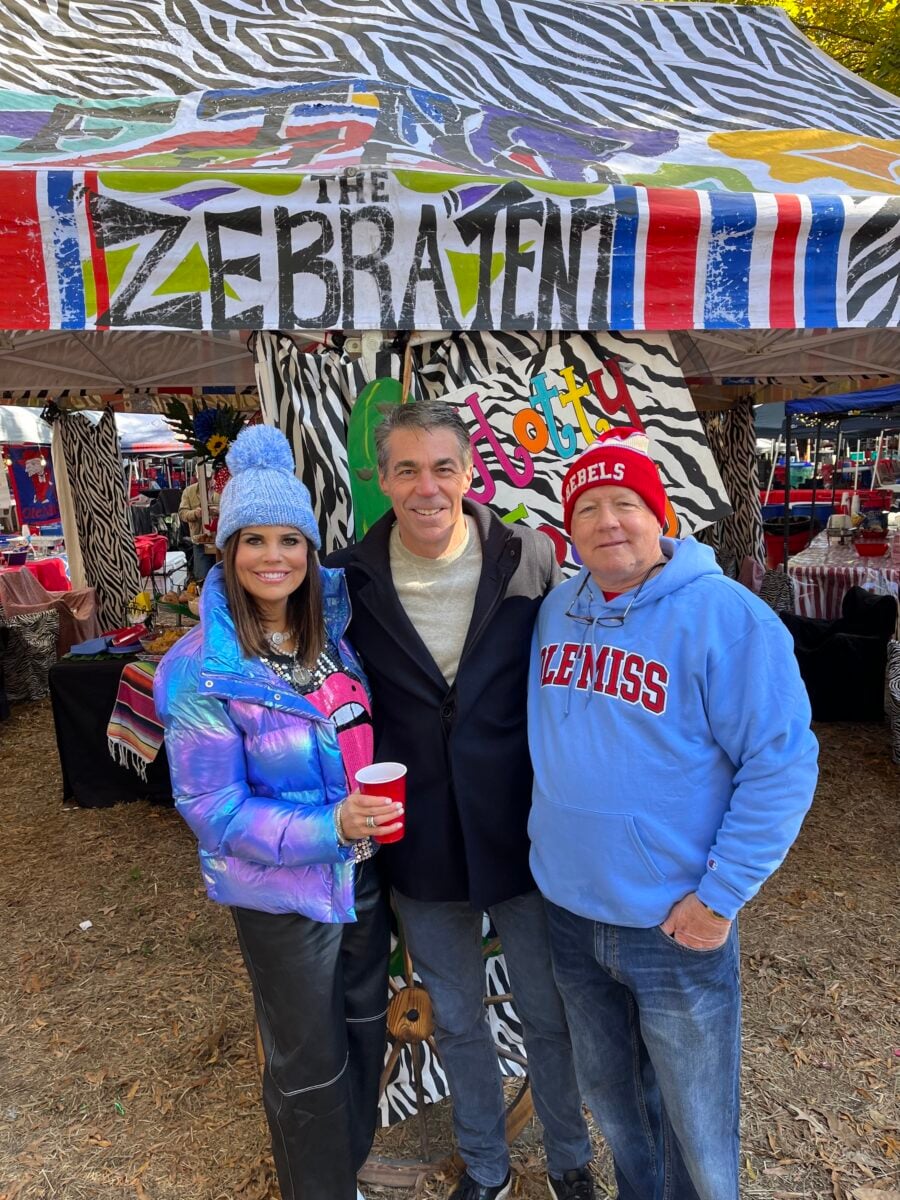
The logistical challenge was immediately apparent: the Grove on a game day is a visual monolith, dominated by a sea of identical red and blue pop-up tents. To ensure her young children—and visiting guests—could locate their home base amidst the chaotic landscape, Foster opted for a distinct aesthetic departure. She selected a striking, zebra-striped marquee. What began as a practical navigation tool quickly mutated into a cultural beacon.
Scaling the Operation: From Family Affair to Community Institution
As the zebra tent gained visibility, its operational demands evolved exponentially. What started as a modest family setup quickly drew the attention of neighboring tailgaters, who offered to pitch in. Over the years, this organic collaboration matured into a formalized roster of twelve participating families.
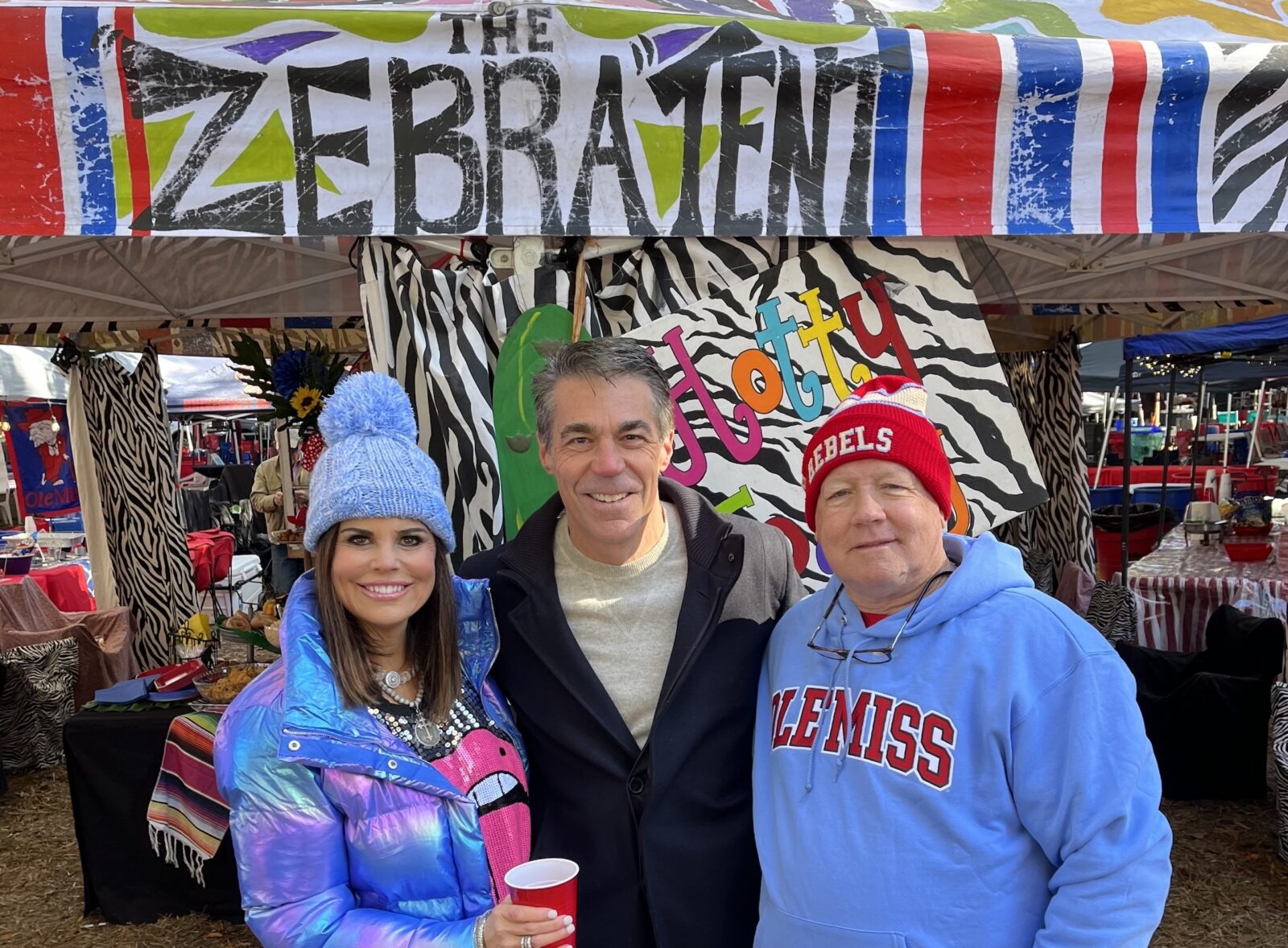
This collective machinery was necessary to sustain the sheer scale of the operation. By the peak of its popularity, the zebra tent regularly serviced between 500 and 700 visitors during standard games. The tipping point arrived in October 2014, when the tent secured its debut feature on ESPN’s College GameDay. The national exposure transformed the site from a local favorite into a pilgrimage destination; the following weekend, an estimated 7,000 people converged on the zebra tent to witness the spectacle firsthand.
The Twilight of an Era and Digital Succession
For twenty-two seasons, Foster maintained a relentless cadence of design, menu curation, and hosting duties. The operation required year-round planning, conceptualizing themes ranging from Mardi Gras revelry to cinematic tributes inspired by Breakfast at Tiffany’s.
Recognizing the immense physical and organizational toll required to maintain elite standards, Foster executed a graceful exit, retiring the physical zebra tent after the conclusion of the 2023 season. Rather than stepping away from the community entirely, she pivoted to digital mentorship. Through her Instagram account (@southernshine2017), she translates decades of high-level event management into accessible, step-by-step guidance for a new generation of hosts, proving that while the physical tent has been retired, the institutional knowledge remains active.
Supporting Context & Metrics: The Mechanics of Maximalism
Tailgating at this tier is frequently misconstrued as mere casual partying; in reality, it operates closer to high-end corporate event planning executed in a public park under severe environmental constraints. Operating a setup that routinely accommodates hundreds of guests demands rigorous logistical frameworks, precise architectural layering, and strict adherence to unwritten social contracts.
The Culinary Architecture
The spatial arrangement of the zebra tent’s menu was engineered to control crowd flow and optimize guest interaction. The layout was systematically segmented:
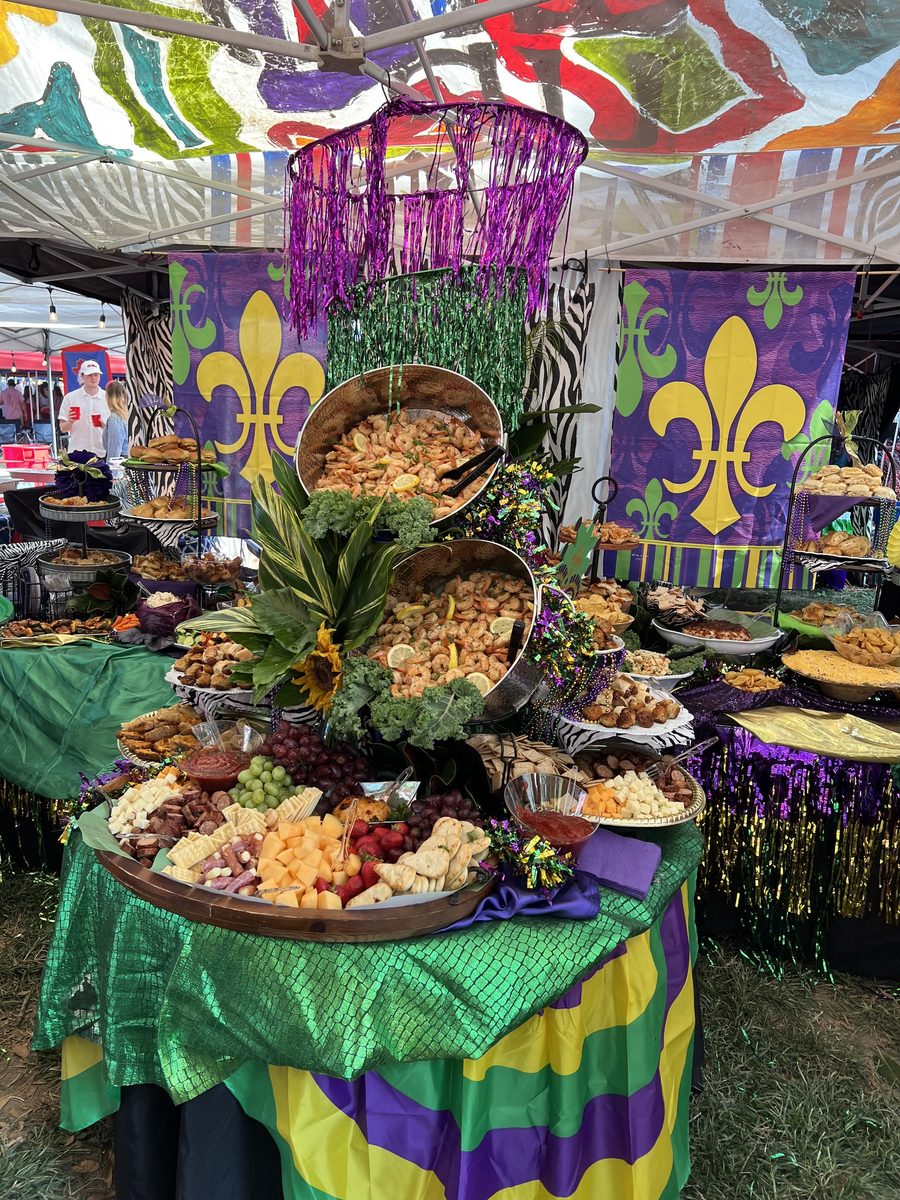
- The Threshold (Front): Dedicated to high-velocity finger foods. Sliders, savory sausage balls, chilled shrimp cocktails, artisanal cheeses, and fresh seasonal fruit were positioned here to capture immediate arrivals without causing internal bottlenecks.
- The Core (Middle): Reserved for structurally dense, heartier comfort foods capable of sustaining long afternoons of socializing and alcohol consumption, such as large-format pasta dishes like house-made spaghetti.
- The Terminal (Back): Anchored by an extensive dessert display and the tent’s signature champagne fountain, creating a destination point that pulled guests through the entire footprint of the space.
Despite the weekly rotation of complex, theme-driven menus, Foster maintains that certain elements are non-negotiable. "Fried chicken is nonnegotiable," she asserts, cementing the staple as the structural heart of any authentic Southern tailgate. Complementing the food logistics was equipment optimization; Foster emphasizes the deployment of stand-up, foldable insulated coolers capable of maintaining thermal integrity across multi-hour events without sacrificing floor space.
The Hidden Infrastructure of High Design
The visual opulence of the zebra tent relied on concealed engineering. Among Foster’s core operational tenets is the utilization of floor-length tablecloths. Beyond creating an elevated, cohesive visual standard, long linens serve a vital logistical purpose: they completely conceal the chaotic under-table storage required to house the heavy-duty plastic bins, extra beverage crates, and structural supplies lugged in from parking lots.
Furthermore, interior volume was maximized through vertical staging. By utilizing serving platters and risers of varying heights, the display counters avoided horizontal monotony. The crowning aesthetic signature—suspending chandeliers from the structural apex of the tent frame—bridged the gap between outdoor athletics and interior interior design.
Official Statements and Industry Insights
The cultural impact of the zebra tent extends far beyond personal nostalgia, drawing commentary from prominent media figures, visiting fans, and hospitality experts who observed the phenomenon firsthand.
Chris Fowler, veteran ESPN college football commentator and host, frequently interacted with the setup during his visits to Oxford for College GameDay. Reflecting on the atmosphere cultivated within the zebra marquee, Fowler noted the unique synthesis of fierce athletic competition and uncompromising graciousness that defined the space:
"When you step into the Grove, you expect passion, but what Jane and her team built inside that zebra tent was something entirely different—it was a masterclass in how community and design can elevate a simple Saturday afternoon football game into an unforgettable cultural experience."
Foster herself remains philosophical about the strict curation required to maintain such an operation, particularly regarding a well-known Southern hospitality paradox: the rule against guests bringing uninvited food dishes. While conventional etiquette dictates contributing a dish to a host, Foster’s high-design environment necessitated strict quality and visual control.
"We didn’t want people bringing food because it wouldn’t be in the right container and it would mess up the aesthetics," Foster explains. For guests struggling with the impulse to show up empty-handed, she recommends pivoting to nonperishable tokens or gift cards directed toward local Oxford establishments, thereby honoring the spirit of giving without compromising the visual ecosystem of the tent.
The communal reciprocity inherent to the tent’s operations was tested—and validated—on occasions when logistical disasters threatened scheduled television appearances. Recalling a morning when she arrived to find her entire inventory of tables and chairs stolen the night before a major national broadcast, Foster leveraged digital community networks.
"We put on the fan boards that we were looking for help, and within an hour we had everything we needed," she recalls, highlighting the resilience of the Oxford community.
Future Outlook: The Evolution of Collegiate Tailgating
As collegiate athletics enters a new era marked by conference realignment, shifting media rights, and the increasing commercialization of game-day atmospheres, traditions like those cultivated in the Grove face both modern pressures and renewed appreciation.
The physical scale of tailgating continues to evolve, with institutional guidelines tightening around space allocation, generator usage, and setup schedules across major SEC campuses. Yet, the foundational ethos championed by figures like Jane Foster—where meticulous preparation meets radical hospitality—ensures that the human element of collegiate sports culture will endure.
Foster’s transition from physical host to digital educator signals a broader trend in sports lifestyle media. As younger generations of alumni and fans look to replicate the iconic aesthetics of traditional tailgating, the demand for authoritative, battle-tested logistical advice is higher than ever. Whether through her active Instagram presence providing blueprint advice on emergency supply kits (which she insists must include Band-Aids for blistered feet, Tums "for men who ate too many meatballs," aspirin, antihistamines, and quick-fix tools like zip ties and duct tape) or her ongoing commentary on cross-conference fan dynamics, Foster’s influence on the ritual of game day remains a permanent fixture.
Ultimately, the enduring lesson of the zebra tent is that while football games last a mere three or four hours, the architecture of hospitality built around them creates lasting communities. As Foster observed regarding the diverse fan bases visiting Oxford—noting the infectious energy of LSU supporters and the polite camaraderie of Auburn and Texas A&M crowds—the true victory of the Grove is its ability to transform rivals into temporary neighbors, united by a shared appreciation for pageantry, community, and exceptionally good fried chicken.

0 Comments