

Executive Overview
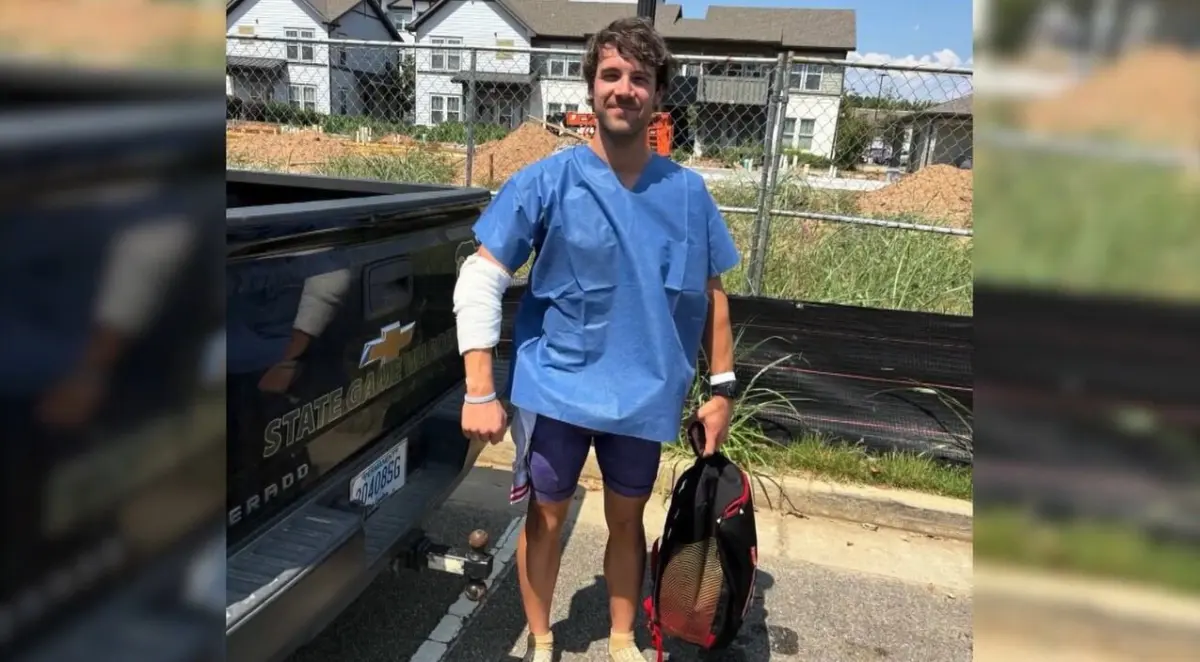
What was meant to be a routine Sunday morning "race rehearsal" along the Savannah River nearly turned fatal for 31-year-old triathlon coach Jonathan Bruney. Preparing a cohort of athletes from NVDM Coaching ahead of the upcoming Ironman Augusta, Bruney found himself locked in a sudden, violent struggle with a 4-to-5-foot American alligator. The attack, which took place in waters adjacent to North Augusta, South Carolina, underscores the unpredictable nature of open-water training in the American Southeast.
Through quick thinking, sheer survival instinct, and applied combat awareness, Bruney jammed his thumb into the alligator’s eye, forcing the reptile to release its grip before a catastrophic "death roll" could be initiated. Swift action from fellow athletes—who utilized a makeshift tourniquet and coordinated a frantic search for emergency services—prevented further tragedy.
While wildlife officials emphasize that unprovoked alligator attacks remain statistically rare, the incident has sparked renewed conversations regarding wilderness risk mitigation, the ecological realities of shared waterways, and the psychological resilience required of endurance athletes who push their limits in natural habitats. Despite sustaining deep tissue wounds that require weeks of recovery, Bruney remains steadfast in his commitment to the sport, vowing to toe the starting line at Ironman Augusta.
Detailed Chronology: From Pre-Race Simulation to Sudden Strike
The Warm-Up and River Entry
The morning of Sunday, August 24, began with optimal conditions for athletic simulation. Bruney and several athletes under his supervision arrived in the Augusta-North Augusta area to execute a full-scale rehearsal of the Ironman Augusta course, scheduled for September. The comprehensive workout plan mapped out a rigorous trifecta: a swim down the Savannah River, a transition to a substantial bike route, and a final running leg along the Greeneway. The primary objective was to acclimate the athletes, mitigate pre-race anxieties, and instill a sense of absolute confidence in the course layout.
At approximately 10:00 a.m., the training squad assembled at the public boat ramp directly next to SRP Park in North Augusta—the exact staging ground utilized on official race days. Adhering to open-water safety protocols, the swimmers donned high-visibility white triathlon suits and trailed neon safety buoys designed to maximize visibility.
Prior to entry, Bruney conducted a visual assessment of the water from a nearby bridge. While he acknowledged the theoretical presence of regional wildlife, he calculated the risk to be exceptionally low and expressed absolute confidence in the safety of his athletes. The group entered the water, falling into a structured formation to begin the 1,000-yard swim leg.
The Strike: Ambush in the Current
Roughly 1,000 yards into the swim and approximately 60 yards offshore, subtle indications of potential danger began to surface. An athlete swimming ahead in the rotation spotted an alligator resting along the muddy riverbank and tactically veered away from the perimeter.
Seconds later, Bruney—who was leading the main pack—experienced a sudden, heavy impact to his right side. Initially, the force felt remarkably mundane, drawing a mental comparison to a clumsy collision on a hardwood basketball court or striking a submerged log.
The illusion shattered instantly as an intense, numbing pain surged up his arm. Glancing down, Bruney realized he was locked in the jaws of a 4-to-5-foot alligator, its front left foot and powerful mandibles firmly clamped onto his upper arm.
Recognizing the split-second window before the predator could initiate a "death roll"—a violent rotational maneuver designed to dismember prey—Bruney abandoned standard swimming strokes and transitioned into active defense. Relying on survival instinct, he reached for the reptile’s head, located its eye socket, and drove his thumb deep into the eyeball. The precise application of pressure yielded an immediate physiological response: the alligator released its grip, retreating into the murky depths of the river.
Emergency Response on the Shoreline
With the immediate threat neutralized, the focus shifted rapidly to triage and evacuation. Matthew Davis, a triathlete swimming closely behind Bruney, initially mistook the churning water for routine training commotion. However, upon sighting ahead, Davis observed the group scrambling onto a nearby dock—an entirely abnormal deviation from a standard swim set.
Prompted by urgent shouts from fellow athletes, Davis swam to the dock and pulled himself out of the water, where he was met with the alarming declaration: "Jonathan’s been bit."
Bruney was already exhibiting signs of shock, bleeding profusely from a severe laceration on his arm. Demonstrating extraordinary composure, Davis—who holds certifications as a wilderness first responder—improvised a tourniquet using the nylon cord ripped directly from a neon safety buoy.
Faced with a communication void due to a lack of cellular devices on the water, the athletes executed a frantic land-based search for help. They began pounding on doors along the affluent riverfront before finally intercepting a local resident walking his dogs, who immediately placed a call to 911.
Supporting Context & Metrics: Statistics and Ecosystem Realities
The Statistical Probability of Alligator Attacks
Human-alligator interactions in states like Georgia and South Carolina are subject to ongoing demographic and ecological study. According to data compiled by researchers at the Savannah River Ecology Laboratory, unprovoked bites from American alligators are statistically rare events. An individual is statistically significantly more likely to be struck by lightning or win a state lottery than to sustain severe injuries from an alligator encounter.
Nevertheless, population growth, suburban encroachment into historical wetlands, and the proliferation of recreational water sports inevitably increase the frequency of human-animal intersections. Alligators (Alligator mississippiensis) are ectothermic apex predators that rely on external thermal regulation, making them particularly active during the warm summer months common to the Southeastern United States.
Environmental Dynamics of the Savannah River
The Savannah River functions as a dynamic, living ecosystem rather than a controlled aquatic athletic facility. Stretching over 300 miles, the river supports a complex biodiversity matrix featuring:
- Finfish populations and freshwater turtles
- Various species of non-venomous and venomous snakes
- Avian predators and migratory waterfowl
- A stable, indigenous population of American alligators
Environmental advocates emphasize that these species have inhabited the watershed long before industrialization and recreational utilization. Consequently, open-water participants operate as visitors within an established biological hierarchy.
Official Statements and Institutional Perspectives
The Savannah Riverkeeper
In the wake of the incident, the nonprofit advocacy group Savannah Riverkeeper issued a formal statement addressing the community via digital media platforms. The organization underscored the necessity of contextualizing the event within broader ecological parameters:
"The recent alligator attack is a sobering reminder that when we swim in the Savannah, we are entering an ecosystem—one inhabited by fish, turtles, snakes, birds, alligators and a thousand other things that have no particular interest in accommodating us. That doesn’t mean we shouldn’t enjoy the river. Quite the opposite. It does, however, mean we should respect it."
The Riverkeeper emphasized that recreation and conservation are not mutually exclusive, provided that waterborne athletes maintain heightened situational awareness and an understanding of environmental volatility.
Wildlife Management and Search Operations
Following the emergency dispatch, local law enforcement and wildlife officers deployed to the Savannah River area to sweep the vicinity for the specific reptile involved in the incident. Despite thorough surface and shoreline searches conducted throughout Sunday afternoon, authorities were unable to locate the alligator.
The South Carolina Department of Natural Resources (SCDNR) was formally notified and maintains oversight of the situation. Wildlife management officials typically do not pursue removal operations unless an animal exhibits prolonged nuisance behavior or poses a verified, recurring threat to human safety, given that relocating wild alligators often results in territorial conflicts or mortality for the animal.
Future Outlook: Recovery, Resilience, and Training Adaptations
Medical Prognosis and Recovery Timeline
Following his transport to a regional medical facility, Bruney underwent professional wound evaluation and surgical cleaning. Medical personnel confirmed that while the lacerations were deep and required extensive suturing, the structural damage was largely confined to superficial skin and adipose (fat) tissue, sparing major muscle groups, tendons, and arteries.
Physicians prescribed a mandatory recovery period of three to four weeks, prohibiting open-water immersion to eliminate the risk of secondary bacterial infections commonly associated with river water exposure.
The Mental Aftermath and Athletic Determination
Despite the trauma of the encounter, both Bruney and his fellow athletes have rejected the notion of abandoning open-water training entirely. Instead, they advocate for a cultural shift toward "healthy respect" rather than paralyzing fear.
Matthew Davis reflected on the incident with a pragmatic mindset:
"Am I scared of the water? No. But do I have a very healthy respect for the water and what’s in it? Absolutely."
Bruney echoed these sentiments, maintaining that the event, while terrifying, was a classic "freak accident" characteristic of southern geography. True to his identity as an elite endurance coach, Bruney confirmed his definitive intention to compete in the upcoming Ironman Augusta, albeit with modified tactical positioning.
"I’ll still be racing. I’ll still be coaching and pursuing the passion," Bruney affirmed. "I told my athletes, ‘I am a coach that will fight off and take a gator bite to protect you and make sure you’re having a successful swim.’"
Moving forward, the NVDM Coaching team plans to integrate enhanced safety briefings, communication redundancies (such as carrying waterproof communication devices), and modified sighting formations into their pre-race protocols. While the Savannah River will continue to host triathletes seeking to test their physical limits, the waters of North Augusta will henceforth be navigated with a newly forged vigilance.

0 Comments