

Executive Overview
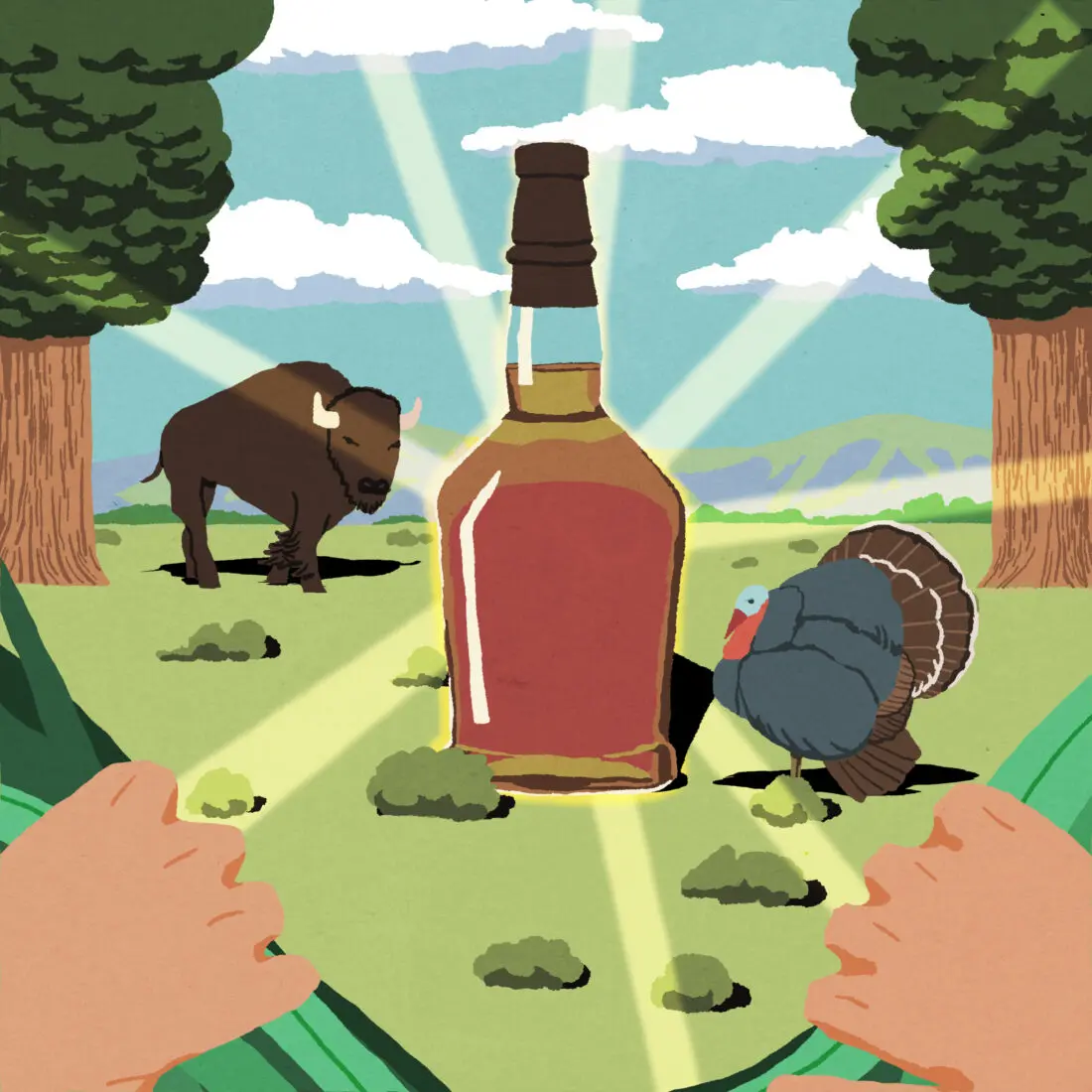
In the hyper-competitive, billion-dollar universe of American whiskey, few phenomena capture the imagination of collectors quite like a liquid shrouded in corporate secrecy, accidental provenance, and internet-fueled mythmaking. Enter “BuffTurkey”—a colloquial, fan-coined moniker for one of the rarest and most anomalous bourgons of the 21st century.
Born out of an industrial hiccup in 2009, this unicorn whiskey is the literal crossover child of two legendary Kentucky institutions that typically operate as fierce competitors: Wild Turkey and Buffalo Trace. When Italian beverage conglomerate Campari acquired the venerable Wild Turkey distillery in Lawrenceburg, Kentucky, a massive equipment retooling effort forced a temporary pause in production. To bridge the gap, Wild Turkey quietly contracted its historic rival—Buffalo Trace, located down the road in Frankfort—to distill a massive run of its signature mash bill.
What followed was a 14-year slumber that involved mysterious Texas sports team owners, high-stakes barrel brokers, independent non-distilling producers (NDPs), and a ravenous cult following. Today, bottles bearing this clandestine juice command astronomical prices on the secondary market, turning a logistical stopgap into the ultimate cross-collectible holy grail.
As the remaining supply dwindles and auction houses field aggressive bids, the story of BuffTurkey serves as a fascinating case study in bourbon lore, corporate secrecy, and the sheer power of enthusiast-driven detective work.
Detailed Chronology: How Two Rivals Accidentally Made History
To understand how a whiskey bearing the DNA of both Wild Turkey and Buffalo Trace came to exist, one must look back to the shifting landscape of the Kentucky bourbon industry in the late 2000s.
2009: The Campari Takeover and the Production Pause
In 2009, the Gruppo Campari acquisition of Wild Turkey sent shockwaves through the spirits world. The new ownership immediately recognized the need to modernize and expand production capabilities at the Lawrenceburg facility to meet surging global demand. However, retooling industrial-scale stills, fermenters, and cookers cannot be done overnight.
Faced with a looming production void, Wild Turkey leadership made an unorthodox move. They contracted the Sazerac-owned Buffalo Trace Distillery in Frankfort—a behemoth in its own right—to produce a specific run of bourbon.
According to historical records and industry consensus, the whiskey was crafted strictly to Wild Turkey’s exacting specifications: a traditional mash bill consisting of 75 percent corn, 13 percent rye, and 12 percent barley. Yet, the actual mashing, fermentation, and distillation took place entirely on Buffalo Trace’s equipment. Industry insiders generally assume that Buffalo Trace supplied the grains and its house yeast strains, though neither distillery has ever gone on the record to confirm the exact parameters of this cross-distillery collaboration.
The Lost Years and the Texas VIP Mystery
Once distilled, the new make spirit was barreled—accounting for roughly 1,000 casks—and sent off to age. But the narrative diverges sharply regarding what happened next.
- The Quality-Control Narrative: One prevailing legend suggests that after the barrels aged for roughly 14 years, Wild Turkey evaluated the stock and decided that while the liquid was undeniably tasty, it deviated too far from the traditional Wild Turkey flavor profile to be released under its flagship labels.
- The VIP Sports Owner Narrative: An alternate, highly plausible version involves a wealthy private client. Macauley Minton, chief alchemist at Dark Arts Whiskey House in Lexington, Kentucky, shares a widely circulated industry tale: "From my understanding, there was a gentleman out of Texas who owns a national sports team and decided to lay down some barrels to celebrate a future championship. But along the way, he decided he wanted to do a Texas whiskey instead."
Regardless of the initial intent, the thousands of maturing barrels were ultimately deemed surplus to requirements. The original buyer pulled out, and a high-stakes broker was brought in to liquidate the inventory.
The Sourcing and the Sighting (2023–2024)
The natural buyers for a large, anonymous block of well-aged, high-quality Kentucky straight bourbon were Non-Distilling Producers (NDPs). Operating on a business model built around sourcing exceptional barrels from heritage distilleries, several NDPs stepped up to acquire portions of the lot.
Dark Arts Whiskey House was among them. Minton, reviewing samples from the broker, was instantly captivated.
"I think I got some of the cream of the crop because I picked so many," Minton recalls. "I found they had a rich, traditional bourbon character with that Wild Turkey spice and cherry cola taste, and some of the barrels were hazmat-level proof. The story of the production interests me because it’s a unique whiskey, but in the end it’s about the quality, and those barrels were exceptional."
As these barrels began hitting the market in 2024 under various independent brand labels, bourbon sleuths on digital forums and enthusiast groups began doing what they do best: comparing mash bills, age statements, and flavor profiles. Piecing together the clues, they identified the anomalous provenance and christened the liquid “BuffTurkey.”
Supporting Context & Metrics: The Anatomy of a Cult Craze
In the world of sourced whiskey, NDPs are rarely transparent about the exact origin of their juice. Non-disclosure agreements (NDAs) and proprietary brand strategies mean that consumers are usually left guessing whether a 14-year-old bourbon came from Heaven Hill, MGP, or Jim Beam.
However, BuffTurkey shattered the mold. The unique intersection of a Wild Turkey mash bill crafted on Buffalo Trace equipment created a distinct sensory fingerprint—combining the signature high-rye spice and dark-fruit notes characteristic of Lawrenceburg with the oak-forward sweetness typical of Frankfort warehouses.
Identifying the Bottles
Because multiple NDPs purchased parcels from the original broker liquidation, BuffTurkey expressions entered the market under several different brand banners. Dedicated sleuths and bourbon archivists have since cataloged the primary releases:
- Buckner’s
- Elkwood Reserve
- Nashville Barrel Company
- OKI
- Provenance
- River Roots
- New Era (A brand launched specifically in 2024 to bottle BuffTurkey stock, though its supply has since been exhausted)
Note: Because these distilleries and NDPs also source and release other independent whiskey stocks, bourbon enthusiasts emphasize the importance of verifying specific batch details, age statements, and flavor profiles before making high-dollar purchases.
The Dark Arts "Cuvee" Phenomenon
While various brands released single-barrel iterations, the crown jewel of the BuffTurkey movement arrived in September 2025 at the Kentucky Bourbon Festival. Dark Arts Whiskey House pulled back the curtain entirely, releasing a limited run of 582 bottles of a 16-year-old, cask-strength BuffTurkey “Cuvee” blend.
Priced at $300 per bottle, the entire allocation sold out in less than 24 hours. Within days, secondary market listings and auction houses saw the bottles flipping for two to three times their retail value, cementing BuffTurkey’s status as a modern collectible titan.
Official Statements and Expert Perspectives
The allure of BuffTurkey extends far beyond its strange backstory; it represents a rare convergence of two ideological camps in the bourbon community: fans of Wild Turkey (often called "Turkey Nerds") and devotees of Buffalo Trace.
Ryan Brechlin, an auctioneer at Connecticut-based Good Bottle Auctions, explains the unprecedented market demand:
"BuffTurkey is the ultimate cross-collectible bourbon. It’s a limited and unique product made in collaboration between two giants of bourbon. That drives demand from fans of both—and it’s made even more desirable because you can’t get it from Buffalo Trace or Wild Turkey."
For legacy distilleries, acknowledging or officially labeling such a cross-distillery project is virtually unheard of due to brand identity protection and quality control optics. Yet, the underground validation by blenders like Minton has transformed an industrial anomaly into a badge of honor for independent bottlers.
Future Outlook: The Elusive End of the Line
As the bourbon community looks toward the future, several burning questions remain regarding the BuffTurkey phenomenon:
- How much liquid remains? While the exact inventory numbers are heavily guarded by brokers and private holders, industry estimates suggest that the vast majority of the original 1,000 barrels have either been bottled or consumed. However, the possibility remains that certain NDPs are quietly "resting" their inventory for extra-aged releases in the future.
- Will secondary prices peak? As supply dwindles toward zero, auction values for remaining bottles from brands like Nashville Barrel Company and the Dark Arts Cuvee are expected to climb, keeping the legend alive among elite collectors.
- Will corporate giants ever repeat the experiment? Given the extreme corporate consolidation and protective branding strategies of modern whiskey giants like Campari and Sazerac, an accidental cross-distillery collaboration of this magnitude is unlikely ever to happen again.
Appropriately, the whiskey continues to weave its way into unexpected cultural moments. Demonstrating that BuffTurkey is prized not just as a speculative asset but as a liquid meant to be shared, Macauley Minton and his bride recently celebrated their nuptials by opening a dedicated BuffTurkey “wedding barrel” with friends and family.
For those lucky enough to secure a pour, BuffTurkey is more than just a clever acronym or a high-proof whiskey—it is liquid history, a bottled accident that proves sometimes the greatest masterpieces in the spirits world are born from the unexpected.

0 Comments