
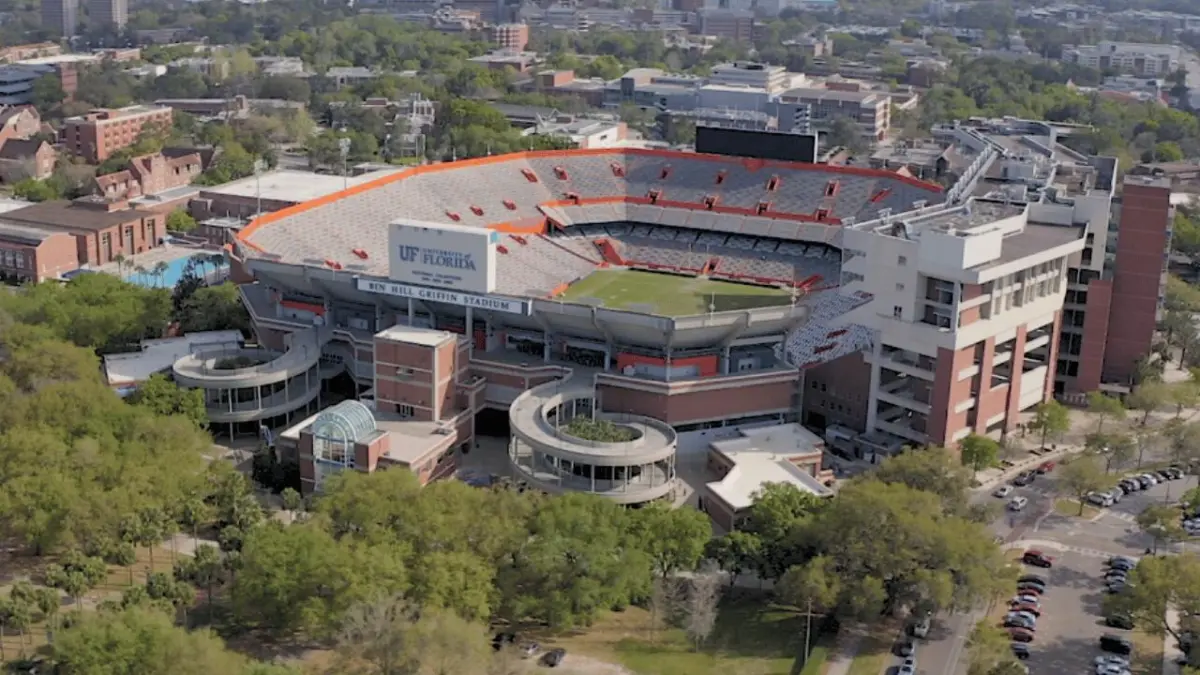

GAINESVILLE, Fla. — Local law enforcement and university officials are conducting a thorough investigation following a fatal incident at the University of Florida’s iconic Ben Hill Griffin Stadium, widely known as "The Swamp." Authorities confirmed that a 51-year-old man died after falling from the upper tiers of the historic athletic facility into the interior concourse below.
While initial findings point toward suicide, the event has sent shockwaves through the campus community and the surrounding city of Gainesville, raising urgent questions regarding campus security protocols, public access to massive athletic venues, and the escalating crisis of homelessness and mental health support in the region.
Executive Overview
The incident occurred during the early morning hours, prompting a rapid response from the University of Florida Police Department (UFPD), Gainesville Fire Rescue, and emergency medical personnel. According to preliminary incident reports, the 51-year-old individual—believed by investigators to be experiencing homelessness—gained access to the upper structure of the stadium before the fatal fall took place.
Officials have been keen to reassure the public that no students, faculty members, or campus visitors were present in the immediate vicinity at the time of the incident, thereby preventing any direct secondary trauma to the university community. Nevertheless, the physical location of the event—one of the most recognizable and revered landmarks in American collegiate athletics—has amplified the gravity of the situation.
As university leadership, security administrators, and mental health advocates grapple with the implications of the tragedy, this developing report examines the chronology of the response, the broader socio-economic context surrounding urban homelessness near university campuses, official statements from governing bodies, and the proactive measures being discussed to prevent future tragedies.
Detailed Chronology of Events
The sequence of events unfolded in the pre-dawn hours, transforming a typically quiet campus landmark into an active crime and death investigation scene.
Initial Discovery and Emergency Dispatch
At approximately 6:45 a.m., maintenance personnel arriving for early-shift operations at Ben Hill Griffin Stadium contacted emergency dispatchers after discovering an unresponsive adult male in the interior concourse area of the stadium. The individual, later identified as a 51-year-old male, had sustained catastrophic injuries consistent with a high-elevation fall.
First Responder Deployment
Within minutes of the initial call, units from the University of Florida Police Department and Gainesville Fire Rescue arrived at the scene, specifically focusing on Gate 2 and the adjacent interior concourse. Emergency medical technicians assessed the victim and determined that he had succumbed to his injuries prior to their arrival. The area was immediately cordoned off with crime scene tape to preserve potential evidence and allow detectives to map the trajectory of the fall.
Crime Scene Investigation and Perimeter Securing
For much of the morning, forensic investigators and crime scene technicians combed the upper seating bowls and concourses of the stadium. Authorities examined the perimeter fencing, gates, and accessibility points to determine how the individual managed to scale the structure. Preliminary assessments indicated that the man had climbed to one of the highest vantage points of the stadium’s upper bowl before dropping into the interior concourse.
By midday, university officials released a preliminary statement confirming that the incident involved no foul play and that investigators were treating the event as an apparent suicide. The body was subsequently transferred to the Alachua County Medical Examiner’s Office for a formal autopsy and toxicological screening, standard protocol in unattended and violent deaths.
Supporting Context & Metrics: Facilities, Security, and Public Access
The tragedy at Ben Hill Griffin Stadium brings to light complex challenges regarding the management of open campus environments, massive athletic infrastructure, and the socioeconomic vulnerabilities facing unhoused populations in Alachua County.
The Architecture and Vulnerability of "The Swamp"
Ben Hill Griffin Stadium is an architectural behemoth. Capable of holding over 88,000 spectators, the stadium features steep upper decks, open-air concourses, and massive structural frameworks that tower over the campus landscape. While designed to provide optimal sightlines for football fans, these very features present significant physical security challenges during the off-season and non-game days.
Universities across the nation face a delicate balancing act: maintaining open, welcoming campuses for students, alumni, and local residents while securing multi-million-dollar athletic complexes against unauthorized access, trespassing, and self-harm incidents. While major gates are typically locked, the sheer scale of modern collegiate stadiums often leaves certain perimeters susceptible to determined individuals seeking shelter, elevation, or concealment.
Homelessness in Alachua County: A Growing Crisis
While the University of Florida maintains a tightly managed campus footprint, it exists within the broader urban ecosystem of Gainesville and Alachua County, where housing affordability and homelessness have remained persistent socioeconomic challenges.
According to data compiled by the Alachua County Coalition for the Homeless and Hungry, hundreds of unhoused individuals navigate the city’s urban core daily. Many gravitate toward university-adjacent areas due to the availability of public transit, charitable resources, and sprawling infrastructure that offers temporary shelter from the elements.
Social service advocates emphasize that unhoused populations experience disproportionately high rates of untreated mental health disorders, severe depression, substance abuse, and trauma. The convergence of homelessness and acute mental health distress often leads to crises that require immediate, compassionate intervention rather than purely punitive security measures.
Official Statements and Institutional Response
In the wake of the incident, leadership from the University of Florida, local law enforcement agencies, and student welfare organizations released statements addressing the tragedy and offering support services to the campus community.
University of Florida Police Department
UFPD Chief of Police spoke briefly to local media outlets, expressing condolences and outlining the scope of the ongoing investigation.
"Our hearts go out to the family and loved ones of the individual involved in this heartbreaking incident," the department stated in a formal release. "While our preliminary investigation strongly indicates this was an isolated act of self-harm with no foul play suspected, we are conducting a comprehensive review of our stadium security and access logs to understand how this occurred."
University Administration and Student Support
University administrators emphasized that although no students or university personnel witnessed the event, the psychological ripple effects of a suicide on campus can be profound. In an email distributed to faculty, staff, and students, the university’s division of student affairs highlighted available mental health resources and encouraged open dialogues surrounding emotional well-being.
"The safety and mental health of every member of our community—and those who traverse our campus—remain our highest priorities," the administrative statement read. "No one should ever feel that they are alone in navigating life’s darkest moments. We urge anyone struggling with despair, crisis, or loss to utilize the robust support systems available both on campus and nationwide."
Future Outlook: Security Enhancements and Mental Health Outreach
As the investigation concludes and the campus begins to heal, institutional leaders, campus planners, and mental health advocates are turning their attention toward long-term prevention strategies.
Re-evaluating Stadium Security and Perimeter Controls
In light of the incident, athletic department officials and campus security planners are undertaking a comprehensive audit of Ben Hill Griffin Stadium’s physical infrastructure. Discussions are underway regarding the potential enhancement of motion-activated surveillance systems, more robust anti-scaling barriers on lower-level access points, and increased frequency of security patrols during overnight and early morning hours.
However, security experts note that physical fortifications alone cannot fully eliminate vulnerabilities in massive public-access structures. Balancing architectural openness with safety remains a formidable engineering and administrative puzzle.
Strengthening Crisis Intervention and Community Outreach
Beyond physical barriers, local stakeholders are advocating for enhanced collaboration between campus police, Gainesville municipal services, and regional mental health agencies. Outreach programs designed to engage unhoused populations with housing placement, medical care, and psychological counseling are seen as vital components of a holistic preventative strategy.
Public health advocates emphasize that tragedies of this nature underscore the critical importance of normalizing conversations around mental health and suicide prevention. Community leaders are urging local media, educational institutions, and civic organizations to continuously amplify crisis intervention resources.
Immediate Resources and Assistance
If you or someone you know is struggling or in crisis, help is available. You are not alone.
- Suicide & Crisis Lifeline: Call or text 988 (Available 24 hours a day, 7 days a week, free, and confidential in the United States and Canada).
- The Trevor Project (for LGBTQ+ youth): Call 1-866-488-7386 or text START to 678-678.
- Veterans Crisis Line: Dial 988, then press 1, or text 838255.
- UF Counseling and Wellness Center (Students): 352-392-1575.
- EAP (Employee Assistance Program for UF Faculty/Staff): 352-392-5770.
This developing story will be updated continuously as new verified information becomes available from the Alachua County Medical Examiner and the University of Florida Police Department.

0 Comments