

Executive Overview
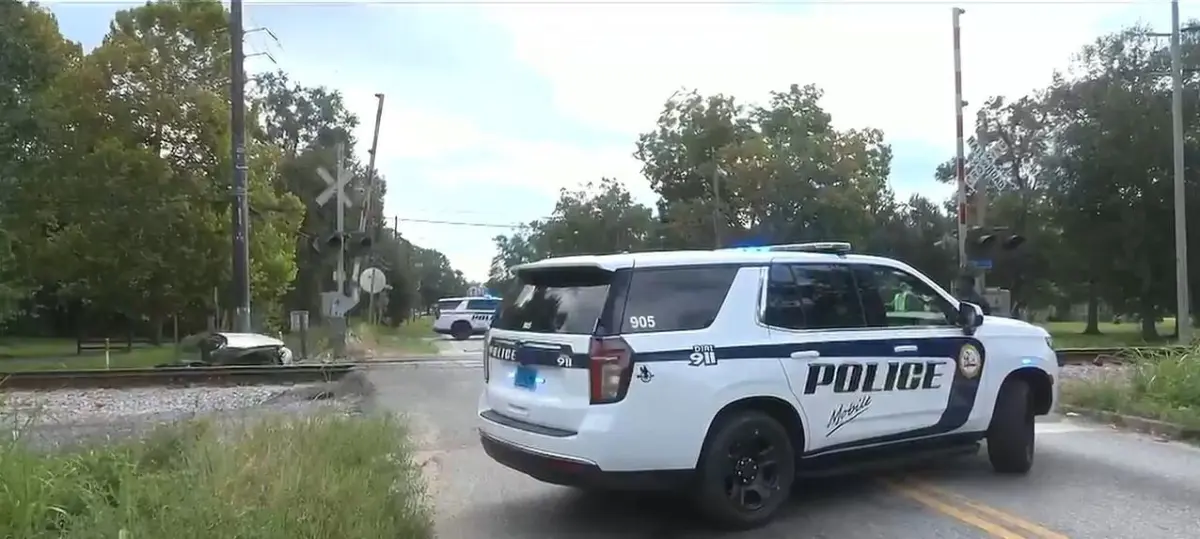
MOBILE, Ala. — A Thursday morning routine turned into an unimaginable nightmare on September 25, 2026, when a devastating collision between an Amtrak passenger train and a passenger vehicle claimed the lives of a beloved local couple in the Theodore community south of Mobile. The crash, which occurred just before 11:00 a.m. at a local railroad crossing, instantly killed 41-year-old James Cobb and his 44-year-old fiancée, Suzanne Wages. The force of the impact was so catastrophic that it sliced the couple’s vehicle cleanly in half, scattering wreckage across the tracks and leaving a community in profound shock and grief.
For Assistant Pastor Leonard Whitfield of the Mount Airy Missionary Baptist Church, the tragedy struck with agonizing immediacy. Whitfield, a lifelong friend of Cobb—having known him since birth—accidentally drove up on the horrific aftermath mere moments after hearing the thunderous roar of the impact. The emotional toll of the tragedy is deepened by a heartbreaking family milestone: the couple leaves behind a young son who celebrated his seventh birthday on the exact day his parents were killed.
The fatal incident is not an isolated event at this specific crossing. According to the Mobile Police Department (MPD), the crossing arms were fully functional and lowered at the time of the collision. Investigators concluded that the vehicle attempted to bypass the safety barriers, echoing a eerily similar, fatal crash at the exact same location in February 2026 that claimed the lives of a 31-year-old mother and her 8-year-old daughter.
As local authorities issue urgent, repeated pleas for drivers to respect rail safety infrastructure, community leaders and residents are pushing back, demanding enhanced physical deterrents and systemic infrastructure changes. This latest tragedy has ignited a fiery debate regarding public safety messaging, driver behavior, human psychology at railroad crossings, and the responsibility of transit authorities to safeguard high-speed rail corridors cutting through growing suburban and rural neighborhoods.
Detailed Chronology
The Final Moments: A Routine Errand Interrupted
The morning of Thursday, September 25, 2026, began like any other for James Cobb. Approximately 45 minutes prior to the fatal collision, Assistant Pastor Leonard Whitfield crossed paths with Cobb at a local gas station. Cobb, described by those who knew him as a respectful, hardworking, and deeply community-oriented individual, was pumping gas.
"I seen him about 45 minutes prior to this incident," Whitfield recalled, reflecting on their brief, routine exchange. "He was pumping gas in his car, and I spoke to him, hollered at him. He’ll throw his hand up and look and give you that smile."
That final flash of recognition would be the last memory Whitfield—or anyone else outside the immediate family—would share with Cobb before tragedy struck. Cobb climbed back into his vehicle alongside his fiancée, Suzanne Wages, unaware that their lives were drawing to an abrupt and violent close.
The Crash at 11:00 AM
Just before 11:00 a.m., Cobb’s vehicle approached the railroad crossing in Theodore as an Amtrak passenger train headed northbound toward Mobile. According to law enforcement and eyewitness reports, the automated warning systems, including the flashing lights and crossing arms, were fully activated and operating properly. The physical safety barriers were lowered to block oncoming traffic.
For reasons still under analysis by accident reconstructionists, the driver attempted to maneuver past the lowered crossing arms. In a split-second calculus that millions of drivers dangerously miscalculate every year, the driver likely believed they could clear the tracks before the oncoming locomotive arrived.
Instead, the high-speed Amtrak train—traveling at a velocity significantly greater than the standard freight trains that typically navigate the corridor—collided directly with the passenger car.
The Immediate Aftermath and Whitfield’s Discovery
Assistant Pastor Whitfield was driving on a nearby errand just moments after the impact. Turning right over the railroad tracks, he heard a sound that would forever alter his life.
"I came over the railroad track, made a right turn. I heard a loud boom," Whitfield said.
Upon investigating the source of the deafening sound, Whitfield realized a catastrophe had unfolded. As he drew closer to the scene, the horrifying realization set in: the mangled vehicle belonged to James Cobb, whom he had conversed with less than an hour earlier.
The physical destruction of the crash underscored the immense kinetic energy involved. The train struck the vehicle with such ferocity that it sheared the automobile cleanly in two. One half of the car remained lodged near the initial point of impact at the crossing, while the second half was dragged and hurled hundreds of feet down the tracks. Hours after emergency responders cleared the bodies, tiny fragments of automotive debris, glass, and personal effects remained scattered across the ballast, a grim testament to the violence of the collision.
Supporting Context & Metrics
The Mechanics of High-Speed Rail Danger
The Amtrak train involved in the September 25 crash operates on a corridor characterized by unique operational challenges. Unlike heavy freight trains, which typically move at slower, more lumbering speeds as they navigate industrial and municipal areas, passenger rail services often maintain higher velocities to adhere to strict timetables.
Mobile Police Department spokesman Blake Brown emphasized this critical factor when addressing the mechanics of the collision. "This train goes a lot faster than some of the other freight trains that move through the area," Brown noted.
This speed differential creates a profound psychological hazard for motorists. Human depth perception and velocity estimation are notoriously unreliable when evaluating oncoming trains. A train moving at 70 or 80 miles per hour appears to be much farther away and moving much slower than it actually is. When drivers see crossing arms descending, an erroneous cognitive bias often leads them to conclude they possess adequate time to "beat" the train, failing to account for the massive stopping distances and deceptive speeds of modern passenger rail.
A Grim History: The February Precedent
The tragedy in Theodore is made even more agonizing by its repetitive nature. The exact same railroad crossing was the site of another catastrophic train-car collision earlier in the year, in February 2026.
That winter incident claimed the lives of 31-year-old Brittany Williams and her 8-year-old daughter. Much like the September crash, investigators determined that Williams’s vehicle maneuvered around the lowered crossing arms before being struck by an oncoming Amtrak train.
The recurrence of fatal accidents at the exact same geographic location within a span of less than eight months has turned local scrutiny toward the engineering design of the crossing. While transit officials maintain that standard safety equipment—lights, bells, and descent arms—satisfies federal regulatory requirements, community members argue that these passive and semi-passive systems are proving dangerously inadequate against human error or impatience.
The Human Cost: An Orphaned Child
Beyond the twisted metal and the technical statistics of train velocity lies a profound human tragedy. James Cobb and Suzanne Wages were not merely statistics on a municipal blotter; they were pillars of their family and social circles.
Cobb was remembered by Whitfield as an exemplary citizen. "Great kid. Very, very, very, very respectful. Come from a great, great family," Whitfield said.
The most devastating casualty of the crash, however, is invisible in the wreckage: the couple’s young son. The boy celebrated his seventh birthday on the exact day his parents were killed. Thrust suddenly into orphanhood, the child’s life has been irrevocably shattered, leaving extended family members to shoulder the unimaginable burden of grief and long-term care.
Official Statements
Law Enforcement Perspective: Accountability and Public Safety
The Mobile Police Department has taken a firm, uncompromising stance regarding the root cause of both the February and September tragedies. Speaking on behalf of the department, spokesman Blake Brown reiterated that mechanical failure played no role in either disaster.
"The safety equipment at the railroad crossing was operating as normal when the crash happened," Brown stated firmly. "The crossing arms were down at the time. A vehicle was not wanting to wait, tried to go around the arms, and that vehicle was struck by the train."
Brown detailed the horrific nature of the scene for first responders, noting that the vehicle was "completely cut in half by the train," leaving two deceased victims entrapped inside.
In response to the double tragedy at the Theodore crossing, the MPD has ramped up public awareness campaigns. "We put out PSAs ourselves. I know the city also put out some other information, as well," Brown said, issuing a direct plea to the motoring public: "Don’t try to outrun a train. Don’t try to go under the arms. They’re there for a reason."
Community Pushback: Demanding Structural Evolution
While law enforcement places the onus squarely on driver behavior and compliance, community leaders and local pastors argue that relying solely on public service announcements and behavioral warnings is a failing strategy.
Assistant Pastor Leonard Whitfield voiced a sentiment shared by many frustrated residents: tragedies of this magnitude are entirely avoidable, but preventing them will require a fundamental shift in how crossings are secured. Whitfield advocated for moving beyond traditional swinging arms and flashing lights toward more aggressive, dynamic physical security measures.
Specifically, Whitfield suggested the implementation of rising wedge barriers—heavy-duty steel plates that rise directly out of the pavement when a train approaches, physically preventing any vehicle from circumventing the crossing perimeter. Such systems, common in high-security zones and select high-risk rail corridors across the country, eliminate the human element of driver impatience by making it physically impossible to drive around a lowered barrier.
Furthermore, local media outlets, including WALA, have made repeated inquiries to Amtrak corporate offices seeking comment on the recurring fatalities at the Theodore crossing, though official corporate responses regarding infrastructure upgrades or speed reductions through the municipality remain pending.
Future Outlook
As the community of Theodore prepares to lay James Cobb and Suzanne Wages to rest, the shadow of the September 25 tragedy hangs heavy over Mobile County. The intersection where the lives of two parents were snuffed out has become a makeshift shrine of flowers, notes, and grieving family members—and a flashpoint for municipal policy discussions.
The Path Forward: Engineering vs. Education
The core debate emerging from the twin tragedies of February and September centers on a fundamental civil engineering question: Should safety rely on human obedience, or should infrastructure be designed to outsmart human error?
- The Behavioral Approach: Proponents of the current framework, backed by law enforcement, argue that no amount of engineering can completely stop a determined driver from circumventing safety barriers. They advocate for intensified law enforcement surveillance, harsher penalties for gate-bypassing, and aggressive public education campaigns targeting reckless driving habits near tracks.
- The Structural Approach: Community advocates, led by voices like Pastor Whitfield, contend that modern high-speed rail demands modern infrastructure. They are calling on city planners, federal transit regulators, and Amtrak to fund engineering upgrades at the Theodore crossing, including advanced detection sensors, CCTV monitoring, and physical traffic-halting barriers that remove the temptation of racing a train.
Honoring the Victims Through Action
For the family of James Cobb and Suzanne Wages—and especially for their newly orphaned seven-year-old son—regulatory debates offer cold comfort in the face of insurmountable loss. Yet, the persistent advocacy of local religious and community leaders ensures that the deaths of Cobb, Wages, Brittany Williams, and her young daughter will not simply fade into the archives of local news blotters.
As public pressure mounts on city hall and transit authorities, the Theodore railroad crossing stands as a solemn monument to the fragile intersection of human haste and unstoppable machine power. Whether this latest catastrophe serves as the catalyst for sweeping infrastructure reform across Mobile County remains to be seen, but the community’s demand for change is louder, clearer, and more urgent than ever before.

0 Comments