

Executive Overview
VANCOUVER, Wash. — A routine Tuesday evening turned catastrophic at a busy intersection in Vancouver, Washington, leaving a 74-year-old resident dead following a collision with a full-sized pickup truck. The fatal incident, which occurred on August 18, 2026, at approximately 7:45 p.m., has reignited intense community scrutiny surrounding pedestrian infrastructure, night-time visibility, and the acute vulnerabilities faced by disabled individuals navigating urban and suburban roadways.
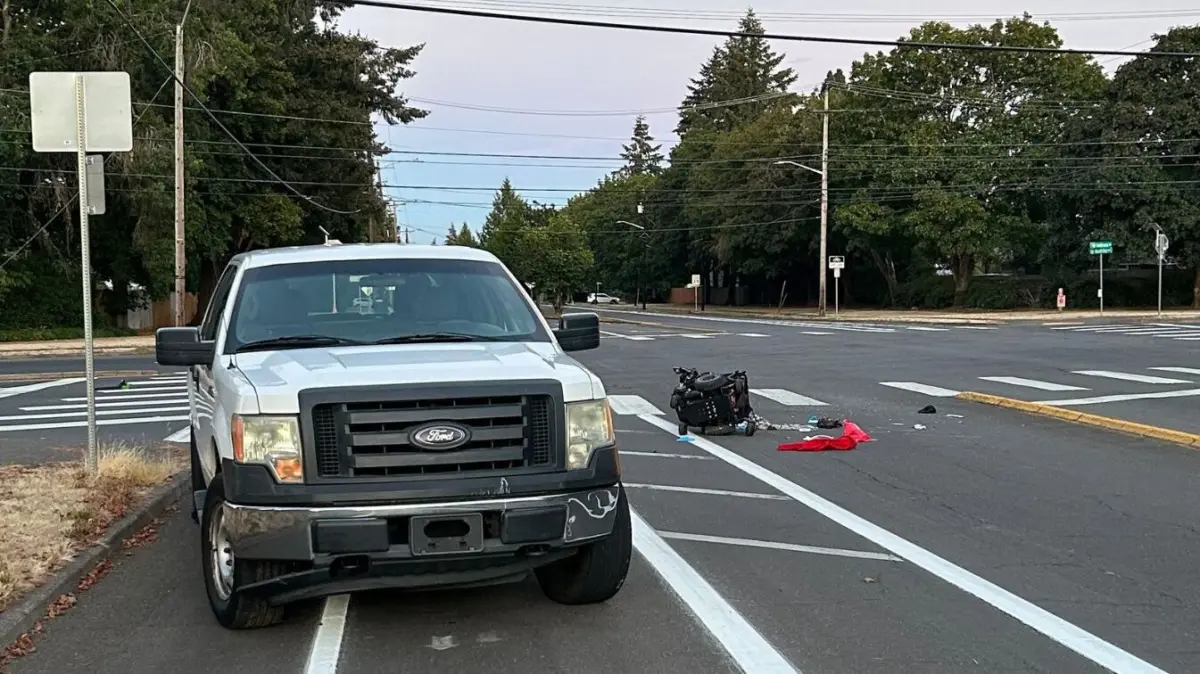
According to preliminary reports released by the Vancouver Police Department (VPD), emergency responders rushed to the junction of South Andresen Road and MacArthur Boulevard following multiple 911 calls reporting a crash involving a pedestrian. Upon arrival, emergency personnel located a 74-year-old man who had been operating a wheelchair within a designated crosswalk. The victim sustained critical, life-threatening injuries and was rushed to a nearby regional trauma hospital, where he succumbed to his injuries shortly after arrival.
The driver of the pickup truck involved in the collision remained at the scene, cooperating fully with investigators from the onset. Law enforcement officials confirmed that preliminary field assessments revealed no signs of driver impairment, intoxication, or erratic behavior. Despite the absence of criminal intent, the incident has triggered a comprehensive ongoing investigation by the VPD’s Traffic Unit to piece together the exact sequence of events, environmental factors, and spatial dynamics that led to the tragedy.
As municipal leaders, advocacy groups, and local residents grapple with the aftermath of the crash, the incident serves as a grim reminder of the persistent dangers embedded within America’s car-centric infrastructure. This comprehensive report explores the detailed chronology of the event, contextualizes the broader systemic dangers confronting vulnerable road users through empirical metrics, reviews statements from municipal and law enforcement officials, and outlines the urgent future outlook required to prevent similar tragedies in the Pacific Northwest.
Detailed Chronology of Events
The Lead-Up: Twilight Transitions and Urban Mobility
The environment surrounding the intersection of South Andresen Road and MacArthur Boulevard on the evening of August 18 presented complex visual and spatial challenges. At 7:45 p.m. in late August, the Pacific Northwest is undergoing a gradual twilight transition. While daylight is not entirely extinguished, the fading sun casts long shadows, creates dynamic glare angles for motorists facing west or south, and significantly diminishes contrast for objects low to the ground.
For a 74-year-old man navigating the built environment in a wheelchair, evening transits often require utilizing arterial crossings where traffic volumes remain heavy even during off-peak hours. South Andresen Road, characterized by multiple lanes of travel, higher posted speed limits, and significant commercial traffic, acts as a major artery connecting various residential corridors within Vancouver.
The Collision at South Andresen and MacArthur
According to investigators, the driver of a late-model pickup truck had arrived at the intersection and stopped at a posted stop sign. The motorist was executing a maneuver to proceed through the intersection when the collision occurred. Concurrently, the 74-year-old victim had entered the marked crosswalk.
Because standard pickup trucks feature elevated front ends, expansive hoods, and substantial blind spots—particularly regarding low-profile objects, children, and individuals seated in wheelchairs—the physical geometry of the vehicle likely played a critical role in the driver’s failure to sight the victim. Investigators are currently examining whether the driver’s line of sight was obstructed by structural pillars of the cab, the high hood profile, or diminishing ambient lighting conditions.
The impact occurred within the bounds of the crosswalk, underscoring that the victim was utilizing designated pedestrian infrastructure at the time of the crash. The force of the collision threw the victim from his wheelchair, causing catastrophic blunt-force trauma.
Immediate Emergency Response
First responders from the Vancouver Fire Department and Clark County Emergency Medical Services (CCEMS) were dispatched to the scene at approximately 7:48 p.m., arriving within minutes of the initial collision. Upon securing the scene and rendering emergency medical aid, paramedics determined that the victim was suffering from critical, life-threatening injuries.
The victim was rapidly transported under advanced life support protocols to a nearby hospital emergency department. Despite aggressive life-saving interventions administered by trauma surgeons and medical staff, the victim succumbed to his injuries. The Clark County Medical Examiner’s Office has scheduled an autopsy to officially determine the exact cause of death, while police continue to withhold the victim’s identity pending formal notification of extended family members.
On-Site Investigation and Driver Cooperation
The Vancouver Police Department’s Traffic Unit immediately secured the intersection, closing sections of South Andresen Road and MacArthur Boulevard for several hours to conduct mapping, laser scanning, and forensic reconstruction of the crash site.
The driver of the pickup truck did not flee the scene—a stark contrast to an alarming number of modern hit-and-run incidents. The motorist remained stationary, immediately contacted or cooperated with emergency dispatchers, and provided full statements to investigating officers. Standard protocol in fatal traffic collisions dictates comprehensive drug and alcohol screening; preliminary field indicators and subsequent tests confirmed that the driver was sober and not impaired by substances. Consequently, no immediate criminal charges were filed at the scene, though the investigation remains fully active as forensic analysts review vehicle telemetry, potential dashcam footage, and surrounding surveillance feeds.
Supporting Context & Metrics: The Crisis of Pedestrian and Vulnerable Road User Safety
The National Landscape of Pedestrian Fatalities
The tragedy in Vancouver is not an isolated anomaly, but rather a tragic data point within a sweeping national public health crisis. According to the Governors Highway Safety Association (GHSA) and the National Highway Traffic Safety Administration (NHTSA), pedestrian fatalities across the United States have surged to levels not witnessed since the early 1980s. Over the past decade, pedestrian deaths have climbed by more than 40%, driven by a combination of distracted driving, soaring vehicle weights, and road infrastructure built primarily for vehicle throughput rather than human safety.
Vulnerable road users (VRUs)—a classification that includes pedestrians, bicyclists, skateboarders, and individuals utilizing mobility assistive devices such as wheelchairs and motorized scooters—bear the brunt of this crisis. When a motor vehicle strikes a pedestrian, the physics of the collision are unforgiving. While a pedestrian struck by a standard passenger car faces severe risks, individuals hit by large pickup trucks and SUVs are disproportionately more likely to suffer fatal injuries. Due to the high center of gravity and elevated bumper heights of modern trucks, these vehicles do not merely sweep pedestrians onto the hood; they frequently strike the torso or head directly and pull the victim underneath the chassis, resulting in catastrophic crush injuries.
The Special Vulnerabilities of Wheelchair Users
Navigating urban infrastructure in a wheelchair presents compounding hazards that able-bodied pedestrians rarely encounter. These challenges include:
- Height Disparity: An adult seated in a manual or electric wheelchair sits at an average eye-level height of approximately 3.5 to 4 feet, rendering them virtually invisible to drivers sitting high up in modern trucks who are scanning for standing pedestrians or other vehicular traffic.
- Crossing Speeds: The average walking speed utilized by traffic engineers to time pedestrian signals is approximately 3.5 feet per second. For individuals propelling manual wheelchairs or operating slower mobility devices, clearing wide arterial intersections like South Andresen Road within the allotted signal phase is frequently a physical impossibility.
- Infrastructure Deficits: Curb cuts, cracked sidewalk panels, inadequate lighting at crosswalks, and faded crosswalk striping disproportionately endanger wheelchair users, often forcing them to alter their paths or spend extended durations exposed within active roadways.
Local Trends in Clark County and Washington State
Washington State has experienced similar upward trajectories in traffic-related fatalities. The Washington Traffic Safety Commission (WTSC) has repeatedly highlighted that intersections and urban arterials remain the deadliest zones for pedestrians. In rapidly growing urban and suburban hubs like Vancouver, the intersection of surging populations, increased vehicular congestion, and aging infrastructure has created a volatile mix for road safety.
A spatial analysis of traffic collisions in Clark County reveals that suburban arterials—roads featuring multiple lanes, higher speed limits, and commercial strip-mall entrances—account for a disproportionate percentage of severe and fatal pedestrian crashes. Intersections like South Andresen Road and MacArthur Boulevard, which balance high-density residential access with heavy commuter traffic, emerge as primary hot spots requiring urgent engineering interventions.
Official Statements and Institutional Responses
Vancouver Police Department Statements
In the wake of the incident, the Vancouver Police Department released initial briefing notes emphasizing the cooperative nature of the driver and outlining the preliminary parameters of the investigation.
"The driver of the vehicle remained at the scene and cooperated fully with our investigators," noted a spokesperson for the VPD. "At this stage of the investigation, preliminary indicators strongly suggest that impairment was not a contributing factor in this collision. However, our Traffic Unit is conducting a comprehensive, meticulous reconstruction of the incident to determine all contributing environmental and physical factors."
Law enforcement officials have emphasized that an absence of impairment does not conclude an investigation. Investigators must evaluate whether environmental factors, such as ambient lighting, foliage obstruction, vehicle blind spots, or pedestrian right-of-way compliance, played determinative roles in the crash.
Municipal Infrastructure and Advocacy Reactions
While local officials have maintained caution while the investigation proceeds, transportation safety advocates and urban planning organizations in the Pacific Northwest have seized upon the tragedy to demand accelerated safety overhauls.
"Every time a vulnerable resident is killed in a crosswalk, it is characterized as an ‘accident’ or an unfortunate tragedy, but these incidents are the predictable outcome of dangerous street design," said a regional representative for a Pacific Northwest pedestrian advocacy coalition. "Arterials like South Andresen Road are engineered like mini-highways, encouraging higher speeds and forcing elderly and disabled residents to traverse massive expanses of asphalt where they are entirely exposed to towering pickup trucks and distracted motorists."
Advocacy groups are calling upon the Vancouver City Council and the Washington State Department of Transportation (WSDOT) to re-evaluate the intersection of South Andresen and MacArthur, pushing for immediate infrastructural enhancements that prioritize human life over vehicular velocity.
Future Outlook and Preventative Recommendations
As the Vancouver Police Department finalizes its forensic reconstruction and the Clark County Medical Examiner releases formal findings, the community faces a critical juncture. Preventing future tragedies at South Andresen and MacArthur—and across the broader Vancouver metropolitan area—requires a multi-faceted, proactive strategy encompassing engineering, legislation, and public education.
1. Engineering and Infrastructure Overhauls
To protect vulnerable road users, urban planners must move beyond basic painted crosswalks and implement proven countermeasures:
- High-Visibility Crosswalks: Upgrading standard striping to high-contrast, ladder-style markings that are easily perceived by motorists in varying lighting conditions.
- Rectangular Rapid Flashing Beacons (RRFBs): Installing active amber warning beacons operated by pedestrians to demand driver yielding behavior at unsignalized or high-risk intersections.
- Geometric Calming: Implementing curb extensions (bulb-outs) to shorten crossing distances, narrow turning radii to force motorists to slow down, and improve sightlines for both drivers and pedestrians.
- Enhanced Lighting: Upgrading street illumination at intersections to modern LED standards, specifically targeting the twilight hours when contrast is at its lowest.
2. Vehicle Design and Regulatory Scrutiny
The proliferation of oversized pickup trucks and large SUVs poses an undeniable national safety threat. While municipal governments cannot unilaterally regulate vehicle manufacturing, federal agencies and consumer advocacy groups must push for:
- Mandatory Blind-Spot Technology: Requiring advanced pedestrian detection systems, automatic emergency braking (AEB) capable of recognizing wheelchair users and pedestrians in low-light conditions, and direct-vision standards for truck cab designs.
- Hood Height Regulations: Addressing the escalating heights of truck hoods that drastically expand front blind spots and increase the lethality of pedestrian impacts.
3. Community Education and Enforcement
Law enforcement and public safety campaigns must continue to educate motorists on the absolute right-of-way granted to pedestrians in crosswalks, while emphasizing the heightened vigilance required during dawn and dusk transitions. Furthermore, targeted enforcement operations focusing on yielding compliance at arterial intersections can establish a powerful deterrent against aggressive or inattentive driving behaviors.
Conclusion
The death of the 74-year-old wheelchair user on August 18, 2026, is a profound loss for the Vancouver community. Beyond the immediate grief of family and friends, this tragedy stands as an indictment of infrastructure that fails to protect its most vulnerable populations. Only through rigorous investigation, unyielding political will, and radical redesign of our roadways can Vancouver hope to honor the memory of the victim and ensure that the crosswalks of the Pacific Northwest become safe passages for all citizens, regardless of mobility.

0 Comments