

Executive Overview
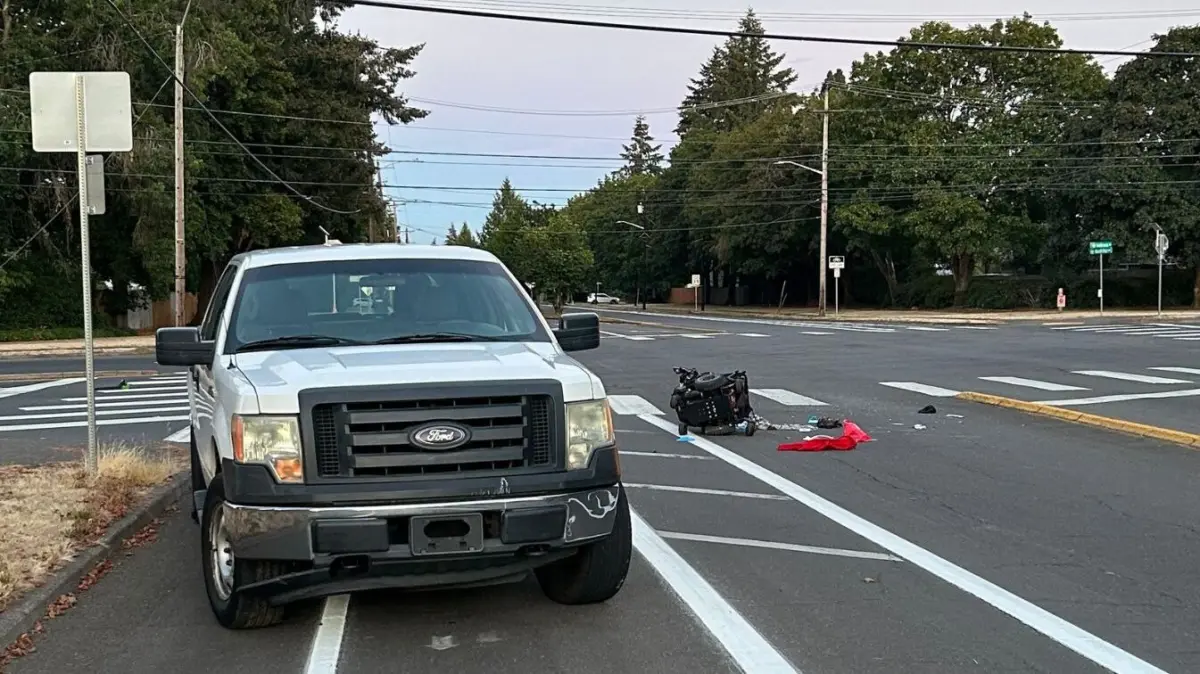
VANCOUVER, Wash. — In the fading twilight of a late-summer evening, a routine transit through a local intersection turned catastrophic in Vancouver, Washington. On Tuesday, August 20, 2026, a 74-year-old man navigating a wheelchair was struck by a full-sized pickup truck while crossing a major thoroughfare. The incident, which unfolded at approximately 7:45 p.m., has reignited pressing community concerns regarding pedestrian safety, infrastructure design, and the heightened vulnerabilities faced by disabled and elderly residents navigating modern urban corridors.
According to preliminary reports released by the Vancouver Police Department (VPD), emergency responders rushed to the junction of South Andresen Road and MacArthur Boulevard following multiple 911 calls reporting a vehicle-versus-pedestrian collision. The victim, whose identity has been withheld pending the absolute notification of next of kin by the Clark County Medical Examiner’s Office, sustained catastrophic injuries. He was rushed to a nearby regional trauma hospital, where life-saving measures ultimately proved unsuccessful.
The driver of the pickup truck, whose identity has also been withheld pending ongoing inquiries, remained at the scene immediately following the impact. Law enforcement officials confirmed that the motorist cooperated fully with investigators during the initial phase of the on-site inquiry. Standard field sobriety tests and preliminary evaluations conducted by traffic enforcement officers yielded no indications of impairment by alcohol or controlled substances.
While the investigation remains active and fluid, the tragedy has sent shockwaves through the Pacific Northwest municipality, drawing immediate scrutiny from local safety advocates who argue that intersections like South Andresen and MacArthur present systemic hazards for non-motorized travelers. As local authorities piece together the precise sequence of events leading up to the crash, municipal leaders face mounting pressure to evaluate and upgrade pedestrian infrastructure to prevent similar tragedies.
Detailed Chronology of Events
To reconstruct the events of Tuesday evening, investigators from the Vancouver Police Department’s Traffic Unit have relied on witness statements, physical evidence recovered from the asphalt, and potential digital surveillance footage captured by nearby commercial establishments.
The Pre-Collision Window: 7:30 p.m. – 7:45 p.m.
As daylight waned over Vancouver on August 20, weather conditions were reported as clear, with dry pavement offering optimal traction for both vehicular and pedestrian traffic. Ambient lighting was transitioning from dusk to night, a critical window during which visibility can be compromised for motorists making turns or clearing intersections.
The 74-year-old victim, operating a wheelchair, was traveling within the vicinity of the commercial and residential hubs flanking South Andresen Road. While the exact origin and destination of his journey have not been publicly disclosed by law enforcement, municipal pathway maps indicate that the area is frequently utilized by residents accessing nearby retail centers, public transit stops, and residential neighborhoods.
The Impact: Approximately 7:45 p.m.
At precisely 7:45 p.m., emergency dispatch centers received the first wave of frantic calls reporting a collision at the intersection of South Andresen Road and MacArthur Boulevard.
According to the official narrative provided by the Vancouver Police Department, the operator of a pickup truck had approached the intersection and brought the vehicle to a complete stop in compliance with the posted stop sign. Investigators believe the driver intended to proceed straight or execute a maneuver through the intersection. As the truck moved forward from the stationary position, it entered the path of the wheelchair user, who had entered the marked crosswalk.
The low-profile nature of a wheelchair, combined with the elevated cab height typical of modern full-sized pickup trucks, presents well-documented blind spots for motorists. Investigators are currently examining whether these structural vehicle dynamics played a decisive role in the driver’s failure to detect the pedestrian prior to impact.
Emergency Response and Medical Intervention
Within minutes of the initial 911 transmissions, units from the Vancouver Fire Department and American Medical Response (AMR) arrived at the scene. First responders located the victim lying in or near the roadway, having sustained severe, multi-system trauma.
Paramedics initiated emergency stabilization protocols at the scene before rapidly transporting the 74-year-old man under trauma-alert conditions to a local hospital. Despite the deployment of advanced life support measures by emergency medical personnel, the victim succumbed to his injuries shortly after arrival.
On-Site Investigation and Scene Management
Following the emergency transport of the victim, VPD traffic investigators closed portions of South Andresen Road and MacArthur Boulevard for several hours. Specialized crash reconstruction teams utilized laser mapping equipment, photographic documentation, and physical evidence collection techniques to map the trajectory of both the pickup truck and the wheelchair.
The pickup truck driver was interviewed extensively by detectives at the scene. Investigators confirmed that the motorist did not flee, showed no visible signs of intoxication, and voluntarily submitted to preliminary investigative evaluations. The vehicle itself was subjected to a mechanical inspection to rule out equipment failure—such as brake malfunction or steering loss—as contributing factors to the crash.
Supporting Context & Metrics: The Crisis of Vulnerable Road Users
The tragic death in Vancouver is not an isolated incident; rather, it underscores a nationwide epidemic of rising pedestrian and vulnerable road user (VRU) fatalities across American municipalities. To fully understand the gravity of the South Andresen Road crash, it is essential to examine the broader statistical landscape governing traffic safety in Washington State and the United States at large.
The National Picture: Rising Pedestrian Fatalities
Over the past decade, pedestrian deaths in the United States have reached levels not seen since the early 1980s. According to data compiled by the Governors Highway Safety Association (GHSA) and the National Highway Traffic Safety Administration (NHTSA), pedestrian fatalities have surged by more than 50% over the last fifteen years.
Several intersecting trends drive this grim statistic:
- The Vehicular Fleet Shift: The American automotive market has experienced a dramatic shift away from sedans toward larger, heavier vehicles, specifically light trucks, sport utility vehicles (SUVs), and massive pickup trucks.
- Distracted Driving: The proliferation of smartphone technology and in-dash infotainment systems has exponentially increased cognitive and visual distractions for motorists.
- Infrastructure Deficits: Many suburban and urban arterial roadways were engineered decades ago with a primary focus on maximizing vehicular throughput rather than protecting human life. Wide multi-lane roads, long crossing distances, and insufficient lighting create perilous environments for pedestrians, particularly seniors and individuals with mobility impairments.
The Vulnerability of Wheelchair Users and Seniors
Older adults and individuals utilizing mobility devices face disproportionate risks when navigating public rights-of-way. According to federal aging and disability advocacy reports, older pedestrians account for a significantly higher percentage of traffic fatalities relative to their share of the population. Diminished visual acuity, slower walking or rolling speeds, and reduced auditory perception make it exceptionally difficult to react to sudden vehicular threats.
Furthermore, wheelchair users sit at a significantly lower visual plane than standing pedestrians. When attempting to cross multi-lane arterial roads like South Andresen Road, wheelchair users are frequently obscured by roadside foliage, parked or stopped vehicles, and the physical design of modern pickup trucks, which often feature high-rising hoods and expansive blind zones stretching several feet in front of the bumper.
Vancouver and Clark County Traffic Safety Data
In Washington State, the Washington Traffic Safety Commission (WTSC) tracks traffic fatalities under the umbrella of the Target Zero strategic plan, which aims to eliminate traffic deaths and serious injuries on Washington roadways by 2030.
Recent WTSC metrics for Clark County highlight ongoing challenges:
- Arterial Risk: Multi-lane arterial roads—characterized by higher speed limits, frequent turning movements, and heavy commercial traffic—consistently rank as the most dangerous corridors for pedestrians in southwest Washington.
- Intersection Vulnerability: A substantial percentage of pedestrian-versus-vehicle collisions occur within or immediately adjacent to marked or unmarked intersections, frequently during turning maneuvers or when motorists fail to yield the right-of-way to individuals lawfully using crosswalks.
Official Statements and Law Enforcement Perspective
As the investigation into Tuesday night’s collision continues, public safety officials have released measured updates while urging community patience as forensic and reconstruction teams finalize their reports.
The Vancouver Police Department
The Vancouver Police Department issued a formal press release detailing the immediate response to the incident. Department spokespersons emphasized the cooperation of the driver involved, noting that preliminary findings point away from criminal intent or substance impairment.
"At about 7:45 p.m., officers responded to South Andresen Road and MacArthur Boulevard for reports of a crash involving a pedestrian," the VPD stated in an official release distributed via media partners. "A driver in a pickup truck had stopped at the stop sign and was proceeding through the intersection when he hit a man in a wheelchair who had entered the crosswalk."
Law enforcement officials stressed that the designation of no immediate signs of impairment does not conclude the investigation. The VPD Traffic Unit is conducting a comprehensive reconstruction to determine whether factors such as sun glare, vehicle blind spots, failure to yield, or right-of-way infractions contributed to the fatal outcome.
The Clark County Medical Examiner
The Clark County Medical Examiner’s Office has assumed jurisdiction over the case to determine the exact cause and manner of death. Officials have indicated that the official identification of the 74-year-old victim will be released publicly only after family notifications have been successfully executed and verified. An autopsy, standard in fatal collision investigations, is expected to provide definitive medical data regarding the specific trauma sustained during the impact.
Community Advocates and Safe Streets Coalition
While official statements from municipal leaders remain procedural, local pedestrian advocacy networks and safe-streets organizations have voiced profound sorrow and growing frustration over the state of intersection safety in Vancouver.
In statements shared across community forums, safety advocates highlighted the urgent need for infrastructure interventions along arterial corridors like South Andresen Road. Proposals frequently championed by these groups include:
- Leading Pedestrian Intervals (LPIs): Programming traffic signals to give pedestrians a head start before vehicular traffic is granted a green light.
- High-Visibility Crosswalk Enhancements: Upgrading standard painted lines to high-visibility continental or "ladder" patterns, paired with overhead or flashing beacon systems (such as Rectangular Rapid Flashing Beacons, or RRFBs).
- Intersection Tightening: Reconfiguring curb radii to force motorists to execute turns at lower speeds, thereby increasing reaction time and field of view.
Future Outlook: Accountability, Infrastructure, and Policy Reform
The tragic loss of a 74-year-old wheelchair user at South Andresen Road and MacArthur Boulevard serves as a stark reminder of the human cost associated with modern traffic safety challenges. As the community looks toward the coming weeks and months, several critical vectors will determine how this incident impacts local policy, legal accountability, and urban planning in Vancouver.
1. The Legal and Investigative Conclusion
The immediate future of the case rests upon the completion of the Vancouver Police Department’s comprehensive crash reconstruction report. Once finalized, the investigative file will be forwarded to the Clark County Prosecuting Attorney’s Office. Prosecutors will review the evidence to determine whether criminal charges—such as negligent driving or failure to yield the right-of-way—are warranted, regardless of the absence of impairment. Under Washington law, motorists bear a legal obligation to exercise due care to avoid colliding with any pedestrian, and failing to yield in a crosswalk can carry significant civil and criminal penalties.
2. Infrastructure Audits and Municipal Response
In the wake of fatal collisions, municipal engineering departments frequently conduct safety audits of the involved intersection. City planners and traffic engineers will likely review the sightlines, lighting conditions, and traffic control devices at South Andresen Road and MacArthur Boulevard. If engineering reviews identify deficiencies—such as inadequate illumination during dusk or blind spots exacerbated by roadway geometry—the city may fast-track safety enhancements to mitigate future risks.
3. Broadening the Vision Zero Commitment
Vancouver, like many progressive cities in the Pacific Northwest, has endorsed initiatives aimed at prioritizing human life over vehicular speed. However, advocates argue that policy declarations must be matched by aggressive capital investment in pedestrian infrastructure. As suburban commercial corridors continue to densify, retrofitting older roadways to accommodate aging populations and residents with mobility disabilities is no longer optional; it is an urgent public health imperative.
Conclusion
The death of the 74-year-old man on August 20, 2026, is a profound tragedy that reverberates far beyond the intersection where it occurred. It highlights the vulnerability of those who navigate our streets without the protection of a steel chassis and underscores the immense responsibility shared by every motorist behind the wheel. As police investigations proceed and community members demand accountability, the ultimate measure of this tragedy will be whether it catalyzes meaningful change—transforming dangerous asphalt corridors into safe, accessible public spaces for all residents of Vancouver.

0 Comments