
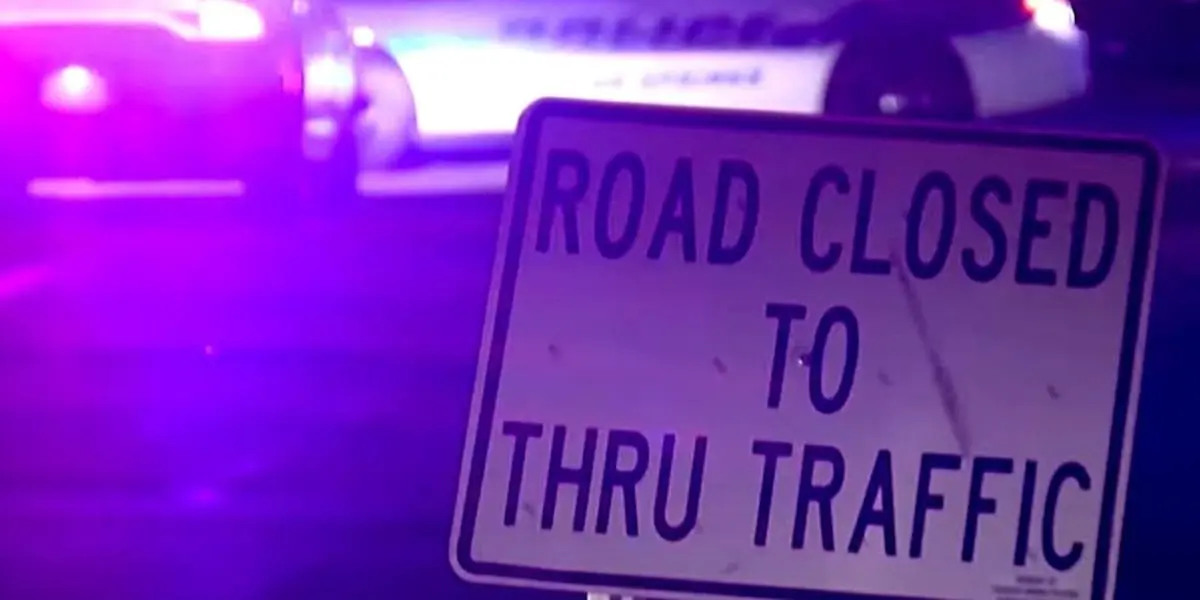

ALACHUA, Fla. — A devastating late-night multi-vehicle collision on Northwest Highway 441 has left one man dead and a teenager fighting for her life, prompting a lengthy closure of a vital Alachua County thoroughfare. The crash, which occurred on Tuesday evening, involved a sudden loss of control that investigators say sent a southbound passenger vehicle hurtling directly into the path of oncoming northbound traffic.
The incident has reignited local concerns regarding roadway safety, speed management, and infrastructure conditions along the heavily traveled US-441 corridor. Local law enforcement, emergency medical services, and Florida Highway Patrol (FHP) troopers responded en masse to the chaotic scene, which required hours of painstaking reconstruction and forensic investigation before the highway could be cleared.
Executive Overview
The fatal collision took place at approximately 8:40 p.m. under dark and potentially hazardous driving conditions along a stretch of US-441 between Turkey Creek Boulevard and Northwest County Road 237. According to preliminary incident reports released by Florida Highway Patrol troopers, an 18-year-old female resident of Lake City was operating a passenger vehicle traveling southbound. For reasons still under active investigation by traffic homicide specialists, the driver lost control of her automobile.
The vehicle crossed the centerline, breaching the opposing traffic lanes where a convoy of northbound vehicles was traveling. The out-of-control car slammed head-on into a pickup truck driven by a 33-year-old local man. The impact was catastrophic, causing the woman’s vehicle to overturn and flip multiple times. Debris from the violent collision struck two additional northbound cars traveling immediately behind the pickup truck.
The driver of the pickup truck succumbed to his injuries at the scene before emergency medical personnel could transport him. The 18-year-old driver of the southbound vehicle sustained severe, life-threatening injuries and was rushed to a regional trauma center under emergency protocols. The occupants of the secondary vehicles struck by flying debris escaped with minor or no physical injuries, though all involved experienced profound psychological trauma.
The crash resulted in an immediate and prolonged total shutdown of US-441 in both directions. The Alachua Police Department, alongside the Alachua County Sheriff’s Office, locked down the corridor to preserve physical evidence and allow accident reconstructionists to map the debris field. The closure severely disrupted regional commuting routes well into the early morning hours, forcing commercial and passenger traffic onto narrow secondary county roads.
Detailed Chronology of Events
Phase 1: The Approach and Loss of Control (Approx. 8:35 p.m. – 8:40 p.m.)
In the moments leading up to the tragedy, traffic along US-441 was flowing at moderate speeds under nighttime conditions. Witnesses reported that visibility was hampered by standard rural lighting constraints typical of this section of Alachua County.
The 18-year-old Lake City woman was driving south in her vehicle. Simultaneously, a 33-year-old motorist was driving his pickup truck north along the same highway, accompanied by a trailing line of at least two other civilian vehicles.
According to FHP crash investigators, the sequence of events was initiated when the southbound driver experienced a catastrophic loss of directional control. Whether this loss of control was precipitated by excessive speed, a mechanical failure, a sudden roadway obstruction, driver distraction, or environmental factors remains the focal point of the ongoing state investigation.
Phase 2: The Catastrophic Impact (8:40 p.m.)
At roughly 8:40 p.m., the southbound vehicle veered sharply to the left, vaulting or sliding across the centerline and invading the northbound lanes. The maneuver left the northbound motorists with virtually zero reaction time.
The 33-year-old pickup truck driver attempted a last-second evasive action, but a collision was unavoidable. The two vehicles collided with immense force. The kinetic energy unleashed during the impact caused the 18-year-old’s car to become airborne and flip over repeatedly before coming to a rest on the roadway shoulders.
The violence of the primary impact scattered jagged metal, shattered glass, and vehicle components across all lanes of travel. Two subsequent northbound vehicles, unable to brake or maneuver around the unfolding disaster in time, plowed directly through the storm of flying debris, sustaining significant structural damage and further compounding the chaos of the scene.
Phase 3: Emergency Response and Scene Lockdown (8:45 p.m. – Midnight)
Emergency dispatchers received the first 911 calls reporting a major traffic collision with entrapment at 8:42 p.m. Within minutes, units from the Alachua Police Department, Alachua County Fire Rescue, and the Florida Highway Patrol converged on the location.
First responders found a scene of total devastation. The pickup truck had sustained catastrophic front-end and cabin intrusion, while the second vehicle was heavily mangled and overturned. Emergency medical technicians (EMTs) immediately evaluated the drivers. The 33-year-old pickup truck driver displayed no vital signs and was pronounced dead at the scene by paramedics.
Simultaneously, rescue crews utilized hydraulic extraction tools—commonly referred to as the "Jaws of Life"—to free the trapped 18-year-old driver from the wreckage of her overturned car. Once stabilized on-site, she was transferred via ground ambulance to a designated trauma center with serious, critical injuries.
Traffic control units quickly established perimeter roadblocks. The Alachua Police Department formally announced the complete closure of NW US Highway 441 from Turkey Creek Boulevard down to NW County Road 237, diverting thousands of motorists onto alternate routes and setting up a secure perimeter for the FHP Traffic Homicide Unit.
Supporting Context & Metrics: The Danger of US-441
To fully understand the gravity of this incident, it is essential to examine the broader safety metrics and historical context of transportation corridors within Alachua County and the wider North Florida region.
Infrastructure and Speed Dynamics
US Highway 441 is a vital North-South artery connecting small municipalities like Lake City and Alachua to larger urban hubs such as Gainesville. While portions of the highway feature multi-lane configurations, many segments run through semi-rural zones characterized by dark stretches, intersections with limited auxiliary turning lanes, and fluctuating speed limits that challenge even experienced motorists.
According to data compiled by the Florida Department of Transportation (FDOT), rural and semi-rural two-lane and multi-lane undivided highways experience a disproportionate share of high-velocity head-on collisions. When a vehicle crosses the centerline on a high-speed road, the closing speed—calculated by combining the velocities of both oncoming vehicles—often exceeds 100 mph, rendering standard automotive safety cages and airbags insufficient to prevent fatal trauma.
Alachua County Traffic Safety Statistics
Recent trends analyzed by the Florida Highway Safety and Motor Vehicles (FLHSMV) division indicate that Alachua County records thousands of traffic crashes annually, with a notable percentage involving younger drivers. Drivers aged 18 to 21 are statistically overrepresented in single-vehicle loss-of-control incidents due to a combination of driving inexperience, spatial awareness challenges, and delayed hazard recognition under nighttime conditions.
| Metric Category | Alachua County Regional Average | State of Florida Benchmark |
|---|---|---|
| Annual Reported Crashes | ~5,500 – 6,000 incidents | Varies by county population |
| Percentage Involving Young Drivers (18-21) | Approx. 14.2% | 12.8% |
| Head-On / Crossing Centerline Fatalities | ~18% of all local road fatalities | 15.5% |
| Nighttime vs. Daytime Crash Ratio | 38% occurring after dark | 34% occurring after dark |
Note: Data derived from aggregated state highway safety reports and regional law enforcement summaries.
The economic and human cost of such collisions extends far beyond the immediate victims. Roadway closures along arteries like US-441 disrupt commercial supply chains, delay emergency response times for neighboring calls, and place immense psychological stress on first responders who bear the brunt of managing these tragic scenes.
Official Statements and Law Enforcement Perspective
Local and state authorities have maintained a transparent posture as the investigation unfolds, though key details remain shielded pending notification of next of kin and ongoing forensic analysis.
Florida Highway Patrol Statement
FHP Public Affairs representatives emphasized that the investigation is still in its preliminary stages. Troopers stated:
"Our Traffic Homicide Unit is examining every physical variable related to this crash. We are analyzing skid marks, vehicle telemetry data, weather conditions at the time of the incident, and statements from witnesses in the secondary vehicles. Until a comprehensive reconstruction is finalized, we cannot definitively state what caused the southbound driver to cross the median and enter opposing traffic."
Authorities have reiterated that toxicology reports—standard procedure in all fatal traffic crashes in the state of Florida—will be conducted on the drivers involved to determine whether impairment played a role in the tragedy. However, officials cautioned against speculation while lab results are pending.
Alachua Police Department Operational Update
The Alachua Police Department coordinated the immediate ground response and traffic diversion efforts. In an official bulletin issued late Tuesday night, the department stated:
"The cooperation of our community has been vital during this critical incident. Closing a major corridor like US-441 creates significant logistical challenges, but securing the scene is paramount to ensuring our investigators can gather accurate evidence. We extend our deepest condolences to the family and loved ones of the deceased victim, and our thoughts remain with the injured driver and her family as she receives medical treatment."
Local officials also praised the swift coordination between Alachua County Fire Rescue, county public works crews, and tow operators who worked through the night to clear debris-laden lanes and restore normal traffic flow by Wednesday morning.
Future Outlook: Safety Measures and Community Impact
As Alachua County reels from yet another fatal collision on its roadways, community leaders, safety advocates, and transportation planners are once again looking toward proactive measures to curb roadway fatalities.
Engineering and Infrastructure Interventions
Transportation safety experts frequently point to engineering solutions as the most effective long-term deterrent against cross-centerline crashes. While physical median barriers (such as concrete jersey walls or cable barriers) are standard on interstate highways, their implementation on state roads like US-441 is often limited by right-of-way constraints, funding priorities, and roadway design standards.
Following this incident, local advocacy groups are expected to petition FDOT to review the safety infrastructure along the US-441 corridor between Alachua and Lake City. Potential recommendations include:
- Installation of High-Tension Cable Barriers: To physically prevent vehicles from crossing into opposing lanes.
- Enhanced Roadway Lighting: Upgrading illumination at key intersections and transitional zones where rural darkness obscures hazards.
- Rumble Strips: Milling center-line and shoulder rumble strips to provide auditory and tactile warnings to drivers who begin to drift out of their lanes.
Public Awareness and Driver Education
Beyond infrastructure, the tragedy underscores the critical need for continuous driver education campaigns targeted at young drivers. Defensive driving programs that emphasize hazard perception, night-driving strategies, and vehicle recovery techniques during loss-of-control scenarios are viewed by educators as essential components of licensing requirements.
Insurance and safety organizations consistently remind motorists of the core tenets of defensive driving on rural highways:
- Maintain Safe Following Distances: Allowing adequate space to react to sudden maneuvers by oncoming or preceding vehicles.
- Mitigate Fatigue: Avoiding long-distance driving during late-night hours when reaction times naturally plummet.
- Speed Regulation: Adhering strictly to posted speed limits, particularly in unlit or unfamiliar rural sectors where road geometry can change unexpectedly.
Conclusion
The multi-vehicle collision on US-441 stands as a grim reminder of the fragility of human life and the unforgiving nature of highway travel. As the Florida Highway Patrol continues its meticulous reconstruction of the events of that fateful night, a grieving family mourns the loss of a 33-year-old man, a community reflects on highway safety, and investigators search for the answers that can only be uncovered through rigorous forensic science. The reopening of the highway brings physical normalcy back to Alachua County, but the emotional and community impact of this tragedy will resonate for a long time to come.

0 Comments