


Executive Overview
In the quiet suburban community of Ladson, South Carolina, a profound tragedy has laid bare the catastrophic vulnerabilities inherent in child welfare interventions, family crisis management, and emergency response protocols. Emory Deacon, age 2, and her younger sister, Harlow Deacon, 15 months old, were discovered dead inside their Pinewood Drive residence on September 29, 2026. According to findings released by the Charleston County Sheriff’s Office (CCSO), the toddlers tragically succumbed to starvation, passing away an estimated three to five days prior to deputies executing a fateful welfare check.
The girls’ mother, Justine May, has been arrested and charged in connection with the deaths, including facing two counts of homicide by child abuse. The case has sent shockwaves through the Charleston metropolitan area and ignited intense public scrutiny, prompting authorities to release extensive body-worn camera footage from previous police and mobile crisis interventions at the home.
This newly disclosed media provides an unprecedented, haunting glimpse into the weeks preceding the children’s deaths. The video evidence captures daily life inside the household, interactions between May and law enforcement, and escalating tensions involving estranged family members and the children’s father, Zachary Deacon. As investigators piece together the timeline, the central question remaining before the community and legal system is how visible warning signs failed to prevent a catastrophic loss of young lives.
Detailed Chronology: A Timeline to Tragedy
To understand the sequence of events that culminated in the September 29 discovery, investigators have mapped out a timeline characterized by fractured familial relationships, repeated calls for assistance, and escalating behavioral concerns.
Early August 2026: The Relationship Dissolves
The foundational stressor in the household appears to be the dissolution of the domestic partnership between Justine May and Zachary Deacon. After an eight-year relationship that included a five-year engagement, the couple separated in early August. Following the split, Zachary Deacon raised immediate concerns regarding May’s mental stability and the welfare of their two young daughters, prompting him to initiate multiple requests for police intervention.
August 30, 2026: The Initial Sheriff’s Office Visit
On August 30, Charleston County deputies responded to the Pinewood Drive residence for a welfare check, generating approximately 22 minutes of body camera footage.
- Inside the Home: When deputies arrived, May answered the door holding 15-month-old Harlow, who was dressed only in a diaper. A dog barked in the background, but the home appeared orderly and well-maintained, with music playing softly from a kitchen speaker.
- The Children: During the conversation, Harlow was placed on the floor to crawl, while toddler Emory sat quietly on the couch, interacting intermittently with other individuals present.
- The Focus: The bulk of the dialogue between May and the deputies centered on Zachary Deacon. May expressed deep frustration over her former fiancé’s actions, while a caseworker present during the visit quietly documented observations and took notes. At this stage, authorities observed no immediate, acute physical danger that warranted emergency removal.
September 12, 2026: Mobile Crisis Unit and Police Return
Roughly two weeks later, on September 12, a mobile crisis unit accompanied by law enforcement returned to the Ladson home following additional expressions of concern—not from the father, but from May’s own parents.
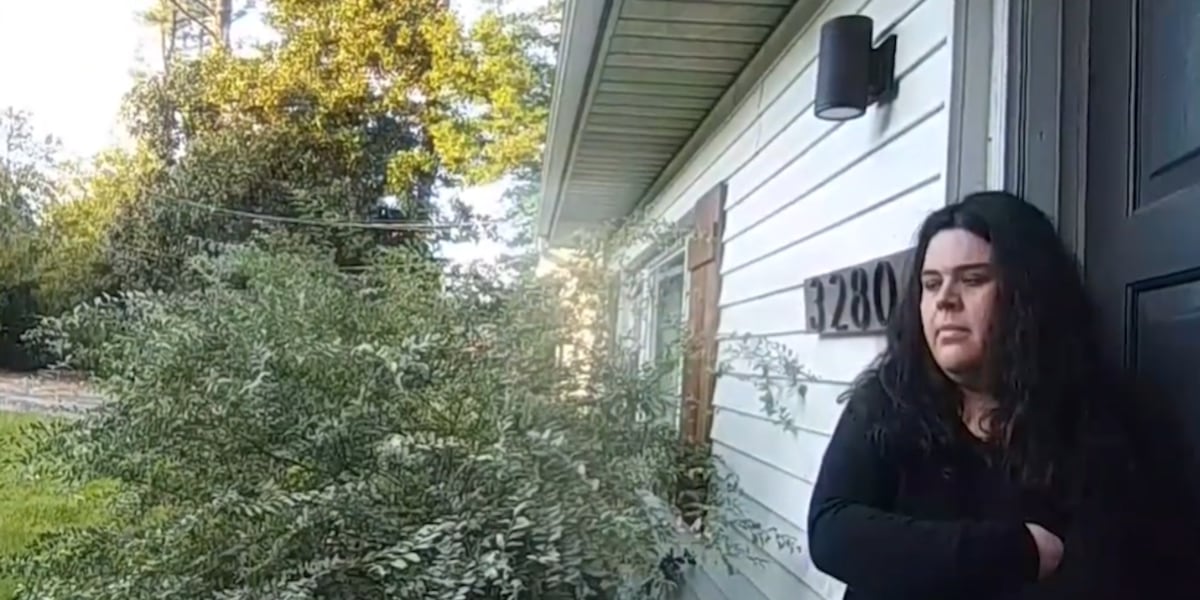
- The Confrontation at the Door: Unlike the previous visit, May engaged with authorities primarily at the front threshold. Barking dogs and the faint sounds of children playing emanated from within. When officers approached, May immediately asked, "How may I help you?" and asserted that nobody was permitted to enter the residence.
- Denials and Defensiveness: Questioned regarding her mental state—specifically whether she was experiencing hallucinations or suicidal ideation—May denied any mental health struggles. She expressed intense bitterness toward her relatives, stating, *"My family has been taunting the *** out of me," and claiming they were spreading falsehoods about her suffering a mental breakdown.
- Social Media and Isolation: May maintained that she had completely severed ties with her family due to harassment. She referenced a "horrible" email sent by her mother questioning her parenting capabilities. Concluding the interaction, May asserted, "I’m clearly not crazy… And no, I’ve never had any mental health issues." Both children briefly appeared in the doorway and in May’s arms as the visit concluded. In the days following, May publicly shared screenshots of text messages and emails online to prove she was being targeted by what she termed "interfering" relatives.
September 29, 2026: The Welfare Check and Discovery
The tragic climax occurred on September 29, when emergency dispatchers received a frantic 911 call requesting another welfare check at the residence. The caller reported that the two little girls had not been seen in public for an extended period, that May was exhibiting erratic behavior, and that she had been spotted wandering the neighborhood alone.
When deputies arrived at the Pinewood Drive home, May emerged from the front door crying and speaking incoherently. Upon entering the premises, law enforcement officers made the grim discovery: Emory and Harlow Deacon were dead. Medical and investigative findings later revealed that the children had perished from starvation days prior.
Supporting Context & Metrics
The Ladson tragedy highlights systemic vulnerabilities common in child abuse and neglect investigations, specifically regarding the challenges law enforcement and social services face when assessing homes during single-snapshot welfare checks.
The Illusion of Order
Criminological and social work experts frequently note that abusive or neglectful environments do not always present as chaotic or squalid. The August 30 body camera footage illustrates this phenomenon:
- Physical Presentation: The home was clean, music played, and the children appeared physically mobile.
- Masking Behaviors: Perpetrators experiencing acute psychological distress or malicious intent can often maintain a veneer of normalcy during brief, scheduled, or announced law enforcement visits.
- The Limitation of Snapshots: A 22-minute interaction cannot measure nutritional intake, psychological neglect, or the dynamic safety of a household over a 24/7 period.
Frequency of Interventions
Records indicate that law enforcement and social service agencies had interacted with the household multiple times in the weeks leading up to the deaths. This high frequency of calls—originating from both a concerned father and estranged grandparents—demonstrates that the family’s support network recognized a mounting crisis long before the tragedy occurred.
| Date | Intervening Agency | Nature of Visit | Key Observations |
|---|---|---|---|
| Early August | N/A | Separation | Domestic partnership dissolves after eight years; stress escalates. |
| August 30 | Charleston County Sheriff’s Office | Welfare Check | Home appears orderly; children observed active; caseworker takes notes. |
| September 12 | Mobile Crisis Unit / CCSO | Welfare Check | Requested by grandparents; May denies mental illness and bars entry. |
| September 29 | CCSO Emergency Response | 911 Welfare Check | May found incoherent; children discovered dead from starvation. |
Official Statements & Legal Proceedings
The magnitude of the case has prompted formal responses from law enforcement agencies, legal representatives, and community leaders seeking accountability.
Law Enforcement Response
The Charleston County Sheriff’s Office has faced intense scrutiny regarding the thresholds required for emergency protective custody and child removal. In public statements, the agency emphasized that deputies and caseworkers operated within the legal parameters governing home visits and welfare checks based on the evidence available at the time. However, the decision to release the body camera footage represents an unprecedented step toward transparency, allowing the public and oversight bodies to evaluate the exact nature of the interactions law enforcement had with May prior to the tragedy.
Criminal Charges
Justine May is currently in custody, facing multiple severe felony charges, most notably two counts of homicide by child abuse. Prosecutors are reviewing the comprehensive timeline—including the mobile crisis unit visit on September 12 and the coroner’s estimation that the children died three to five days before September 29—to construct a case establishing criminal negligence, severe deprivation, and depraved indifference to human life.
Future Outlook: Systemic Reform and Community Impact
As the legal proceedings against Justine May advance through the South Carolina court system, the community of Ladson and state child welfare advocates are demanding a critical evaluation of how systemic responses to family crises can be improved.
Interagency Communication Protocols
A central focus moving forward will be the communication breakdown between municipal law enforcement, mobile crisis units, and child protective services. When multiple family members—both the father and the maternal grandparents—independently voice alarms about a mother’s psychological stability and child welfare, experts argue that protocols must mandate more aggressive, multidisciplinary follow-up rather than relying on compliance at the front door.
Legislative and Policy Implications
Lawmakers in South Carolina are already discussing potential legislative frameworks that could grant child welfare workers expanded authority to mandate internal home inspections and medical evaluations when repeated, credible warnings are issued by immediate family members.
For Emory and Harlow Deacon, these reforms arrive too late. Yet, as the body camera footage is dissected in courtrooms and public forums, their memory remains a stark reminder of the hidden dangers that can persist behind closed doors, even when the authorities have knocked.

0 Comments