By Kris Ann Valdez | Published: September 17, 2026
Executive Overview
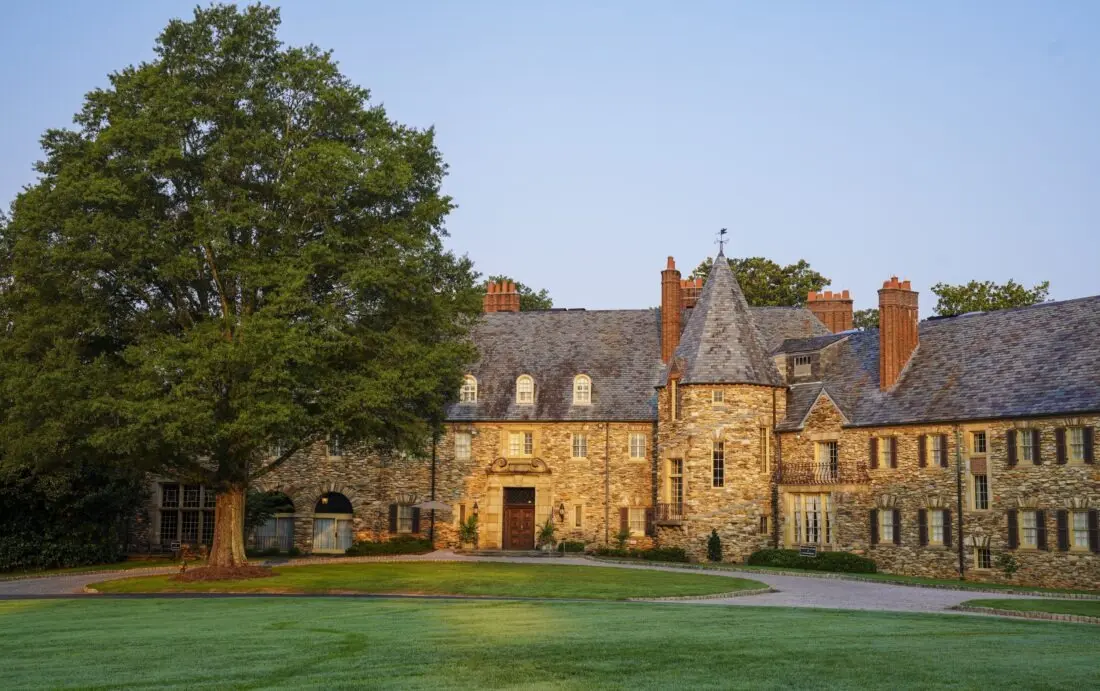
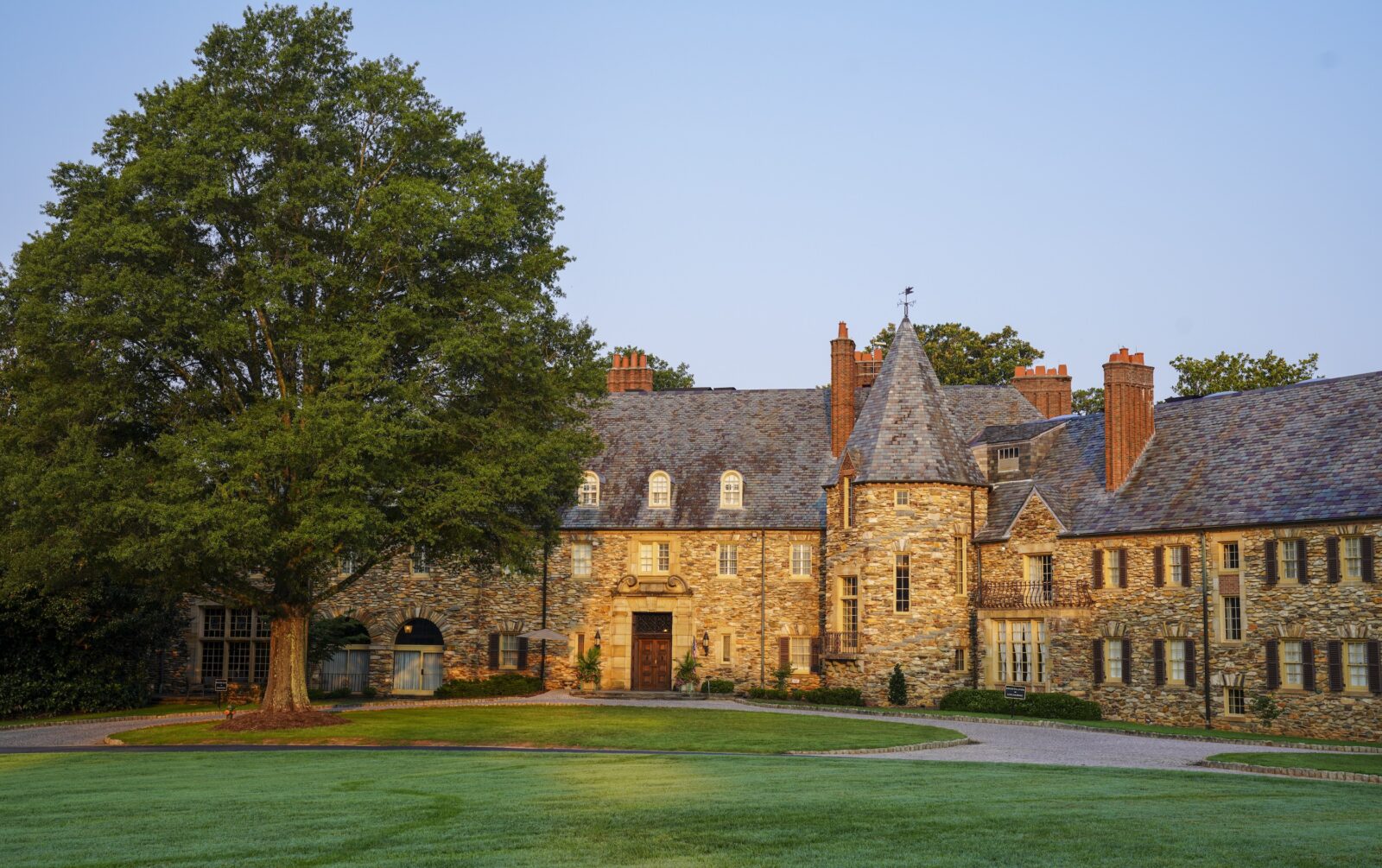
Nestled within the undulating, verdant landscape of Winston-Salem, North Carolina, the Graylyn Estate stands as an architectural tapestry of unmatched opulence, historic resilience, and eccentric design. Earlier this summer, the estate stepped onto the global stage when the Germany men’s national soccer team claimed the 1930s-built manor as their official home base during the 2026 World Cup, draping long white banners across its historic facade.
Yet, international athletic spotlights are merely the latest brushstrokes on a canvas that has spent nearly a century evolving through wildly disparate identities. Before operating as a premier boutique hotel and conference center, Graylyn served as an academic psychiatric hospital, an ultra-luxurious university dormitory, and the deeply personal, master-planned sanctuary of R.J. Reynolds Tobacco Company President Bowman Gray and his visionary wife, Nathalie.
Spanning 85 uniquely appointed guest rooms and suites, the estate marries architectural plunder from across the globe with idiosyncratic domestic comforts—such as skylit poultry houses turned luxury suites and a storied around-the-clock ice cream tradition. This comprehensive report explores the multifaceted history, architectural evolution, and modern resurgence of one of the American South’s most captivating historic estates.
Detailed Chronology of the Graylyn Estate
To understand Graylyn is to trace a fascinating timeline of American wealth, institutional adaptation, and architectural preservation across nearly a century.
[1928–1932] Construction under Nathalie Gray's global vision
    │
[1946]      Donated to Bowman Gray School of Medicine (Psychiatric Hospital)
    │
[1972]      Repurchased by Gordon Gray & donated to Wake Forest University (Dormitory)
    │
[1980]      Third-floor manor fire catalyzes conversion into a hotel & conference center
    │
[2026]      Serves as World Cup home base for the German men's national soccer team
1928–1932: The Genesis of a Global Patchwork
Between 1928 and 1932, as Bowman Gray helmed the R.J. Reynolds Tobacco Company, his wife, Nathalie Gray, spearheaded the design and construction of their grand country estate. Eschewing the conventional architectural homogenization of the era, Nathalie acted as an intrepid curator rather than a traditional homemaker.
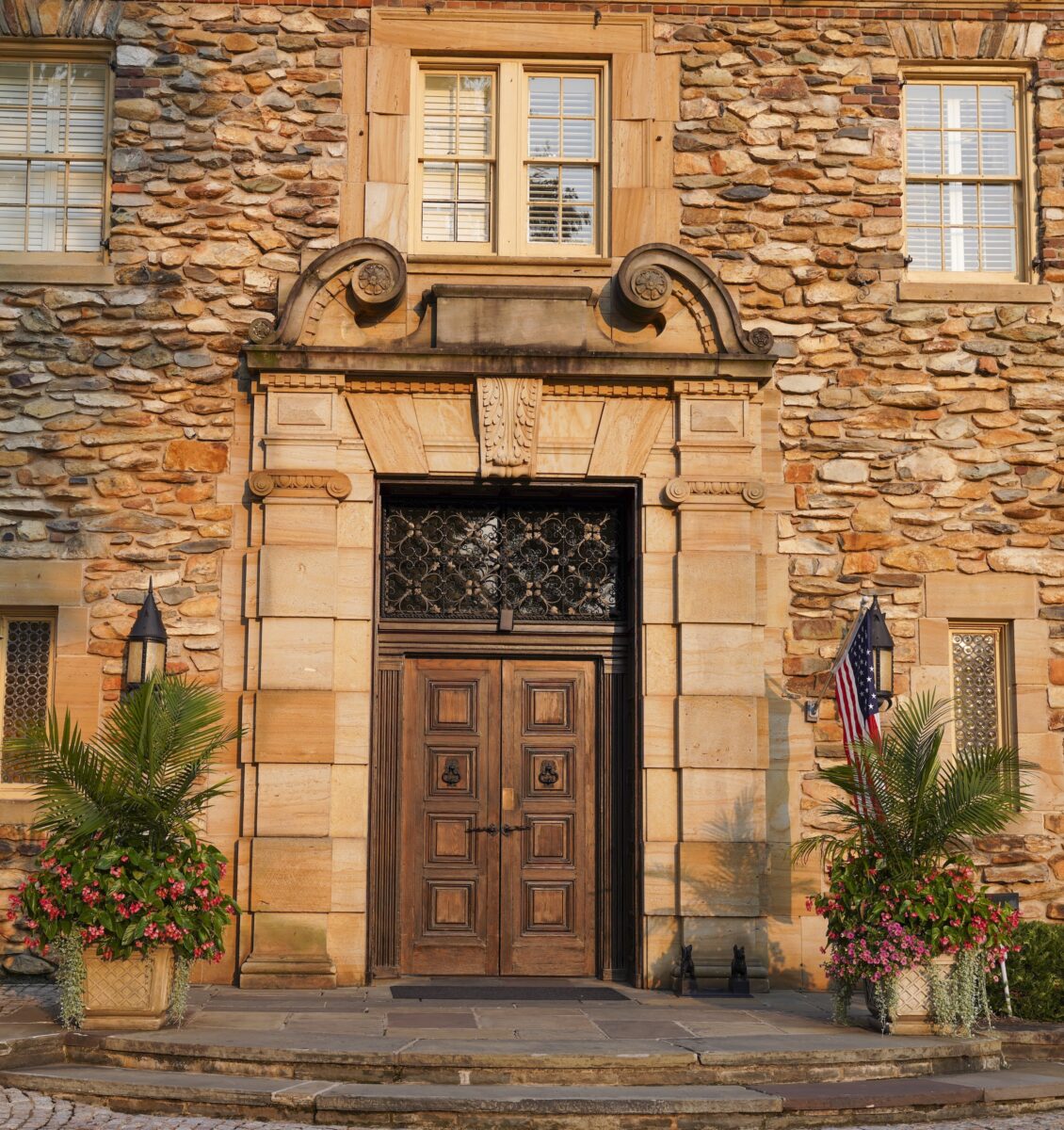
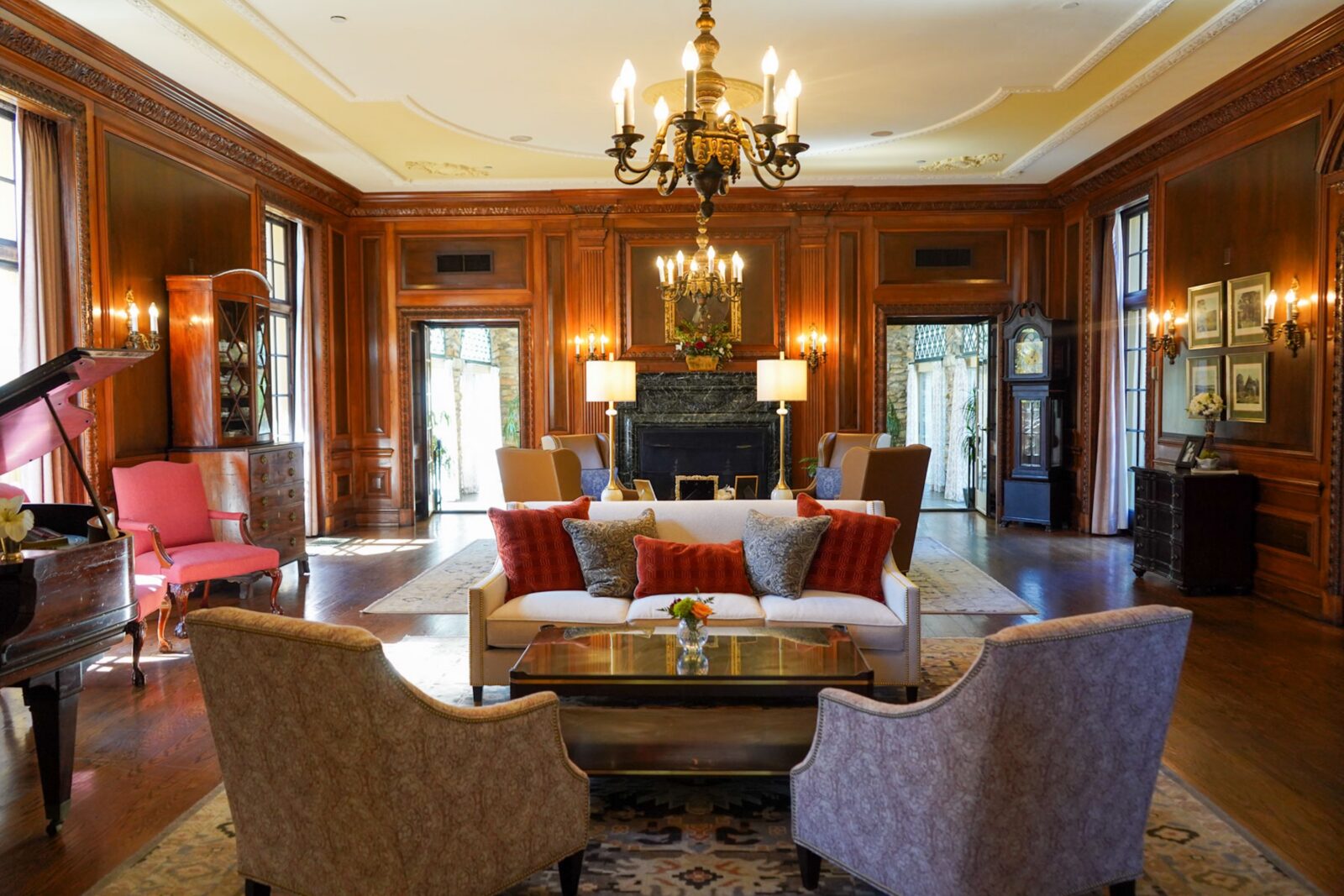
Rejecting the notion that each room should flow seamlessly into the next, she integrated structural elements, antiques, and design philosophies collected from extensive international travels. The primary manor house emerged as a deliberate pastiche: a medieval-style stone-carved entryway juxtaposed against a soaring Georgian Revival living room, which in turn leads into an authentic Persian card room complete with intricate, handcrafted wood panels sourced directly from Istanbul.
1946: The Medical and Institutional Turn
Following the passing of its original creators, the Gray family made the momentous decision in 1946 to donate the expansive property to the Bowman Gray School of Medicine at Wake Forest University. For decades, the echoing halls of the sprawling manor and its surrounding structures did not house elite socialites, but rather functioned as an academic psychiatric hospital. The estate’s quiet, secluded acreage provided an unconventional backdrop for psychiatric care and medical instruction during the mid-20th-century evolution of behavioral health.
1972–1980: The Wake Forest Dormitory Era and the Devastating Fire
In 1972, Gordon Gray—son of Bowman and Nathalie—repurchased the estate from the medical school and immediately gifted it back to Wake Forest University, this time transitioning the property into an exceptionally high-end student dormitory and administrative retreat.
The residential era of the estate faced a severe trial in 1980, when a destructive fire broke out on the manor house’s third floor. Rather than demolish or abandon the smoke- and water-damaged historic core, Wake Forest leadership chose to embark on a meticulous restoration, ultimately deciding to reimagine Graylyn as a fully functioning luxury hotel and conference center. This pivot preserved the structural integrity of the estate while opening its doors to the public for the first time.
Modern Era: Periodic Restorations and the 2026 World Cup Spotlight
In the decades following its hotel conversion, Graylyn has undergone carefully orchestrated periodic renovations to maintain its modern hospitality standards without compromising its historic fabric. The estate reached a contemporary apex in the summer of 2026, when the German men’s national soccer team selected Graylyn as their exclusive training and recovery compound for the World Cup. The juxtaposition of elite international athletes unfurling banners across a 1930s historic landmark cemented Graylyn’s place in modern pop-culture history.
Supporting Context & Architectural Metrics
Graylyn’s enduring allure lies in its unapologetic embrace of excess, architectural eclecticism, and whimsical historical anecdotes.
Architectural Marvels and Global Spoils
Nathalie Gray’s ambition knew few bounds, a fact best illustrated by the estate’s prized library. While visiting Paris during the construction phase, the Grays acquired rare Louis XIV wall paneling dating back to the 1680s. The acquisition triggered an immediate international standoff: the French government attempted to block the historic woodwork from leaving the country, escalating the dispute all the way to the French Supreme Court. Ultimately, the court ruled in favor of the Grays, allowing the 17th-century French panels to find a permanent home in North Carolina.
The Mews and Architectural Quirks
Nathalie’s hyper-fixation on detail extended even to the estate’s livestock. Believing her chickens deserved optimal living conditions, she commissioned skylights to be installed directly into the poultry houses, bathing the birds in natural sunlight.
Today, that same farm complex—affectionately known as "The Mews"—has been repurposed into luxury guest lodgings. Visitors staying in the Mews can sleep in a striking two-story guest suite housed entirely within the estate’s old grain silo, benefiting from the very architectural foresight Nathalie once reserved for her flock.
Property Metrics & Amenities at a Glance
Total Guest Rooms & Suites: 85 individually designed rooms, featuring no two layouts alike.
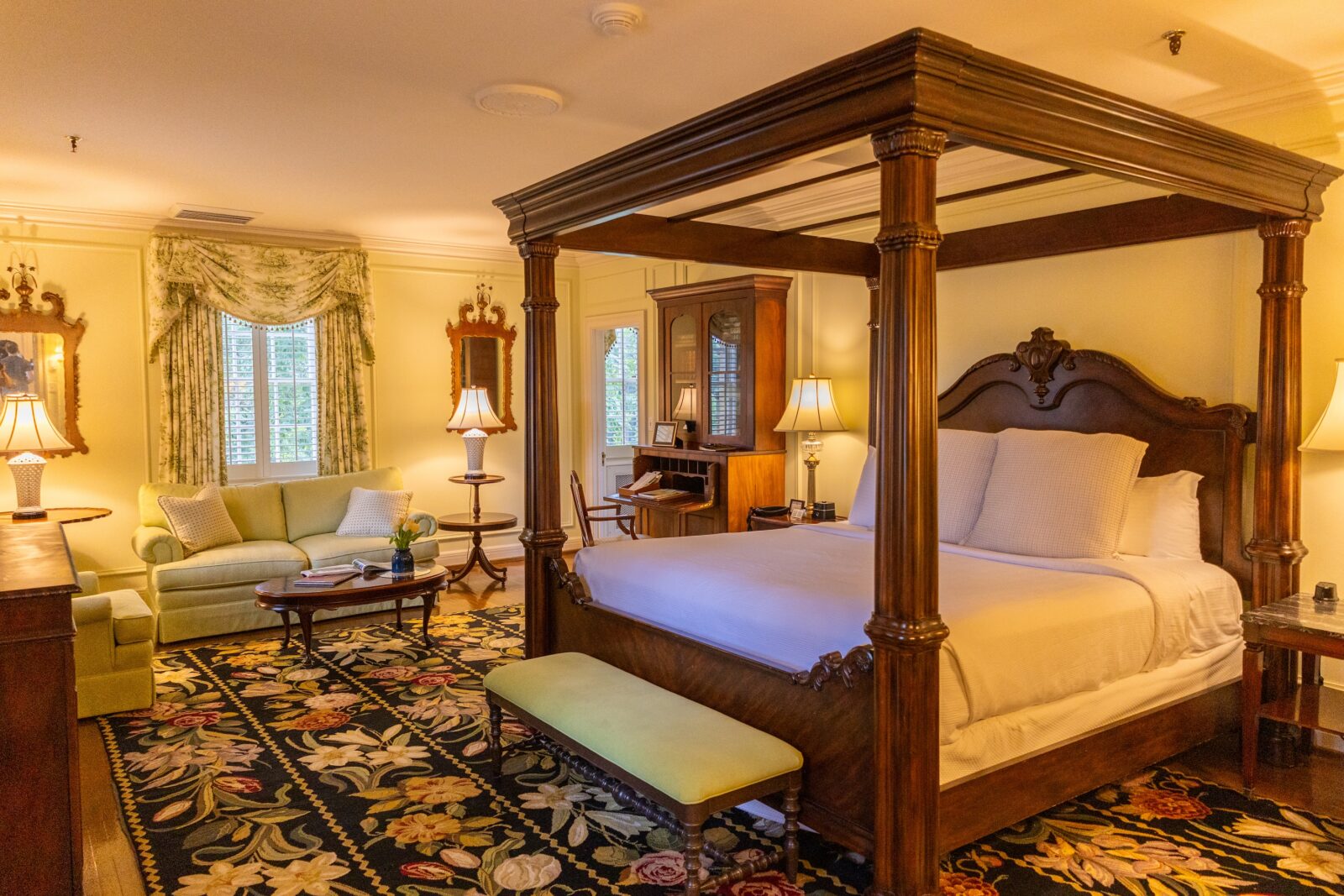
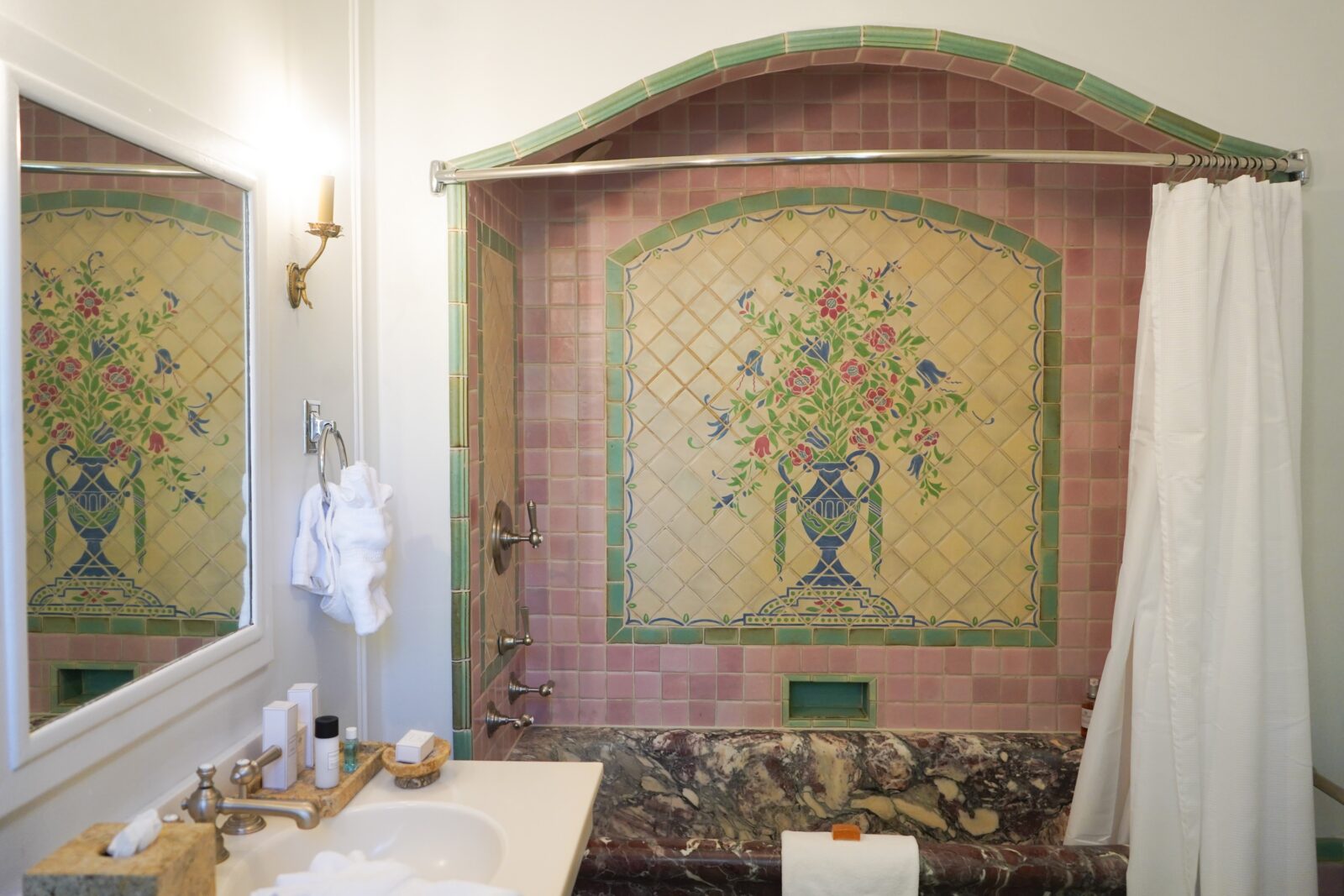
Notable Room Features: Antique four-poster beds, Grecian-inspired hand-laid bathroom tiles, and deep, original Italian marble soaking tubs.
On-Site Recreation: Seasonal outdoor swimming pool, professional tennis courts, a stocked fishing pond complete with a stone bridge and gatehouse, and direct access to the historic gardens and walking trails of the adjacent Reynolda estate.
Culinary Traditions: Daily afternoon butterscotch cookies and a legendary, 24-hour unlimited ice cream station—reportedly honoring Bowman Gray’s favorite sweet indulgence.
Official Statements
The profound emotional and visual impact of the estate continues to resonate with both first-time visitors and veteran hospitality professionals.
Alexandra Collins, Graylyn’s Director of Sales and Marketing, notes that the historic estate retains a cinematic quality that defies modern construction standards. Reflecting on the property’s daily magic, Collins shared:
"I can see the look on their faces when they drive down the driveway and see the manor house for the first time. It truly is a sight to behold."
That initial drive—winding through dense, mature canopies before opening up to reveal the asymmetrical, stone-clad European-style manor—remains a foundational element of the Graylyn guest experience. Whether hosting international soccer squads or travelers seeking a step back in time, the management remains dedicated to preserving the property’s quirky heritage.
Future Outlook
As Graylyn looks toward the remainder of the 21st century, its trajectory points firmly toward the preservation of its eccentric identity within the competitive landscape of luxury boutique hospitality. Having successfully navigated its transition from a private family enclave and institutional hospital to a world-class conference destination and athletic sanctuary, the estate proves that historic preservation does not require sterile museum-like conditions.
By maintaining signature eccentricities—such as unlimited round-the-clock ice cream, meticulously preserved 17th-century French paneling, and suites housed in repurposed grain silos—Graylyn bridges the gap between historical reverence and modern comfort. Nearly a century after Nathalie Gray began piecing together her global dream home, the estate remains an enduring testament to the power of visionary architecture, proving that a little well-curated excess will never go out of style.



0 Comments