

Executive Overview
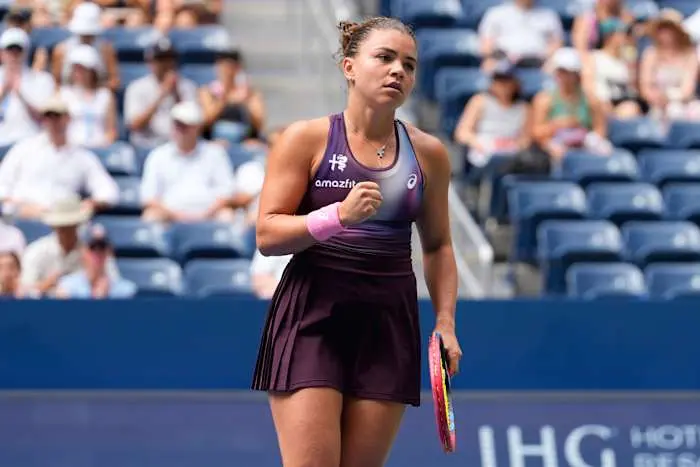
NEW YORK — The 2026 U.S. Open main draw burst into motion on a sun-drenched Sunday at the UAI Billie Jean King National Tennis Center, instantly delivering high drama, fierce baseline exchanges, and a packed slate of marquee matchups. Day one of the final Grand Slam tournament of the calendar year set a blistering pace across Flushing Meadows, highlighted by 19th-seeded Italian standout Jasmine Paolini navigating a tricky opening hurdle against Slovenia’s Veronika Erjavec.
As the opening Sunday unfolded, tennis fans flooded the sprawling Queens complex, anticipation palpable across every court. The tournament’s premier arenas—Arthur Ashe Stadium, Louis Armstrong Stadium, and the Grandstand—hosted an elite roster of champions, seasoned veterans, and rising contenders. Third-ranked American star Jessica Pegula initiated the daytime festivities on the grandest stage in tennis, while men’s titans like Daniil Medvedev and Novak Djokovic anchored the marquee slots. Adding a rich layer of nostalgia and historic significance, 46-time Grand Slam champion Venus Williams returned to the spotlight for a blockbuster primetime clash against compatriot and fellow wild card Sofia Kenin, with rumblings of a legendary doubles reunion with sister Serena adding to the electric atmosphere.
This year’s opening weekend arrives against a backdrop of shifting paradigms within professional tennis. The sport continues to grapple with generational transitions, grueling schedules, and the relentless physical demands of the hardcourt swing. Sunday’s action served as an immediate stress test for title hopefuls and dark horses alike, offering an unvarnished preview of the fortnight-long gauntlet required to lift the iconic silver trophy under the New York lights.
Detailed Chronology of Opening Sunday’s Action
Morning Session: Early Jitters and Establishing Momentum
The gates of the Billie Jean King National Tennis Center swung open early Sunday morning, welcoming eager spectators into crisp, near-ideal tournament conditions. On Court 17, 19th-seeded Jasmine Paolini of Italy stepped out to launch her championship campaign against Slovenia’s Veronika Erjavec. Paolini, who has enjoyed a meteoric rise through the tennis hierarchy over recent seasons, faced early resistance from the aggressive, flat-hitting Slovenian.
Erjavec utilized deep, penetrating groundstrokes to keep Paolini pinned behind the baseline in the early games, forcing the Italian to rely on her trademark defensive scrambling and exceptional court coverage. After weathering an initial storm that saw breaks traded in the opening set, Paolini’s veteran composure and tactical adjustments began to tilt the momentum. By tightening her service games and exploiting Erjavec’s second serve, Paolini secured a critical late break in the first set, eventually wearing down her opponent to seize control of the match and establish an energetic tone for the Italian contingent in New York.
Simultaneously, action across the outer courts saw Czech star Barbora Krejcikova lock horns with Uzbekistan’s Kamilla Rakhimova. Krejcikova, renowned for her cerebral, all-court game, experienced a sluggish start characterized by unforced errors from the forehand wing. Rakhimova capitalized on the lapses, aggressively attacking second serves and dictating rallies. However, the reigning Grand Slam champion recalibrated midway through the first set, leaning heavily on her deft touch at the net and varied slice to disrupt Rakhimova’s rhythm and ultimately wrest back control of the baseline.
Afternoon Showcase: Pegula and Medvedev Take Center Stage
At the stroke of noon, the energy inside Arthur Ashe Stadium reached a fever pitch as local favorite and third-ranked Jessica Pegula stepped onto the hardcourt to face Romania’s Elena-Gabriela Ruse. Pegula, buoyed by vocal home-crowd support, looked razor-sharp from the opening coin toss. Her disciplined, flat-hitting game plan systematically unraveled Ruse’s defenses. Pegula’s clinical redirection of the ball, combined with a remarkably high first-serve percentage, allowed her to dictate the tempo without taking undue risks.
Ruse fought valiantly, attempting to turn the contest into a physical slugfest, but Pegula’s tactical intelligence and relentless baseline consistency suffocated any thoughts of an early-round upset. Securing an early break in each set, the American number-one coasted through her opening assignment, sending an emphatic statement to the rest of the women’s draw.
Following the women’s blockbuster opener, the men’s side took over Arthur Ashe Stadium as former champion Daniil Medvedev squared off against France’s Hugo Gaston. Known for his unorthodox, drop-shot-heavy style of play, Gaston attempted to throw Medvedev completely out of his comfort zone. The opening games featured a fascinating tactical chess match: Gaston lobbed soft, high-spin balls and delicate touch shots designed to frustrate the towering Russian, who traditionally prefers a high-paced rhythm from deep behind the baseline.
Medvedev, however, demonstrated admirable adaptability. Rather than getting sucked into Gaston’s pacing, the 2021 U.S. Open champion stepped significantly inside the baseline, cutting off angles and punishing short balls with authoritative flat backhands. Medvedev’s suffocating court coverage transformed defense into offense instantaneously, slowly breaking down the Frenchman’s resolve and neutralizing the tactical novelty of Gaston’s game.
Primetime Drama: Djokovic’s Quest and Williams’ Grand Return
As the New York sun dipped below the Queens skyline, casting a dramatic shadow over the tournament grounds, the anticipation for the night session reached fever pitch. The narrative focal point of the evening was Novak Djokovic, embarking on yet another historic campaign. At 39 years of age, the legendary Serbian maestro began his quest for a record-extending 25th Grand Slam singles title against Argentina’s tenacious Mariano Navone.
Djokovic entered the tournament under a microscope following a surprisingly early exit at the hardcourt tune-up event at the Cincinnati Open earlier in the month. Whispers regarding his physical conditioning and vulnerability on hard courts circulated among pundits throughout the week. Yet, as Djokovic walked onto the Arthur Ashe Stadium court to a deafening roar, his body language projected absolute focus. Navone, a player more naturally inclined toward clay-court success, sought to extend rallies and test the physical stamina of the veteran champion. Djokovic responded by dictating play with surgical precision, utilizing his peerless backhand down the line to keep Navone on the defensive and methodically dismantling the Argentine’s tactical blueprint.
To cap off the blockbuster opening Sunday, American tennis royalty took center stage in the final match of the night. Venus Williams, a cultural icon and multi-time Flushing Meadows champion, faced fellow American and wild-card entry Sofia Kenin in a generational clash that electrified the packed stadium. Williams, displaying the sublime court sense and powerful serve that defined her legendary career, traded heavy blows with Kenin from the very first game.
Adding to the theatrical magnitude of the evening, rumors and confirmed schedules swirling around the grounds hinted at an imminent doubles partnership between Venus and her legendary sister, Serena Williams, creating an emotional undercurrent that resonated deeply with the New York faithful.
Supporting Context & Metrics: The 2026 U.S. Open Landscape
Historical Context and Generational Shifts
The 2026 edition of the U.S. Open unfolds during a fascinating inflection point in professional tennis history. On the men’s side, the historic dominance of the "Big Three" has fully given way to an era of fierce competition led by resilient veterans like Novak Djokovic, who continues to defy chronological norms, and a formidable vanguard of younger challengers. Djokovic’s ongoing pursuit of a 25th major title represents a statistical summit that may stand untouched for generations. However, the physical toll of a grueling year-round calendar has introduced unprecedented volatility into early-round matches.
Similarly, the women’s tour is characterized by unprecedented depth. While established elite players like Jessica Pegula and Jasmine Paolini maintain high rankings through exceptional consistency, the absolute field features rising teenagers and dangerous unseeded floaters capable of dismantling top-tier players on any given afternoon. This democratization of the tour has elevated the entertainment value of opening-round matches, turning historic venues like Arthur Ashe Stadium into arenas where no victory can be taken for granted.
Tournament Metrics and Operational Scale
To fully appreciate the spectacle of the U.S. Open opening Sunday, one must examine the staggering operational metrics that underpin the event:
- Attendance Figures: Opening weekend at the Billie Jean King National Tennis Center consistently draws record-shattering crowds, with daily attendance figures regularly exceeding 70,000 spectators across the sprawling 46.5-acre facility.
- Prize Money Pool: The 2026 tournament boasts a historic total compensation fund, reflecting the USTA’s commitment to robust financial distribution across all rounds, including early-stage participants and qualifying rounds.
- Court Infrastructure: Play is distributed across three massive stadium courts—Arthur Ashe Stadium (capacity ~23,771), Louis Armstrong Stadium (capacity ~14,000), and the Grandstand (capacity ~8,125)—alongside 15 field courts and numerous practice setups.
- Global Broadcast Footprint: The tournament is broadcast to over 200 territories worldwide, utilizing hundreds of embedded cameras, Hawk-Eye Live electronic line-calling systems, and advanced biometric tracking to deliver an immersive viewing experience.
Official Statements and Reactions
Following the conclusion of Sunday’s high-octane opening fixtures, players, tournament officials, and analysts shared their perspectives on the state of the tournament and the unique challenges posed by the New York hardcourts.
Jasmine Paolini addressed the media regarding her hard-fought opening victory over Veronika Erjavec, emphasizing the mental fortitude required to survive the first round of a major:
"Grand Slam opening matches are never easy. There is always a mix of excitement, nerves, and high expectations. Veronika played an incredible match and made me fight for every single point out there. I had to dig deep into my game plan and stay mentally resilient, especially in the tight moments of the first set. To come through that challenge with a victory gives me a lot of confidence as I look ahead to the next round."
Tournament Director Stacey Allaster highlighted the record-breaking enthusiasm surrounding the opening weekend and the unique cultural fabric of the New York Grand Slam:
"The energy here at Flushing Meadows today has been nothing short of extraordinary. From the passionate fans filling every corner of the grounds to the incredible level of competition on the court, Sunday has set a phenomenal benchmark for what promises to be an unforgettable two weeks of tennis. We are witnessing a wonderful blend of legendary champions making history and fierce rising contenders ready to seize the spotlight."
Reflecting on his preparations and physical readiness heading into his first-round clash, Novak Djokovic spoke candidly about his motivation and the enduring allure of competing under the lights in Arthur Ashe Stadium:
"Every time I walk out onto this court, the emotions are unique. New York fans know tennis better than almost anywhere else in the world; they appreciate the fight, the drama, and the effort. Coming off a tough week in Cincinnati, I knew I needed to reset mentally and physically. At this stage of my career, every Grand Slam match is a precious opportunity to test myself against the best and write another chapter."
Future Outlook: What to Expect in the Fortnight Ahead
As the dust settles on a frenetic opening Sunday, the 2026 U.S. Open shifts its focus toward the remainder of the first-round matches and the inevitable unraveling of the tournament draws. The immediate horizon promises more high-stakes drama, physical attrition, and tactical battles across the grounds of Flushing Meadows.
Key Storylines to Watch
- Djokovic’s Physical Resilience: As the tournament progresses, the central storyline on the men’s side will undoubtedly be Novak Djokovic’s physical recovery between matches. Navigating a grueling best-of-five-set format at age 39 demands elite physiological management, and analysts will be scrutinizing his movement and energy levels in the second and third rounds.
- American Title Hopes: With Jessica Pegula launching her campaign in dominant fashion and veteran stars like Venus Williams commanding global headlines, the home crowd will be hyper-focused on deep runs from the American contingent. The pressure of playing a home Grand Slam can be a double-edged sword, and how players manage crowd expectations will dictate their longevity in the draw.
- The Rise of Unseeded Threats: Sunday’s tight encounters involving seeded players like Jasmine Paolini and Barbora Krejcikova underscored the danger posed by unseeded opponents. In the modern era of tennis, the gap between the top seeds and the rest of the locker room has compressed dramatically, suggesting that the second week of the tournament could yield unexpected quarterfinalists and dark-horse contenders.
- Weather and Court Conditions: As is tradition in late-summer New York, shifting weather patterns, high humidity, and intense afternoon heat will play a silent yet decisive role in match outcomes. Players possessing superior physical conditioning and efficient recovery protocols will hold a distinct advantage as matches stretch past the three-hour mark.
Ultimately, the 2026 U.S. Open has established a thrilling baseline of athletic excellence and entertainment value. With elite contenders locking horns, legendary careers writing their final chapters, and a new generation banging loudly on the door, the next fortnight at the Billie Jean King National Tennis Center guarantees unforgettable moments of sporting history.

0 Comments