

Executive Overview
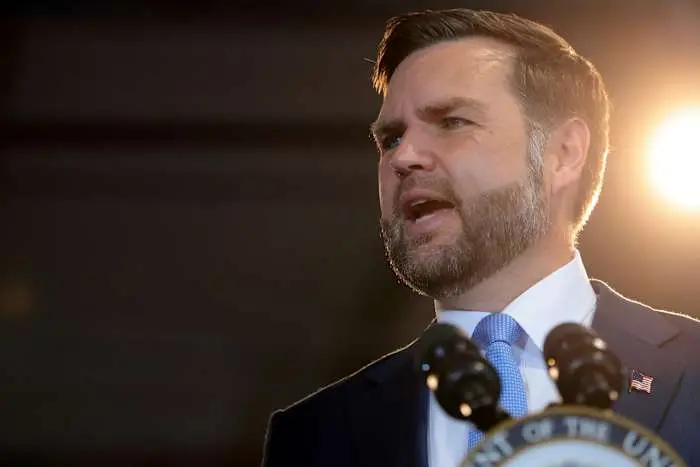
LAS VEGAS — Vice President JD Vance took the stage at the annual gathering of the Republican Jewish Coalition (RJC) in an address closed to the news media, navigating a high-stakes political landscape. As a prominent frontrunner for the 2028 Republican presidential nomination, Vance used the platform to attempt to assuage deep-seated concerns among conservative Jewish activists regarding his foreign policy stances on Israel, his recent rhetoric concerning Middle Eastern diplomacy, and his ongoing, controversial association with media figures linked to antisemitism.
The appearance unfolds at an extraordinarily sensitive juncture for Jewish Americans, the broader U.S. political ecosystem, and the enduring strategic partnership between Washington and Jerusalem. With midterm elections on the horizon and domestic anxiety over rising antisemitism surging across the political spectrum, the Republican Party has sought to consolidate its position as a staunch defender of Israel. However, internal ideological schisms—particularly between traditional, hawkish pro-Israel conservatives and an emergent, isolationist, "America First" faction—have complicated these efforts.
Vance’s appearance in Las Vegas highlights these intra-party tensions. While widely acknowledged as a vital surrogate for the Trump administration’s broader agenda, the Vice President has frequently departed from traditional Republican orthodoxies on foreign intervention, particularly regarding Israel’s military engagements and the mechanics of U.S. foreign aid. His closed-door remarks were designed to bridge this gap, yet they underscored the difficult balancing act required of a leader attempting to inherit a political coalition defined by both populist realignment and traditional alliances.
Detailed Chronology: A Trajectory of Friction
The skepticism greeting Vice President Vance in Las Vegas is not born of a single isolated event, but rather of a carefully tracked trajectory of policy statements, media appearances, and unaddressed political associations stretching back over the past year.
The Spring and Summer Policy Divergences
The friction between Vance and segments of the traditional pro-Israel community intensified significantly during the summer months of 2026. In June, Vance drew sharp rebukes from various foreign policy traditionalists—and private expressions of concern from Israeli officials—when he publicly criticized members of Israel’s governing coalition for pushing back against White House efforts to negotiate an end to the protracted war with Iran.
In a candid appraisal of diplomatic channels, Vance remarked: "If I was in the cabinet of the Israeli government, I might not be attacking the only powerful ally I have left."
The tension escalated further in July during an extensive appearance on podcaster Joe Rogan’s widely syndicated program. Vance went a step further, asserting that distinct factions within the Israeli government apparatus had deliberately attempted to manipulate American public opinion to derail ongoing ceasefire and diplomatic negotiations.
"There are some people within their system that we know beyond a shadow of a doubt are manipulating and trying to change American public opinion to keep the war going on indefinitely," Vance told Rogan.
These comments created immediate ripples through the American political establishment. While populist and isolationist factions within the GOP praised Vance for prioritizing American diplomatic leverage, traditional hawks and many Jewish community leaders viewed the remarks as dismissive of an allied nation’s existential security concerns and evocative of historical tropes regarding foreign manipulation.
The Shadow of Controversial Associations
Compounding these policy disagreements is Vance’s persistent refusal to publicly distance himself from conservative media personality Tucker Carlson. The issue came to a boiling point during the previous year’s RJC summit, which had originally been planned as a triumphant celebration of administration-led hostage rescue efforts in Gaza. Instead, the 2025 gathering devolved into a tense ideological reckoning over the boundaries of conservative discourse.
The catalyst for that friction was the refusal of high-profile conservative figures—including Heritage Foundation President Kevin Roberts—to distance their organizations from Carlson after the commentator hosted known antisemite Nick Fuentes for a widely criticized, friendly conversation. Throughout that summit, conservative college students and delegates made their displeasure known, waving red placards bearing the slogan: "Tucker is not MAGA."
Despite these warnings, Vance has maintained professional and ideological alignments within Brewer, Maine, and other populist hubs that leave doors open to figures whom mainstream Jewish organizations view as toxic to civic discourse. For key donors and activists, this perceived tolerance represents a dangerous vulnerability that threatens to normalize fringe extremism under the umbrella of the conservative movement.
Supporting Context & Metrics: Shifting Landscapes of Support
The internal debates playing out within the Republican Jewish Coalition do not exist in a vacuum; they reflect profound, measurable shifts in public opinion regarding Israel, foreign intervention, and identity politics across the United States.
Generational and Partisan Divides on Israel
For decades, unwavering support for Israel served as a nearly frictionless bipartisan consensus in Washington. However, contemporary polling data illustrates a fracturing of this consensus along both partisan and generational lines:
- The Democratic Shift: According to a comprehensive AP-NORC poll released in July, roughly half of all self-identified Democrats now believe that Israel has committed genocide against Palestinians in Gaza—an incendiary allegation leveled by various international human rights organizations, but vehemently rejected as baseless libel by the Israeli government and the U.S. State Department.
- The Republican Generational Gap: While the Republican Party remains overwhelmingly supportive of Israel compared to its political opposition, an emerging generational divide has begun to manifest. Younger conservative voters and activists are significantly more likely than their older, Boomer-and-Silent-generation counterparts to express skepticism regarding foreign entanglements, arguing that U.S. financial and military support for Israel is overly unconditional or detrimental to domestic priorities.
The Fight Against Antisemitism
This evolving landscape has placed immense pressure on prominent Jewish conservative leaders to use platforms like the RJC annual summit to demand absolute ideological purity and accountability from elected officials. The goal, according to organizers, is to ensure that the conservative movement remains an uncompromising sanctuary against the rising tide of bigotry.
Prominent figures within the party have increasingly spoken out, emphasizing that combating prejudice requires preemptive vigilance from leadership. The stakes are particularly high ahead of the midterm elections, where both major parties are aggressively vying for the votes and financial backing of suburban and urban Jewish communities.
Official Statements and Reactions
The deep-seated anxieties surrounding Vice President Vance’s Las Vegas address were mirrored in reactions from community members, national lawmakers, and prominent conservative surrogates, reflecting a deeply divided constituency.
Grassroots Uncertainty and Disappointment
For many rank-and-file attendees, the decision to invite Vance—and to keep his remarks closed to the press—was a source of palpable discomfort.
"There’s a sentiment here of some discomfort over the vice president speaking. Some people are disappointed," admitted Terry Platt, a prominent Republican Jewish Coalition member from New York. "We’re confused about his true sentiments."
Platt’s sentiment captures the core dilemma for voters trying to reconcile Vance’s vocal alignment with Donald Trump’s historic pro-Israel accomplishments—such as the Abraham Accords and the relocation of the U.S. embassy to Jerusalem—with his newer, more skeptical "America First" foreign doctrine.
Lawmakers Draw a Hard Line
In contrast to the behind-the-scenes friction, congressional speakers at the summit delivered unequivocal public messages emphasizing the necessity of moral clarity.
During weekend proceedings leading up to Vance’s address, U.S. Rep. Lisa McClain of Michigan took to the stage to rally the base, emphasizing that the fight against antisemitism must begin within the party’s own ranks.
"We need a country where elected officials stand proudly with the Jewish community," McClain declared to applause on Sunday. "That is the work, and it begins before we leave this room."
High-Profile Warnings from Pro-Israel Surrogates
The tension has also drawn commentary from non-political figures who have emerged as influential voices on the conservative pro-Israel circuit. Bruce Pearl, the Auburn University men’s basketball coach and a prominent conservative advocate for Israel, has been exceptionally vocal regarding the prerequisites for leadership support.
Earlier in the summer, Pearl laid down a clear marker regarding Vance’s associations:
"If he maintains that connection to that antisemite," Pearl said in June, referring to Vance’s ties to Tucker Carlson’s network, "I think that’s going to be bad for antisemitism, because he will bring a lot of Tucker Carlsons with him. He’ll uplift them."
Future Outlook: Navigating 2028 and Beyond
As Vice President JD Vance continues to solidify his position as a leading contender for the Republican presidential nomination in 2028, his appearance at the Republican Jewish Coalition summit marks a critical milestone in his political maturation.
The challenge facing Vance is fundamentally structural. To successfully unify the disparate factions of the modern Republican Party, he must satisfy the traditional, hawkish donor class and advocacy organizations that view unconditional backing of Israel as a non-negotiable tenet of conservative foreign policy. Simultaneously, he must maintain the fervent loyalty of the populist, anti-interventionist base that propelled the MAGA movement to dominance—a base that frequently chafes at foreign aid and traditional diplomatic alliances.
Whether Vance’s closed-door assurances in Las Vegas succeeded in calming the waters remains to be seen. However, the intensity of the debate signals that the battle for the ideological soul of the conservative movement—particularly concerning its posture toward foreign allies and domestic civil rights—will remain a defining narrative of the upcoming election cycle and the road to 2028.

0 Comments