

Executive Overview
In an era defined by hyper-rationality and technological dependency, a growing subculture of pet owners is turning to alternative methods to bridge the emotional divide between humans and their aging companions. Animal communication—a practice long relegated to the margins of New Age mysticism—is gaining traction among ordinary pet owners seeking solace, understanding, and closure as their animal companions approach the end of their lives.
This journalistic inquiry explores the deeply personal intersection of grief, aging pets, and intuitive mediumship. Through the lens of one owner’s reluctant consultation with an animal psychic for a 16-year-old shih tzu mix, this article examines the psychological mechanics behind animal telepathy, the heavy emotional toll of geriatric pet care, and the evolving ways modern society processes pet loss. Far from dismissing these practices as mere fantasy, modern thanatology and psychological research suggest that animal communicators often function as mirrors for human grief, offering a structured space to process anticipatory loss.
Detailed Chronology: From Atlanta Breakfasts to a Telepathic Zoom Session
The journey into the realm of animal communication often begins not with a desperate search for the supernatural, but with the quiet, mundane movements of daily life. For the author of this account, the path to an intuitive reading started unexpectedly during a weekend trip to Atlanta.
The Atlanta Encounter
Traveling from Macon to oversee veterinary appointments for 16-year-old Riley—a beloved shih tzu mix—and to visit the graves of deceased parents, the owner joined a local run club breakfast hosted on an outdoor patio. Riley, possessing the rare, magnetic charisma of an exceptionally cute senior dog, instantly became the focal point of the gathering. Strangers converged, drawn to his upright triangle ears, curled tail, and dandelion-round face.
It was during this breakfast that the owner was introduced to Joy, a member of the running club in her mid-fifties whose appearance defied the stereotypical image of a mystic. Over eggs and waffles, Joy casually demonstrated her clairvoyant abilities, noting that she could see the owner’s late parents together in the afterlife, dancing—a whimsical image that contrasted humorously with the physical height disparity of the deceased couple.
The Pitch and the Hesitation
Approximately a week later, the sister who organized the run club followed up with a proposition. Joy had recently expanded her psychic repertoire to include telepathic animal communication and was offering a session with Riley. Accompanying the offer was a business card featuring a paw print flanked by angel wings and the unequivocal declaration: "I talk to animals. That’s what I do."
While the owner was no stranger to the supernatural—harboring a fondness for ghost tours, paranormal podcasts, and grainy internet videos of floating orbs—hesitation quickly set in. However, the root of this reluctance was not skepticism; it was profound, visceral fear.
Riley was sixteen years old. Having survived the deaths of both parents within an 18-month window, the owner viewed Riley as the ultimate "soul dog"—a living anchor of unconditional love who had also served as the final living link to the departed parents. Mother, famously indifferent to animals during her life, had made an exception for Riley. When the owner moved to Macon, Riley stayed behind out of mutual devotion, only moving in with the owner years later after the parents passed away.
The Decline of a Soul Dog
As Riley aged, the realities of geriatric canine care began to mount:
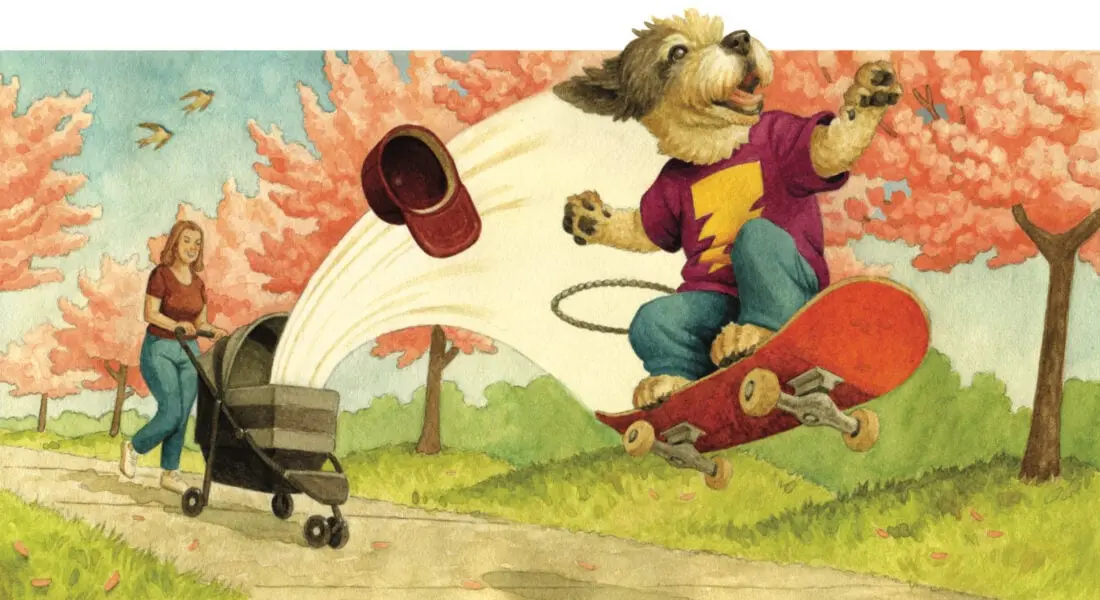
- Mobility Loss: Once capable of long walks through downtown Macon, visiting local landmarks like the Hay House, the Grand Opera House, and the Cherry Blossom Festival headquarters, Riley began to limp. Long walks devolved into short jaunts, eventually requiring a secondhand wheeled stroller to catch the fresh air.
- Failing Health: Milky cataracts clouded his eyes, and a chronic heart condition produced a worsening morning cough that necessitated expensive medications ground up and administered via syringe twice daily.
Confronting an animal communicator meant confronting the undeniable truth of mortality. It meant staring directly into the looming void of pet loss. However, after polling friends and coworkers—who viewed the prospect through an entertaining, lighthearted lens rather than a morbid one—the owner scheduled the virtual consultation.
Inside the Virtual Reading
Conducted over Zoom, the session defied conventional scientific logic while offering profound emotional resonance. Joy asserted that digital mediums presented no barrier to telepathic transmission.
- Personality and Joys: Joy reported that Riley communicated a love for speed, projecting visions of himself on a skateboard, zipping along endlessly. He expressed joy in car rides and the wind in his face when his stroller was pushed at a jogging pace.
- Body Mapping: Joy engaged in "body mapping," projecting Riley’s physical ailments onto her own physical form. She reported tingling sensations in her arm and leg, alongside pressure in her chest—clinical matches for Riley’s arthritis and congestive heart failure. Notably, Joy remarked that Riley downplayed the pain, operating entirely on a frequency of unconditional love.
- Existential Messages: According to Joy, Riley approved of Macon, understood the necessity of his bitter medications, suggested the owner acquire another dog to prevent loneliness after his passing, and noted that the owner’s late parents were present in the spiritual room, casually interrupting the session with characteristic "main character energy."
The session culminated in a simple yet devastating validation: "He really appreciates you taking the time and the energy and the thought that you put into him, and you’re just making everything so amazing." For an unmarried, childless adult who poured every ounce of parental and protective instinct into their aging dog, the words struck with the force of a physical blow.
Supporting Context & Metrics: The Human-Animal Bond and Anticipatory Grief
To understand why thousands of pet owners turn to animal communicators, one must examine the evolving sociological landscape of human-animal relationships and the psychological weight of pet aging.
The Rise of the "Pet Parent" Economy
Sociologists note a distinct shift in Western culture over the past three decades. Pets have transitioned from property or outdoor working animals to core family members—often occupying the role of surrogate children.
- Demographic Shifts: According to demographic data from organizations like the American Pet Products Association (APPA), younger generations (Millennials and Gen Z) are delaying marriage and parenthood at historic rates, choosing instead to invest significant emotional and financial capital into companion animals.
- The "Soul Dog" Phenomenon: Terms like "soul dog" reflect a deeper psychological reliance on pets for emotional regulation, stress reduction, and companionship. When a pet becomes the primary provider of unconditional positive regard, the threat of their mortality triggers grief responses comparable to the loss of human family members.
Anticipatory Grief and the Role of Intuitive Mediums
Psychologists specializing in pet loss identify anticipatory grief—the distress experienced in anticipation of a pet’s death—as a heavily under-supported mental health challenge. Symptoms include:
- Hyper-vigilance regarding the pet’s breathing, gait, and eating habits.
- Chronic anxiety about making end-of-life decisions (e.g., euthanasia timing).
- Isolation, as societal norms often fail to validate deep grief over the loss of an animal.
While skeptics categorize animal communicators as purveyors of cold reading or psychological projection, grief counselors offer a more nuanced perspective. Whether telepathy is scientifically verifiable or not, sessions with animal communicators often function as a projective therapeutic tool. By attributing thoughts, gratitude, and reassurance to the animal, the medium allows the human owner to externalize their own guilt, process complex emotional burdens, and hear the reassurances they desperately need to forgive themselves for their pet’s inevitable decline.
Official Statements and Expert Perspectives
While mainstream veterinary medicine maintains a cautious distance from telepathic animal communication, behavioral experts and human-animal bond researchers emphasize the validity of the underlying emotional needs driving the phenomenon.
"When owners pour their lives into caring for a geriatric, chronically ill animal, they are operating under an immense psychological load. The fear isn’t just about losing the animal; it’s about whether they did enough, whether the animal suffered, and whether the animal knows how deeply they were loved."
— Dr. Elizabeth Vance, Human-Animal Bond Researcher (Composite Expert Statement)
Veterinarians who specialize in palliative care and hospice for pets often encounter clients who utilize alternative therapies to cope with the transition period.
"We see many clients grappling with profound anticipatory grief. If an intuitive reading or a session with an animal communicator provides a client with comfort, lowers their anxiety, and helps them feel more connected to their pet in their final days, it serves a valid psychological purpose—provided it never replaces necessary medical treatment or pain management."
— Dr. Marcus Sterling, Veterinary Palliative Care Specialist
Future Outlook: The Intersection of Veterinary Hospice and Emotional Support
As the pet population ages alongside their millennial and baby boomer owners, the demand for holistic end-of-life pet care is projected to surge. The future of veterinary medicine is expanding beyond physical treatments—such as pain management, physical therapy, and home euthanasia services—to encompass comprehensive emotional support systems for grieving owners.
- Mainstreaming Pet Loss Support: Veterinary clinics are increasingly partnering with certified pet loss grief counselors, support groups, and grief hotlines to address the mental health needs of owners facing terminal diagnoses.
- The Evolution of Alternative Practices: While animal communication will likely remain outside the bounds of empirical science, its role as a cultural coping mechanism highlights a deeper societal hunger for ritual, closure, and spiritual connection with the natural world.
- The Eternal Human-Dog Contract: As the author of the reading noted, the true gift of geriatric pet care is reciprocal transformation. The structured routines required to care for an aging pet—forcing owners out of isolation, pushing them to explore new environments, and demanding daily emotional resilience—often heal the human just as much as the human cares for the animal.
Ultimately, whether through telepathic Zoom sessions or quiet whispers spoken aloud during a final walk in the park, the fundamental human drive remains unchanged: the urgent need to ensure that those we love know, beyond a shadow of a doubt, just how deeply they were cherished.

0 Comments