

By Jay Capasso
Published: August 20, 2024 | Updated: September 9, 2025
Categories: Agribusiness, Agriculture, Crops, Farm Management, Natural Resources, UF/IFAS Extension, Water
Executive Overview
Water management in North Florida is entering a critical new era. In a collaborative initiative spearheaded by the Florida Department of Environmental Protection (FDEP), alongside the Suwannee River and St. Johns River Water Management Districts, a sweeping new regulatory framework is taking shape. At the center of this initiative is a proposed Minimum Flow and Levels (MFL) rule tailored specifically for the Santa Fe and Ichetucknee Rivers, as well as their associated priority springs.
For decades, the delicate balance between human utilization—driven heavily by booming agriculture, regional commerce, and municipal growth—and ecological preservation has been a focal point of environmental policy in the Sunshine State. MFLs establish legally enforceable water flow and level thresholds. When water levels or flows drop below these critical benchmarks, significant, long-lasting ecological harm is deemed to occur.
While the rule is currently pacing toward formal finalization ahead of the 2026 Florida legislative session, its implications are felt immediately across the region’s agricultural community, industrial sectors, and residential water users alike. The proposed rule directly impacts water withdrawals within the expansive North Florida Regional Water Supply Partnership area. This multi-county jurisdiction spans Alachua, Baker, Bradford, Clay, Columbia, Duval, Flagler, Gilchrist, Hamilton, Nassau, Putnam, St. Johns, Suwannee, and Union counties.
For agricultural producers, commercial enterprises, and landowners operating within these boundaries, the message from state regulators and extension agents is clear: proactive adaptation is no longer optional. With the public comment window demanding urgent attention, stakeholders must understand the precise mechanics of the proposed rule, the math behind potential water use offsets, and the stringent new water conservation and irrigation standards heading their way.
Detailed Chronology: The Pathway to Regulatory Enforcement
Understanding the trajectory of the Lower Santa Fe and Ichetucknee Rivers (LSFIR) MFL rule requires mapping out a precise timeline of regulatory milestones, scientific assessments, and stakeholder engagement opportunities.
The Foundation and Historical Context
The scientific foundation of MFLs traces back to mandates within the Florida Water Resources Act, which tasks water management districts with setting minimum flows for surface watercourses to prevent "significant harm." Over the years, preliminary assessments of the Santa Fe and Ichetucknee systems revealed troubling trends: declining spring discharges, reduced baseline river flows, and visible stress on aquatic and riparian habitats.
The 2024 Regulatory Awakening
As scientific modeling grew more refined, regional water management districts recognized that existing protective measures were insufficient to pull recovering water bodies out of deficits. Throughout mid-2024, state agencies synthesized hydrological data from the previous decade, culminating in the formal unveiling of the updated MFL rule proposals.
The timeline accelerated sharply in the late summer of 2024:
- August 20, 2024: Initial regulatory guidance and educational breakdowns—such as briefings by regional extension specialists like Jay Capasso—were published to alert agricultural producers and stakeholders to the impending policy shifts.
- October 31, 2024: This marked the critical hard deadline for the official public comment period. During this window, agricultural coalitions, environmental groups, local governments, and individual farmers submitted feedback, critiques, and alternative data sets to
[email protected]. - Late 2024 through 2025: Regulatory agencies began reviewing the vast influx of public comments, refining technical definitions, and assisting permittees in understanding how the rules would apply to their specific consumptive use permits (CUPs).
- September 2025 (Current Outlook): Ongoing compliance preparation, infrastructure audits, and educational campaigns are underway to help permittees prepare for compliance evaluations.
- 2026 Florida Legislative Session: The rule is officially slated for finalization and legislative codification, locking in enforcement mechanisms and embedding the new calculations into ongoing and upcoming permit renewals.
Supporting Context & Metrics: The Science of Recovery
To grasp why the FDEP and regional water management districts are imposing these strict mandates, one must examine the physical reality of the waterways and the mathematical frameworks governing water withdrawals.
The Three MFL Compliance Points
The proposed rule ties regulatory enforcement to three specific river gages strategically positioned across the watershed:
- Santa Fe River near Fort White: Currently, this compliance point meets the required MFL thresholds. Water users whose impacts center primarily around this zone face fewer restrictive offset demands, provided conditions do not degrade.
- Santa Fe River at US Highway 441 near High Springs: This gage is officially designated as being "in recovery," signifying that baseline flow levels persistently fall below the legally mandated MFL threshold.
- Ichetucknee River at Highway 27 near Hildreth: Like its counterpart near High Springs, this vital spring-fed river gage is also classified as being in a state of recovery, requiring aggressive intervention to restore historical discharge volumes.
Impact Evaluation and Permittee Responsibility
Under the proposed rule, all existing and expanding consumptive use permits will undergo rigorous impact evaluations. Regulators will assess how individual water withdrawals influence flow rates at each of the three MFL compliance points.
If a permittee’s withdrawals affect a recovering compliance point (such as the High Springs or Hildreth gages), they are legally obligated to address their contribution. Crucially, if a single water user impacts multiple compliance points that are currently in recovery, their offset requirements will not be compounded cumulatively across all points. Instead, their required mitigation will be determined based on the compliance point where their proportional impact is greatest.
The Mathematics of the Net Flow Deficit
To ensure fairness while enforcing mandatory conservation, the FDEP has established a formal mathematical model for calculating a permittee’s required "offset." This formula bridges individual water use habits with watershed-wide ecological deficits, utilizing a baseline average of water use spanning the years 2014 through 2018.
The foundational equation for calculating a permittee’s required offset is:
$$textProportionate Share = left( fractextIndividual Impact (I_p)textTotal Impact (It) right) times textNet Flow Deficit of the Recovering MFL Compliance Point (Infd)$$
A Practical Calculation Example:
Consider a hypothetical agricultural operation whose historical water use reduces the flow at a recovering MFL compliance point by 1 cubic foot per second (cfs).
- Suppose the Total Impact ($I_t$) from all regulated water users combined (based on 2014–2018 baseline data) at that specific compliance point equals 10 cfs.
- Suppose the Net Flow Deficit ($I_nfd$)—the total amount of water needed to restore the river or spring to its healthy MFL threshold—is 6.3 cfs.
Plugging these figures into the formula:
$$textProportionate Share = left( frac1text cfs10text cfs right) times 6.3text cfs = 0.63text cfs$$
In this scenario, the permittee must find a way to offset 0.63 cfs of water use—either through efficiency upgrades, infrastructure improvements, or participation in alternative water supply (AWS) projects—to ensure their operations do not hinder the ecological recovery of the Santa Fe or Ichetucknee systems.
Official Guidelines and Agricultural Requirements
For agricultural producers across the North Florida Regional Water Supply Partnership region, the rule introduces sweeping operational standards. Compliance is divided into two primary categories: rigorous irrigation system evaluations and advanced water conservation measures.
1. Irrigation System Maintenance and Evaluation Standards
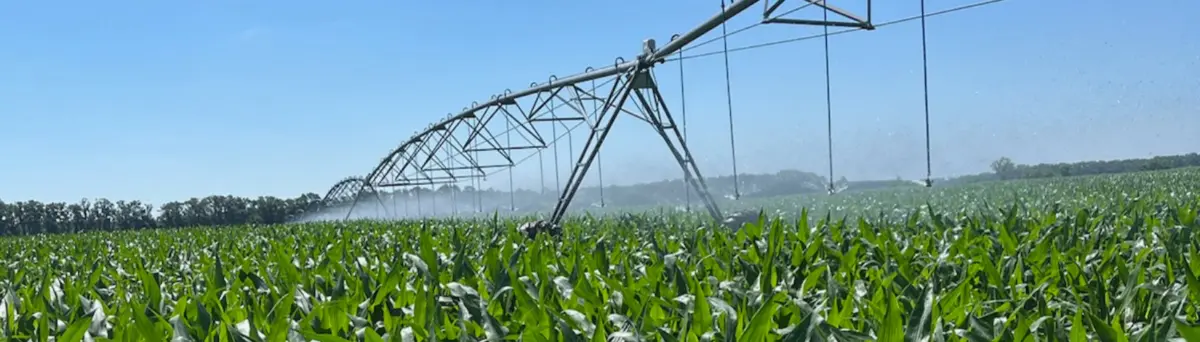
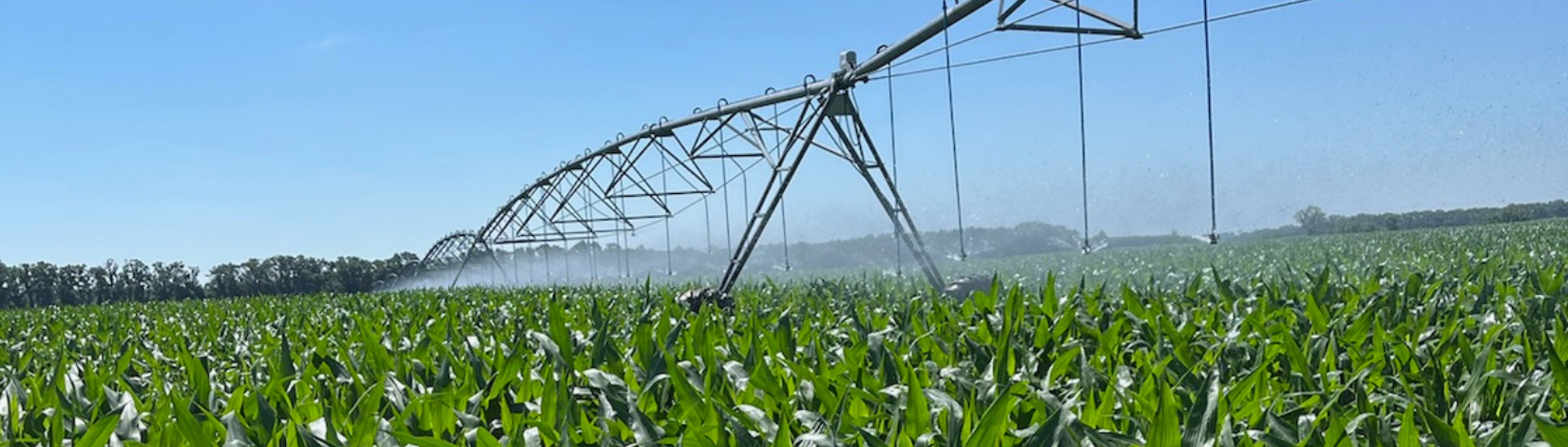
Water application efficiency is central to the new rule. Agricultural permittees will be held to strict minimum Distribution Uniformity (DU) standards. Distribution uniformity measures how evenly an irrigation system applies water across a given field; higher percentages mean less waste, less runoff, and better crop yields with lower volumetric draws.
Minimum DU standards vary explicitly by irrigation system type:
- Micro-drip systems: Must achieve an exceptional DU of 80% to 90%.
- Micro-spray systems: Must achieve a DU of 75% to 85%.
- Low-pressure center pivot or lateral move systems: Targeted at 75% to 85%.
- Standard center pivot systems with end guns: Required to maintain 65% to 75%.
- In-place overhead sprinklers: Required to maintain 70% to 75%.
Growers do not have to navigate these evaluations alone. Mobile Irrigation Labs (MILs)—often operating in coordination with university extension programs—frequently estimate DU during free evaluations for agricultural producers. Furthermore, state and local stakeholders are actively exploring the establishment of an additional Mobile Irrigation Lab specifically dedicated to the Suwannee Valley to help farmers meet these stringent thresholds.
2. Transitioning Away from Inefficient Methods
The regulatory writing is on the wall for outdated, highly wasteful watering practices. For instance, permittees currently relying on traditional seepage irrigation will no longer be grandfathered in indefinitely. Under the proposed rule, these growers must submit a comprehensive, actionable plan detailing how they will transition to modern, highly efficient irrigation systems within the lifecycle of their current permit duration. This transition plan must outline clear developmental milestones, equipment investments, and expected reductions in overall water withdrawal.
3. Tiered Water Conservation Practices
Beyond baseline equipment maintenance, the rule implements a tiered hierarchy of water conservation practices. Agricultural permittees must affirmatively demonstrate that they are executing high-level water-saving strategies or proposing equivalent alternative methods approved by the water management districts.
Key mandatory or highly encouraged practices include:
- Advanced Irrigation Technologies: Deploying soil moisture monitoring probes, weather-station-linked telemetry, and fully automated irrigation scheduling controllers to prevent over-watering during precipitation events.
- System Conversions: Upgrading legacy overhead or flood setups to precision micro-irrigation or low-pressure pivots.
- Conservation Tillage: Adopting minimum-till or no-till practices that preserve soil moisture, improve organic matter, and reduce runoff velocity.
- Tailwater Recovery Systems: Engineering catchment basins and pumps designed to capture, store, and reuse agricultural runoff water rather than letting it escape the property.
- Alternative Water Supply (AWS) Integration: Utilizing non-traditional water sources—such as reclaimed water, deep aquifer brackish sources, or captured surface water storage—which receive top priority status under the rule due to their profound potential for reducing strain on Floridan Aquifer spring sheds.
Future Outlook: Challenges, Adaptations, and Industry Resilience
As the 2026 Florida legislative session approaches, the agricultural and industrial landscape of North Florida stands at a critical crossroads. The transition from voluntary conservation to mandatory, mathematically enforced water offsets represents a cultural and operational shift for many multigenerational family farms and regional businesses.
The Economic and Operational Reality
For farmers, complying with the new DU standards and designing offset projects will require capital investment. While state-cost share programs, grants, and technical assistance through groups like the UF/IFAS Extension service will cushion the blow, profit margins in modern agribusiness remain tight. Permittees who fail to audit their systems proactively risk running into permit renewal roadblocks, forced production cutbacks, or costly mitigation liabilities.
Ecological Imperatives
Conversely, environmental scientists and conservation advocates emphasize that these rules are long overdue. The iconic springs of the Santa Fe and Ichetucknee basins—beloved for their crystal-clear recreational waters, fragile endemic species, and vital contributions to the broader Suwannee River ecosystem—have suffered from visibly declining flows for decades. Restoring these springs is not merely an aesthetic or conservation goal; it is an economic necessity for ecotourism, regional property values, and the long-term sustainability of the very aquifer that feeds the region’s agricultural engine.
A Call to Action for Stakeholders
Although the formal public comment window closed on October 31, 2024, the rulemaking process remains dynamic as state agencies process feedback and prepare for legislative codification. Water users, landowners, and agricultural producers are strongly encouraged to stay informed, review their existing consumptive use permits, engage with local UF/IFAS extension agents, and prepare their operations for the rigorous environmental standards of tomorrow.
For ongoing updates, technical documentation, and direct contact details regarding the Lower Santa Fe and Ichetucknee Rivers MFL rule development, stakeholders can visit the official FDEP Water Policy Information Portal.

0 Comments