

Executive Overview
For the intrepid angler willing to test the limits of both vessel and nerve, the vast oceanic expanses of the Bahamas hold a singular, enduring promise: get far away from people, and you will catch more fish.
This core philosophy served as the guiding beacon for a grueling yet profoundly rewarding 252-mile open-ocean crossing aboard a customized center console, departing from Miami’s Haulover Inlet and culminating at the remote southwestern tip of Eleuthera Island. Nestled far off the beaten path trodden by the mainstream South Florida fleet, the Cape Eleuthera Resort & Marina stands as an isolated bastion of luxury amidst a wilderness of deep-water trenches, sweeping shallows, and lightly pressured reefs.
While the northern Bahamas—specifically the Abacos and Bimini—routinely draw hundreds of weekend warriors from Palm Beach and Fort Lauderdale, the Out Islands of the southern and central chain demand a deeper commitment. Cape Eleuthera occupies a unique geographical sweet spot. Aligned more directly with the Miami and Fort Lauderdale boating corridors, it remains delightfully insulated from heavy angling pressure. On the busiest day of a multi-week expedition, the crew tallied a grand total of just four other fishing boats across thousands of square miles of productive water.
From the dizzying depths of Exuma Sound to the rugged, untamed bottom topography of the Atlantic side, this destination delivers a world-class mixed bag: trophy yellowtail snappers, explosive schoolie and heavy-grade yellowfin tunas, aggressively feeding mahi-mahi, and deep-drop bottom dwellers that rarely see a baited hook. This report provides a comprehensive, chronologically detailed technical breakdown of the crossing, tactical breakdowns for tackling local pelagics and reef species, and an authoritative look at why this remote Bahamian sanctuary represents the ultimate frontier for modern center-console captains.
Detailed Chronology: The Journey and Execution
Departure and the Bimini Customs Protocol
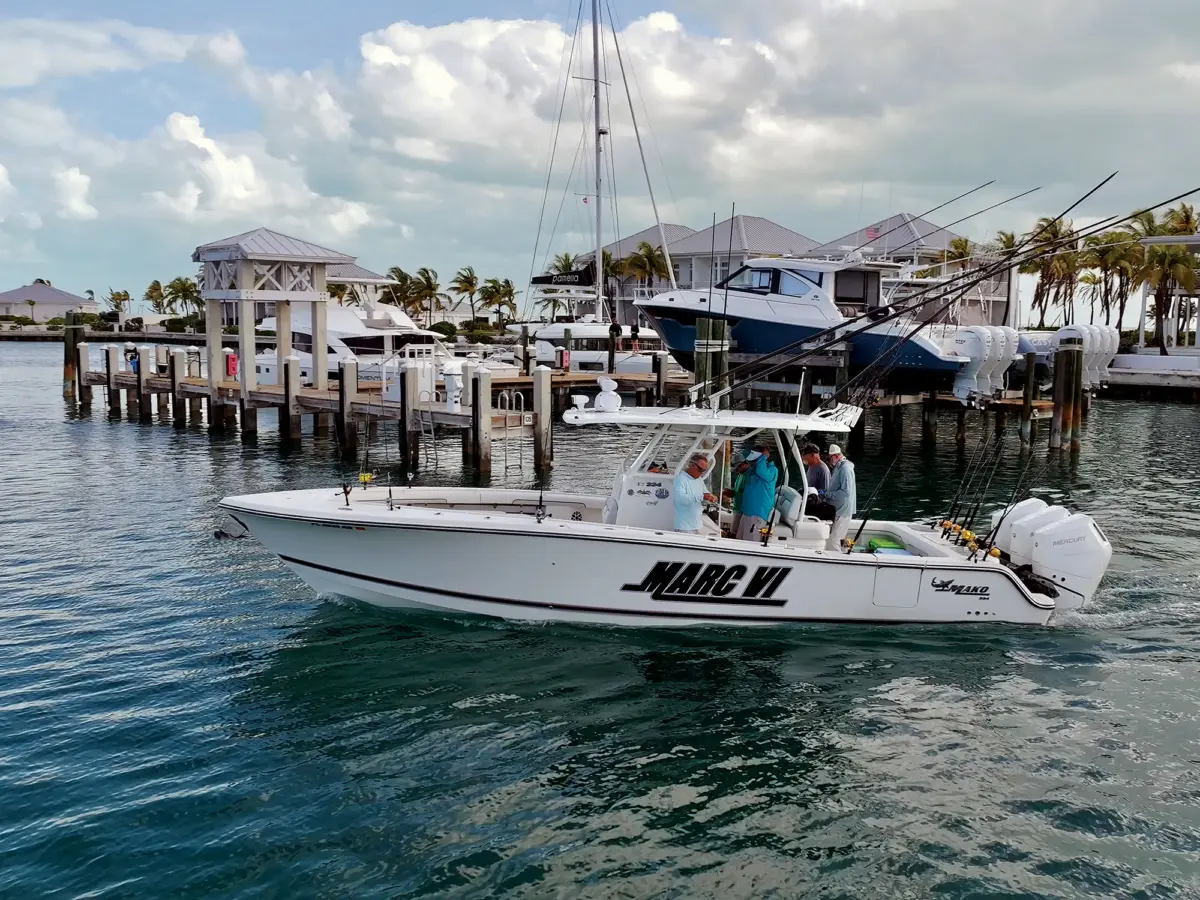
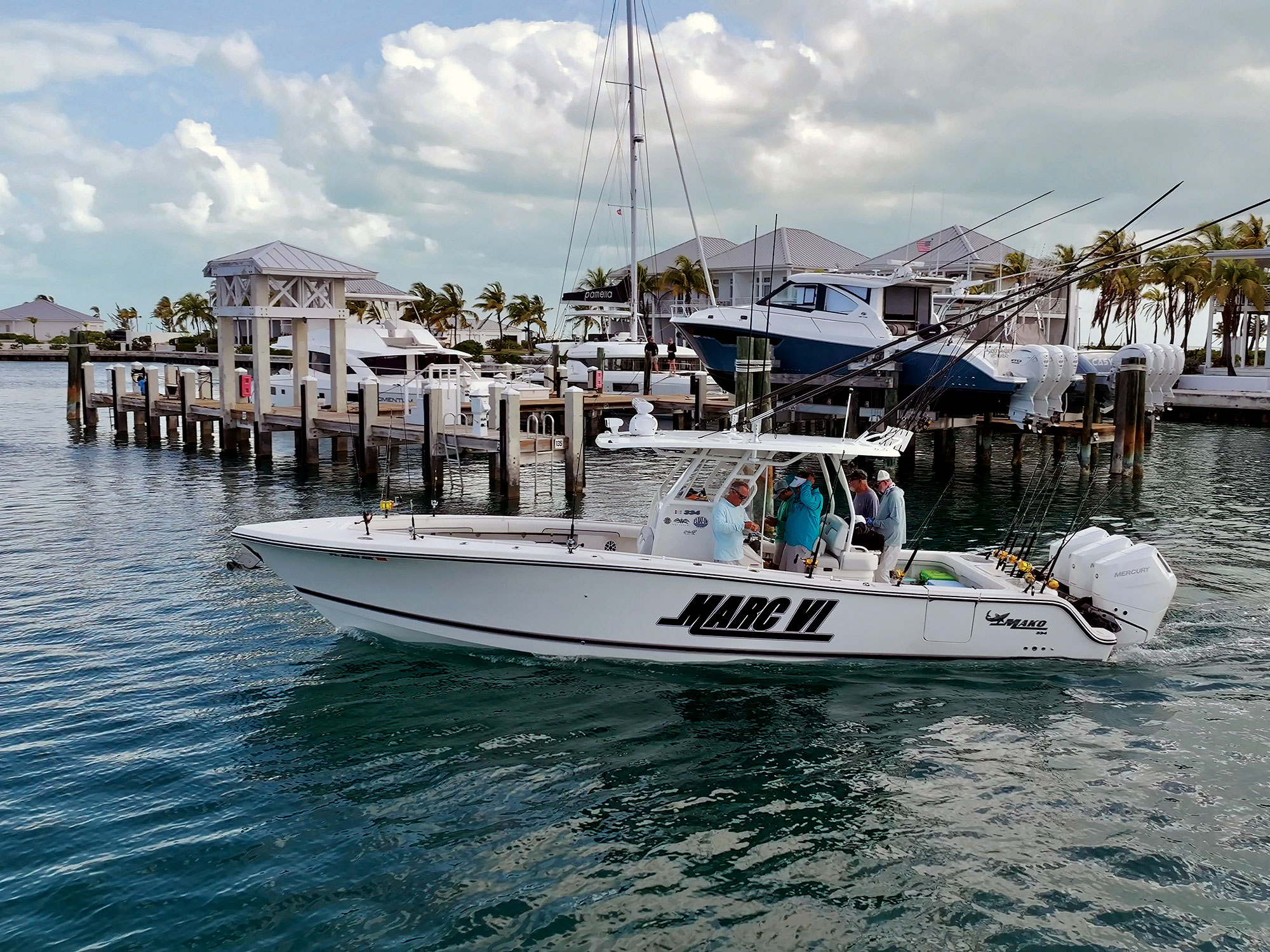
The expedition commenced at 6:00 a.m. at the TNT Marine Center in North Miami. A seasoned five-man crew—comprising Harry Vernon, Mark Schmidt, Rob “The Swede” Greene, videographer Charles Gonzalez, and the skipper—rigged the MARC VI (a Mako 334 center console). Every critical safety asset was rigorously audited: life jackets, throw cushions, and a marine EPIRB were stowed within immediate reach, alongside a comprehensive array of heavy and light tackle.
The boat cleared Haulover Inlet precisely at 7:15 a.m., setting a direct heading toward Bimini for the mandatory international check-in.
Streamlining this process is vital for any modern Bahamian crossing. One week prior to departure, the crew utilized the official online portal (Click2Clear.com) to submit formal cruising and fishing permit applications, comprehensive vessel documentation, and complete crew manifests. Upon settling the government fees online, the vessel was issued a specialized PCR number. Presenting this confirmation code on-site at Bimini Customs and Immigration expedited the clearance procedure, granting official, stamped legal cruising and fishing permits within a single hour. Legally authorized to deploy baits in Bahamian waters, the crew immediately pushed onward.
The Route Across the Banks and Into Exuma Sound
From Bimini, the MARC VI laid down a 68-mile track across the Great Bahama Bank into the deep, indigo waters of The Pocket. Skirting past Chub Cay—situated roughly 15 miles into The Pocket—the crew maintained a brisk cruising clip toward the entrance of Nassau Harbour, a 35-mile leg.
Prudence dictated a fuel stop in Nassau to ensure an ample safety margin before crossing the exposed shallows. After topping off the tanks, the vessel crossed the expansive Yellow Bank, steaming 40 miles across translucent shallows to Ship Channel Point, the strategic gateway into the abyss of Exuma Sound. From Ship Channel Point, a final 44-mile leg delivered the vessel directly to the slips of the Cape Eleuthera Resort & Marina.
Upon tying off, the total tally for the 252-mile transit registered exactly 253 gallons of fuel burned. The afternoon was dedicated to standard post-crossing maintenance: washing down the hull, checking into oceanfront quarters, cleaning gear, and reconvening for a celebratory team dinner ahead of the morning’s tide.
Supporting Context & Metrics: Navigating the Grounds
The Geography of Exuma Sound and "The Bridge"
Exuma Sound is an oceanographic masterpiece. Featuring precipitous deep-water drop-offs running parallel to jagged, shallow-water reef structures, it creates natural bottlenecks and upwelling zones that concentrate baitfish and apex predators alike.
Approximately 12 miles east of the resort lies “The Bridge”—an underwater reef system ranging between 25 and 60 feet in depth. This geological formation physically connects the southern terminus of Eleuthera Island to Little San Salvador. Beyond this shallow spine lies the wide-open Atlantic Ocean, characterized by aggressive, high-relief bottom topography that plays host to migrating pelagics.
Fuel, Range, and Tactical Logistics
Modern center consoles equipped with high-horsepower outboards and expanded fuel capacities have entirely rewritten the calculus of Out Island travel. However, the margin for error in the Exuma Sound remains razor-thin.
- Total Passage Distance: 252 miles (one way from Haulover Inlet).
- Fuel Consumption: 253 gallons consumed on the outbound leg.
- Marina Infrastructure: Cape Eleuthera boasts the deepest marina in the Bahamas, offering secure deep-water dockage capable of accommodating mega-yachts up to 200 feet, alongside premium amenities including oceanfront bungalows, marina villas, waterfront dining, three private beaches, and 4,500 acres of secure property easily traversed via golf cart.
- Weather Dependency: The region demands favorable weather windows. While a strong northeast or east blow pushing 25 knots can ruin offshore plans on the Atlantic side, the resort side of Exuma Sound frequently offers a reliable lee, allowing captains to shift tactics and target shallow-water patch reefs or protected deep-drop zones.
Official Statements & Field Insights
The Local Perspective
Justin Dubowitz, General Manager of the Cape Eleuthera Resort & Marina, notes that the unmatched quality of the surrounding fishery is directly tied to its geographical isolation.
"We cherish the tranquility and sheer biological abundance found here," Dubowitz explains. "It is the direct, unadulterated fruit of our secluded location. The crossing acts as a natural filter, deterring the massive droves of weekend boaters found closer to the Florida coast. For captains willing to make the run, the rewards are virtually guaranteed."
Cracking the Tuna Code: A Masterclass in Trolling Adjustments
During the initial days of the expedition, unseasonal water temperatures and a prevailing northeast wind pattern temporarily suppressed the pelagic bite along the Atlantic drop-offs. Trolling standard blue marlin spreads—comprising five circle-hook ballyhoo/chugger combinations deployed on Penn International 50-pound class outfits alongside an active teaser dredge—produced little more than an afternoon lull.
However, as a minor solunar feeding period approached at 2:00 p.m., the ocean stirred to life. Flying fish scattered across the surface, while frenzied schools of blackfin and yellowfin tunas blitzed small glass minnows against the backdrop of Little San Salvador, mirroring the dramatic surface feeds typically witnessed off the Pacific coasts of Central and South America.
When initial heavy trolling spreads failed to draw strikes from the larger yellowfins crashing the surface, the crew initiated a tactical pivot:
- The Spin-Tackle Test: Harry Vernon was maneuvered within casting range of surface blitzes using light spin tackle rigged with small crankbaits and surface chuggers, resulting in brief hook-ups before pulling free.
- The Swimmer Solution: Standard trolling gear was swapped out in favor of deep-diving plugs—specifically Rapala X-Rap Magnum Xtreme and Rapala Countdown Magnum swimmers—which matched the exact running depth and profile of the fleeing forage.
- The Fluorocarbon Upgrade: On the far-center rigger, the crew deployed a small, pink-skirted ballyhoo rigged with an in-line circle hook on an 80-pound test fluorocarbon leader.
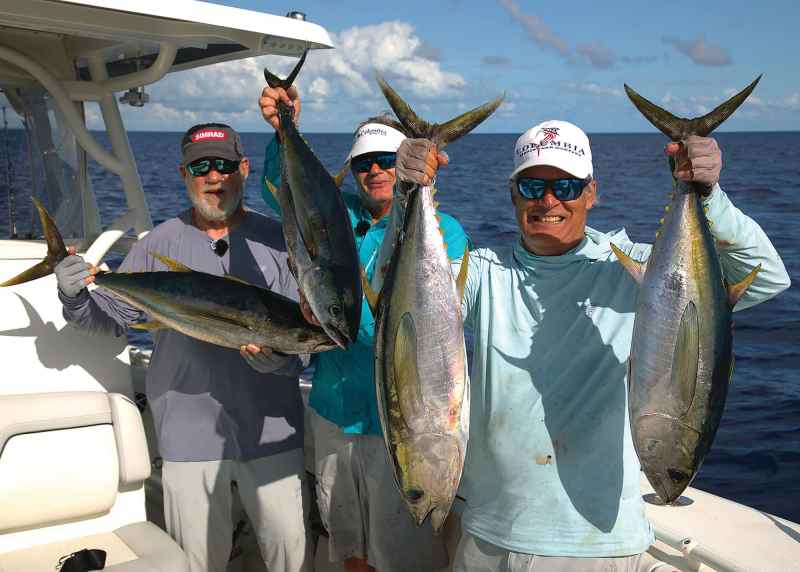
The adjustment was instantaneous. The screaming clickers of the reels announced a heavy yellowfin strike on a Rapala swimmer, quickly followed by a rapid-fire quadruple-header. The new-found presentation unlocked the fishery, resulting in a flurry of quality yellowfins and providing an essential blueprint for targeting wary tunas in clear Bahamian waters.
Deep-Water and Shallow-Reef Tactical Breakdown
- Targeting Flag Yellowtails: The shallow reefs skirting Exuma Sound and The Bridge harbor staggering populations of yellowtail snapper. Anchoring over prime bottom coordinates (averaging 70 feet) and deploying a continuous mesh chum bag draws the fish upward in the water column. Because many of these yellowtails reach trophy proportions ("flags" exceeding 24 to 27 inches), light tackle must be upgraded. The team recommends 20-pound-test fluorocarbon leaders, stout medium-action spinning rods, and 20-pound class mainline to successfully horse fish away from aggressive reef sharks. Baits should consist of fresh silversides, ballyhoo strips, and squid pieces presented on small yellowtail jigs or 1/0 in-line circle hooks utilizing minimal weight (knocker rigs).
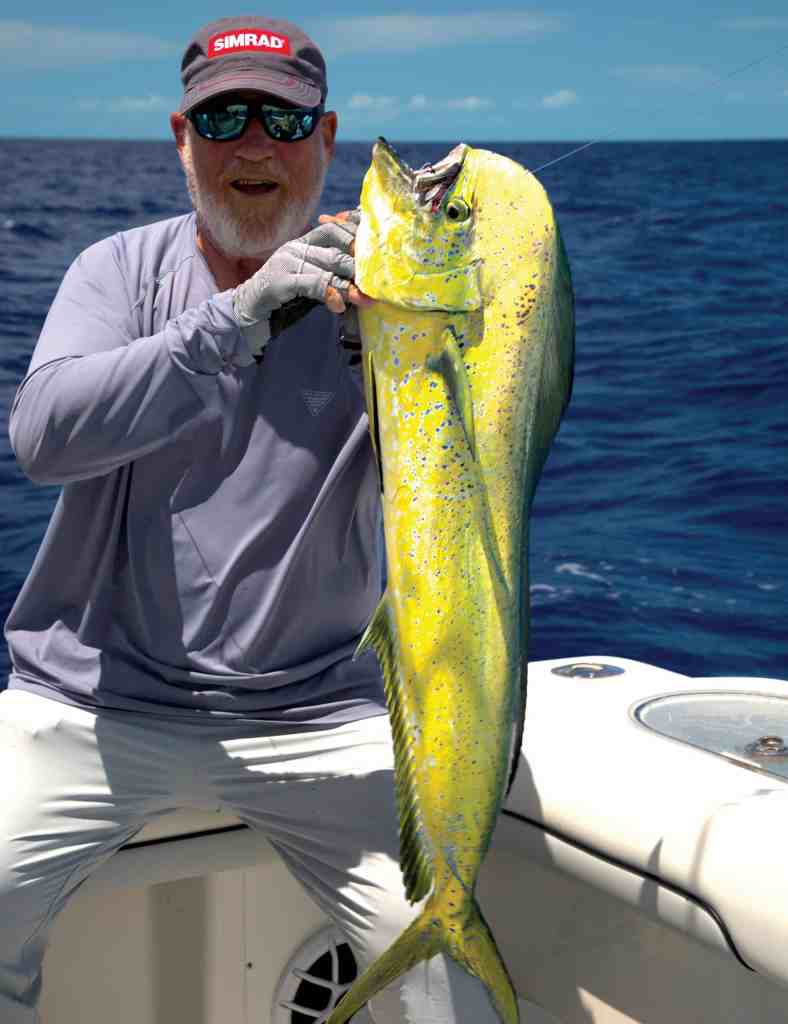
- Mahi-Mahi Encounters: Even in the absence of heavy sargassum weed lines, mahi-mahi remain prolific throughout the Cape Eleuthera ecosystem. Blind trolling along color changes or actively hunting working frigate birds routinely yields fish in the 15- to 20-pound class. In fact, aggressive mahi frequently crash the surface right up to the transom while crews are actively chumming for yellowtails on the reef.
- Deep-Dropping for Snapper: When surface action slows, dropping down to abyssal depths between 600 and 1,000 feet using electronic reels (such as the Penn Fathom series) loaded with heavy squid strips yields pristine bottom-dwellers, including yelloweye, wenchman, and blackfin snappers.
Future Outlook
The golden age of Out Island exploration is currently undergoing a rapid transformation. As marine manufacturers continue to engineer larger, high-performance center consoles featuring quad-outboard configurations, expanded fuel cells, and sophisticated navigation suites, the 252-mile span between South Florida and the southern Bahamas is shrinking.
While Cape Eleuthera has long remained a quiet sanctuary for cruisers and sailors, its immense angling potential is steadily coming to light. The historical seasonal window of April through June—prime time for migrating white and blue marlin, explosive mahi runs, and schooling yellowfins—continues to deliver world-class action, while bottom fishing remains exceptionally productive twelve months out of the year.
For captains seeking an escape from crowded domestic waters, the window of pristine isolation is open, but it will not remain a secret indefinitely. As modern vessel technology bridges the gap between civilization and the remote Bahamian outback, the ultimate takeaway for the serious offshore angler is simple: Get here while the getting is good.

0 Comments