

Executive Overview
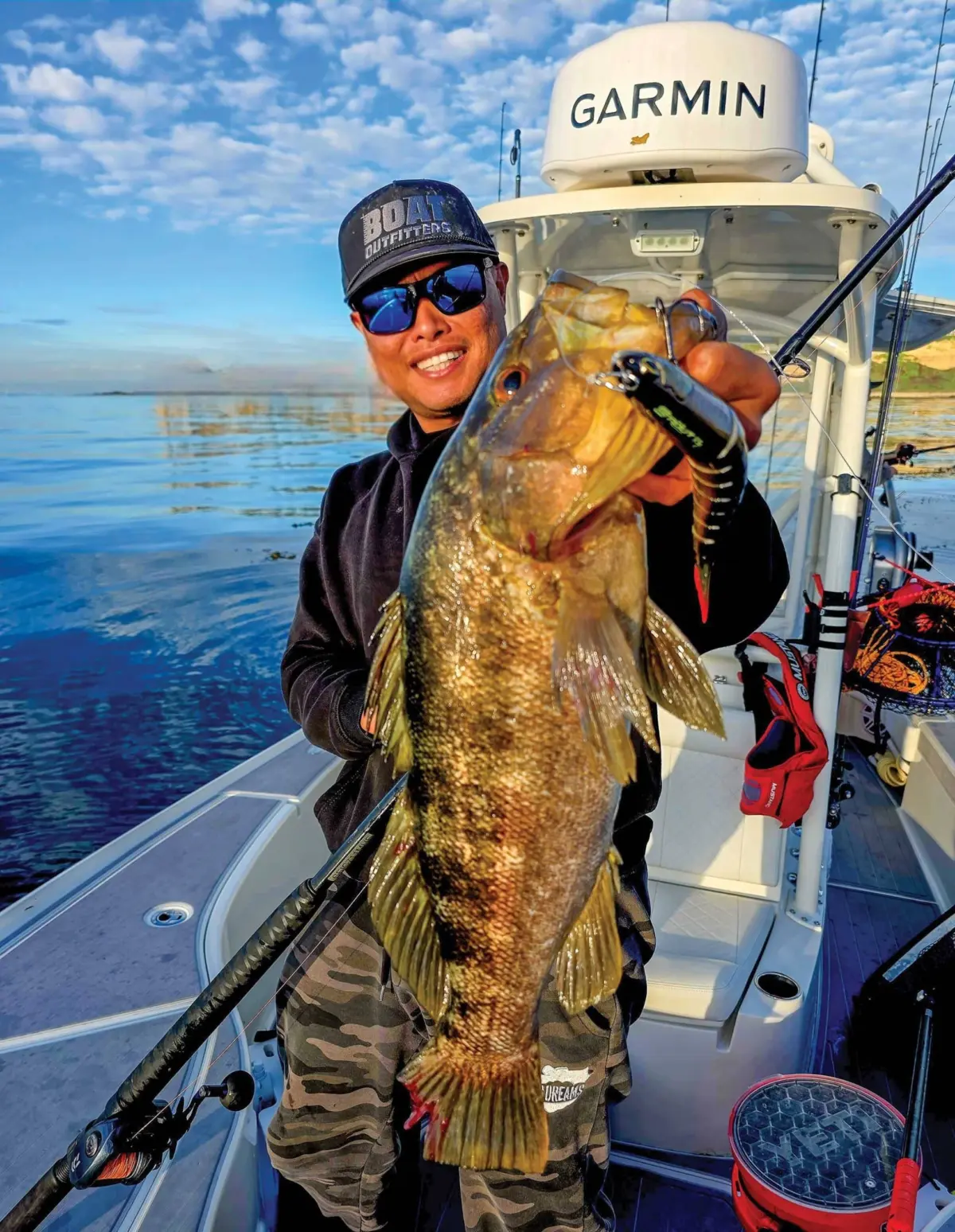
For generations, Southern California’s inshore angling community has operated under a strict seasonal dogma regarding the iconic kelp-forest predator, the calico bass (Paralabrax clathratus). Conventional wisdom dictated that water temperature was the absolute sovereign of fish behavior: summer meant aggressive topwater action, while winter meant deep, lethargic drops where slow presentations reigned supreme.
However, decades of on-the-water observation, advanced multi-species tracking, and empirical testing by elite guides like Oliver Ngy challenge this long-standing paradigm. The true catalyst for topwater aggression is not the average seasonal temperature, but rather thermal stability. Calico bass, resilient and adaptable inshore predators, will readily feed on or near the surface across a wide thermal spectrum—ranging from 55°F to 70°F—provided that temperature remains constant without sudden, jarring fluctuations.
Coupled with a nuanced understanding of forage dynamics, current vectors, and structural ambush points, this paradigm shift allows anglers to abandon seasonal restrictions and effectively target trophy calico bass on topwater lures year-round. This report breaks down the biological mechanisms, environmental triggers, tackle configurations, and specialized techniques required to master the modern inshore topwater game.
Detailed Chronology of an Inshore Evolution
To understand how modern anglers approach calico bass fisheries, it is necessary to trace the evolution of Southern California inshore tactics from traditional live-bait dependency to advanced artificial-lure mastery.
The Live-Bait Era and the Birth of Thermal Dogma
Historically, the Southern California sportfishing fleet relied heavily on live anchovies and sardines sourced from commercial bait receivers. Anglers matched hatch conditions by dropping live baits down deep during winter months or slow-trolling them through kelp edges. Because fish caught during colder months were predominantly found lower in the water column, charter captains and local anglers concluded that winter cooling inherently drove calicos downward, shutting down their surface activity.
The Artificials Revolution and Confirmation Bias
As high-end soft plastics, custom swimbaits, and surface irons gained popularity in the late 20th and early 21st centuries, anglers began adopting specialized casting strategies. Yet, the seasonal confirmation bias persisted. Anglers who ventured out in January would exclusively fish heavy weedless plastics near the bottom because that is where historical precedent dictated they should look. By refusing to throw surface lures during cooler months, they inadvertently perpetuated the myth that winter calicos ignored topwater presentations.
The Modern Paradigm: Stability Over Seasonality
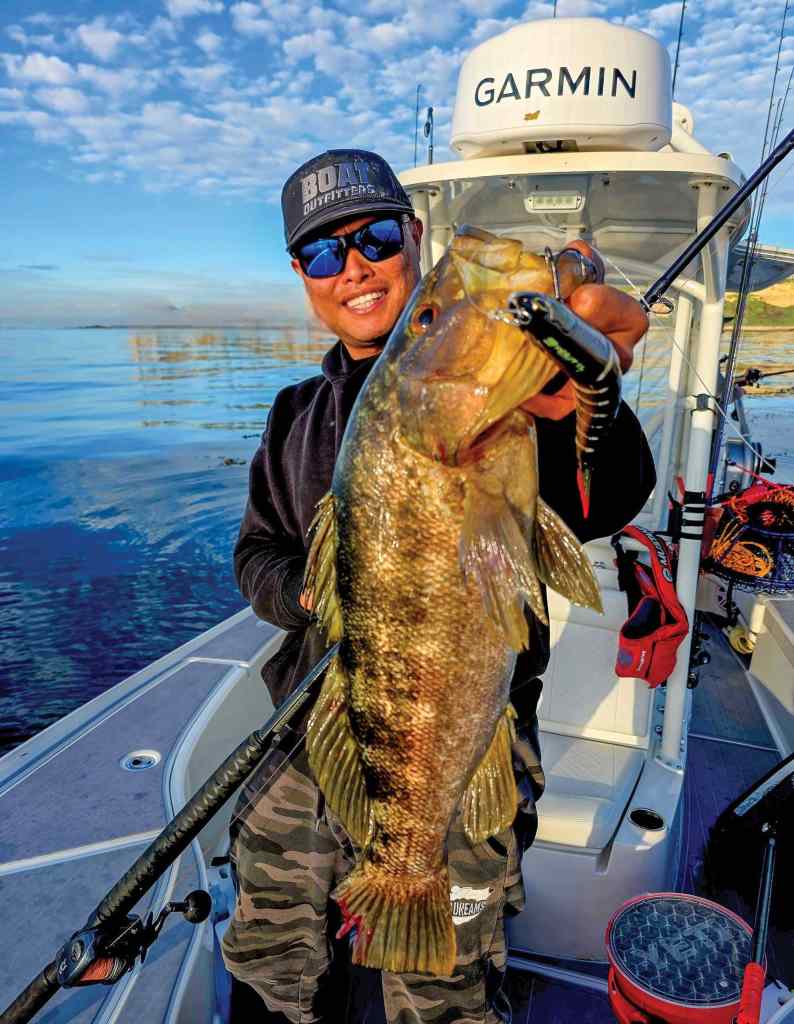
In recent years, forward-thinking guides and tournament anglers began experimenting outside established temporal boundaries. By tracking micro-temperature shifts and recognizing that juvenile anchovies inhabit the surface canopy year-round, these anglers documented consistent topwater bites in the dead of winter. The determining factor was isolated: stable water temperatures over a 48-to-72-hour window. If the water held steady at 56°F without a sudden drop, calico bass would aggressively assault surface lures just as they would during a mid-summer heatwave.
Supporting Context & Metrics: Environmental Triggers and Forage Dynamics
Mastering the topwater calico fishery requires a granular understanding of the variables governing fish movement. Temperature shifts, current interactions, and baitfish habits dictate every strike.
The Thermal Fluctuation Threshold
While calicos tolerate a broad range of temperatures, they possess zero tolerance for rapid thermodynamic change.
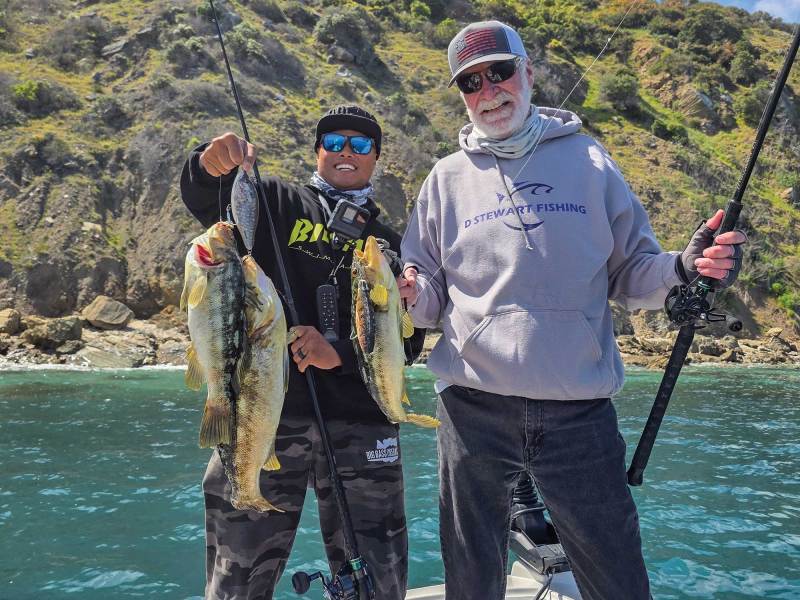
- The 3-Degree Rule: Empirical observations show that a sudden drop of as little as 3°F within a 24-hour window is enough to send active bass into a physiological funk. For example, a drop from 71°F to 67°F caused by an upwelling or cold current intrusion will routinely cause surface-oriented fish to sink into the water column and reject topwater offerings.
- Baseline Stability: Whether the water sits at a brisk 55°F or a warm 70°F, a stable multi-day baseline allows metabolic functions to equalize, encouraging predatory roaming near the kelp canopy.
The Anchovy Factor and Forage Localization
Calico bass position themselves in the water column based entirely on where forage concentrates. Over recent seasons, inshore ecosystems have experienced a massive influx of juvenile anchovies along kelp beds and rocky shorelines.
- Unlike sardines, which roam open water indiscriminately, juvenile anchovies rely on the structural safety of the kelp canopy or turbid shorelines to evade pelagic predators.
- Consequently, calico bass suspend directly beneath or within the surface canopy, maintaining a perpetual ambush posture waiting for concentrated schools of bait.
Current Vectors and Hydraulic Mechanics
Understanding how water movement influences predator behavior is vital for presentation strategy.
- Kelps and Stringers: Calico bass orient their snouts directly into the prevailing current to hold position effortlessly while conserving energy.
- Shallow Reefs and Boiler Rocks: Much like stream trout hiding behind boulders, calicos tuck behind large reef structures to break strong currents. These micro-eddies serve as primary ambush stations where fish intercept disoriented baitfish swept along by the tide.
Official Guidelines & Expert Methodologies for Success
Successfully extracting big calicos from complex marine environments requires a systematic approach to habitat assessment, lure selection, and retrieve mechanics.
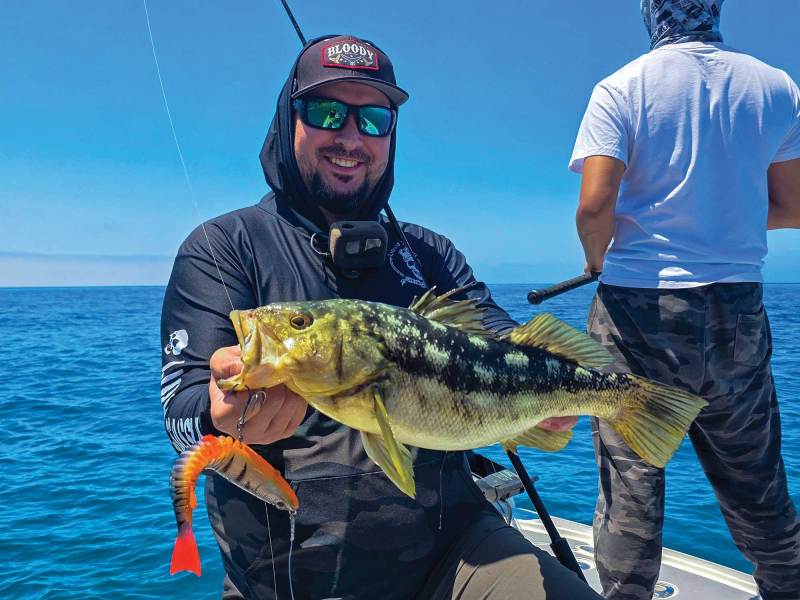
Phase 1: Locating Active Fish
- Scout for Micro-Forage: Scan the surface for visual clues—puddling bait, diving seabirds, or solitary cormorants resting on the water. Even the sudden appearance of stray baitfish while running the coastline indicates life.
- The Upcurrent Edge Test: When approaching a kelp bed, never blindly drift into the middle. Always start on the upcurrent edge of the bed and make targeted casts to the leading stringers.
- Immediate Feedback: Active calicos will reveal themselves immediately. If a fish strikes within the first few casts, systematically work through the rest of the bed. If the upcurrent edge yields nothing after a brief series of casts, abandon the spot to save valuable time.
Phase 2: Mastering Lure Selection
Lure choice must match both the structural density of the habitat and the prevailing behavioral mood of the fish:
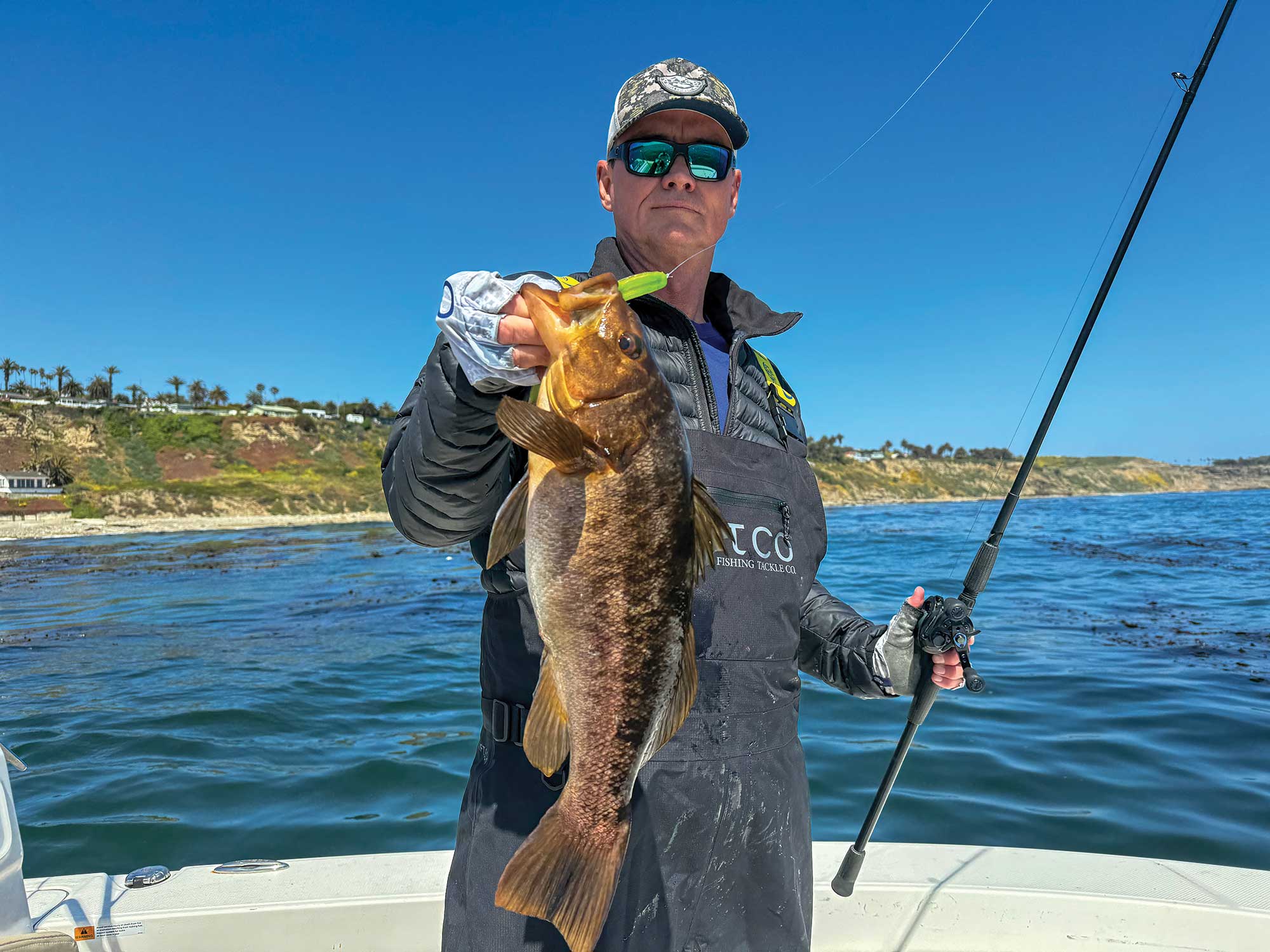
- Open Lanes & Isolated Stringers: Utilize treble-hooked surface glides, walking baits, and stick baits. Top performers include the Yo-Zuri Hydro Pencil, AFTCO Blue Fever 160, and large freshwater-style swimbaits like the BIWAA USA S’Trout or West Coast Baits Roma Trout.
- Dense Kelp Canopies: Deploy weedless configurations to prevent snagging. Heavy-duty soft plastics—such as a 7-inch weedless swimbait or a 7-inch slug rigged on a keel-weighted hook—allow anglers to punch through thick kelp mats.
+--------------------------+---------------------------+-----------------------------------+
| Habitat Type             | Recommended Lure Style    | Specific Model Examples           |
+--------------------------+---------------------------+-----------------------------------+
| Open Kelp Lanes          | Walking Baits / Stickbaits| Yo-Zuri Hydro Pencil, AFTCO Blue  |
|                          |                           | Fever 160                         |
| Dense Kelp Canopies      | Weedless Soft Plastics    | MC Swimbaits 7" Slug / Swimbait   |
| Shallow Reefs / Boilers  | Large Slow-Rolled Baits   | BIWAA S'Trout, Roma Trout         |
+--------------------------+---------------------------+-----------------------------------+
Phase 3: Presentation and Retrieve Mechanics
- Retrieve Against the Current: Always swim your lure against or perpendicular to the current. Because bass face into the current, a lure moving with the current approaches from behind, allowing the fish to track it easily and recognize it as artificial. Conversely, retrieving against the current generates acoustic vibrations via the fish’s lateral lines while presenting only a fleeting, high-speed visual glimpse, triggering an immediate predatory strike.
- Match Speed to Structure:
- In kelp beds, maintain a rapid, steady retrieve for weedless swimbaits, or employ an erratic stop-and-go cadence with stick baits to mimic fleeing baitfish.
- Over shallow reefs and boiler rocks, a fast retrieve is unnecessary. Bass rely heavily on lateral lines in turbulent, structure-rich zones; a painfully slow-rolled, large freshwater swimbait drawn across the surface of a submerged reef can provoke explosive strikes from territorial lunkers.
Tackle and Rigging Specifications
Targeting large calico bass in heavy structural environments requires robust, specialized gear capable of stopping a determined fish before it burrows into kelp or sharp reef.
- Light Spinning / Stick Bait Setup:
- Rod: 7-foot, 6-inch medium-heavy casting or spinning rod with a fast tip.
- Line: 20-pound braided mainline tied to a 20-pound fluorocarbon leader. Ideal for smaller surface stick baits.
- Heavy Swimbait / Kelp Setup:
- Rod: 8-foot heavy action swimbait rod.
- Reel: 300-sized low-profile baitcaster.
- Line: 50-pound braided mainline connected to a 40-pound abrasion-resistant fluorocarbon leader. Designed to winch fish out of dense canopy jungles.
- Shallow Reef Technical Setup:
- Rod: Medium action casting rod.
- Line: Straight 15-pound fluorocarbon. The inherent stretch of straight fluorocarbon prevents anglers from pulling hooks out of fish’s mouths when working tight target zones over shallow rocky structures.
Future Outlook
As marine coastal monitoring systems become increasingly sophisticated and anglers adopt a more scientific approach to inshore ecology, traditional seasonal boundaries are rapidly dissolving. The recognition that calico bass feeding behavior is governed by thermodynamic stability rather than arbitrary calendar months opens up unprecedented year-round opportunities for Southern California anglers.
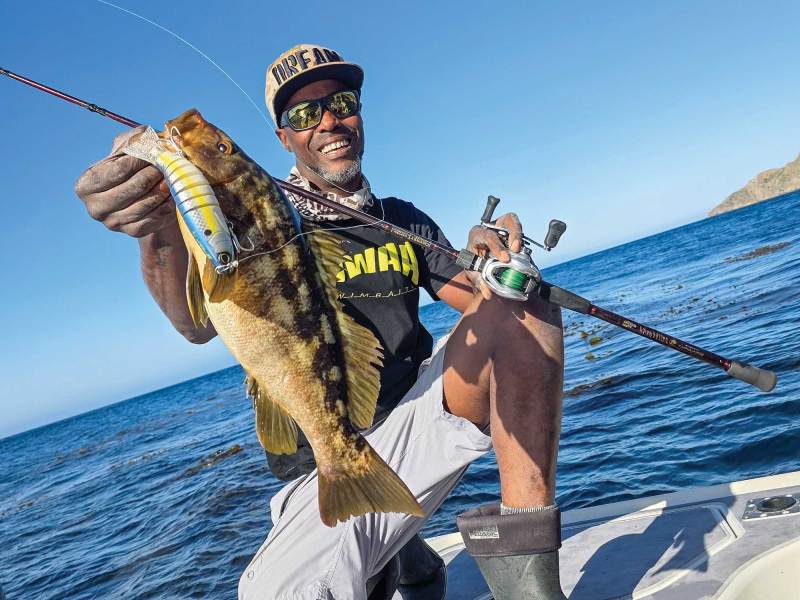
By prioritizing stable temperature windows, tracking juvenile anchovy movements, aligning presentations against current vectors, and utilizing modern weedless and topwater tackle, the inshore game has been permanently elevated. For those willing to abandon outdated dogmas and embrace the surface code, the kelp forests and rocky points of the Pacific coastline offer world-class topwater action 365 days a year.

0 Comments