

Executive Overview
The modern recreational boating landscape has experienced a dramatic physical transformation over the last decade. Vessels that were once considered massive—such as 40-foot center consoles—have been entirely eclipsed by a new generation of 50- and 60-foot leviathans. These modern platforms are routinely outfitted with towering hardtops, multi-engine outboards, powerful onboard generators, and sprawling superstructures. While these technological upgrades provide incredible range, comfort, and offshore capability, they have inadvertently introduced a formidable challenge: severely restricted sightlines and complex handling characteristics at the helm.
Compounding this design evolution is a shift in how these boats are operated. The traditional model of running with a dedicated professional captain or an experienced first mate is increasingly rare. Today, owners typically cruise with family and friends—passengers whose maritime experience rarely extends beyond enjoying the ride. When it is time to slide into a narrow slip, pick up a fallen wakeboarder, manage a tricky trailer loading sequence, or drop anchor against a stiff current, the person who knows the vessel best is frequently pinned behind the wheel. They are left shouting commands to inexperienced deckhands while navigating blind spots created by the boat’s own architecture.
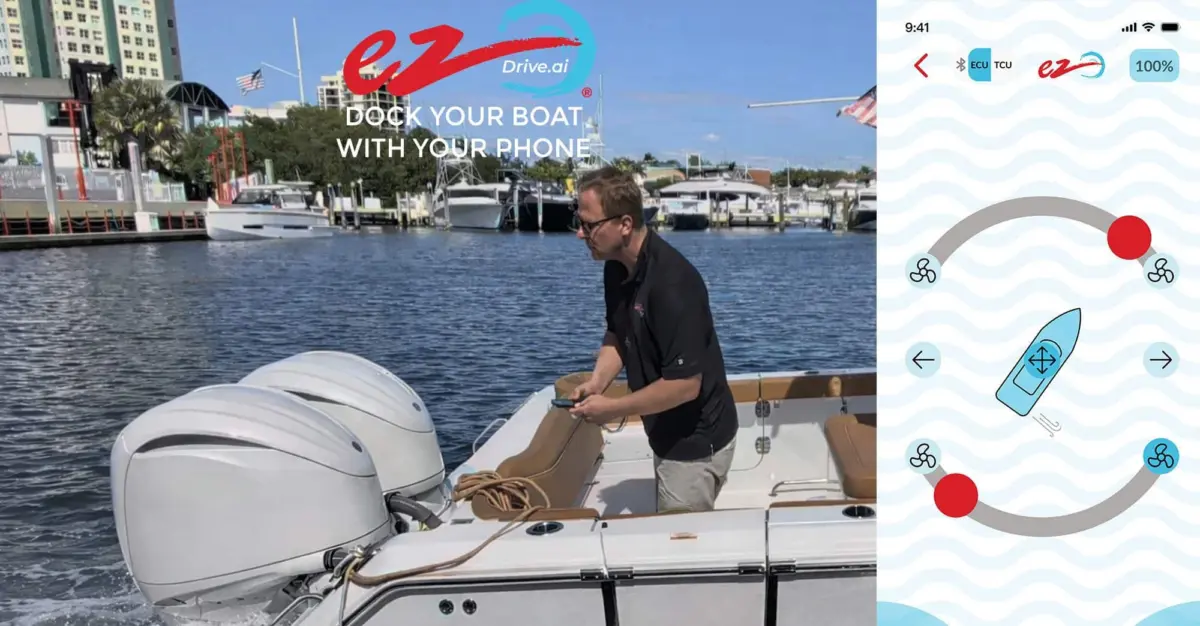
Enter ezDrive.ai, a groundbreaking, wireless, app-driven system designed to completely redefine close-quarters maneuvering, trailering, and anchoring. By transforming an everyday smartphone into a full-scale command center, ezDrive.ai allows skippers to step away from the traditional helm and maintain real-time, proportional control of their engines and thrusters from anywhere on deck. Combining long-range Bluetooth architecture, intuitive artificial intelligence, and seamless OEM integration, this technology provides a cost-effective, high-tech solution to one of boating’s most enduring stressors.
Detailed Chronology & Development: Solving the Single-Handed Dilemma
The conceptual genesis of ezDrive.ai lies in a straightforward observation: modern boats have grown exponentially larger, heavier, and more feature-rich, while the typical crew size has shrunk. Ten years ago, a 40-foot center console pushed the boundaries of what an owner-operator would comfortably handle without professional assistance. Today’s 50- and 60-foot center consoles—along with specialized, high-horsepower wakesurf boats—are equipped with towers, canvas enclosures, and multi-engine configurations that block sightlines from the traditional driving position.
Traditionally, docking or trailering these massive vessels without a skilled crew meant relying on trial, error, and a lot of crossed fingers. If an owner needed to jump to the bow to secure a line or manage a stubborn anchor, they had to leave the helm unmanned or entrust the throttle to a novice passenger.
Recognizing this operational bottleneck, the engineering team behind ezDrive.ai set out to build a system that would bridge the gap between heavy-duty yacht remote controls and accessible consumer tech. Rather than forcing owners to invest in bulky, expensive, dedicated hardware remotes typically reserved for mega-yachts, the developers looked to the device every boater already carries in their pocket: the smartphone.
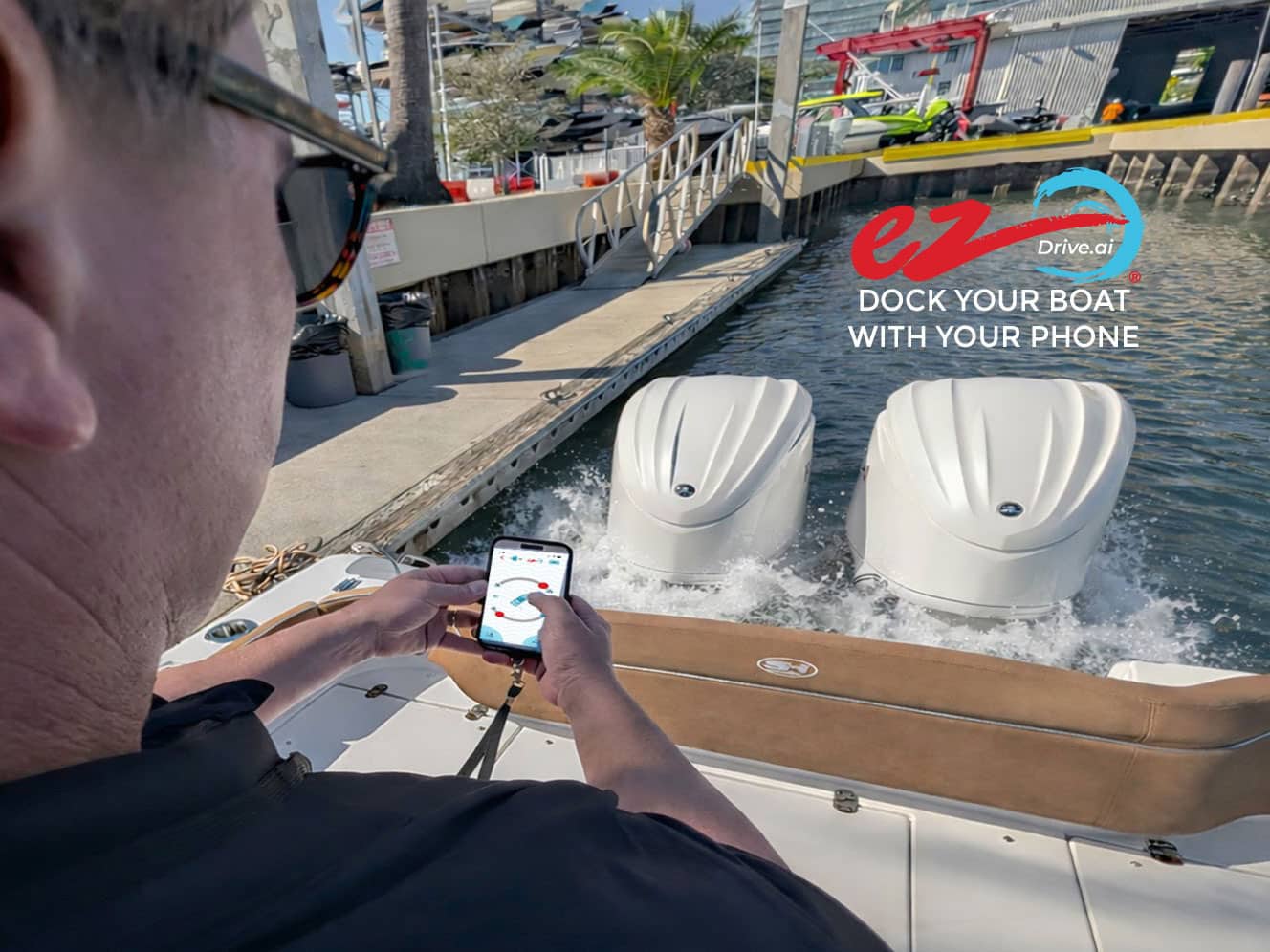
By engineering a secure, proprietary software interface backed by robust hardware integration, the developers created a system that places absolute docking, anchoring, and trailering control directly into the palm of the operator’s hand. This development phase focused heavily on creating multiple tactile interfaces, ensuring that whether a boater is standing on the stern quarter-panel watching the swim platform clear a piling, or standing on the trailer tongue guiding a wake boat home, they have the exact same level of precision they would expect from the primary helm.
Supporting Context & Technology: Under the Hood of ezDrive.ai
A wireless application controlling high-horsepower marine engines must overcome severe environmental and technical hurdles. ezDrive.ai was architected from the ground up to operate reliably in harsh marine environments, incorporating sophisticated engineering choices across its user interface, connectivity, and safety protocols.
Three Distinct Control Modes
Understanding that different skippers prefer different tactile experiences, ezDrive.ai does not lock users into a single operational style. Instead, the application offers three distinct control modes:
- Auto Mode: Designed for purists who want a true 3-axis joystick experience. This mode delivers proportional thruster control and integrates directly with joystick-equipped outboard systems from industry giants like Yamaha, Mercury, and Suzuki. As the operator engages the throttle or toggles the bow thruster through the app, the smartphone provides subtle haptic feedback mirroring OEM physical controls. This tactile confirmation ensures the skipper always knows precisely how the vessel is reacting without needing to stare at the screen.
- AI Mode: Built to simplify complex inputs. Instead of manipulating virtual joysticks, operators simply slide the boat icon in the exact direction they want the hull to travel. The underlying artificial intelligence intuitively calculates and fires the appropriate combination of engines and thrusters to achieve the movement smoothly and efficiently. Furthermore, AI Mode functions as a learning platform: every time a registered user docks via the app, operational data is fed back to engineers, continually refining and adapting the algorithm to match real-world handling nuances.
- Console Controller Mode: Tailored for users accustomed to modern digital interfaces and gaming controllers. Held horizontally, the smartphone displays a virtual joystick under one thumb and directional sliding mechanisms under the other. It offers an immediately familiar and highly intuitive learning curve for the vast majority of smartphone users.
Overcoming Marine Engineering Challenges
Designing a smartphone application for the water requires solving issues like screen glare and signal drops. ezDrive.ai addresses these challenges directly:
- Anti-Glare Interface: The application automatically modulates its display contrast and brightness to remain completely legible under glaring midday sun and direct marine reflection.
- Long-Range Bluetooth Connectivity: Rather than relying on standard consumer Wi-Fi or short-range Bluetooth—which often suffer interference on fiberglass and metal-laden vessels—ezDrive.ai utilizes long-range Bluetooth protocols. Modern smartphones already possess the hardware for extended-range connections; ezDrive.ai unlocks this capability, providing robust coverage capable of blanketing center consoles, wakesurf boats, and V-drives from bow to stern.
Plug-and-Play Installation
A major deterrent for many boat owners considering aftermarket electronics is the prospect of cutting wires, splicing harnesses, or modifying the hull. ezDrive.ai eliminates this friction through a completely plug-and-play installation philosophy.
The system integrates directly with existing original equipment manufacturer (OEM) architecture, building a digital model of how the vessel’s specific helm equipment operates. It bypasses nothing; all factory safety protocols and primary features remain fully active. When handing control back and forth, the transition is seamless—taking command at the physical throttles or helm joystick immediately returns full priority to the primary steering station.
Official Statements & Industry Perspective
The philosophy driving ezDrive.ai centers on empowering the single-operator boater and relieving the stress traditionally associated with marina navigation.
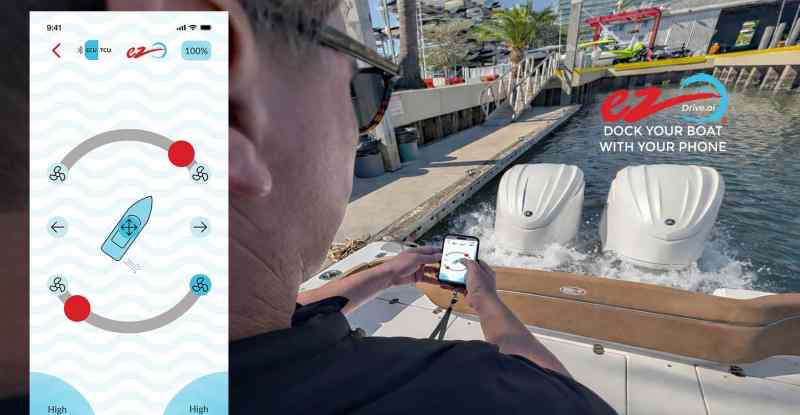
"Having control in the palm of your hands allows you to remain in control while you work on the bow line, drop anchor, get a line of sight on the dock, pick up a downed rider while wake surfing, and much more," explains Chris Willits, Account Manager for ezDrive.ai.
Willits highlights the distinct operational hurdles faced by modern owners: "If you’re in a 40- to 50-foot boat tied to the helm, it’s difficult to do certain tasks if you have an inexperienced person helping with lines. ezDrive.ai integrated into your phone has changed that dynamic. It lets you move wherever you need to and still have control while working on the trickier parts of an outing."
Addressing the design philosophy behind the system’s integration, Willits emphasizes the commitment to preserving familiar user habits: "We don’t want to disturb the user experience you’re already used to. We create an accurate model that mimics the mechanics of your OEM equipment, and we don’t bypass any features or safety protocols you use on your boat."
Ultimately, the goal is democratization and practicality. "It’s super practical and easy to use. You don’t have to think about it," Willits notes. "Our goal is to give center console and wakesurf boat owners a far more cost-effective solution than the traditional wireless remote-control systems typically offered in the yachting market."
Safety Engineered Into Every Layer
Entrusting propulsion and directional control to a handheld smartphone naturally invites critical questions regarding safety, reliability, and fail-safes. What happens if the phone battery dies? What if the connection drops while the engines are engaged?
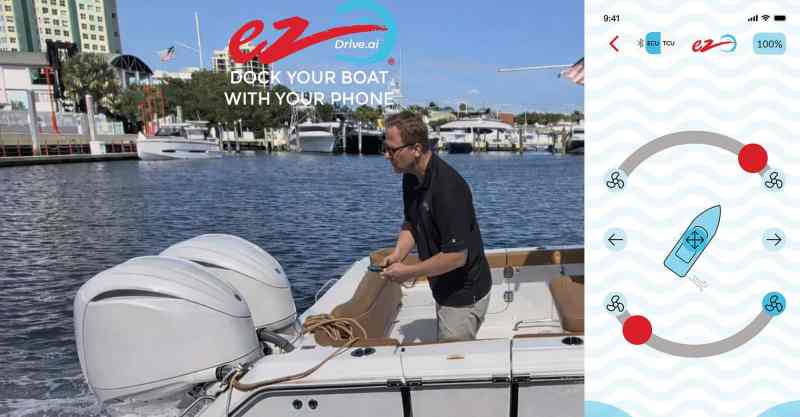
The ezDrive.ai engineering team has addressed these scenarios through a comprehensive, multi-layered safety architecture:
- Battery Threshold Monitoring: The system continuously monitors the host smartphone’s battery status. If the charge drops below 20 percent, control transfer to the app is locked out entirely, and the user receives early visual warnings well before reaching that threshold.
- Haptic and Visual Drop-Out Warnings: Should the long-range Bluetooth connection encounter interference mid-operation, the smartphone immediately pulses with pronounced haptic feedback and displays a high-visibility warning message.
- Momentary Command Requirement: The application enforces a strict "dead-man" style operational rule. Control inputs require active, continuous engagement from the operator. There is zero risk of a dropped phone or a lost signal resulting in a runaway throttle, locked thruster, or uncommanded vessel acceleration.
Future Outlook: A New Era for Owner-Operators
As ezDrive.ai prepares for its official market launch this fall, it arrives at a pivotal moment for the recreational marine industry. The trend toward larger, more heavily appointed center consoles and specialized wake boats shows no sign of slowing down. For owners who frequently navigate busy marinas, shallow anchorages, and crowded boat ramps without professional crew members, the app represents a paradigm shift.
By turning the smartphone into a reliable, responsive extension of the vessel’s brain, ezDrive.ai effectively grants skippers the ability to be in two places at once. Whether streamlining the dreaded trailer-loading process for a wakesurf boat, pinning a 50-foot center console against a windy dock while securing spring lines, or managing an anchor drop from the bow, the technology eliminates the chaos of close-quarters maneuvering.
With upcoming integration support rolling out for a rapidly expanding array of outboard propulsion and thruster manufacturers, ezDrive.ai is poised to transform docking from a high-stress group project into a smooth, confident, one-person operation. Boaters eager to explore compatible propulsion systems and prepare for the upcoming fall rollout can find further details directly at ezdrive.ai.

0 Comments