

By Jay Capasso (UF/IFAS Extension), Jason Mallard (UGA Cooperative Extension), and Phillip Edwards (UGA Cooperative Extension)
Published: December 4, 2024 | Updated: September 9, 2025
Executive Overview
Water is the lifeblood of modern agriculture, serving as the single most critical variable in maximizing crop yield, quality, and economic return. However, as regional water tables face increased scrutiny and input costs soar, the margin for error in agricultural water management has grown razor-thin. To navigate these challenges, growers must look beyond simply turning on a pivot and embrace the nuanced sciences of Distribution Uniformity (DU) and Irrigation Efficiency.
Far from being mere academic buzzwords, these two metrics dictate the difference between a thriving, high-yielding harvest and an uneven crop plagued by water stress, nutrient leaching, and inflated energy bills. While DU measures how evenly water is spread across a given acreage, irrigation efficiency evaluates how much of that applied water is actually utilized by the crop.
Across the Southeast—particularly in agricultural powerhouses spanning Florida’s Suwannee Valley and the state of Georgia—extension specialists are sounding the alarm: optimizing these systems is no longer optional. With the help of mobile irrigation labs, advanced soil moisture sensing technology, and regional cost-share programs, growers have unprecedented access to the tools needed to audit, upgrade, and perfect their irrigation operations. This report explores the mechanics of DU and efficiency, the factors that compromise them, and the actionable steps growers can take to safeguard their operations and natural resources.
Detailed Chronology: The Evolution of Regional Irrigation Assessment
The push toward precision irrigation in the Southeastern United States did not happen overnight. It represents a decades-long evolution in how agricultural extension agencies, water management districts, and growers collaborate to address environmental stewardship and economic viability.
The Foundation of Field Evaluations
Historically, agricultural irrigation was managed largely by intuition. Growers would estimate run times based on seasonal averages, visual crop stress, or historical rainfall patterns. However, as center pivot and linear overhead irrigation systems became more sophisticated, the limitations of "guess-and-check" watering became glaringly obvious.
In the late 20th and early 21st centuries, land-grant universities—including the University of Florida’s Institute of Food and Agricultural Sciences (UF/IFAS) and the University of Georgia (UGA) Cooperative Extension—began deploying specialized evaluation teams. Recognizing that underground leaks, pressure drops, and worn nozzles were quietly robbing growers of yield and money, these institutions pioneered systematic field testing protocols, most notably utilizing the "catch-can" method.
The Rise of Mobile Irrigation Labs
As water resource regulations tightened and regional droughts underscored the fragility of aquifers, state agencies and extension services formalized these testing procedures. In Florida, the creation of Mobile Irrigation Labs (MILs)—often operating in tandem with the Florida Department of Agriculture and Consumer Services (FDACS) Best Management Practices (BMP) program—provided growers with on-site, professional evaluations of their center pivot and linear move systems free of charge.
Concurrently, the UGA Cooperative Extension established robust auditing protocols across Georgia, pairing academic expertise with local producers to diagnose systemic hydraulic failures. Over the past fifteen years, these initiatives have evolved from simple diagnostic checks into comprehensive advisory networks. Today, they link field-level data directly to state and federal financial assistance programs, such as FDACS cost-shares and USDA Natural Resources Conservation Service (NRCS) grants, empowering growers to affordably overhaul inefficient systems.
Supporting Context & Metrics: Unpacking DU and Efficiency
To effectively manage an irrigation system, a grower must understand the distinct roles that Distribution Uniformity and Irrigation Efficiency play in daily field operations. Though frequently discussed in the same breath, they measure entirely different facets of system performance.
Understanding Distribution Uniformity (DU)
Distribution Uniformity measures the spatial consistency of water application across a field. Achieving a DU of 90% is widely considered the gold standard and is entirely attainable for modern center pivot and linear overhead irrigation systems. A 90% DU means that 90% of the field is receiving water in a uniform, predictable manner. This parity is crucial for minimizing water waste and ensuring every plant receives the exact moisture required to reach its genetic potential.
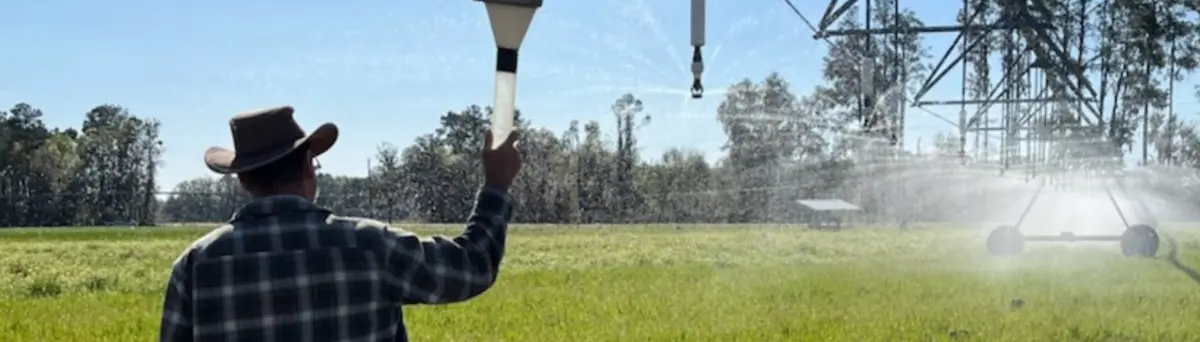
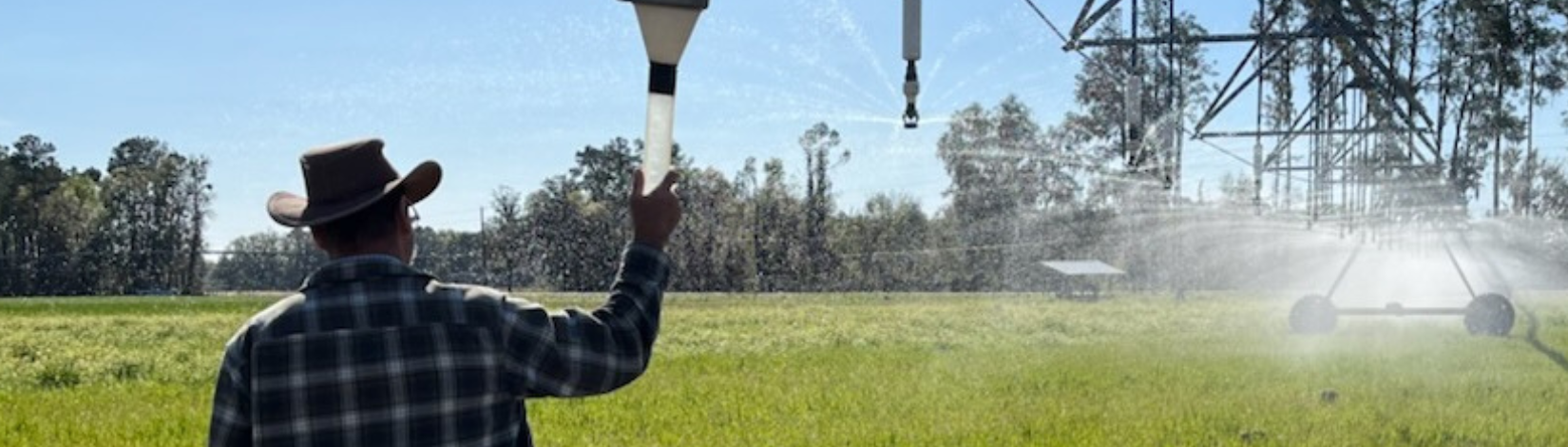
The industry-standard metric for calculating DU is the catch-can method. Technicians strategically place a grid of catch-cans across the span of the field under the pivot path. After a test run, the volume of water in each can is measured. The DU is determined mathematically by taking the average depth of the lowest 25% of measurements and dividing it by the total average depth of water applied across the entire field.
Why Good DU Matters
Maintaining a high DU yields cascading operational advantages:
- Maximized Crop Uniformity: Crops mature at the same rate, simplifying harvest schedules and reducing grading losses.
- Optimized Fertigation: When liquid fertilizers are injected through the irrigation system (fertigation), a high DU ensures the nutrients are distributed evenly. This prevents localized over-application (which can burn roots or leach nitrates) and under-application (which causes nutrient deficiencies and stunted growth).
- Reduced Energy and Input Costs: Pumping water requires immense energy. Even distribution ensures you aren’t over-watering 30% of your field just to keep the driest 10% alive, directly reducing diesel or electricity consumption.
The Mechanics of Irrigation Efficiency
While DU looks at spatial distribution, Irrigation Efficiency looks at beneficial utilization. The formula is straightforward:
$$textEfficiency = fractextWater Beneficially UsedtextTotal Water Applied$$
In the humid Southeast, irrigation efficiency primarily measures how much applied water is consumed to meet crop evapotranspiration (ET)—the combination of water transpired by the plant and evaporated from the soil surface. Unlike arid Western states, Southeastern growers rarely need to irrigate heavily for salt leaching (flushing accumulated salts below the root zone). However, less common beneficial uses can include climate control (such as frost protection) or intentionally promoting weed germination prior to a targeted herbicide burndown.
Measuring efficiency accurately is notoriously difficult because it relies on knowing precisely how much water successfully infiltrates and remains within the active crop root zone. This is where modern agricultural technology, particularly soil moisture sensors, bridges the gap between theory and practice.
The Critical Role of Soil Moisture Sensors
Soil moisture sensors serve as the ultimate report card for irrigation scheduling and system performance. However, growers must exercise caution regarding sensor placement.
If a soil moisture sensor is inadvertently installed in an area of the field with poor Distribution Uniformity (such as an under-watered high spot or an over-watered low spot), the data it transmits will be skewed. Relying on corrupted sensor data can trick a grower into over-or-under-watering the entire field, compounding existing inefficiencies rather than solving them. Sensors must be placed in statistically representative zones where the DU reflects true field-wide averages.
Factors Impacting Distribution Uniformity and Efficiency
Even state-of-the-art irrigation systems degrade over time. A myriad of hydraulic, mechanical, environmental, and operational variables can quietly sabotage a system’s DU long before visible crop distress appears.
1. Hydraulic and Pressure Variations
Water seeks the path of least resistance, and pressure fluctuations are the primary enemy of uniform distribution.
- Flow Rate Variability: Caused by pressure differences, friction losses within aging pipes, or significant elevation changes across rolling terrain.
- Pressure Regulators: These devices control water pressure entering individual sprinklers. When regulators fail or wear out, they allow erratic water flow, causing uneven spray patterns, accelerated mechanical wear, and wasted energy. Stable, managed pressure is non-negotiable for uniform irrigation.
2. Mechanical Wear and Maintenance Issues
- Nozzle Wear and Clogging: Over time, abrasive sediments and mineral deposits enlarge nozzle orifices or clog them entirely, drastically altering discharge rates and throwing off sprinkler patterns.
- Improper Sprinkler Spacing and Design: Poor initial engineering or unauthorized modifications during repairs can create dead zones or heavy overlapping streams.
- End Gun Malfunctions: End guns are notorious for throwing off DU if they are misaligned. When an end gun’s throw overlaps areas already thoroughly irrigated by standard overhead sprinklers, it creates double-watered zones that drown crops and invite disease.
3. Environmental and Operational Disrupters
- Wind and Plant Interference: High winds distort fine droplets from overhead sprinklers, causing severe drift and pooling. Furthermore, tall, dense crop canopies can physically block water from reaching the lower root zones in localized patches.
- Startup and Shutdown Dynamics: The transitional periods when a pivot charges or drains can deposit uneven amounts of water near the pivot point or at the outer edge of the field.
- Pipe Diameter Invariances and Edge Effects: Mixing pipe sizes during repairs can alter flow friction, while "edge effects"—where field boundary sprinklers overlap—frequently result in irregular application profiles.
Official Statements and Regional Support Networks
Navigating the complexities of irrigation optimization requires robust institutional backing. Fortunately, agricultural producers in key Southeastern states have access to world-class extension services and financial support infrastructure.
Florida: Mobile Irrigation Labs and FDACS BMPs
For growers operating in Florida, the regional Mobile Irrigation Lab network remains an indispensable asset. Administered in cooperation with local water management districts and the Florida Department of Agriculture and Consumer Services (FDACS), these labs provide professional, on-site evaluations of center pivot and linear move systems.
Growers who participate in the FDACS Best Management Practices (BMP) program and identify efficiency bottlenecks through an MIL evaluation may qualify for agricultural cost-share opportunities. These state-backed grants and funding initiatives help offset the capital expenses required to replace worn regulators, upgrade nozzles, repair leaks, and install advanced variable-rate irrigation (VRI) technology.
For more information on scheduling an evaluation, growers can visit the official FDACS Mobile Irrigation Labs portal.
Georgia: UGA Cooperative Extension and USDA-NRCS Partnerships
Just across the state line, the UGA Cooperative Extension plays an equally vital role in agricultural water security. Extension agents across Georgia routinely perform comprehensive system evaluations, helping producers analyze their DU, calibrate application depths, and match irrigation run-times precisely to crop demand.
To assist Georgia farmers in modernizing aging infrastructure, collaborative financial pathways are readily available through the USDA Natural Resources Conservation Service (NRCS). Programs such as the Environmental Quality Incentives Program (EQIP) provide crucial financial and technical assistance to implement structural water-saving improvements, ensuring that regional aquifers remain productive for generations to come.
Future Outlook: The Next Frontier in Precision Water Management
As the agricultural sector faces converging pressures—including climate unpredictability, tightening regulatory oversight, and the continuous need to produce more food with fewer resources—the concepts of Distribution Uniformity and Irrigation Efficiency will only grow in importance.
The future of irrigation is moving rapidly toward hyper-localization. Emerging technologies such as Variable Rate Irrigation (VRI) allow center pivots to alter application depths dynamically across micro-zones within a single field, adapting in real-time to shifting soil types, topography, and crop biomass. Coupled with continuous telemetry from robust soil moisture networks and drone-based thermal imaging to detect crop water stress, growers are transitioning from reactive water management to predictive stewardship.
However, advanced technology is only as reliable as the baseline infrastructure supporting it. As Jay Capasso, Jason Mallard, and Phillip Edwards emphasize, unlocking the full potential of next-generation farming tools begins with the fundamentals: auditing your system, understanding your Distribution Uniformity, maximizing irrigation efficiency, and leveraging local extension resources. By treating irrigation not as a background chore, but as a precision science, Southeastern growers can protect their profit margins, conserve precious natural resources, and secure the long-term sustainability of their agricultural enterprises.

0 Comments