
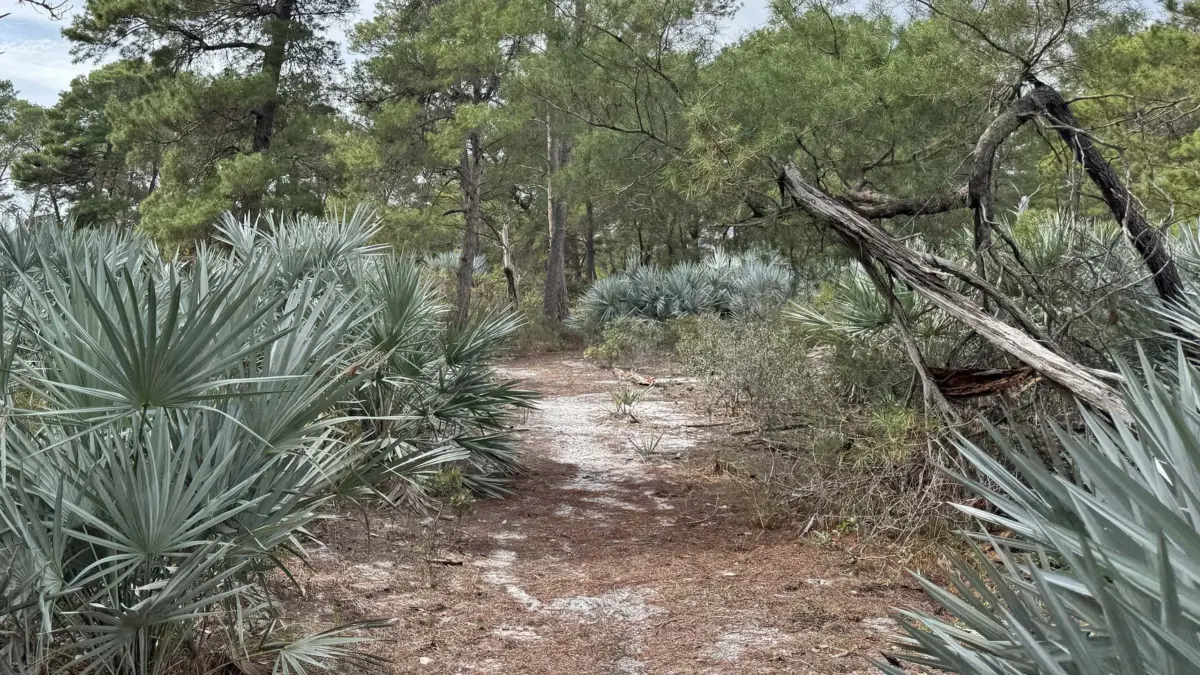

Nestled within the bustling coastal landscape of Palm Beach County, Florida, the Lantana Scrub Natural Area stands as a vital ecological sanctuary. Situated on ancient, elevated sand dunes that once served as a fragile barrier between historical marshlands and the dynamic Lake Worth Lagoon, this 0.5-mile protected corridor represents a precious sliver of wilderness. Managed by Palm Beach County, the property preserves an increasingly rare slice of Florida’s native sand pine scrub ecosystem—a landscape characterized by stark white quartz sands, stunted vegetation, and a distinct assemblage of endemic plant and animal species adapted to extreme, xeric (dry) conditions.
While the surrounding municipalities experience continuous urban development, the Lantana Scrub offers a quiet, immersive window into pre-development Florida. The preserve features a thoughtfully designed loop trail that guides visitors past towering sand pines, silver saw palmettos, and a shifting tapestry of seasonal wildflowers. Although compact in geographic size, this natural area plays an outsized role in urban conservation, providing localized biodiversity preservation, public environmental education, and an accessible outdoor escape for residents and travelers alike.

Detailed Chronology of the Trail Experience
Exploring the Lantana Scrub Natural Area is an immersive exercise in botanical transition. The site is structured for intuitive access, featuring three distinct entry points: two walk-through gates situated strategically at the northeastern and southeastern corners, and a primary trailhead complete with a designated parking area on the southwestern side, which marks the natural beginning and end of the loop.
Trailhead and the Restoration Corridor
Upon parking at the southwestern terminus off Southwinds Drive, visitors approach a secure gap in the perimeter fence. Here, an informative interpretive kiosk introduces hikers to the rare flora and fauna protected within the boundaries of the preserve.

Stepping through the gate, hikers are greeted by a pathway to the left, marked distinctively by wooden posts featuring yellow-circle blazes. The initial segment of the trek heads north down a wide, open corridor flanked by native grasses, cabbage palms, and diminutive scrub oaks draped delicately in love vine (Cassytha filiformis). Land managers and conservationists have prioritized this section for ongoing ecological restoration, actively working to pull back the remnants of past disturbances and return the understory to its natural, historic state.
Deep into the Xeric Canopy
As the path cuts deeper into the interior of the preserve, the landscape shifts dramatically. Slender sand pines rise overhead, casting a dappled light across the stark, bleached-white quartz sand below. This bright, reflective soil is heavily carpeted by sand spikemoss, alongside delicate stands of silkgrass and palafox.

The route soon turns eastward, where an increasing density of trees provides welcome partial shade. The footing changes to a soft, resilient carpet of pine needles. Depending on the time of year, sharp-eyed hikers will notice an array of colorful wildflowers piercing the white sand. Spring brings the striking purple blossoms of largeflower false rosemary (Conradina grandiflora), while the autumn months introduce the brilliant yellow, daisy-like heads of coastal honeycombhead (Balduina angustifolia).
The Heart of the Scrub and Palmetto Flats
At approximately the 0.1-mile mark, the trail transitions away from the wide fire break, narrowing as it diverges into a tighter, more intimate pathway leading directly into dense, undisturbed scrub.

Here, expansive patches of silver saw palmettos (Serenoa repens) provide a stunning visual contrast, their metallic, silvery-green fronds catching the light against a backdrop of myriad verdant shades. Where the canopy thickens to create a heavy shelter, large airplants (Tillandsia species) cling tenaciously to the crooked, weathered branches of the older trees.
The Return Loop
By the 0.3-mile mark, the trail shifts southward, following a quiet firebreak corridor briefly before curving back toward the west through the heart of the sand pine forest. This final leg highlights some of the area’s most characteristic woody shrubs: pungent Florida rosemary bushes dot the sandy floor, growing alongside dense clusters of gopher apple (Licania michauxii) and delicate patches of sage-tinted deer moss.

As the odometer ticks toward the half-mile mark, the narrow trail breaks out of the thick canopy and returns precisely to where it began, concluding at the trailhead kiosk.
Supporting Context & Metrics
Understanding the ecological and structural significance of the Lantana Scrub Natural Area requires an examination of its core metrics, logistical details, and regional environmental context.

Geographic and Logistical Profile
- Location: Lantana, Florida (Palm Beach County)
- Total Trail Length: 0.5-mile loop
- Coordinates (Trailhead): 26.592639, -80.063194
- Physical Address: 1259 Southwinds Dr., Lantana, FL 33462
- Admission Fees: Free to the public
- Operating Hours: Open daily from sunrise to sunset
- Amenities: None (Restrooms are not available on-site)
- Accessibility & Restrictions: Dogs, pets, and bicycles are strictly prohibited to protect the fragile ground-nesting wildlife and native plant communities.
Navigational Directions
For travelers approaching via major thoroughfares, the preserve is easily accessible. From Interstate 95 in Lantana, motorists should head east along West Lantana Boulevard, then make a left turn onto Andrew Redding Road. After traveling approximately 0.4 miles, turn right onto Southwinds Drive and proceed to the dead-end parking lot situated directly adjacent to the trailhead.
The Broader Ecological Neighborhood
Lantana Scrub is part of a critical network of preserved public lands managed by Palm Beach County along the heavily developed Atlantic Coastal Ridge. Within close proximity, visitors can explore several sister properties that highlight different facets of South Florida’s coastal ecosystems:

- Lantana Nature Preserve: Located just a block from the Atlantic Ocean, featuring an accessible boardwalk through a shady coastal tropical hammock and mangrove wetlands.
- Hypoluxo Scrub Natural Area: A 1.7-mile trail system featuring an impressive observation deck overlooking expansive, preserved scrub habitats.
- Rosemary Scrub Natural Area: A compact parcel showcasing sand pine scrub along the ancient coastal ridge.
- High Ridge Scrub Natural Area: Another protected pocket of ancient dunes dominated by sand pines and delicate xeric flora.
Official Statements
Local land managers and environmental advocates emphasize the disproportionate ecological value that small urban preserves like Lantana Scrub provide.
According to representatives from the Palm Beach County Department of Environmental Resources Management (ERM), properties like Lantana Scrub act as irreplaceable outdoor classrooms and genetic reservoirs. "While the physical footprint of the Lantana Scrub Natural Area may be modest at half a mile, its value to our regional biodiversity is immense," notes a conservation briefing from the county. "These pockets of ancient dune scrub are among the most endangered habitats in the state of Florida. By protecting them from the pressures of high-density coastal development, we safeguard endemic species that exist nowhere else on Earth and provide the public with a direct, immersive connection to our state’s natural heritage."

Furthermore, local trail advocates and outdoor educators stress the importance of low-impact recreation. Chris Stevens, an outdoor writer, Trailmaster, and advocate for Florida’s public lands, notes that urban preserves serve a vital gateway function. "When you walk onto a property like Lantana Scrub, you are stepping back in time thousands of years," Stevens explains. "The stark white sand, the crunch of pine needles, the smell of Florida rosemary—it grounds you. These micro-hikes prove that you don’t need to travel deep into the wilderness to experience the profound, quiet beauty of the Sunshine State’s native ecosystems."
Future Outlook
Looking ahead, the long-term viability of the Lantana Scrub Natural Area hinges on active, science-based stewardship, aggressive invasive species management, and community engagement. As southeastern Florida continues to experience rapid population growth and urban densification, the pressures on isolated natural areas multiply. Stormwater runoff, the introduction of non-native plant species via wind and wildlife, and the fragmentation of regional wildlife corridors remain constant management challenges.

To counter these pressures, Palm Beach County’s environmental management strategies for Lantana Scrub focus heavily on ecological restoration. Ongoing initiatives include the targeted removal of aggressive exotic vegetation—such as invasive vines and non-native Brazilian pepper trees—alongside the re-establishment of native understory species. Additionally, periodic controlled burns or mechanical thinning techniques are carefully evaluated and deployed to mimic the natural fire regimes that sand pine scrub ecosystems require to regenerate.
Ultimately, the future of the Lantana Scrub Natural Area relies on a delicate balance between public access and rigorous habitat protection. By strictly enforcing rules against pets and bicycles, maintaining clear educational signage, and fostering a deep sense of stewardship among local visitors, Palm Beach County aims to preserve this fragile sliver of ancient Florida for generations of hikers, naturalists, and wildlife enthusiasts to come.

0 Comments