For centuries, humanity has intuitively understood that music possesses a profound capacity to soothe the soul, elevate the spirit, and mend the broken. Yet, while the philosophical and emotional appreciation of melody and rhythm is as old as civilization itself, the clinical formalization of music as a frontline healthcare intervention remains a dynamic, rapidly evolving medical frontier. At the vanguard of this movement is the Florida State University (FSU) College of Music, an institution that has long championed the intersection of art and science.
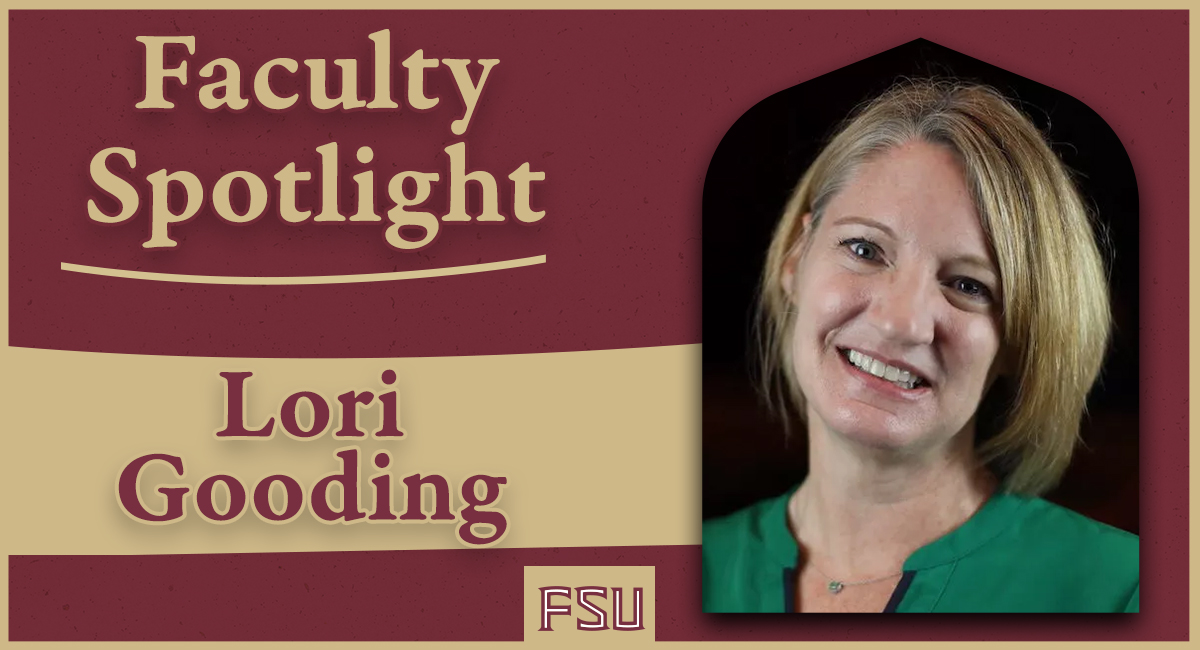
Through the pioneering work of faculty leaders such as Professor of Music Therapy Lori Gooding, FSU is actively redefining what modern healthcare looks like. By replacing casual assumptions—such as the idea that simply pressing play on a personal smartphone playlist constitutes therapy—with rigorous, evidence-based clinical interventions, FSU is shaping an emerging medical discipline. Music therapy is no longer merely an alternative or complementary afterthought; it is an accredited, board-certified, and highly specialized healthcare profession. It addresses a staggering array of human ailments, from severe neonatal distress and physical rehabilitation to profound neurological hurdles and adolescent mental health crises.
As the medical community increasingly recognizes the necessity of holistic, patient-centered care, FSU’s pioneering music therapy program stands as a beacon of academic excellence and clinical impact. Boasting a remarkable 100% placement rate for its graduates across elite medical centers, special education facilities, hospices, and older adult care networks, the university is proving that the marriage of auditory art and clinical science is not just therapeutic—it is transformative. This report explores the mechanics, the misconceptions, the clinical applications, and the visionary leadership driving FSU’s music therapy apparatus into the future.
Detailed Chronology: The Evolution of Music Therapy at FSU
To understand the current prestige of the Florida State University College of Music, one must examine its historical trajectory. FSU did not merely adopt music therapy as a modern academic trend; it helped author the foundational playbook of the discipline.
The Formative Decades: Laying Academic Roots
Long before music therapy was widely recognized by major insurance providers or integrated into mainstream hospital systems, visionary educators at Florida State recognized that the structural elements of music—tempo, pitch, rhythm, and harmony—could be systematically harnessed to elicit measurable physiological and psychological responses in patients. During the mid-20th century, as modern psychology and physical medicine began to formalize specialized therapeutic sub-disciplines, FSU established one of the earliest and most comprehensive collegiate music therapy programs in the United States.
From its inception, the program was designed to reject superficial interpretations of "musical healing." Instead, FSU insisted that students receive rigorous training in both the conservatory arts and the biological and behavioral sciences. This dual-track educational philosophy ensured that graduates were not just talented musicians, but competent clinicians capable of reading vital signs, understanding neurological pathways, and collaborating seamlessly with physicians, nurses, and psychiatrists.
The Rise of Board Certification and Clinical Standards
As the decades progressed, the professional landscape of music therapy matured dramatically. The establishment of national board certification standards and state-level licensure transformed the practice from an experimental art form into a standardized healthcare profession. Throughout these systemic shifts, FSU remained at the regulatory and educational forefront. Faculty members actively contributed to the research literature that established music therapy’s clinical efficacy, ensuring that the curriculum at FSU evolved in real-time alongside medical advancements.
Modern Integration: The Birth of Advanced Partnerships
In recent years, the chronological arc of FSU’s program has bent sharply toward institutional collaboration and advanced clinical specialization. A landmark development in this timeline is the strategic partnership forged with Tallahassee Memorial HealthCare (TMH). Together, FSU and TMH established specialized training pathways, most notably the Neonatal Intensive Care Unit Music Therapy (NICU-MT) certificate program housed within the College of Music.
This modern phase bridges the historical gap between academic research and acute hospital care. By embedding students directly into high-stakes clinical environments like neonatal units and comprehensive mental health facilities, FSU has transitioned from being an educational institution that teaches about therapy into an active healthcare engine that co-creates patient outcomes in real time.
Supporting Context & Metrics: Unpacking the Science of Sound
To fully appreciate the scope of FSU’s program, one must examine the clinical data, institutional metrics, and physiological mechanisms that validate music therapy as a hard science.
Dismantling the Playlist Fallacy
A primary hurdle facing the modern music therapy profession is widespread public misconception. Consumers frequently conflate the passive enjoyment of music with active clinical intervention. Listening to a favorite album on a commute home can certainly elevate mood or alleviate daily stress, but it lacks the critical diagnostic, interactive, and adaptive components that define true healthcare.
"A lot of people don’t recognize that music therapy is a profession you train for, that you have academic and clinical training, that there’s a board certification exam you have to pass, and there’s licensure in many states," explains Professor Lori Gooding.
True music therapy is defined by active assessment and clinical relational dynamics. As Gooding elaborates: "The difference between that and what we do in music therapy is that we are going in and assessing an individualized need, and we are using music within the context of a therapeutic relationship to help someone restore, maintain, or improve their functioning."
Measurable Physiological Impacts
The human body responds to musical stimuli in remarkably predictable, measurable ways. According to data compiled by organizations such as the National Alliance on Mental Illness (NAMI) and echoed in FSU’s clinical research, structured music therapy yields concrete physiological benefits:
Cardiovascular Regulation: Controlled rhythmic auditory stimulation can help normalize heart rates and lower blood pressure.
Neurological and Cognitive Support: Patients recovering from strokes or managing neurodegenerative conditions like Alzheimer’s disease demonstrate enhanced memory recall and speech recovery through melodic intonation therapy.
Tension and Stress Reduction: Systematic deep breathing exercises paired with steady musical pulses help physically de-escalate the autonomic nervous system of patients experiencing acute anxiety.
The 100% Placement Metric and Educational Rigor
The ultimate benchmark of an academic program’s success is its ability to prepare students for the demands of the real world. The FSU College of Music boasts an enviable 100% job placement rate for its music therapy graduates. These professionals step directly into diverse, high-demand sectors, including:
Acute care hospitals and pediatric centers
Comprehensive mental health and psychiatric facilities
Specialized special education institutions
Hospice care and palliative networks
Older adult assisted living and memory care facilities
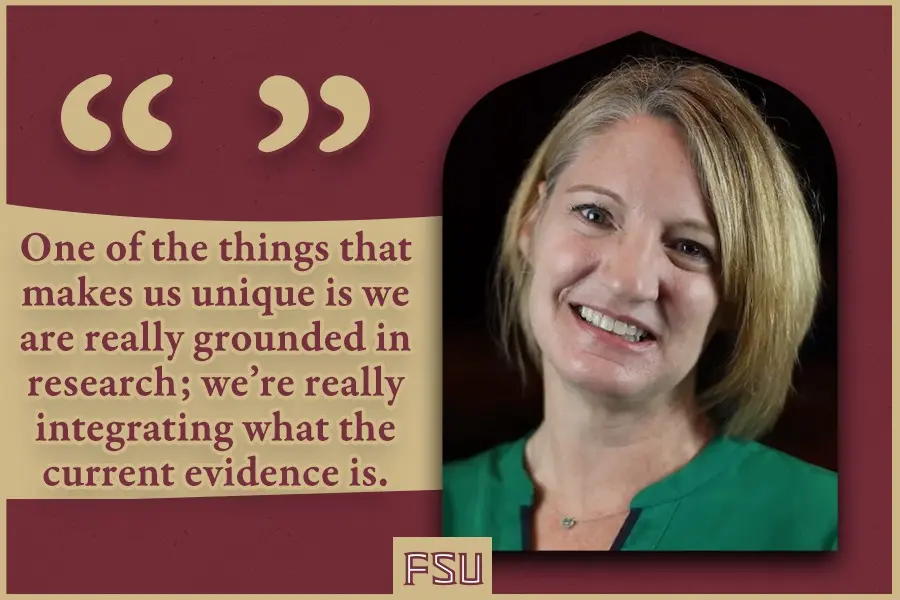
Gooding attributes this flawless employment track record to an educational model that forces students to straddle the line between consumers of existing science and creators of new knowledge. "One of the things that makes us unique is we are really grounded in research; we’re really integrating what the current evidence is," Gooding notes. "They’re also learning how to generate new evidence. It’s going to not just keep practice current, but actually push practice forward. It’s that combination, I think, that sets us apart."
Official Statements & Clinical Insights from Professor Lori Gooding
To gain a deeper understanding of how these theoretical frameworks translate to the bedside, it is vital to examine the direct insights and case methodologies articulated by Professor Lori Gooding.
Navigating Acute Care: The NICU Paradigm
In the high-intensity environment of a Neonatal Intensive Care Unit, every variable matters. Premature infants are exceptionally vulnerable, and their physiological stability can fluctuate rapidly. Through the collaborative FSU-TMH NICU-MT certificate program, trained music therapists monitor fragile infants with surgical precision.
"We’re watching the monitors for their heart rate, their respiration rate, the oxygen saturation rate, and so on," Gooding explains, detailing the delicate real-time adjustments required in neonatal care. "And based on what’s happening, knowing where those levels need to be, and watching what’s happening while we’re doing the music intervention, we actually adjust what we’re doing."
If an infant’s vitals begin to spike due to environmental stress, the therapist modifies the tempo, timbre, and volume of the auditory input—often utilizing specialized, womb-like humming or gentle string arrangements—to coax the infant’s autonomic nervous system back toward a stable baseline.
Managing Anxiety and Physiological Entrainment
Beyond neonatology, Gooding’s clinical philosophy heavily emphasizes the concept of physiological entrainment—the biological tendency of human internal rhythms to synchronize with external pulse frequencies.
When treating patients disabled by severe anxiety or panic disorders, traditional relaxation techniques like isolated diaphragmatic breathing can sometimes prove frustratingly difficult for patients to master on command. Gooding’s methodology integrates these established psychological concepts with musical frameworks:
"A lot of people do relaxation exercises like deep breathing, that kind of thing. We take those similar concepts and pair it with music, so that if someone is feeling anxious, or if they’re noticing that their heart rate is elevating, they can use the steady pulse of a piece of music or a music exercise or experience to help their body kind of get in line with that steady pulse, which is going to help literally physiologically slow them down."
Breaking Through Adolescent Barriers with Lyric Analysis
Mental health treatment for adolescents presents unique clinical challenges. Teenagers frequently exhibit resistance to traditional, purely conversational psychotherapy. Direct one-on-one questioning about emotional states can induce defensiveness or withdrawal. Here, music therapy serves as an indispensable bridge.
Gooding highlights the clinical power of structured lyric analysis in youth psychology:
"Where it might be a challenge for someone to engage in just one-on-one talking directly about themselves, we can find a song that has lyrics that are relevant to what that person is going through, and that creates a space that allows people to say, ‘Well, I noticed this in the song, you know what? I do that sometimes too.’"
By externalizing emotional conflict onto a neutral piece of art, the adolescent patient is granted psychological safety, enabling productive clinical dialogue to unfold naturally.
The Imperative of Radical Personalization
A foundational tenet of Gooding’s teaching and clinical practice is that music therapy is never a one-size-fits-all prescription. What heals one individual may distress another.
"One person could love heavy metal music and find that relaxing because it’s their favorite kind of music, whereas for another person, that’s going to increase their anxiety. We really lean into that patient-preferred piece to try to connect with them."
By honoring the unique musical identity, cultural background, and personal preferences of each patient, FSU-trained therapists establish rapid therapeutic rapport, maximizing clinical efficacy across diverse demographic populations.
Future Outlook: The Intersection of Music and Modern Medicine
As healthcare systems across the globe increasingly pivot toward holistic, value-based, and interdisciplinary care models, the future of music therapy has never looked brighter. The establishment of initiatives like FSU Health—the university’s expansive integrated health system uniting hospitals, clinical practices, academic researchers, and technological innovators—places Florida State in an ideal position to scale its impact.
Expanding Research and Institutional Collaboration
Looking ahead, the roadmap for FSU’s music therapy program involves deeper integration with advanced neurological imaging, chronic pain management protocols, and geriatric care networks. As neuroscientists continue to map the complex neural networks activated during musical perception and production, clinical music therapists will likely find themselves utilizing neurofeedback loops and biomarker tracking to fine-tune interventions with unprecedented precision.
Furthermore, the expansion of telehealth and digital health technologies opens new horizons for music therapy delivery. While in-person bedside care will always remain the gold standard for acute interventions, remote music therapy platforms hold immense promise for managing chronic mental health conditions, providing ongoing rehabilitation for stroke survivors in rural areas, and supporting aging populations who wish to maintain cognitive vitality from home.
Training the Next Generation of Pioneers
Ultimately, the legacy of FSU’s music therapy program rests in the hands of the students walking its halls today. Under the guidance of luminaries like Professor Lori Gooding, these aspiring clinicians are not merely learning how to apply existing techniques; they are being equipped to challenge clinical boundaries, author peer-reviewed research studies, and advocate for policy changes that ensure insurance reimbursement and universal healthcare access for music therapy services.
By anchoring artistic expression in empirical science, Florida State University’s College of Music is ensuring that the timeless healing power of melody and rhythm continues to evolve. As this emerging healthcare practice matures, FSU remains firmly at the helm, proving that science and art are not opposing forces, but rather the dual wings of human healing.



0 Comments