

Executive Overview
From the sophisticated acoustics of university lecture halls to the vibrant energy of middle school band rooms and the foundational playfulness of early childhood music programs, the transformative power of arts education is echoing profoundly across South Florida. A newly released short documentary by the Florida State University (FSU) College of Music shines a brilliant spotlight on this phenomenon, tracking the journeys of three extraordinary alumni who have taken the rigorous pedagogical foundations they built in Tallahassee and translated them into deep, sustained community service in Miami.
This cohort of musical leaders—featuring an internationally acclaimed jazz professor, a celebrated public school orchestra director named a 2026 Teacher of the Year, and an innovative mobile music education entrepreneur—exemplifies a modern ethos in arts pedagogy. No longer viewed merely as an isolated performance discipline, music is being leveraged by these FSU graduates as a dynamic engine for social cohesion, civic engagement, and equity.
Todd Queen, dean of the FSU College of Music, underscores the philosophical driving force behind these alumni successes. “Our alumni in Miami are outstanding examples of helping others to make meaningful music in their community,” Queen remarks. “They’re using music to educate, connect, and strengthen communities across Miami. That spirit of service and engagement is central to what we teach at Florida State and to the future of our college.”
This article explores the multi-tiered impact of these three trailblazers, examining how their institutional roots at FSU informed their careers, the methodologies they employ to dismantle cultural and socioeconomic barriers in Miami, and the broader institutional shifts occurring at Florida State—such as the launch of a pioneering bachelor’s degree in community music and a dedicated Center for Music Leadership and Community Engagement—that signal a profound evolution in how modern musicians are trained to serve society.
Detailed Chronology: From Tallahassee Training Grounds to Miami’s Cultural Frontlines
The trajectory of an artist-educator is rarely linear, yet for Etienne Charles, Vivian Ventura, and Portia Dunkley, the geographical bridge between Florida State University’s campus in Tallahassee and the bustling, multicultural metropolis of Miami represents a shared lineage of rigorous academic preparation and a profound dedication to public service.
The Foundational Years at FSU
Long before they were transforming the cultural fabric of South Florida, each of these alumni walked the halls of the FSU College of Music, an institution renowned for balancing uncompromising artistic standards with pedagogical innovation. Whether pursuing undergraduate degrees in performance and music education or advancing their craft through rigorous master’s programs, these educators were immersed in an environment that prioritized not just how to play an instrument or conduct an ensemble, but why music matters in the human experience.
Southward Expansion and Professional Impact
Upon completing their studies, each alumnus ventured into different sectors of Miami’s rich educational and cultural ecosystem:
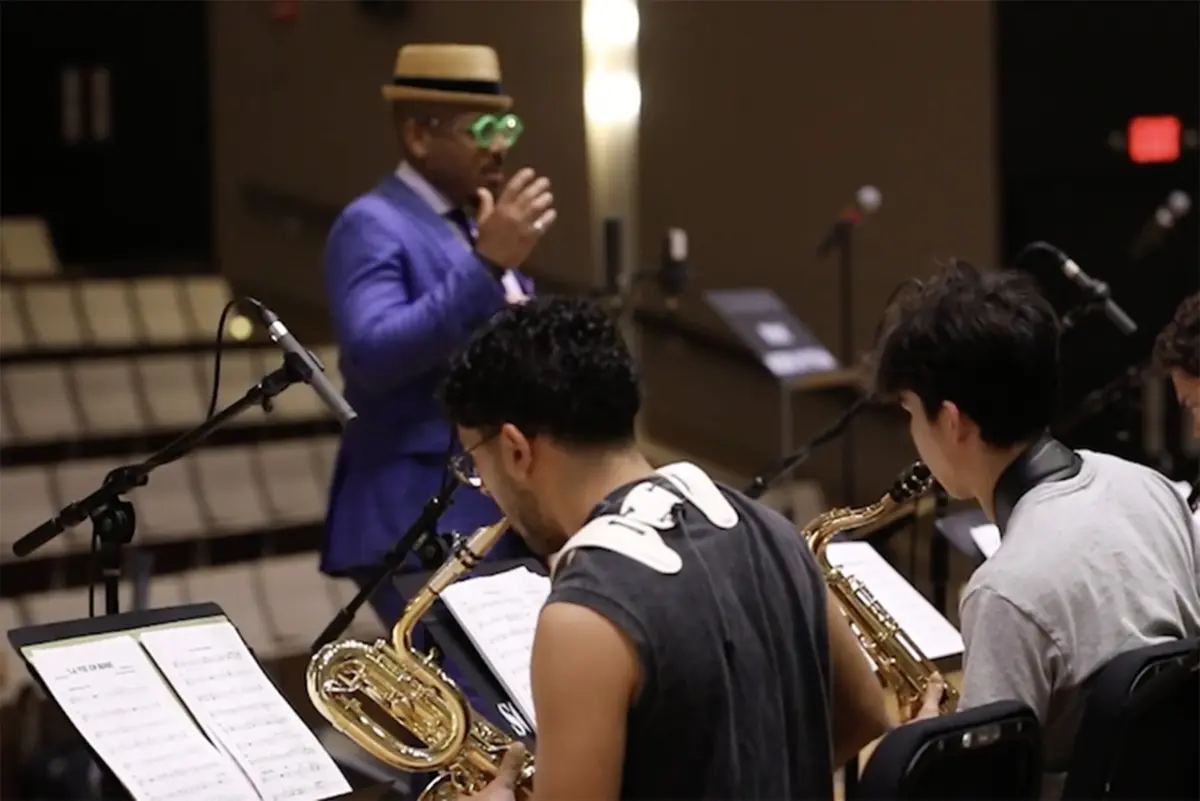
- Etienne Charles (Class of 2006): Stepped into higher education, ultimately taking his talents to the Frost School of Music at the University of Miami as a professor of studio music and jazz, where he bridges Caribbean heritage with modern American jazz pedagogy.
- Vivian Ventura (Undergraduate and Graduate Alumna): Dedicated herself to the K-12 public school system, cultivating a culture of excellence as an orchestra director at Southwood Middle School within Miami-Dade County Public Schools—a tenure highlighted by her prestigious recognition as the district’s 2026 Teacher of the Year.
- Portia Dunkley (College of Music Alumna): Identified a critical gap in early childhood education accessibility and founded Teeny Violini, a mobile music education program designed to bring high-quality instrumental instruction directly to early learners and elementary students through the fifth grade.
These distinct professional journeys showcase a comprehensive ecosystem of musical mentorship. From early childhood development to advanced collegiate studies, FSU alumni are providing an unbroken continuum of musical guidance for South Florida youth.
Supporting Context & Metrics: The Socioeconomic and Cultural Fabric of Miami
To fully appreciate the weight of the work being done by these FSU alumni, one must examine the unique demographic and cultural landscape of Miami-Dade County. As one of the most culturally diverse and linguistically dynamic regions in the United States, Miami presents both extraordinary opportunities and complex challenges for educators.
Bridging Cultural Divides Through Rhythm and Melody
Miami is a mosaic of Caribbean, Latin American, North American, and European influences. In environments like Etienne Charles’s university studios and Vivian Ventura’s middle school orchestra rooms, music serves as a universal vernacular that transcends linguistic and socioeconomic boundaries.
Research consistently demonstrates that arts education acts as a powerful catalyst for cognitive development, emotional regulation, and social equity. In a public school district as vast and diverse as Miami-Dade—which serves hundreds of thousands of students from myriad socioeconomic backgrounds—programs that foster collaboration, active listening, and collective problem-solving are vital.
Ventura emphasizes the holistic nature of these developmental benefits: “There’s so many life skills they learn in music. They learn how to get along. They learn to communicate. They learn to listen. They learn to think about what they are doing. When you apply those skills, you can do anything.”
Addressing the Equity Gap in Early Childhood Education
Portia Dunkley’s Teeny Violini addresses a pervasive challenge in arts administration: the disparity in access to early instrumental training. Historical inequalities in public school funding and community resources often mean that children from under-resourced neighborhoods do not encounter classical or orchestral instruments until much later in life—if at all.
By mobilizing music education and bringing it directly to early learners, Dunkley’s initiative democratizes access, ensuring that a child’s zip code or household income does not dictate their musical future. This grassroots approach aligns with national movements to make arts education universally accessible, planting the seeds for lifelong appreciation and cognitive enhancement during the most critical windows of human neurological development.
Official Statements and Perspectives
The synergy between Florida State University’s pedagogical philosophy and its alumni’s real-world impact is best understood through the voices of those leading the charge.
Dean Todd Queen on Institutional Mission
FSU College of Music Dean Todd Queen has been a vocal proponent of redefining what it means to be a professional musician in the 21st century. In the college’s new documentary, Queen emphasizes that technical proficiency alone is no longer sufficient.
"Our alumni in Miami are outstanding examples of helping others to make meaningful music in their community," Queen states. "They’re using music to educate, connect, and strengthen communities across Miami. That spirit of service and engagement is central to what we teach at Florida State and to the future of our college."
Etienne Charles on Music as a Social Bridge
Etienne Charles, whose global career as a jazz trumpeter, composer, and educator has taken him around the world, remains deeply grounded in the interpersonal power of music—a philosophy he traces directly back to his formative years in Tallahassee.
"I am firmly of the belief that you should take your music to the people," Charles reflects. "Music builds bridges literally. That’s what music does. That’s what we do every time we play."
He elaborates on the unique unifying force of musical performance in culturally complex urban centers: "Music brings people together who would not have been coming together for any other reason. And I see that as a power, and it’s a power that I learned in Tallahassee."
Vivian Ventura on Transformative Graduate Studies
Recognized as the 2026 Teacher of the Year for Miami-Dade County Public Schools, Vivian Ventura points directly to her advanced training at FSU as the crucible that transformed her professional self-image and pedagogical efficacy.
"FSU prepared me for Teacher of the Year through my master’s degree studies," Ventura notes. "They enhanced my overall understanding of how to improve the way I think of myself as a teacher."
Her perspective highlights the critical importance of continuing education for educators, proving that institutional support and rigorous academic inquiry directly translate into prestigious public recognition and superior student outcomes.
Portia Dunkley on Legacy and Accessibility
For Portia Dunkley, CEO and founder of Teeny Violini, her entrepreneurial and pedagogical journey is rooted in a profound sense of community responsibility and a desire to pay her experiences forward.
"Teeny Violini was inspired really by my love for reaching back and wanting to create opportunities for students in my community that didn’t really have access to high-quality music education," Dunkley explains.
Reflecting on her alma mater, she adds: "My experience at Florida State not only shaped, you know, the person that I am in my career, but also gave me an educational foundation that I’m really, really proud of."
Future Outlook: The Evolution of Community Music at FSU
The remarkable success stories of Charles, Ventura, and Dunkley are not isolated anomalies; rather, they represent the vanguard of a broader institutional transformation at the Florida State University College of Music.
Recognizing that modern musicians must be cultural leaders, entrepreneurs, and civic catalysts, the College of Music has aggressively expanded its programmatic offerings. Most notably, FSU launched a dedicated bachelor’s degree in community music, paired with the establishment of the Center for Music Leadership and Community Engagement. These initiatives are specifically designed to institutionalize the ethos that these alumni embody: the fusion of high-level musical training with proactive, grassroots community engagement.
Portia Dunkley voiced immense enthusiasm for this institutional pivot, recognizing its potential to influence the broader landscape of American higher education:
"I am so excited that community music is the direction that the College of Music is going in. I love the way that it has the ability to be flexible and to grow and expand into something that could really set the bar for so many other schools and programs across the nation."
A Blueprint for National Arts Education
As universities across the United States grapple with how to prepare graduates for a rapidly shifting professional landscape—one where traditional orchestral and academic positions are increasingly competitive—the model pioneered by FSU and executed by alumni in hubs like Miami offers a compelling blueprint.
By dissolving the imaginary boundary between the ivory tower of higher education and the public square, FSU alumni prove that musicians can be primary architects of social health, educational equity, and cultural vitality. Whether teaching a toddler how to hold a miniature violin, guiding a middle school orchestra toward district-wide acclaim, or exploring the deep historical intersections of jazz and Caribbean rhythms in a university studio, these educators carry forward a simple, enduring truth—one championed by Etienne Charles and lived daily by hundreds of FSU alumni across the globe:
“Music brings people together.”

0 Comments