For decades, modern society has sold a singular, comforting narrative about retirement: it is the ultimate finish line, a hard-earned reward at the end of a grueling marathon of corporate ladders, morning commutes, and performance reviews. We are conditioned to believe that once the alarm clock is finally turned off for good, we will step into an endless horizon of unbridled leisure, relaxation, and effortless bliss.
Yet, for millions of retirees, reality tells a sharply contrasting story.
Step into the daily routine of the average retiree, and you will rarely find them lounging passively on a sun-drenched beach. Instead, you will find calendars packed tighter than a corporate executive’s Monday morning schedule. Between keeping up with household chores, managing endless errands, tending to the yard, running club meetings, attending social get-togethers, and consuming hours of digital media, the modern retiree is often as busy as ever.
As time marches on, however, a quiet, insidious discontent begins to creep in. After the novelty of the post-work honeymoon phase wears off—typically within the first year or two—many retirees experience a subtle, nagging realization. Despite having schedules crammed from dawn until dusk, they look at their lives and wonder: Is this all there is?
This phenomenon exposes a critical blind spot in modern retirement planning. While financial advisors, pension funds, and retirement seminars focus heavily on asset accumulation, portfolio management, and healthcare costs, they routinely ignore the psychological and existential crisis of post-work life. The issue is not a lack of activity; it is a profound deficit of meaning. retirees are discovering that being "busy" is a far cry from being "fulfilled."
Navigating this transition requires a fundamental psychological shift. Moving away from decades of conditioning that equates human worth with productivity, retirees must learn to curate their lives not around what they should do, but around what makes their hearts sing. This comprehensive investigation explores the anatomy of post-work busyness, the psychological science of fulfillment, and the actionable strategies required to transform a busy retirement into a truly rewarding chapter of life.
Detailed Chronology: The Evolution of the Modern Retirement Crisis
To understand how contemporary retirees find themselves trapped on a treadmill of trivial busyness, we must examine the chronological progression of the retirement lifecycle.
Phase 1: The Honeymoon Phase (Months 1–6)
The initial departure from the workforce is almost universally characterized by euphoria. Freed from the tyranny of deadlines, commute traffic, and office politics, the newly retired individual experiences an immediate rush of relief. Mornings belong to leisurely cups of coffee; afternoons are open-ended canvases. During this phase, sleep debt is paid off, long-delayed home improvement projects are initiated, and initial travel plans are executed. The absence of work is, in itself, deeply satisfying.
Phase 2: The Decompression and Proliferation of Tasks (Months 6–18)
As the initial high subsides, nature abhors a vacuum. Without the structured framework of a 40-hour work week, everyday life naturally begins to expand to fill the available hours. Tasks that were once compressed into frantic weekends—grocery shopping, deep cleaning, car maintenance, administrative appointments—spread out across the week. Furthermore, friends, family members, and community organizations quickly notice the retiree’s newfound availability. Invitations to committees, volunteer boards, and social lunches multiply. Before the retiree realizes what has happened, their calendar is once again operating at full capacity.
Phase 3: The Busyness Trap (Years 2 and Beyond)
By the second or third year, the retiree has established a new routine. On paper, life looks active and engaged. They attend weekly club meetings, play pickleball on Tuesdays, babysit grandchildren on Thursdays, and run errands every morning.
However, a psychological friction point emerges. The retiree begins to notice that while their days are full, they lack deep resonance. The errands feel obligatory; the social gatherings feel repetitive; the hours spent consuming television or browsing the internet feel hollow. They have successfully traded the rigid structure of a career for a self-imposed, equally rigid structure of trivial busyness. They are busier than ever, yet profoundly unfulfilled.
Supporting Context & Metrics: The Anatomy of Post-Work Discontent
The psychological transition from active employment to retirement is one of the most volatile life stages an individual can experience. According to sociological data and psychological research, the loss of a professional identity triggers a cascade of identity and existential challenges.
The Productivity Trap
Human beings are deeply conditioned creatures. For roughly forty years, society measures an individual’s value through external markers of productivity: salary, job titles, completed projects, and annual performance evaluations. When a person retires, this external validation machine is abruptly switched off.
Consequently, many retirees suffer from a conditioned reflex that demands constant output. They feel guilty if they sit idle, leading them to weaponize their leisure time. They turn relaxation into another project—treating hobbies with the same intense pressure and rigid metrics they once applied to corporate deliverables.
Pleasure vs. Fulfillment: A Critical Distinction
A primary source of post-work disillusionment stems from a fundamental misunderstanding of human psychology. Cultural messaging suggests that a "good" retirement consists of continuous pleasure: sleeping in, traveling, dining out, and avoiding all forms of labor.
However, psychological science demonstrates that human beings are not wired to thrive on pleasure alone. Pleasure is sensory, fleeting, and external; fulfillment is systemic, enduring, and internal.
Pleasure is fun, relaxing, and enjoyable (e.g., watching a movie, sunbathing, eating a fine meal).
Fulfillment is rewarding, purposeful, and deeply resonant (e.g., mastering a complex skill, mentoring a young person, creating art, contributing to a community cause).
While a healthy retirement requires a balanced diet of both, pleasure without purpose inevitably leads to stagnation. The most enduringly satisfying activities are those that successfully bridge the gap—activities that are simultaneously fun and deeply meaningful.
Official Perspectives and Expert Insights
Experts in gerontology, psychology, and life-transition coaching emphasize that designing a successful retirement requires the same intentionality as building a career.
Renowned author and life-transition expert Ernie Zelinski, widely recognized for his work on alternative lifestyles and retirement philosophy, notes:
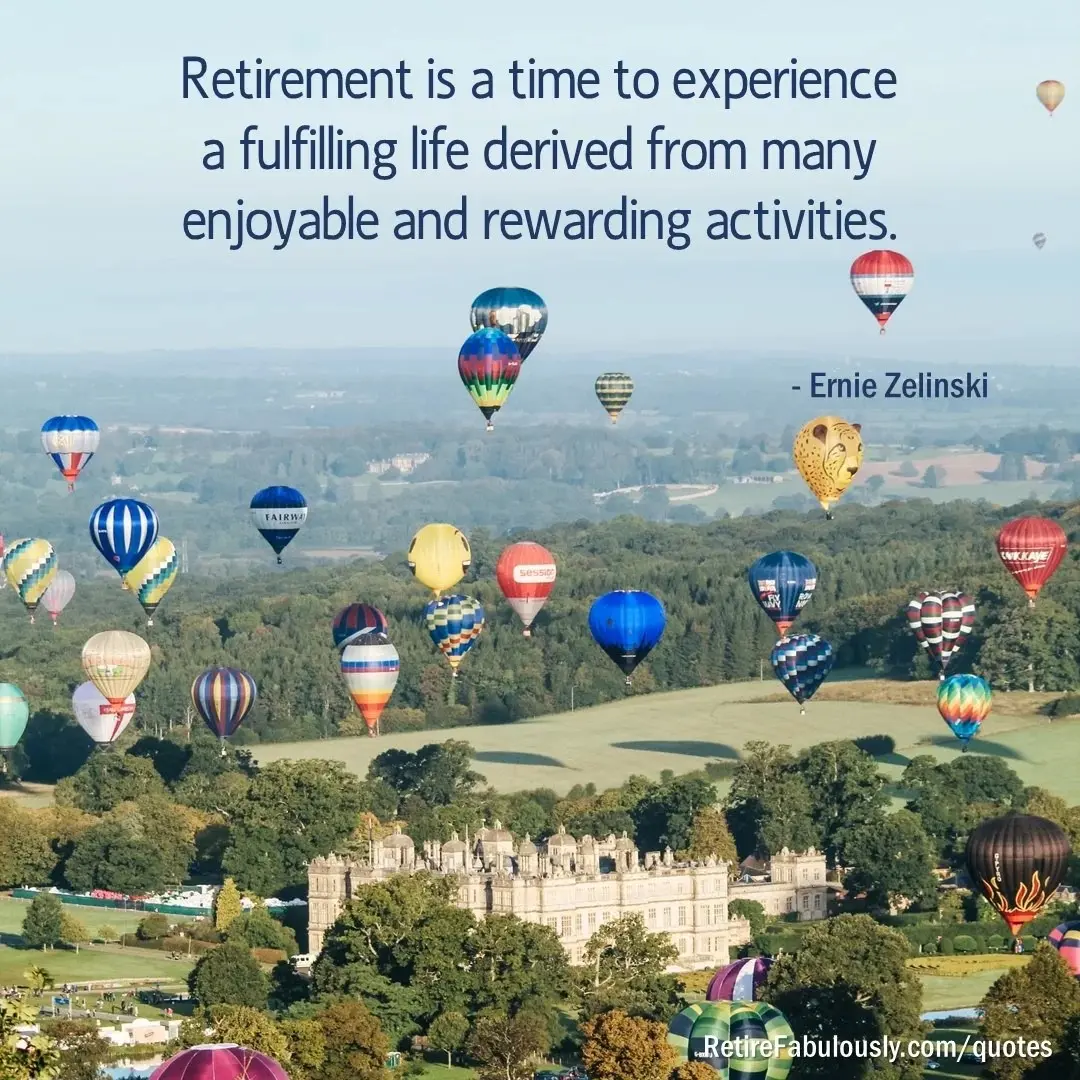
"Retirement is a time to experience a fulfilling life derived from many enjoyable and rewarding activities."
Zelinski and other retirement strategists argue that the greatest gift retirement offers is absolute autonomy—the freedom to live life strictly on one’s own terms. However, with this unprecedented freedom comes a daunting responsibility: the task of self-curation.
Unlike working life, where paths are largely dictated by economic necessity and employer demands, retirement demands total self-direction. As Dave Hughes, author of Design Your Dream Retirement, observes:
"After you are retired, you don’t have work assignments to complete, deadlines to meet, quotas to satisfy, or accomplishments to collect for your annual review. Your ‘job’ now is to be happy living the life you want to live. That may require a significant mindset shift from how you have lived for most of her life."
This shift requires dismantling old mental models. Retirees must unlearn the compulsion to constantly justify their existence through relentless activity. They must recognize that rest, contemplation, and self-care are legitimate, valuable pursuits in their own right.
Future Outlook: Crafting Your Personal Fulfillment Blueprint
If you recognize the symptoms of the "busy retirement trap" in your own life—if your calendar is full, yet your spirit feels undernourished—now is the moment to pause, step back, and conduct a rigorous life audit.
Achieving a fulfilling post-work life does not happen by accident; it requires deliberate design. Transition experts recommend a structured, introspective exercise to recalibrate your daily existence.
The Three-List Audit
Find a quiet space free from digital distractions, television, and interruptions. Take a blank sheet of paper and divide it into three distinct categories:
Start Doing: Brainstorm activities that genuinely spark joy, invoke curiosity, or bring a deep sense of purpose. Reflect on past chapters of your life—childhood passions, creative impulses, or neglected interests—that fell by the wayside during your career years. What did you always wish you had time to explore?
Stop Doing: Critically evaluate your current weekly schedule. Identify obligations, chores, social engagements, and habits that drain your energy without adding authentic value to your life. Give yourself permission to say "no" to commitments driven purely by guilt, social pressure, or the ingrained habit of keeping busy.
Keep Doing: Acknowledge the routines, relationships, and responsibilities that currently work well, bring you genuine happiness, and anchor your daily life in a positive way.
Expanding the Spectrum of Fulfillment
Fulfillment is deeply personal and manifests differently for every individual. For some, it is expressed through creative outlets such as painting, writing, or playing a musical instrument. For others, it is found in continuous learning—auditing university courses, mastering a new language, or diving deep into history.
Community connection is another powerful catalyst. Volunteering for local schools, animal shelters, museums, or spiritual organizations allows retirees to leverage decades of accumulated wisdom in service of others, without the financial pressures of a paycheck.
Finally, reconnecting with the natural world through gardening, hiking, or quiet contemplation offers a grounding sense of perspective that busy urban environments often strip away.
Conclusion: Reclaiming Your Time
Retirement is not merely an extended vacation; it is a profound identity transition. By shifting the focus away from superficial busyness and toward deliberate, values-aligned fulfillment, retirees can unlock the true potential of their post-work years.
The greatest asset you possess today is time. The question facing every retiree is no longer How much can I get done?, but rather: What makes my heart sing, and how will I choose to curate my life?



0 Comments