

ORLANDO, Fla. — For decades, the Sunshine State has reigned supreme as the undisputed mecca for Americans seeking to shed the burdens of the workforce and enjoy their golden years under a dependable canopy of palm trees and year-round sunshine. Yet, as the demographic wave of baby boomers continues to crest, what retirees demand from their post-career paradise has undergone a fundamental transformation. No longer is a simple combination of warm weather and a lack of state income tax sufficient to win over today’s discerning older adult. Modern retirees are looking for sophisticated healthcare ecosystems, cutting-edge urban planning, rich cultural tapestries, and deeply personalized lifestyle programming.
Nowhere is this evolution more evident than in a recent, highly anticipated ranking by Travel + Leisure, which named the 10 Best Places to Retire in the South. Shaking out across the region from historic coastal hamlets to vibrant mountain enclaves, the publication’s list placed an unmistakable, powerful spotlight on Florida. By sweeping three coveted spots on the roster—Sarasota, Lake Nona, and The Villages—the state has proven that it is not merely coasting on its historical reputation. Instead, it is actively redefining the very architecture of retirement living.
Together, these three distinct Florida communities illustrate the breathtaking range of lifestyles available within a single state boundary. They serve as a case study in modern demographic evolution: Sarasota offers the timeless allure of culture-driven coastal living; Lake Nona pioneers a futuristic, wellness-centric master-planned environment; and The Villages remains the undisputed heavyweight champion of purpose-built, highly active community design.
Executive Overview: The Changing Face of American Retirement
To understand the weight of Travel + Leisure’s latest rankings, one must first examine the shifting psychographics of the contemporary retiree. The traditional image of retirement—frequently associated with quiet rocking chairs, slow-paced afternoons, and homogeneous retirement villages—has been thoroughly upended by a healthier, wealthier, and far more active generation of older adults.
Today’s retirees are living longer, healthier lives and demanding environments that intellectually stimulate them, safeguard their physical wellness, and offer robust social connectivity. They view retirement not as a period of withdrawal from society, but as a vibrant, second chapter filled with new hobbies, entrepreneurial ventures, and continuous learning.
Florida’s dominant showing in the regional roundup is no accident. It is the result of decades of strategic municipal planning, massive private-sector investment in healthcare infrastructure, and a real estate market that has continuously innovated to meet elevated consumer expectations. While the list spans historic Southern cities, Appalachian mountain towns, and coastal retreats across neighboring states, the inclusion of Sarasota, Lake Nona, and The Villages underscores Florida’s unique capacity to cater to vastly different retirement philosophies.
Whether a retiree is chasing the symphony and the art gallery, the biometric-tracked wellness hub, or the social whirlwind of 100-plus pickleball courts and nightly town-square dances, Florida provides a bespoke roadmap for the years ahead.
Detailed Chronology: From Humble Beginnings to National Preeminence
The story of how Florida evolved into this multi-faceted retirement powerhouse did not happen overnight. It is a rich, decades-long chronicle of vision, economic adaptation, and demographic necessity.
The Mid-20th Century Genesis
The foundation of modern Florida retirement was poured in the post-World War II era. Bolstered by the widespread adoption of residential air conditioning and the rapid expansion of the Interstate Highway System, developers began looking at Florida’s vast, inexpensive tracts of interior and coastal land with ambitious eyes. Early pioneers laid out sprawling master-planned subdivisions aimed squarely at retirees fleeing the harsh winters of the Northeast and Midwest.
During this era, Sarasota was primarily known as a sleepy Gulf Coast arts enclave and winter home to the Ringling Bros. and Barnum & Bailey Circus, while the interior of the state consisted largely of sprawling citrus groves and quiet cattle ranches.
The Master-Planned Explosion (Late 20th Century)
As the baby boom generation entered the workforce, visionary developers recognized that the next wave of retirees would demand more than just a patch of grass and a swimming pool. This realization birthed the concept of the hyper-amenitized, purpose-built community.
The Villages—which began humbly as a mobile home park in the central Florida scrubland—evolved under the astute leadership of the Morse family into a sprawling, self-contained city. By constructing dedicated town squares, private golf cart pathways, and an unprecedented density of recreational clubs, they created a blueprint for active adult living that captured the national imagination.
Concurrently, established coastal markets like Sarasota began leaning heavily into their cultural infrastructure. Rather than relying solely on natural amenities like the world-famous, quartz-crystal sands of Siesta Key, Sarasota invested aggressively in the performing arts, museum curation, and downtown revitalization. The result was a sophisticated coastal city that attracted not just retirees, but artists, intellectuals, and philanthropists.
The 21st-Century Wellness Pivot (The Modern Era)
Entering the 2000s and 2010s, a new paradigm emerged: wellness-driven infrastructure. Spearheaded by Tavistock Development Company in the Orlando metro area, the conception of Lake Nona shattered traditional molds of real estate development. By intentionally anchoring a massive, master-planned community around an elite medical hub—Lake Nona Medical City—developers demonstrated that the future of retirement living lay at the intersection of advanced healthcare, high-speed fiber-optic connectivity, and environmental sustainability.
Today, the convergence of these three distinct developmental trajectories—Sarasota’s cultural sophistication, Lake Nona’s technological and wellness innovation, and The Villages’ social engineering—has culminated in the sweeping recognition seen in the latest Travel + Leisure assessment.
Supporting Context & Metrics: Deep Dive into the Triad of Excellence
To truly appreciate why Sarasota, Lake Nona, and The Villages earned their spots among the South’s elite retirement destinations, one must examine the specific data points, lifestyle offerings, and structural advantages that set them apart.
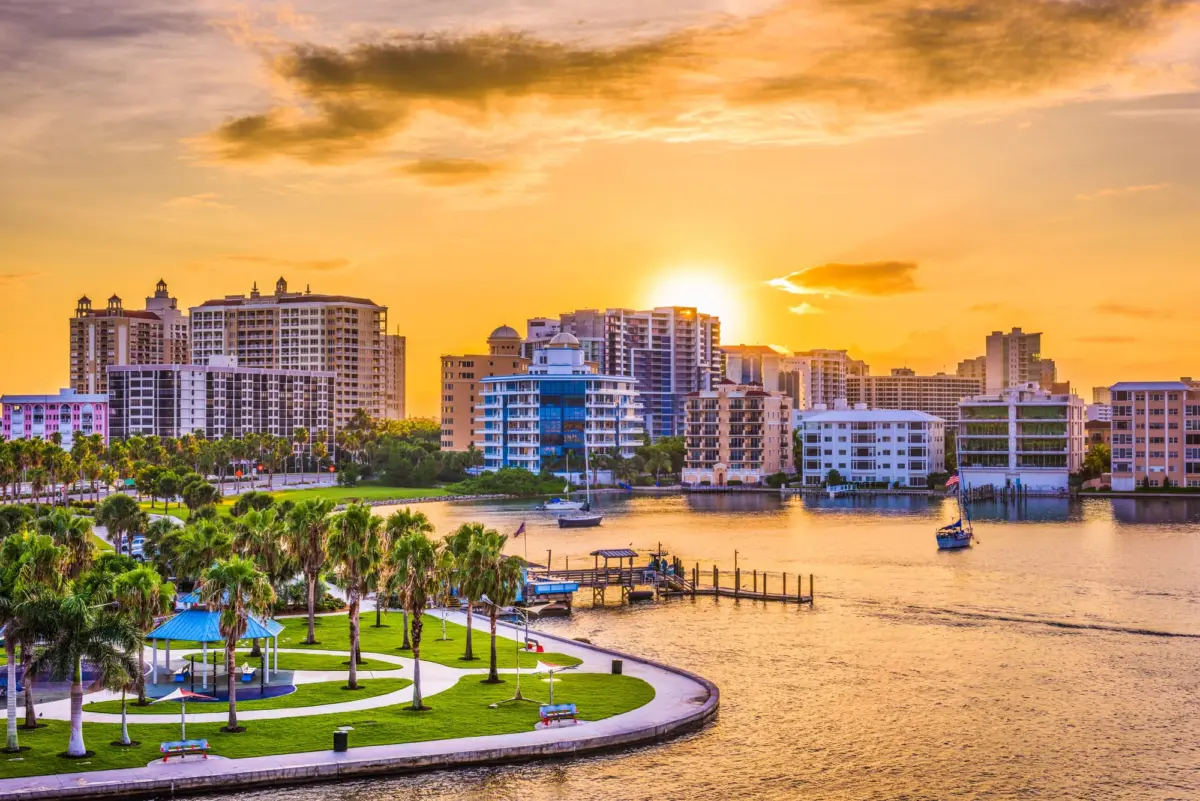
1. Sarasota: Culture-Driven Coastal Retirement
Sarasota’s inclusion on the Travel + Leisure list cements its standing as one of Florida’s premier, long-established luxury retirement markets.
- Arts and Culture Concentration: Often referred to as Florida’s Cultural Coast, Sarasota boasts an astonishing array of cultural institutions for a city of its size. Residents enjoy year-round access to the Sarasota Opera, the Asolo Repertory Theatre, the Florida Studio Theatre, and the world-renowned John and Mable Ringling Museum of Art.
- Natural Amenities: The city’s proximity to pristine Gulf Coast beaches—most notably Siesta Key Beach, routinely ranked among the best beaches in the United States for its powdery, cool-to-the-touch quartz sand—provides an idyllic backdrop for outdoor enthusiasts.
- Walkable Urbanism: Downtown Sarasota features a pedestrian-friendly layout punctuated by fine dining, boutique shopping, and modern high-rise condominiums that allow retirees to shed car dependency for urban strolls.
- Healthcare Infrastructure: A critical driver of Sarasota’s high ranking is its robust healthcare ecosystem. Anchored by Sarasota Memorial Health Care System—a nationally recognized, 839-bed regional medical center—the city offers comprehensive, specialized geriatric and acute care that provides immense peace of mind for long-term planning.
2. Lake Nona: A Modern, Wellness-Oriented Option
Located just southeast of downtown Orlando, Lake Nona represents the bleeding edge of modern retirement infrastructure.
- Lake Nona Medical City: This 650-acre health and life sciences cluster is a powerhouse of medical innovation. Featuring institutions such as the University of Central Florida College of Medicine, Orlando Health Lake Nona Hospital, Nemours Children’s Health, and the Orlando VA Medical Center, it places world-class healthcare literally at residents’ doorsteps.
- Technology and Connectivity: Designed from the ground up as a smart city, Lake Nona features gigabit fiber-optic infrastructure, autonomous shuttle networks, and a built-in emphasis on active, outdoor living through miles of paved trails, fitness installations, and community wellness programming.
- Holistic Lifestyle: Unlike age-restricted enclaves, Lake Nona appeals to a multigenerational demographic of forward-thinking retirees who prefer a dynamic, technologically integrated urban environment over traditional suburban retirement models.
3. The Villages: Retirement by Design
As one of the largest and most famous active-adult communities in the world, spanning parts of three counties in Central Florida, The Villages continues to set the gold standard for master-planned age-restricted living.
- Unprecedented Scale and Amenities: The community features over 50 golf courses, dozens of recreation centers, three distinct town squares hosting nightly live music, and thousands of organized clubs catering to every conceivable hobby from pickleball and wood-working to ballroom dancing and astronomy.
- Golf Cart Culture: With more than 100 miles of dedicated multi-modal paths, residents rely on street-legal golf carts as their primary mode of transportation, creating a uniquely cohesive, low-stress, and highly social neighborhood dynamic.
- Social Programming: Loneliness and isolation are among the greatest threats to senior health. The Villages completely eliminates this risk through a hyper-active social calendar that practically mandates community engagement and instant friendship-building for newcomers.
Official Statements and Expert Insights
Industry leaders, urban planners, and demographic analysts have weighed in heavily on what this trio of winners signifies for the broader real estate and retirement landscape.
"The recognition of Sarasota, Lake Nona, and The Villages by a publication of Travel + Leisure’s caliber is validation of a multi-decade evolution in how Florida builds communities," noted a prominent regional real estate analyst based in Orlando. "We are no longer just selling sunshine and swimming pools. We are selling holistic longevity, cutting-edge medical access, and deeply personalized lifestyle curation."
Healthcare executives within the Lake Nona ecosystem have similarly highlighted the changing priorities of incoming residents.
"Today’s retiree is fiercely proactive about their health," stated a health systems administrator in Central Florida. "They aren’t just looking for a hospital down the street when something goes wrong; they want a wellness-focused ecosystem that helps them optimize their health, mobility, and cognitive longevity on a daily basis. Communities that integrate lifestyle and advanced medicine—like Lake Nona—are capturing the hearts and minds of this new generation."
Cultural leaders in Sarasota echo a parallel sentiment regarding the intangible value of the arts.
"Retirement is the first time in many people’s lives where they finally have the discretionary time to pursue passions they shelved during their working years," remarked a Sarasota-based arts foundation director. "Whether it is taking up oil painting, attending the symphony every weekend, or volunteering with local theater groups, Sarasota offers an intellectual vibrancy that deeply enriches the retirement experience."
Future Outlook: What Lies Ahead for Florida’s Retirement Industry
As we look toward the horizon of the 21st century, the demographic pressures driving the demand for high-end retirement communities will only intensify. The oldest members of the baby boomer generation are well into their late seventies, while the younger cohort continues to transition out of the workforce. This ensures a steady, high-volume pipeline of affluent, active retirees looking for their final home base.
However, developers and municipal leaders cannot rest on their laurels. The challenges of the coming decades—including climate resilience, sustainable infrastructure, managing soaring property insurance costs, and adapting to artificial intelligence in healthcare—will require continuous innovation.
- Climate and Infrastructure Resilience: Future retirement developments in Florida will increasingly emphasize storm-hardened architecture, elevated infrastructure, and advanced stormwater management systems to ensure long-term safety and peace of mind for residents.
- Technological Integration in Healthcare: The integration of remote patient monitoring, AI-driven diagnostics, and tele-health into master-planned communities will transform how medical care is delivered within retirement enclaves, reducing the friction of doctor visits and improving chronic disease management.
- Diversity of Product Offerings: As seen in the Travel + Leisure ranking, a one-size-fits-all approach is officially obsolete. The future belongs to communities that can hyper-specialize—whether catering to the culture-hungry cosmopolitan in Sarasota, the tech-forward wellness seeker in Lake Nona, or the hyper-social community builder in The Villages.
Ultimately, Florida’s dominant presence in national retirement rankings serves as a testament to the state’s unmatched economic adaptability and visionary planning. By successfully catering to the diverse, evolving, and increasingly sophisticated desires of America’s aging population, Sarasota, Lake Nona, and The Villages have secured their status not just as the best places to retire in the South, but as the premier blueprints for graceful, vibrant aging in the modern world.

0 Comments