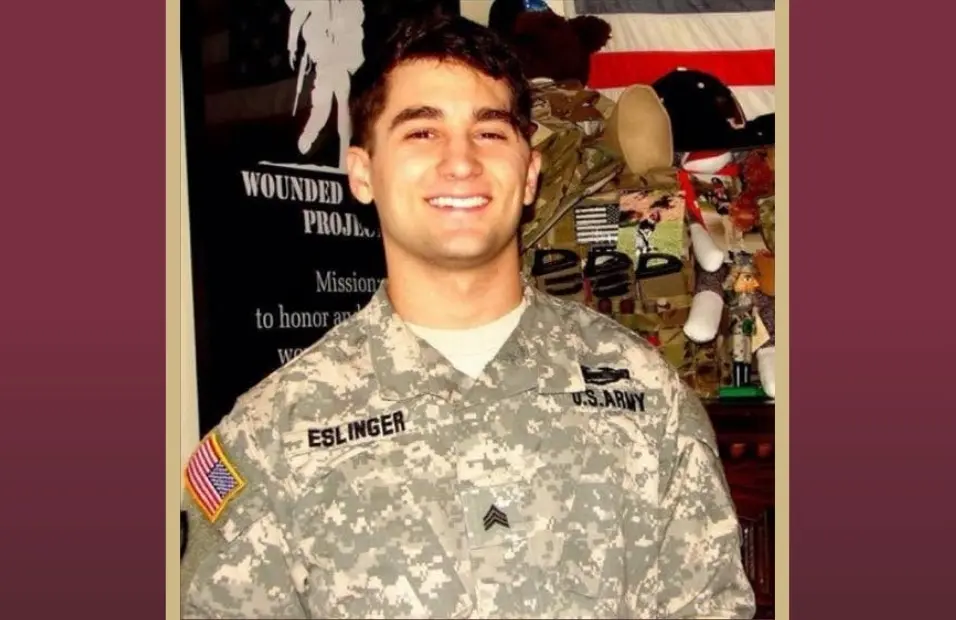
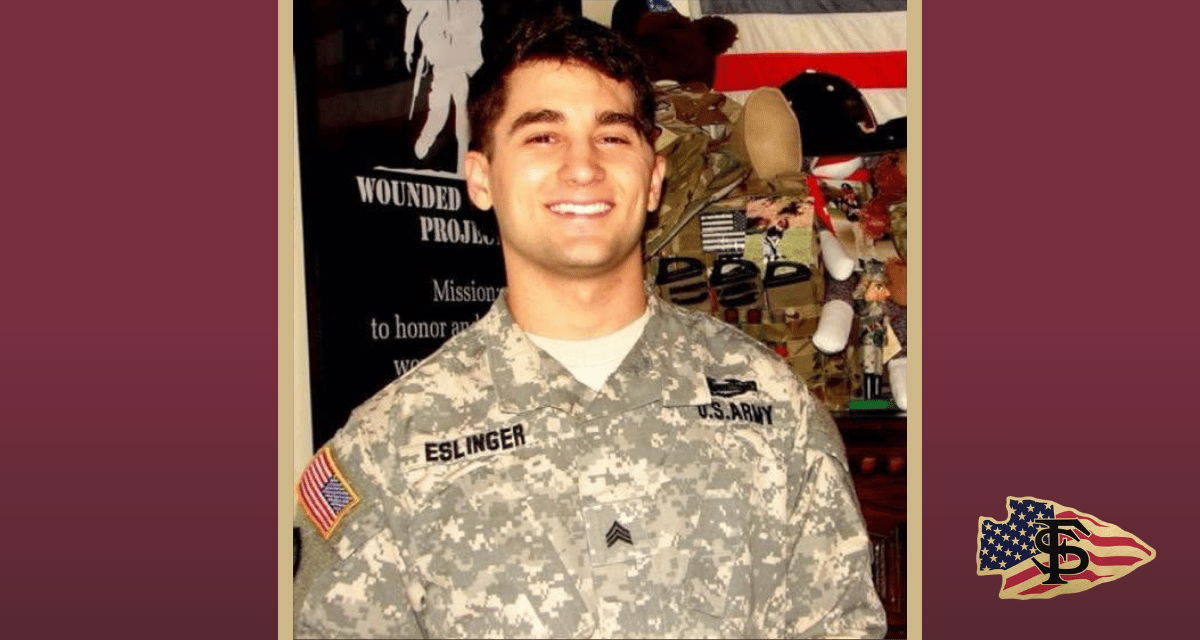
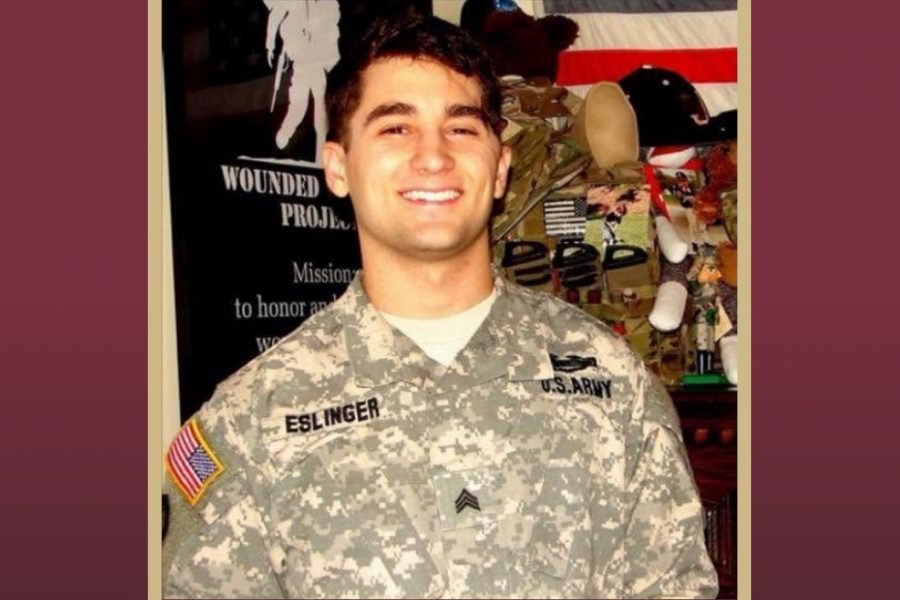
The path to higher education is rarely linear, but for United States Army veteran Donald Eslinger, it has been defined by profound sacrifice, astonishing physical resilience, and an unwavering commitment to academic purpose. An undergraduate student in the Florida State University (FSU) College of Social Sciences and Public Policy, Eslinger is pursuing a degree in International Affairs with a minor in Intelligence, with a scheduled graduation in Fall 2026.
However, before walking the historic brick walkways of FSU’s Tallahassee campus, Eslinger walked through the literal fires of the global war on terrorism. As an infantryman deployed to Afghanistan, he survived catastrophic combat injuries that left him facing 28 surgeries, traumatic brain injury (TBI), and a long, arduous path toward neurological and physical rehabilitation. Today, Eslinger channels that same tenacity into his upper-division coursework. Supported by FSU’s nationally recognized Student Veterans Center, his journey offers a powerful testament to the healing power of community, the enduring value of veterans’ educational benefits, and the relentless drive of a soldier who refused to let his injuries define the limits of his potential.
Detailed Chronology: From Jemison to the Hindu Kush and Back
Formative Years and the Call to Serve
Growing up in Jemison, Alabama, Donald Eslinger’s worldview was forged in the crucible of a post-9/11 America. As an elementary school student sitting in his classroom, he watched the tragic events of September 11, 2001, unfold on live television. In the years that followed, he watched closely as uncles and community members from his hometown answered the nation’s call, deploying overseas to fight in the expanding global war on terrorism.
That foundational exposure to patriotism was reinforced intimately at home. Raised by a father who immersed him in American history and modeled the pillars of strong character, Eslinger learned early what it meant to live a life governed by a purpose larger than oneself. Cinematic touchstones like Saving Private Ryan and Band of Brothers, shared between father and son, further cemented his understanding of sacrifice, brotherhood, and duty.
Although he possessed the athletic talent and collegiate offers to pursue a career in baseball, Eslinger’s internal compass pointed elsewhere. Just two weeks after receiving his high school diploma, he bypassed the traditional college track, packed his bags, and reported to basic training. Following initial training, he was stationed as an infantryman in the demanding, sub-arctic climate of Fairbanks, Alaska—a rigorous environment that tested his physical and mental endurance long before he ever set foot in a combat zone.
Deployment, Trauma, and Catastrophic Injury
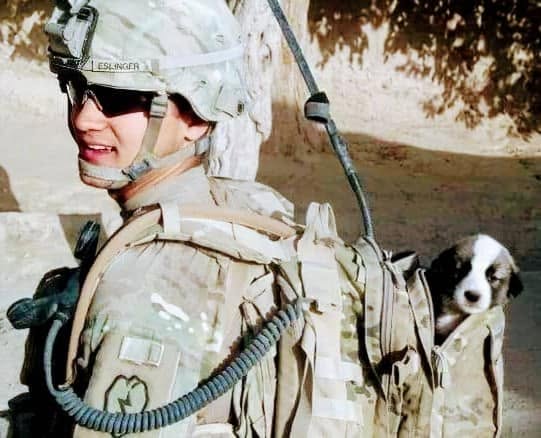
In 2011, at just 19 years of age, Eslinger deployed to Afghanistan. Like many young infantrymen entering a combat theater, he arrived brimming with youthful eagerness, ready to execute his mission side-by-side with his trusted platoon mates. But war exacts a heavy and immediate toll. The reality of combat shifted irrevocably when the unit suffered its first fatal casualty, stripping away the abstract notions of military service and replacing them with the raw, unforgiving gravity of the battlefield.
Later that September, the trajectory of Eslinger’s life changed forever. During combat operations, he sustained severe, life-threatening injuries. The extensive trauma included a major traumatic brain injury (TBI), compound fractures across multiple limbs, the loss of his spleen, and cranial damage so severe that titanium would eventually be required to replace half of his skull.
Evacuated from the theater of war, Eslinger began an excruciating medical odyssey. Over the ensuing months and years, he would undergo 28 distinct surgeries. The initial prognosis was daunting: upon waking from the worst of his medical crisis, he could not walk independently, struggled to read without severe stuttering, and lacked the motor control to write his own name.
Yet, it was precisely his fierce, unyielding disposition that became his greatest therapeutic asset. "I got mad at what I couldn’t do," Eslinger reflects, channeling a localized fury into his physical and speech therapy sessions. Rather than succumbing to despair, he channeled his frustration into a relentless drive to push past physical plateaus, rebuilding his speech, motor skills, and strength brick by painful brick.
During his recovery at Walter Reed National Military Medical Center, a touch of humanity pierced the clinical darkness: Eslinger rescued a stray dog while deployed in Afghanistan, an animal that a dedicated non-profit organization eventually flew to the United States to aid in his psychological and physical rehabilitation. "Smoke" became a symbol of survival, bridging the gap between his wartime trauma and his healing reality.
Reintegration and the Road to Higher Education
Following an intensive multi-year medical recovery, Eslinger demonstrated extraordinary resolve by returning to active military service for nearly two more years before finally transitioning to civilian life. Upon hanging up his uniform, he sought ways to channel his leadership skills, briefly coaching baseball at his former high school and re-entering the civilian workforce.
Like countless veterans navigating the labyrinth of post-service life, Eslinger initially found himself in the dark regarding the complex ecosystem of government benefits and educational entitlements earned through his service. Once he realized the robust scope of the educational resources available to him through the post-9/11 GI Bill, he resolved not to let those hard-won opportunities pass him by.
He began his academic reentry at Tallahassee State College (TSC). Serving as a crucial bridge between military service and a major university setting, TSC provided Eslinger with a supportive environment to reacclimate to classroom dynamics, accumulate core credits, and build academic confidence. It was during this foundational period that whispers of Florida State University’s legendary support network for veterans first reached him. Initially skeptical—wondering whether a major public research university could truly offer a welcoming, empathetic environment for a combat veteran with a severe TBI—Eslinger soon discovered a campus culture uniquely dedicated to those who had worn the cloth of the nation.
Supporting Context & Metrics: The FSU Veteran Ecosystem
Institutional Excellence and Support Structures
Florida State University has long distinguished itself as a national beacon for military-connected students. Consistently ranked among the top military-friendly institutions in the United States, FSU’s commitment extends far beyond nominal recruitment; it is embedded in the operational infrastructure of the campus.
At the heart of this ecosystem is the FSU Student Veterans Center, directed by veteran advocate Billy Francis. The center functions as a specialized nexus where military students can seamlessly untangle administrative hurdles, secure financial aid, optimize course schedules, and access targeted mental and physical health resources. For students managing invisible wounds—such as post-traumatic stress disorder (PTSD) or traumatic brain injuries—the center offers an indispensable safety net.
Holistic Health and Academic Persistence
Eslinger’s daily life at FSU reflects a careful balance of academic rigor and physical wellness. To manage the ongoing residual effects of his PTSD and maintain his physical conditioning, Eslinger utilizes weightlifting as a cornerstone of his health regimen. This physical discipline mirrors his academic strategy: methodical, progressive, and resilient.
Within the College of Social Sciences and Public Policy, Eslinger’s major in International Affairs, paired with a minor in Intelligence, allows him to view global conflicts through a uniquely informed lens. Having experienced the geopolitical theater of the Middle East not from a textbook, but from the muddy ground of an infantry deployment, he brings an invaluable, real-world analytical depth to classroom discussions, elevating the intellectual discourse for his peers and professors alike.
Official Statements and Perspectives
The transformation from combat infantryman to high-achieving scholar is underscored by the deep sense of community fostered at FSU. Reflecting on his transition into university life, Eslinger frequently emphasizes the profound impact of the university’s veteran-specific infrastructure:
"The FSU Student Veterans Center has been incredible, because from the second you walk through those doors, you’re welcomed with open arms and treated like family."
Eslinger highlights the comprehensive, hands-on nature of the center’s staff:
"The center staff goes out of their way to support you with whatever you need. Director Billy Francis and the team are there to help you navigate financial aid, work out course schedules, and get connected with campus resources. Beyond handling all the administrative side of things, it gives you a community of fellow veterans who understand what you’ve been through. Having that kind of built-in brotherhood and support system makes all the difference when you’re transitioning into higher education, and it shows why FSU is a top destination for military veterans."
Reflecting on the psychological turning point of his physical therapy, Eslinger notes how his stubborn refusal to accept defeat became his greatest academic tool:
"At first, I couldn’t walk, read without stuttering, or write my own name properly. Rebuilding my speech, motor skills, and physical strength through therapy was a long process, but being stubborn worked to my advantage. I got mad at what I couldn’t do, which pushed me to power through it instead of giving up. That whole experience taught me to value life, care for others, and keep moving forward."
Future Outlook
As Donald Eslinger looks toward his anticipated graduation in Fall 2026, his trajectory exemplifies the extraordinary potential unlocked when institutional support meets individual grit. Armed with a degree in International Affairs and a specialized background in intelligence studies, Eslinger is positioning himself to make meaningful contributions in the realms of public policy, national security, or global affairs—arenas where his lived experiences grant him an authoritative and grounded perspective.
For Florida State University, students like Eslinger embody the core ethos of public service, resilience, and academic excellence. By fostering an environment where combat veterans are not merely accommodated, but actively embraced as foundational pillars of the campus community, FSU continues to set a national standard for veteran reintegration. As Eslinger prepares to cross the commencement stage, his journey stands as a enduring reminder that no matter how severe the obstacles, tenacity, community, and purpose can pave the road from the darkest battlefields to the brightest futures.



0 Comments