

Executive Overview
In the relentless global battle against oncology’s most stubborn frontiers, a quiet revolution is taking shape within the laboratories of Florida State University (FSU). Qing-Xiang “Amy” Sang, the Diane and Michael Bruton Professor for Cancer Research in FSU’s Department of Chemistry and Biochemistry, has been awarded a prestigious grant exceeding $500,000 from the Florida Cancer Innovation Fund. Her mission is as ambitious as it is vital: to leverage the immense computational horsepower of artificial intelligence (AI) alongside advanced, human-cell laboratory modeling to identify innovative treatments for aggressive brain cancers—with a primary, urgent focus on vulnerable pediatric patients.
Brain cancers remain among the most devastating diagnoses in modern medicine. For rare, aggressive pediatric malignancies such as atypical teratoid rhabdoid tumors (ATRT) and diffuse intrinsic pontine glioma (DIPG), prognosis is frequently grim, and effective treatments are virtually non-existent. Traditional drug discovery pipelines—notoriously sluggish, extraordinarily expensive, and commercially driven—often bypass these rare conditions due to limited patient populations and constrained financial incentives from major pharmaceutical firms.
Dr. Sang’s groundbreaking initiative cuts through these systemic bottlenecks. By combining predictive AI analytics with the strategic repurposing of nearly 600 existing cancer-fighting pharmaceuticals—and even medications originally approved by the U.S. Food and Drug Administration (FDA) for non-cancer conditions—her research team aims to fast-track viable therapeutics from theoretical models to clinical reality. Supported by FSU’s broader strategic research mandates and alignment with the statewide health initiative FSU Health, this project represents a paradigm shift: turning the vast ocean of global scientific literature into a practical roadmap for saving young lives.
Detailed Chronology
To understand the magnitude of Dr. Sang’s current project, it is essential to trace the intersection of her foundational research in molecular biophysics, the recent legislative and institutional developments in Florida’s scientific funding ecosystem, and the technological convergence that made this AI-driven approach possible.
The Evolution of a Biochemist’s Quest
For years, Dr. Sang’s laboratory has delved into the complex molecular mechanisms governing cancer progression, extracellular matrix remodeling, and metastasis. As a prominent faculty member within FSU’s Institute of Molecular Biophysics and the Department of Chemistry and Biochemistry, Sang has long recognized the frustrating paradox of contemporary oncology: while thousands of targeted drugs and millions of pages of biochemical research exist, translating these disparate insights across different tumor types remains exceedingly difficult.
Tumors that appear morphologically distinct under a microscope often share deep, hidden similarities at the molecular and genetic levels. However, human cognitive limits prevent individual researchers or single laboratory groups from comprehensively cross-referencing decades of global scientific literature to spot these elusive biochemical cross-overs.
The Birth of the Florida Cancer Innovation Fund (2024)
A critical catalyst for this project arrived in 2024 with the establishment of the Florida Cancer Innovation Fund under the auspices of the Florida Department of Health. Conceived to bridge the historical divide between clinical oncologists and academic researchers, the fund was designed to inject capital into high-risk, high-reward research and novel treatment paradigms. Recognizing the urgency of accelerating translational oncology in the state, the fund evaluated cutting-edge proposals that promised rapid, scalable impacts on patient care. Dr. Sang’s proposal—seeking to deploy machine learning to mine the backlog of global cancer research for pediatric brain cancer solutions—stood out as a prime candidate for state investment.
Integrating AI and Human Organoids (2025–2026)
With the securing of the $500,000 grant, Dr. Sang’s research framework moved rapidly into its execution phase. The methodology bridges two state-of-the-art technological frontiers:
- Computational Data Mining: Utilizing AI tools to rapidly analyze data spanning nearly 600 cancer-fighting drugs and millions of global scientific publications produced between 2010 and 2019. The algorithms isolate hidden patterns in drug-tumor interactions, generating high-confidence predictions of which existing medicines might cross the blood-brain barrier and successfully neutralize rare pediatric brain tumors.
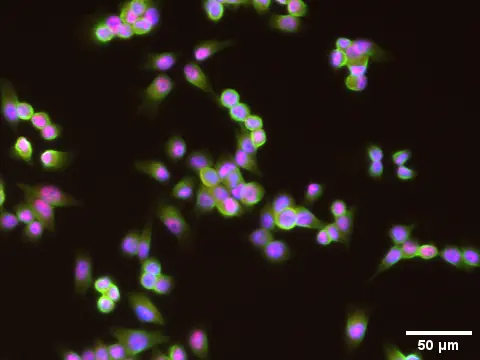
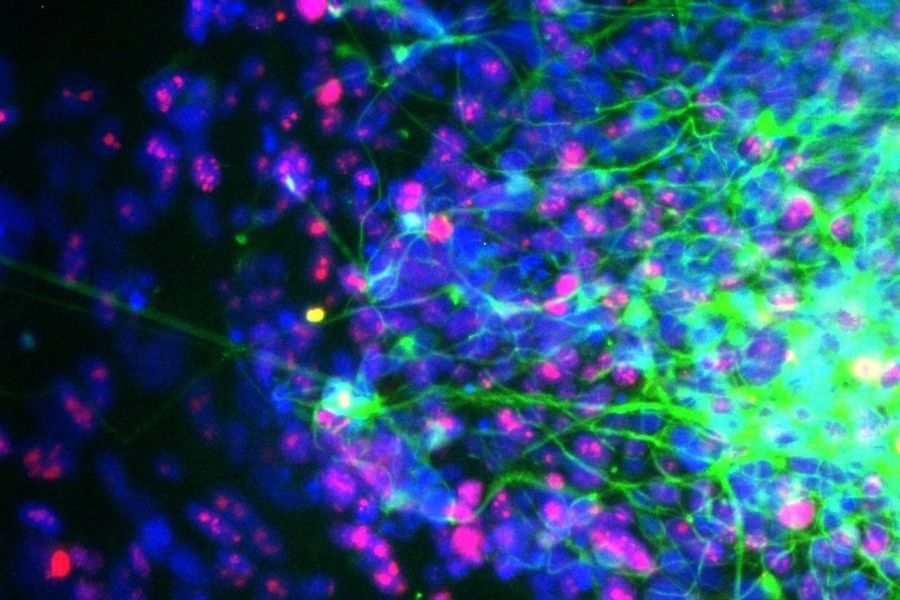
- Biological Validation via Organoids: Moving beyond traditional two-dimensional cell cultures and reducing reliance on animal models, Sang’s team tests predictive drug candidates on patient-derived, three-dimensional human brain organoids. These ball-shaped clusters of cells replicate the complex spatial architecture and microenvironment of actual human tumors, offering an unprecedented level of predictive accuracy before clinical trials are ever considered.
Supporting Context & Metrics
The challenges inherent in treating brain cancer—particularly rare pediatric variants—are underscored by stark epidemiological and economic realities. Examining the data reveals why innovative approaches like Dr. Sang’s drug-repurposing model are urgently required.
The Landscape of Brain Cancers
According to the National Foundation for Cancer Research, primary brain and central nervous system tumors account for less than two percent of all new cancer cases diagnosed annually in the United States. Despite their relatively low incidence compared to breast, prostate, or lung cancers, brain tumors carry a disproportionately high mortality rate. They are notoriously difficult to treat for several biological reasons:
- The Blood-Brain Barrier: A tightly regulated network of cells that protects the brain from foreign substances, which unfortunately also blocks the vast majority of systemic chemotherapy drugs from reaching the tumor site.
- Tumor Heterogeneity: Brain tumors display immense diversity even within a single tumor mass, meaning a drug that kills 90% of a cancer’s cells may leave behind resistant subpopulations that rapidly recur.
- Pediatric Vulnerability: Rare pediatric conditions like ATRT and DIPG strike young children during critical phases of neurological development, making aggressive surgical resection and high-dose radiation therapies extremely hazardous or impossible.
The Economics of Orphan Diseases
Traditional pharmaceutical development requires an average investment of over $1 billion and more than a decade of research and clinical trials for a single new chemical entity. For pharmaceutical companies, investing heavily in drugs targeting rare pediatric cancers—often classified as "orphan diseases"—is frequently seen as economically unviable due to the small patient pool.
Dr. Sang’s strategy completely bypasses this financial dead-end:
- The Power of Repurposing: By focusing on drugs that are already FDA-approved for other cancers or non-cancer conditions (such as tamoxifen, which transitioned from a contraceptive to a premier breast cancer therapeutic), researchers leverage existing safety profiles, pharmacokinetic data, and manufacturing pathways.
- Shrinking Timelines and Costs: Repurposing existing compounds drastically reduces the time and expense required to advance a treatment toward clinical application, offering a realistic, cost-effective lifeline to patients who do not have years to wait for brand-new drug discovery pipelines.
The Big Data Challenge
Between 2010 and 2019 alone, the global scientific community produced over 1 million cancer-related publications. Contained within these papers are vital clues regarding drug interactions, tumor genetics, and patient responses. Without artificial intelligence, this mountain of information remains siloed and underutilized. AI acts as an intellectual multiplier, allowing FSU researchers to ingest, parse, and act upon data at a scale previously thought impossible.
Official Statements
The convergence of artificial intelligence, biochemistry, and institutional support has drawn praise from academic leadership across Florida State University.
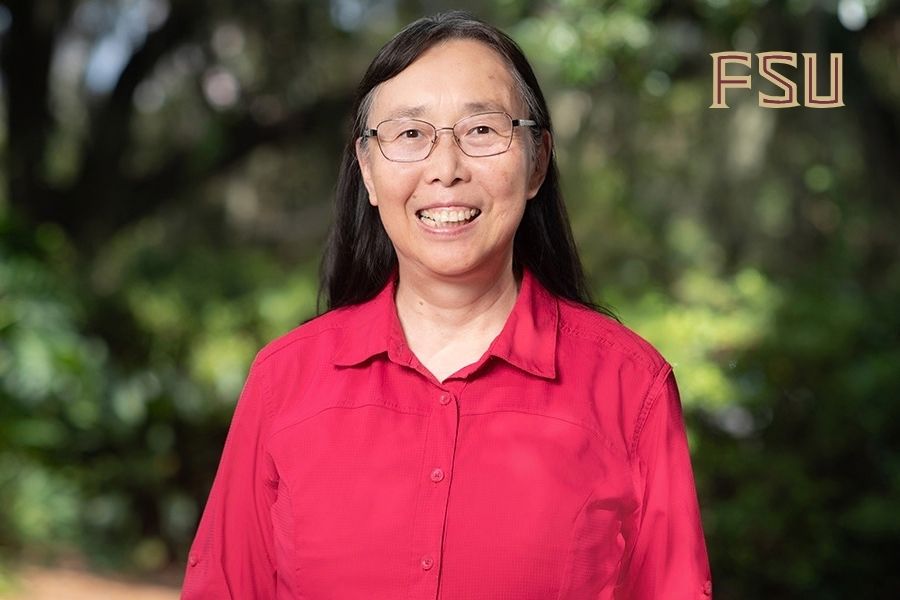
Reflecting on the core philosophy of her research, Dr. Qing-Xiang “Amy” Sang emphasized the collaborative and pragmatic nature of the initiative:
"Brain cancers are among the deadliest and hardest-to-treat cancers in both children and adults. There are many types of brain cancers, so a drug that works well against one may do nothing against another. However, different tumors often share hidden similarities in their underlying biology. This grant will help us examine drugs that are already known to work against certain cancers and test whether they can also treat different, less-studied types of brain cancer."
Detailing the transition from computational models to tangible laboratory results, Sang added:
"By identifying molecular similarities among tumors, we can make educated, data-driven hypotheses about which existing drugs might work in a new biological setting. We will take our top candidates for novel brain cancer treatments into the lab and test them directly on brain tumor cells to demonstrate that our approach works in practice, not just theory."
Wei Yang, chair of the FSU Department of Chemistry and Biochemistry, highlighted the broader institutional significance of the achievement:
"Dr. Sang is a highly regarded biochemist with remarkable creativity, persistence, and a research program yielding unique insights. Her new grant is also a testimony to the advancement of A Strategic Plan to Inspire Research Excellence, or the FSU ASPIRE mission, developed to identify strategic areas of focus and investment, ensuring the sustained growth and impact of FSU’s research enterprise, particularly in the area of drug discovery."
Looking toward the broader societal impact, Dr. Sang summarized the ultimate mission of her laboratory’s work in tandem with regional health networks:
"Our goal is to extend the lives of cancer patients, enhance quality of life and when possible, provide a cure. I hope that in our efforts to repurpose existing drugs, we have a realistic shot at finding effective treatments for difficult brain cancers in a quicker timeframe."
Future Outlook
As Dr. Sang’s project progresses over the coming years, its implications extend far beyond the walls of her Florida State University laboratory. The initiative serves as a powerful proof-of-concept for how academic research centers can utilize artificial intelligence to democratize drug discovery, shifting focus toward neglected patient populations.
Aligning with National Regulatory Shifts
The project’s heavy reliance on patient-derived human brain organoids places FSU at the vanguard of modern biomedical ethics and methodology. The U.S. Food and Drug Administration has increasingly signaled a strategic preference for reducing animal testing in favor of advanced computer-based modeling and realistic human-cell systems. By utilizing 3D organoids that mimic true tumor behavior, Sang’s team is not only complying with cutting-edge regulatory trends but is also generating more accurate, human-relevant preclinical data that will streamline eventual applications for clinical trials.
Synergizing with FSU Health
Furthermore, the research directly bolsters FSU Health—an ambitious academic health system linking hospital networks, clinical practitioners, researchers, and educational institutions across the region. By fostering close communication between basic scientists, computational experts, and clinical oncologists, FSU Health is building an ecosystem where laboratory breakthroughs can be translated into patient care with minimal friction.
The Road Ahead for Pediatric Oncology
While substantial challenges remain in conquering rare pediatric brain cancers like ATRT and DIPG, Dr. Sang’s AI-assisted, drug-repurposing framework offers a renewed sense of urgency and optimism. By transforming historical scientific literature into actionable clinical intelligence—and by validating those insights through sophisticated human-cell models—Florida State University is proving that even the most intractable diseases can be confronted with ingenuity, collaboration, and modern technological tools.

0 Comments