

Executive Overview
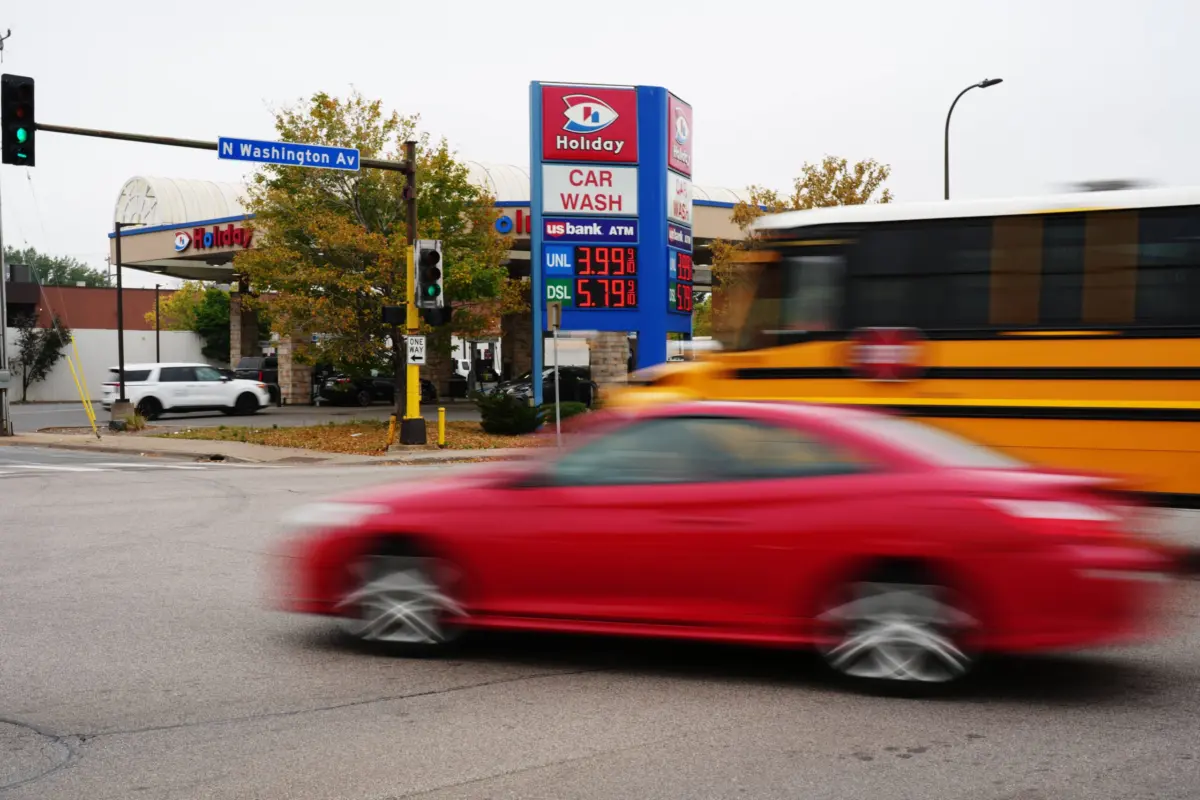
For millions of Americans preparing to hit the road for the traditional end-of-summer Labor Day holiday, the final getaway of the season has arrived with a historically bitter financial pill to swallow. Driving across the country has never been this expensive during a Labor Day weekend, a reality driven by a volatile mix of ongoing geopolitical conflicts, severely restricted global trade corridors, and acute supply-side bottlenecks at domestic and international refineries.
According to data compiled by the AAA motor club, the national average price for a gallon of regular gasoline hovered at $4.14 heading into the holiday weekend. This figure represents an increase of nearly a dollar compared to the same period in the previous year and easily shatters the previous Labor Day record of $3.82 set back in 2012. While this benchmark remains comfortably below the all-time national high of $5.02 per gallon recorded in June 2022, the psychological and economic toll of persistent, elevated energy costs is weighing heavily on households.
The burden is even more pronounced for commercial transport and heavy-duty logistics. On Friday, the national average price for diesel fuel surged to an unprecedented $5.85 per gallon, marking a historic high. Because the trucking industry and freight delivery networks rely almost exclusively on diesel, these soaring expenses are quickly cascading through the supply chain. Consequently, consumers are absorbing higher prices not only at the pump, but on grocery store shelves, through package delivery fees, and across a wide spectrum of retail goods.
While the Trump administration maintains that broader market futures point toward relief in the coming months, energy experts warn that a confluence of overseas military conflicts, extreme domestic weather, and infrastructure vulnerabilities could keep fuel prices stubbornly high well into the autumn.
Detailed Chronology: How the Crisis Unfolded
To understand the current economic landscape at the pump, industry analysts point back to a pivotal escalation in early 2026. The primary catalyst for the sustained surge in energy prices occurred in February, when a series of military engagements involving the United States, Israel, and Iran drastically destabilized the Middle East.
- February 2026: Joint military strikes against targets in Iran shattered regional stability, prompting immediate ripple effects across global crude oil markets.
- Spring 2026: Traffic through the Strait of Hormuz—a vital maritime chokepoint through which a significant percentage of the world’s liquefied natural gas and petroleum passes—plunged dramatically. Amid escalating tensions, the Iranian government refused to reopen or normalize passage through the waterway, trapping tankers and forcing international shipping lines to seek longer, more expensive alternative routes.
- June – August 2026: As the peak summer driving season commenced, crude oil supply deficits fully materialized at the wholesale level. Domestic refiners were forced to operate under intense pressure. Compounding the issue during the height of summer, extreme and unusually harsh heatwaves swept across Texas, forcing major refining hubs to operate near maximum capacity (around 98%) while struggling against environmental and thermal strain.
- September 2026 (Labor Day Weekend): Regular gasoline prices reached a nationwide average of $4.14 a gallon, while diesel peaked at a record-shattering $5.85 a gallon, setting the stage for one of the most expensive holiday travel weekends in modern U.S. history.
Tom Seng, a professor of energy finance at Texas Christian University, summarized the overarching driver of the crisis: "Everything points to the Iran War and the Strait of Hormuz."
Supporting Context & Metrics: Global Supply Squeezes and Consumer Impact
While the conflict in the Middle East serves as the primary engine behind the crisis, energy economists emphasize that the current price pressures are multi-dimensional, involving both domestic constraints and international supply shocks.
The International Refinery Squeeze
The energy crunch is not isolated to Middle Eastern shipping lanes. Matthew Metzgar, a clinical professor of economics at the University of North Carolina at Charlotte, highlights that global refining capacity has taken heavy hits from multiple directions.
In Eastern Europe, ongoing Ukrainian drone strikes targeting Russian energy infrastructure have systematically disrupted Russia’s petroleum output, squeezing regional diesel supplies. Simultaneously, Chinese refiners have reported declining outputs due to domestic policy adjustments and shifting industrial demands.
"There’s just less gasoline coming out of those refineries globally," Metzgar noted, explaining that the loss of output from key international players prevents the global market from easily offsetting the Middle Eastern crude deficit.
Domestic Vulnerabilities
Domestically, U.S. refineries are operating at an aggressive 98% capacity. While high utilization rates are intended to maximize fuel output, they leave zero margin for error. Energy analysts caution that if an unexpected mechanical failure occurs, or if a late-season Atlantic hurricane sweeps into the Gulf of Mexico and knocks refining systems offline, the fragile supply balance could shatter, driving prices even higher.
The Human and Economic Toll
For everyday citizens, the elevated prices have forced difficult lifestyle adjustments. Nicole Collins, a resident of Philadelphia, intended to drive her family down to South Carolina over the Labor Day weekend to visit friends. Instead, she explained that her household had spent the entire summer close to home, cutting out typical weekend road trips to conserve financial resources.
"Gas is pretty high right now. It doesn’t help that we also have a baby, so we have to pay for that," Collins said outside a gas station in Claymont, Delaware, where regular unleaded gasoline was posted at $4.199 per gallon. "It doesn’t really seem like there’s an end to it."
Beyond personal travel, the record-breaking price of diesel—hitting $5.85 per gallon—acts as a hidden tax on the entire economy. Because nearly all consumer goods spend part of their journey on a diesel-powered semi-truck, elevated fuel expenses are rapidly embedding themselves into the cost of food, clothing, and manufactured products.
Official Statements and Government Response
As consumers voice frustration over the state of the economy, federal officials are facing mounting pressure to articulate a clear strategy for relief.
Appearing on ABC’s This Week, Energy Secretary Chris Wright acknowledged that American families are facing significantly higher costs this Labor Day compared to the same holiday in 2025.

"Yes, they’re higher today, but we’re doing everything we can to push them down," Wright stated during the broadcast. He emphasized that the administration is actively implementing policies aimed at ramping up domestic oil and gas production to ease the structural supply deficit.
Crucially, Wright pointed to commodities futures markets as an indicator that relief is on the horizon. He noted that bulk wholesale gasoline for delivery two months out in November is trading at approximately 35 cents cheaper per gallon than current spot prices.
"If you look at the futures prices, if you wanted to buy today in bulk gasoline for two months out in November, it’s about $0.35 cheaper than it is today," Wright said. "So the marketplace thinks gasoline prices are going to move meaningfully lower."
However, independent analysts urge caution, noting that futures markets can shift rapidly depending on unforeseen geopolitical escalations or weather-related disasters.
Future Outlook and Practical Consumer Strategies
Looking past the Labor Day weekend, seasonal trends typically offer a glimmer of hope for drivers. Historically, gasoline prices begin a downward trajectory as the peak summer travel season concludes and refineries transition from expensive summer-grade fuel blends to cheaper winter-grade formulations.
Yet, experts warn that standard seasonal drops may be blunted this year by the lingering disruptions in the Strait of Hormuz, ongoing geopolitical conflicts involving Russia and Ukraine, and the precarious operational status of domestic refineries amid severe weather patterns.
Because consumers have virtually no leverage over international geopolitics or crude oil supply chains, economists recommend tactical consumer behaviors to mitigate personal expenses.
- Utilize Fuel-Tracking Applications: Drivers are encouraged to leverage digital price-comparison apps to scout local stations. Studies and market observations indicate that gas stations located directly off major interstate highways can often be 10 to 15 cents per gallon more expensive than stations situated just a short drive off the main exits.
- Consolidate Errands: With regular gas averaging $4.14 and diesel at $5.85, minimizing non-essential vehicle trips remains one of the most effective ways for households to protect their monthly budgets.
- Monitor Regional Variances: Prices will continue to fluctuate significantly depending on state tax policies, proximity to refining centers, and local distribution costs.
As the nation transitions from summer to autumn, the resilience of the U.S. consumer will continue to be tested by an energy market bound tightly to unpredictable global events. Whether the optimistic futures market projections materialize into real relief at the pump remains one of the defining economic questions of the year.

0 Comments