

Executive Overview
Retirement planning has historically been treated as a mathematical puzzle of wealth accumulation. We calculate savings rates, estimate market returns, project healthcare inflation, and debate the merits of various pension structures. Yet, this narrow financial lens misses a profound operational truth: where we spend our later decades—and how safely we navigate them—depends far less on our portfolio balance and far more on our immediate environment.
Place matters. But the fundamental question of modern aging is not merely where we choose to live, but how we sustain that choice. As life expectancies lengthen and demographic shifts reshape society, the infrastructure supporting our daily lives must evolve.
For generations, the definition of home security was defensive and singular: keeping threats on the outside. It was a physical fortress mentality defined by deadbolts, window latches, perimeter alarms, and piercing sirens meant to deter intruders. Today, however, demographic realities and technological advancements are fundamentally altering what it means to feel secure at home. Longevity preparedness is no longer just about guarding against external hazards; it is about managing internal vulnerabilities, bridging the physical gaps of aging, and crafting an integrated safety net that preserves human dignity and autonomy.
According to data from the MIT AgeLab-John Hancock Longevity Preparedness Index, the United States scores a mediocre 60 out of 100 in overall longevity preparedness, with home preparedness lagging even further behind at 56. These figures reveal a troubling disconnect: millions of Americans have chosen where they intend to age, yet they have failed to build the systematic infrastructure required to make that dream sustainable.
This report investigates how the concept of home security is transforming from a tactical alarm system into a holistic ecosystem of people, data, technology, and services. By examining expert insights, housing trends, and the growing intersection of smart-home tech and professional caregiving, we explore how society must construct a new "architecture of security" for an aging population.
Detailed Chronology: The Evolution of Aging-in-Place and Home Security
To understand how home security and aging-in-place intersected, it is necessary to examine how both concepts evolved from isolated practices into an interconnected socio-technical movement.
Phase 1: The Era of Physical Fortification (Mid-to-Late 20th Century)
For decades, the security industry operated on a strictly adversarial model. Homes were viewed as targets for burglary or trespassing. Solutions were mechanical: heavy-duty locks, window bars, mechanical timers for lights, and early electronic hardwired alarm systems. Simultaneously, aging-in-place was viewed through an equally rudimentary lens: structural modifications. If an older adult experienced mobility issues, the standard prescription was straightforward—add grab bars in the bathroom, remove throw rugs, install a ramp over the front steps, or perhaps convert a ground-floor dining room into a makeshift bedroom.
While these physical adjustments were necessary, they treated the home as a static physical container rather than a dynamic living system. They did nothing to address the invisible vulnerabilities of isolation, cognitive decline, or the gradual erosion of functional capacity that comes with advanced age.
Phase 2: The Rise of Personal Emergency Response Systems (PERM) (Late 20th to Early 21st Century)
As populations aged, the vulnerability of living alone became apparent, sparking the introduction of Personal Emergency Response Systems (PERS)—most famously recognized by the ubiquitous "I’ve fallen and I can’t get up" marketing campaigns of the 1980s and 90s.
These wearable pendants represented a critical milestone: the first acknowledgment that home safety included medical and physical emergencies occurring inside the house. However, these systems relied entirely on active user intervention. If an older adult lost consciousness during a fall, forgot to put on their pendant, or suffered a sudden cognitive lapse, the device remained silent. The burden of response still rested entirely on the individual’s ability to recognize distress and press a button.
Phase 3: The Smart Home Revolution and Ambient Intelligence (2010s)
The proliferation of high-speed internet, smartphones, and affordable Internet of Things (IoT) sensors shifted the paradigm from active response to passive monitoring. Motion detectors, smart locks, video doorbells, and connected smoke alarms began entering mainstream consumer markets.
Initially marketed for convenience and anti-intrusion, these technologies quietly laid the groundwork for ambient eldercare. Caregivers and adult children realized that a motion sensor tracking whether a kitchen cabinet had been opened in the morning offered a non-intrusive way to verify that an aging parent was up, moving, and maintaining their daily routine—all without invading their privacy with constant video surveillance.
Phase 4: The Convergence of Security Infrastructure and Caregiving (Present Day)
Today, we are witnessing the convergence of traditional security providers, smart-home automation, and professional monitoring services. Companies that once exclusively protected perimeter doors from burglars are now designing integrated platforms that manage medication reminders, track environmental hazards (such as unattended stoves or carbon monoxide leaks), and provide remote access for home health aides and emergency responders.
Security has transformed from a standalone device on a wall into a continuous, collaborative network that bridges the physical distance between aging individuals and their support circles.
Supporting Context & Metrics: The Reality of Aging Alone
The urgency of rethinking home security is underscored by sweeping demographic shifts. According to the AARP’s latest Home and Community Preferences Survey, a resounding 75% of Americans aged 50 and older express a strong desire to remain in their current homes as they age. However, the aspiration often collides with physical reality: 43% of respondents readily admit that their current homes will require significant modifications to make aging-in-place feasible.
The broader systemic unpreparedness is quantified by the MIT AgeLab-John Hancock Longevity Preparedness Index, which evaluates a nationally representative sample of over 1,300 Americans across eight distinct dimensions of aging. The nation’s overall score sits at a modest 60 out of 100. More alarmingly, the Home domain scores a meager 56. This specific dimension assesses whether homes are accessible, adaptable, connected to essential community services, and equipped with modern technologies that foster long-term independence.
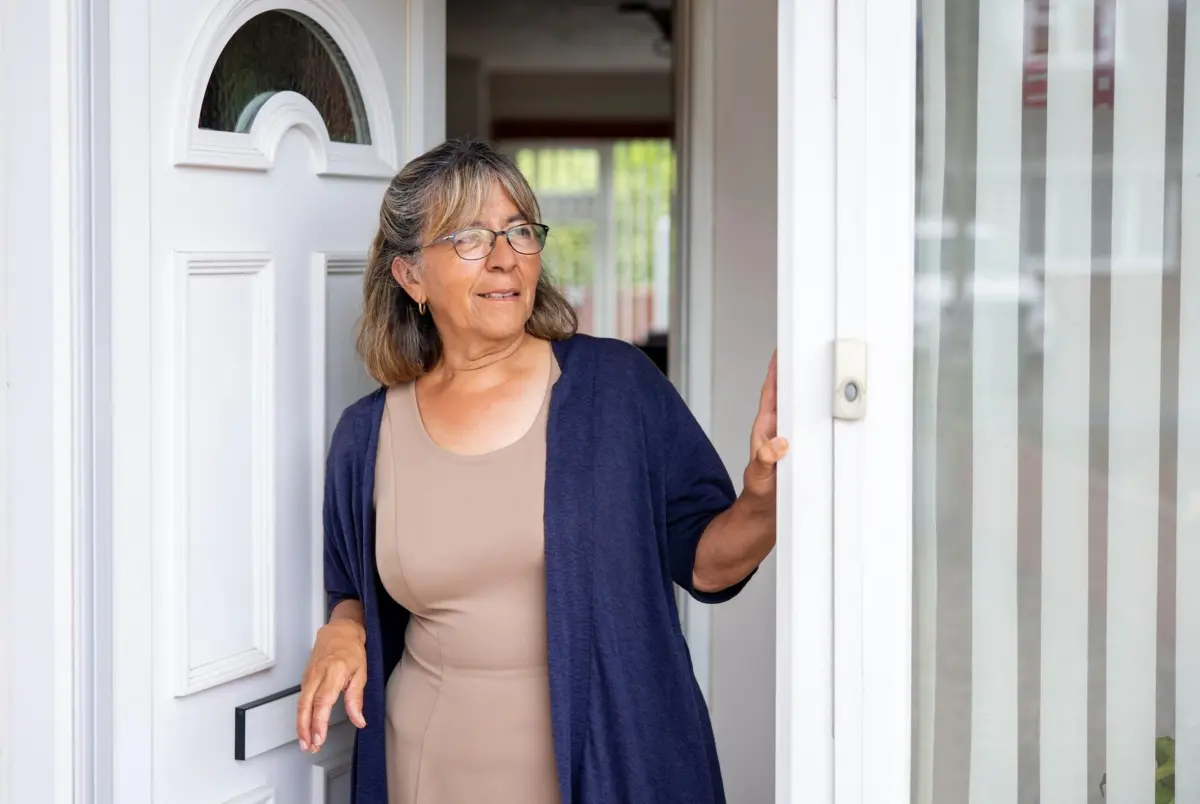
A critical variable compounding this issue is living arrangements. Millions of older Americans do not age alongside a spouse or partner; they age alone. This demographic trend is heavily gendered. U.S. Census Bureau data reveals that more than four in ten women aged 75 and older live by themselves.
Living alone in later life is a double-edged sword. For many, solitude is a cherished manifestation of autonomy, dignity, and independence. It is an expression of self-determination. Yet, it dramatically alters the mathematical equation of home security and risk management.

When a household consists of a single individual, there is no spouse to smell an electrical short, no partner to notice a subtle change in speech or gait, no roommate to hear a fall in the hallway, or check why the front door was left unlocked through the night. Furthermore, the people who care most deeply about that individual—their adult children, siblings, or extended family members—frequently live across town, in another state, or on the opposite coast.
In this context, technology and systemic services must fill the operational gap. While a sensor can never replace a daughter, and a professional monitoring center can never substitute for a spouse or a close neighbor, high-tech infrastructure can effectively extend the reach of high-touch human care. It creates a safety net that catches signals of distress before they escalate into catastrophic emergencies.
Official Statements & Expert Perspectives
To unpack how the security industry is pivoting to meet these complex demographic demands, industry leaders and researchers are re-evaluating the foundational tenets of domestic safety.
Laura Finson, Director of Product at Brinks Home, has been at the forefront of translating this paradigm shift into tangible consumer products. In a recent interview, Finson reflected on how the definition of security has expanded far beyond traditional intrusion protection.
"We used to think of home security as protection against intrusion," Finson noted. "Now, home security is much broader than that."
Finson illustrates this evolution through personal experience. Recounting an incident at her own residence, she described how a carbon monoxide detector alerted Brinks Home’s professional monitoring center while she was miles away. The local fire department was dispatched immediately. Using integrated connected technologies, Finson was able to monitor the responders’ arrival in real-time, communicate with them directly via two-way audio, grant them remote digital access to unlock the front door, and even inform them precisely where her large dog was sheltering in the house.
This multi-layered event demonstrates that modern security is no longer an isolated gadget; it is a collaborative architecture involving connected devices, professional monitoring operators, homeowners, and municipal emergency services.
This philosophy is echoed by researchers at the MIT AgeLab. Dr. Chaiwoo Lee and Dr. Shabnam FakhrHosseini, research scientists specializing in home logistics, technology, and the future of aging, frame the modern home not merely as physical shelter, but as a dynamic service platform:
"The home is more than shelter; it is a platform of people and services enabled by technology," Lee and FakhrHosseini explain. "Our vision of technology in the home is one where the home evolves with us, providing convenience in youth, connectivity in a busy middle age, and ultimately care in older age."
However, unlocking this vision requires navigating a delicate ethical boundary: the fine line between care and surveillance. Every technological capability introduces a complex human question. Who has permission to view the security camera feed? Who receives automated alerts when a door opens? Who tracks when an older adult leaves the house? At what point does an adult child’s desire for reassurance cross the threshold into intrusive monitoring?
Finson emphasizes that trust is the foundational currency of this new era. Customers are entrusting third-party service providers and family members with the most critical elements of their lives: their personal safety, their physical well-being, and their most cherished valuables. Trust, therefore, cannot be treated as a binary switch. It must be permissioned, contextual, and dynamic, adapting as family structures and personal needs shift over time.
Future Outlook: Building Your Longevity Architecture
Longevity preparedness requires a proactive mindset. Too often, critical safety decisions are made reactively—forced upon families by unexpected crises. A fall occurs in the bathroom, and only then do relatives rush to purchase an emergency alert pendant. A parent fails to answer a morning phone call, triggering a frantic family debate over who should hold a spare house key. A medical scare happens, and a hurried scramble ensues to figure out home healthcare options.
In worst-case scenarios, these decisions are never consciously made at all; they happen by default, dictated by emergency room physicians or institutional placement coordinators.
True longevity preparedness means consciously designing an architecture of people, technology, and services before circumstances dictate them. It means recognizing that the security framework required at age 65 will look fundamentally different from the one needed at 75 or 85. Needs evolve, bodies change, spouses pass away, adult children relocate, and personal perceptions of privacy mature.
Is Your Home Prepared? 5 Essential Questions for Every Household
To help families evaluate their readiness and establish a personalized longevity infrastructure, experts recommend assessing five core questions:
- Physical Adaptability: Can your current living space accommodate sudden or gradual changes in mobility (e.g., stairs, bathroom access, lighting) without requiring emergency renovations?
- Ambient Awareness: Do you have passive technologies (such as smart motion sensors, connected locks, or environmental monitors) in place to detect anomalies in daily routines without invading personal privacy?
- The Response Network: If an emergency occurs at 2:00 AM, who is alerted first? Is your support network—composed of family, neighbors, or professional monitoring services—clearly defined and digitally connected?
- Access and Delegation: Who holds digital or physical keys to your home, and how smoothly can emergency responders or caregivers enter your property if you are incapacitated?
- Trust and Boundaries: Have you had explicit, transparent conversations with your loved ones about privacy, data sharing, and caregiving boundaries to ensure your independence is respected?
As Laura Finson aptly summarizes, aging-in-place is ultimately about choice: "It’s not necessarily about having to make a choice between being independent and being secure."
Ultimately, a longevity-ready home is not merely one equipped with grab bars and brighter lightbulbs. It is an intelligent ecosystem—a seamless integration of human relationships, supportive technology, and responsive services designed to detect, communicate, and act when we, or those who care for us, cannot. Aging-in-place is about where we choose to live; longevity preparedness is about consciously building the invisible architecture that allows us to stay there, safely and on our own terms.

0 Comments