

Executive Overview
Four years after the historic U.S. Supreme Court ruling in Dobbs v. Jackson Women’s Health Organization stripped away the constitutional right to abortion and returned regulatory authority to individual states, the national battleground has fundamentally shifted. No longer focused solely on clinic doors and state borders, the frontline of the American abortion debate now plays out in digital networks, mailboxes, and federal appellate courts.
On Wednesday, a panel of federal judges at the New Orleans-based 5th U.S. Circuit Court of Appeals is set to hear pivotal arguments regarding whether federal regulators should drastically tighten prescribing rules for mifepristone—one of the two drugs that comprise the most common medication abortion regimen in the United States.
The lawsuit, spearheaded by Louisiana Attorney General Liz Murrill alongside individual plaintiff Rosalie Markezich, represents a coordinated, multi-state conservative strategy. Anti-abortion advocates are attempting to close a critical loophole that allows providers in states with legal abortion access to ship medication via telehealth and mail into states where abortion is heavily restricted or entirely banned.
With medication abortions now accounting for at least three in every five U.S. terminations, the stakes could not be higher. If successful, the legal challenges could reinstate strict in-person mandates nationwide, fundamentally altering reproductive healthcare access regardless of state-level statutes. Yet, even as conservative states press their advantage through the federal judiciary, the political climate remains fraught, with voters consistently signaling support for reproductive access in public opinion polls and state ballot measures, setting up a high-stakes collision between judicial intervention, executive policy, and public will.
Detailed Chronology: From FDA Approvals to the 5th Circuit Courtroom
The path to Wednesday’s high-stakes hearing at the 5th Circuit is paved with decades of regulatory evolution, dramatic legislative shifts, and unprecedented legal maneuvers.
- September 2000: The U.S. Food and Drug Administration (FDA) grants initial approval to mifepristone (then known as RU-486) under strict safety parameters, requiring it to be dispensed exclusively in-person by certified physicians in clinical settings.
- 2016–2021: Over successive administrations, the FDA begins relaxing certain distribution and prescription requirements based on accumulated safety data. In 2021, amid the COVID-19 pandemic, the agency permanently lifts the in-person dispensing requirement, allowing the medication to be prescribed via telehealth and sent directly to patients through the mail.
- June 2022: The U.S. Supreme Court issues its landmark Dobbs decision, overturning Roe v. Wade and allowing individual states to ban or severely restrict abortion access. Immediately, a patchwork of state laws emerges, with 13 states enacting total bans and others instituting gestational limits.
- 2023–2024: Conservative legal groups launch coordinated challenges against the FDA’s relaxation of mifepristone rules. Multiple lower courts and panels within the 5th Circuit agree that the agency’s rules are excessively loose. However, in June 2024, the U.S. Supreme Court unanimously rejects an effort to roll back mifepristone availability—ruling not on the merits of the scientific arguments, but on a technicality: that the anti-abortion groups lacked legal standing to sue.
- Late 2025 – Early 2026: A new wave of lawsuits gathers steam, brought forward directly by state attorneys general, including Louisiana’s Liz Murrill, alongside coordinated legal actions from Florida, Texas, Idaho, Kansas, and Missouri. Meanwhile, opposing federal rulings emerge out of Hawaii and Virginia, where judges declare current FDA restrictions too restrictive.
- Wednesday’s Hearing: The 5th Circuit panel—comprising judges nominated by Presidents Barack Obama, George W. Bush, and Joe Biden—hears arguments on whether to impose tighter prescribing constraints once again, setting the stage for an inevitable return to the U.S. Supreme Court.
Supporting Context & Metrics: The Mechanics and Impact of Medication Abortion
To understand the ferocious legal and political battles surrounding mifepristone, one must examine the shifting metrics of how abortions are performed in modern America.
The Two-Drug Regimen
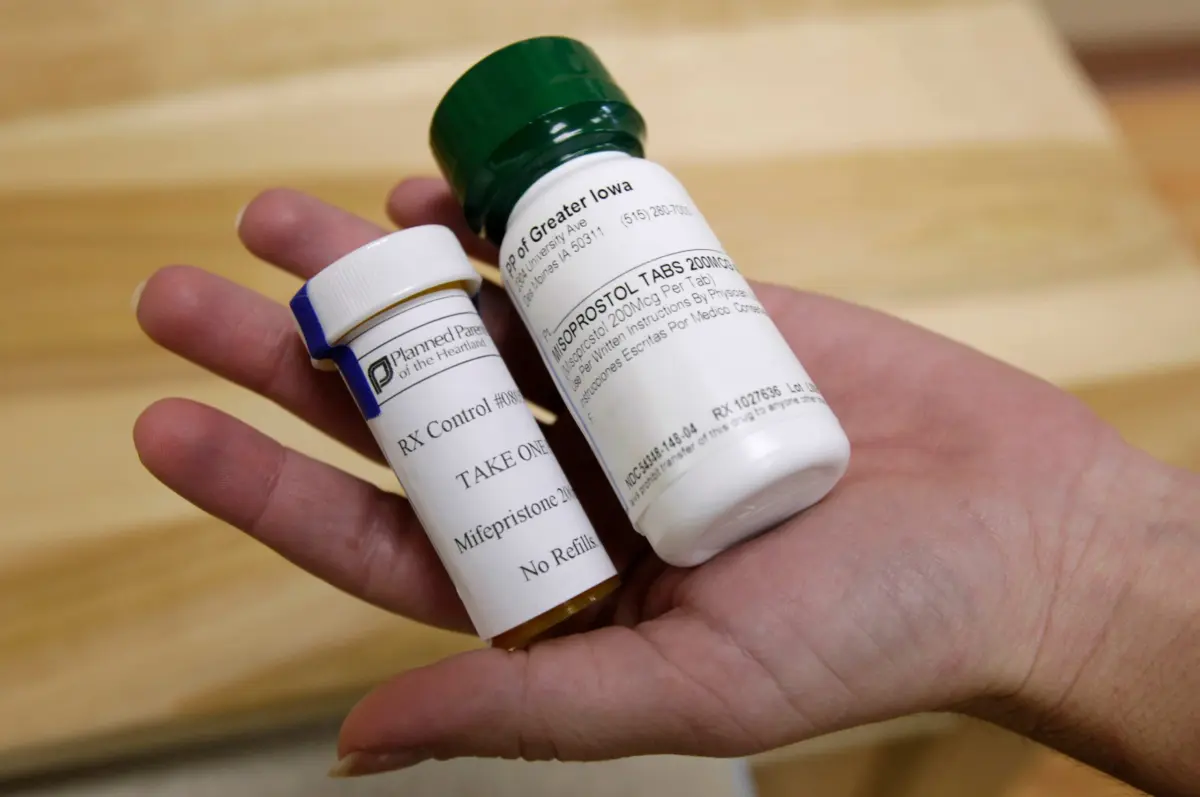
Medication abortion in the United States overwhelmingly relies on a sequential two-drug combination: mifepristone followed by misoprostol.
- Mifepristone functions by blocking progesterone, a hormone necessary to maintain a pregnancy, effectively stopping its progression.
- Misoprostol, taken 24 to 48 hours later, induces cramping and contractions to empty the uterus.
According to FDA labeling, this combined protocol successfully completes a medical abortion approximately 97.4% of the time. Data compiled by the Society of Family Planning indicates that at least 60% of all U.S. abortions are now performed using this medication combination, eclipsing traditional procedural (surgical) abortions.
The Telehealth Pipeline and State-Level Disparities
With 13 states banning abortion entirely and four others enforcing bans around the six-week mark—before many individuals even realize they are pregnant—access has fractured geographically. In response, blue-leaning states have enacted robust "shield laws" to protect providers who use telehealth platforms to prescribe and mail abortion pills to patients residing in ban states.
A survey conducted for the Society of Family Planning estimates that between 770 and 900 women in Louisiana alone obtained abortions each month in 2025 by securing pills prescribed online by out-of-state clinicians.
Anti-abortion advocates argue that this digital workaround actively circumvents the democratic will of states that chose to ban the procedure.
"This case is going to have a huge impact," said Gabriella McIntyre, legal counsel at Alliance Defending Freedom, which is representing the Louisiana plaintiffs. "The promise of the Dobbs decision was that states would be able to decide on their own how to regulate abortion."
Conversely, reproductive rights advocates emphasize the universal nature of the restriction being sought.
"They’re asking to restore an in-person requirement for every person across the country to access this medication regardless of whether they live in a state with strong legal protection for abortion access," noted Amanda Allen, executive director of the Abortion Coalition for Telemedicine.
Official Statements and Political Realities
The legal battle over mifepristone unfolds against a delicate and complex political backdrop. For Donald Trump and his political base, anti-abortion organizations remain a cornerstone of political support. Yet, national polling and state-level ballot measures consistently demonstrate that a majority of American voters favor legal access to abortion in most circumstances.
The Federal Government’s Ambivalent Stance
The FDA—whose career scientists have repeatedly reviewed extensive data confirming mifepristone to be safe and effective when used as directed—remains the official defendant in these mounting federal lawsuits. Throughout the multi-year litigation, the agency’s executive leadership has maintained a relatively muted public posture.
However, political shifts within the executive branch could alter this dynamic. President Trump’s nominee to lead the FDA, Dr. Heidi Overton (formerly the deputy director of the White House Domestic Policy Council), has openly criticized the agency’s past decisions to relax prescribing rules for the drug.
In response to ongoing litigation, a federal judge has ordered the FDA to provide a formal status update regarding its ongoing review of mifepristone safety and prescribing rules by October 7—just weeks before critical midterm congressional elections. Meanwhile, anti-abortion groups are aggressively pressuring the administration to settle the Louisiana lawsuit out of court, roll back telehealth approvals entirely, and even invoke the 1873 Comstock Act—a historic "anti-vice" statute—to criminalize the mailing of abortion medications nationwide.
Future Outlook: Adaptability of Providers and the Road Ahead
Regardless of how the 5th U.S. Circuit Court of Appeals rules on Wednesday, any immediate operational changes remain on hold. The U.S. Supreme Court has previously blocked sweeping structural alterations to mifepristone’s distribution rules until the justices can formally review the merits of the latest challenges. Furthermore, pharmaceutical manufacturers of the drug argue that state attorneys general lack the legal standing to challenge federal regulatory approvals.
Even if federal courts ultimately side with Louisiana and other conservative states, forcing a return to strict in-person dispensing requirements for mifepristone, reproductive healthcare providers and advocacy networks are already preparing contingency plans.
The Misoprostol Alternative
Public health experts and telehealth providers note that a restriction or ban on mifepristone will not halt medication abortions entirely. Organizations that currently prescribe via telehealth are prepared to pivot their protocols.
Misoprostol alone—which has long been utilized globally and is officially FDA-approved for treating stomach ulcers rather than termination—can successfully induce an abortion independently. While slightly less effective than the combined two-drug regimen (with individual effectiveness studies placing misoprostol alone at approximately 80% or higher), it remains a viable, accessible pharmaceutical option.
As state legislatures continue to introduce aggressive civil and criminal penalties for prescribers—as seen in states like Texas and Mississippi—the legal, medical, and political wars over mail-order and telehealth medication abortion are poised to dominate the American judiciary for years to come, with the ultimate resolution resting once again in the hands of the U.S. Supreme Court.

0 Comments