

EXECUTIVE SUMMARY
In the ever-evolving landscape of American retirement planning, the American South remains an undisputed magnet for aging populations seeking tax advantages, favorable climates, and community infrastructure. Yet, a recent comprehensive ranking by Travel + Leisure naming the “10 Best Places to Retire in the South” reveals a fascinating structural shift. Rather than pointing to a monolithic southern retirement model, the publication’s spotlight on Sarasota, Lake Nona, and The Villages exposes the profound diversity of modern retirement aspirations.
Together, these three Florida destinations encapsulate a tri-part paradigm of contemporary aging: Sarasota offers a culture-driven, coastal lifestyle rooted in established civic prestige; Lake Nona represents a forward-thinking, wellness-oriented enclave anchored by medical innovation and smart-city technology; and The Villages stands as the quintessential, purpose-built, hyper-social master-planned community.
This in-depth special report investigates how these three distinct environments captured national attention, examining the socioeconomic drivers, infrastructure investments, and shifting consumer preferences that continue to cement Florida’s dominance in the national retirement ecosystem.
Executive Overview: The New Anatomy of Southern Retirement
For decades, the narrative surrounding retirement migration to the Sunbelt followed a predictable script: trade a high-tax, cold-weather northern state for a modest Florida bungalow, a golf cart, and year-round sunshine. While the foundational appeal of mild winters and absence of state income tax remains unchanged, the expectations of the modern retiree have undergone a seismic evolution.
Today’s retirees—largely comprising leading-edge Baby Boomers and early Generation X—are healthier, wealthier, more technologically literate, and far more discerning than previous generations. They view retirement not as a period of withdrawal, but as an active, purposeful phase of reinvention. They demand robust healthcare infrastructure, continuous learning opportunities, cultural enrichment, walkability, and high-speed digital connectivity.
Travel + Leisure’s recent index captures this nuance by selecting three communities within a single state that could not be more different from one another. By juxtaposing Sarasota’s historic arts scene against Lake Nona’s futuristic medical corridor and The Villages’ gargantuan, club-centric recreation machine, the ranking illustrates a broader macroeconomic reality: Florida is no longer just a place to escape the cold; it is an experimental laboratory for how society will house, care for, and entertain an aging population over the next half-century.
Detailed Chronology: The Evolution of Florida’s Elite Retirement Enclaves
To understand how Sarasota, Lake Nona, and The Villages arrived at the pinnacle of national retirement lists, one must trace the historical trajectories that shaped their development. Each community represents a distinct chapter in the history of Florida real estate and regional planning.
Phase I: The Cultural Roots of Sarasota (Mid-20th Century to Present)
Sarasota’s journey to becoming a premier retirement destination is decades in the making. Unlike purpose-built enclaves, Sarasota evolved organically, beginning with its mid-century architectural boom—the Sarasota School of Architecture—which infused the Gulf Coast city with a distinct modernist aesthetic.
Over the decades, civic leaders deliberately cultivated an arts-and-culture economy, establishing the John and Mable Ringling Museum of Art, the Sarasota Opera, and the Asolo Repertory Theatre. As the decades progressed, Sarasota earned a reputation as a sophisticated refuge for retirees who wanted the amenities of a major metropolitan cultural center wrapped in a tropical coastal setting. The explosive growth of barrier islands like Siesta Key and Lido Key in the late 20th century cemented its status as a high-end destination where healthcare, higher education, and fine arts intersected seamlessly.
Phase II: The Master-Planned Blueprint of The Villages (1980s to Present)
While Sarasota grew outward from its historic roots, The Villages was born entirely from intentional design. Originating as a mobile home park in the 1970s (originally known as Orange Blossom Gardens), the community underwent a radical transformation in the 1980s and 1990s under the stewardship of the Morse family.
By introducing the concept of multi-neighborhood, amenity-rich "town squares" connected by tens of miles of dedicated golf cart paths, developers created a self-contained universe designed exclusively for adults aged 55 and older. Over the past thirty years, The Villages expanded across three counties (Lake, Sumter, and Marion), evolving into a sprawling municipality characterized by hyper-structured social programming, hundreds of active clubs, and a uniquely insular civic culture that has made it a frequent stop for national political candidates.
Phase III: The Technocratic Rise of Lake Nona (2000s to Present)
The newest contender on the national stage is Lake Nona, a 17-square-mile master-planned community situated just southeast of Orlando International Airport. Conceived by Tavistock Development Company, Lake Nona represents the cutting edge of 21st-century urban planning.
Beginning in the mid-2000s with the strategic placement of Lake Nona Medical City—a massive cluster of hospitals, research institutions, and universities including the University of Central Florida College of Medicine—the community was engineered from the ground up to integrate health, wellness, and cutting-edge technology. Rather than targeting retirees specifically through age-restricted zoning, Lake Nona attracted an intergenerational demographic by offering high-tech infrastructure, autonomous shuttle buses, high-speed gigabit fiber networks, and a built-in wellness culture. Over the last decade, its reputation has expanded rapidly among affluent retirees who prefer a modern, urban-suburban hybrid over traditional age-restricted retirement villages.
Supporting Context & Metrics: Analyzing the Tri-City Appeal
The inclusion of Sarasota, Lake Nona, and The Villages on Travel + Leisure’s prestigious roster is supported by hard metrics concerning healthcare access, cost of living, recreational infrastructure, and resident satisfaction.
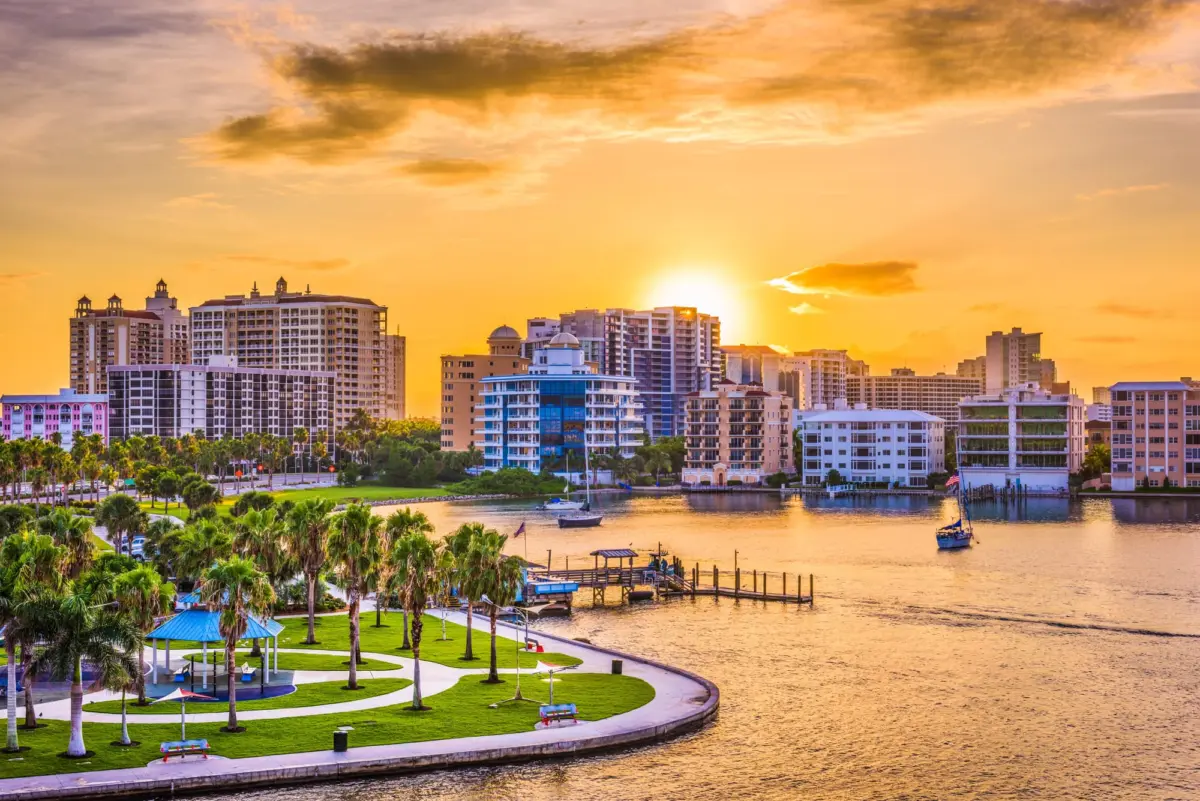
1. Sarasota: Culture-Driven Coastal Retirement
- Healthcare Infrastructure: Anchored by Sarasota Memorial Health Care System, a nationally recognized regional medical center boasting high marks in cardiology, oncology, and geriatrics.
- Cultural Capital: Home to over 10 cultural districts, professional ballet, opera, symphony orchestras, and world-class museums.
- Geographic Assets: Direct proximity to globally acclaimed beaches, including Siesta Key Beach, consistently ranked among the top white-quartz sand beaches in the United States.
- Demographic Profile: Attracts affluent, highly educated retirees seeking cultural engagement, walkable downtown living, and fine dining.
2. Lake Nona: A Modern, Wellness-Oriented Option
- Medical Innovation: Powered by Lake Nona Medical City, featuring the Orlando VA Medical Center, Nemours Children’s Health, and the UCF College of Medicine, representing billions in biomedical investment.
- Infrastructure & Technology: Features autonomous public transit pods, advanced smart-home integrations, and the 50,000-square-foot Drive Shack and Lake Nona Performance Club—one of the most advanced wellness centers in the country.
- Community Design: Master-planned with miles of paved trails, community gardens, green spaces, and robust public art installations designed to foster mental and physical well-being.
- Demographic Profile: Appeals to active, tech-savvy older adults, multi-generational families, and professionals looking toward a seamless transition into retirement without sacrificing modern urban conveniences.
3. The Villages: Retirement by Design
- Scale and Scope: Spans over 32,000 acres, housing more than 140,000 residents across dozens of distinct neighborhoods and three vibrant town squares.
- Recreational Density: Features over 50 golf courses (combining executive and championship layouts), more than 100 recreation centers, indoor/outdoor tennis and pickleball courts, and upwards of 3,000 organized resident-run clubs.
- Mobility Infrastructure: Features an estimated 100+ miles of dedicated golf cart paths, allowing residents to navigate shopping, dining, and medical appointments without operating standard automobiles.
- Demographic Profile: Highly social, community-oriented retirees seeking built-in peer groups, continuous activity schedules, and a predictable, low-maintenance daily routine.
Official Statements and Industry Insights
Real estate analysts, urban planners, and demographic experts view the prominence of these three Florida communities as a clear indicator of where the broader housing market is heading.
"The modern retiree is fundamentally rewriting the rulebook," notes Dr. Elena Vance, a senior demographic researcher specializing in Sunbelt migration patterns. "Twenty years ago, a retiree was largely content with a quiet home and a shuffleboard court. Today’s retirees are living longer, healthier lives, and they demand intellectual stimulation, top-tier healthcare security, and dynamic social fabrics. Sarasota, Lake Nona, and The Villages prove that Florida’s real estate market has adapted to provide three entirely distinct blueprints for aging successfully."
Industry leaders within the development sector echo these sentiments. According to municipal planning documents and developer briefs from Tavistock and The Villages operating groups, the focus has shifted sharply toward preventative health and digital connectivity.
"When people look at Lake Nona, they aren’t looking at a traditional retirement village," stated a regional development spokesperson during a recent urban planning symposium in Orlando. "They are looking at a wellness ecosystem. Retirees want to live alongside families, tech innovators, and medical professionals. They want their environment to actively support their longevity through architecture, nutrition, physical activity, and immediate access to advanced healthcare."
Conversely, the enduring appeal of Sarasota and The Villages highlights the unbreakable power of specialized lifestyle branding. While Sarasota banks on its decades-old reputation as an authentic cultural haven by the Gulf, The Villages demonstrates the unmatched economic efficiency and social safety net of hyper-dense, purpose-built peer communities.
Future Outlook: The Next Frontier of Florida Retirement Living
As the demographic wave of Baby Boomers continues to crest over the next decade, the pressure on southern retirement hubs will intensify. Municipalities and master-planned developments across Florida are already looking ahead to address the emerging challenges and opportunities of tomorrow’s retirees.
1. The Integration of Smart-Aging and Telehealth
As seen in Lake Nona, the integration of digital health monitoring, smart-home sensors designed to detect falls, and telehealth infrastructure will move from a luxury amenity to a baseline expectation. Future retirement developments will increasingly rely on artificial intelligence to monitor resident health metrics proactively, reducing emergency hospitalizations and extending independent living periods.
2. Environmental Resilience and Sustainable Design
With climate change and rising sea levels posing genuine threats to coastal infrastructure, retirement destinations must adapt. Sarasota and other coastal markets are investing heavily in seawall fortification, stormwater management, and sustainable building codes. Meanwhile, inland hubs like Lake Nona and The Villages benefit from higher elevations and sophisticated internal drainage networks, making them increasingly attractive to climate-conscious risk-averse retirees.
3. Evolving Intergenerational Living Models
The strict age-segregation model pioneered by traditional retirement communities is facing competition from intergenerational urban nodes. Future developments are likely to blend senior-specific housing with student apartments, co-working spaces, and family-oriented neighborhoods, fostering cross-generational mentorship and combating the loneliness epidemic frequently reported among older adults.
4. Economic Pressures and Affordability
As demand for properties in Sarasota, Lake Nona, and The Villages surges, affordability remains a critical concern. Property insurance costs in Florida have experienced dramatic upward pressure in recent years, testing the fixed budgets of retirees. Communities that can successfully navigate insurance market stabilization, property tax management, and workforce housing for the service employees who support these enclaves will maintain their competitive edge.
Conclusion
Travel + Leisure’s recognition of Sarasota, Lake Nona, and The Villages does more than simply validate three successful real estate markets; it provides a comprehensive snapshot of modern retirement philosophy.
Whether an individual seeks the timeless, high-culture elegance of Sarasota’s Gulf Coast art scene, the high-tech, wellness-centered innovation of Lake Nona’s Medical City, or the hyper-social, golf-cart-centric camaraderie of The Villages, Florida offers an unmatched spectrum of choices.
As the definition of aging continues to expand, these three communities stand at the forefront of a national movement, proving that the golden years in the American South can be as diverse, dynamic, and individualized as the retirees living them.

0 Comments